
Effective onboarding for home health registered nurses improves retention, job satisfaction, and patient outcomes. It includes creating a comprehensive plan that starts engaging the new nurse from when they accept the job offer and continues past the onboarding period. Incorporating onboarding software such as ops.work streamlines this process, saving your time and money.
Key Takeaways
- A structured onboarding process clarifies responsibilities for RNs, improving retention and job satisfaction
- Technology streamlines onboarding, reducing administrative burden, lowering costs, and reducing errors
- Comprehensive and ongoing training improves confidence, competence, and patient outcomes
- Ongoing support post onboarding results in long-term job satisfaction and retention
Home health nurses provide accessible health services to patients who are unable to visit the hospital for ongoing care.
They visit patients' homes to provide individualized care. This includes nutritional support, educating families and caregivers on using medical devices and managing care at home, and monitoring patients' health.
Despite their importance, turnover remains a major staffing problem for home health agencies. This can be fixed by implementing strategic employee retention initiatives throughout the employee life cycle. One of these initiatives is a structured onboarding process for home health nurses.
What is the Onboarding Process For Home Health Registered Nurses?
Your approach to onboarding shapes a new hire's experience, morale, and job satisfaction. An effective onboarding program should include the following steps:
Preboarding
Preboarding includes all activities that occur between the time a registered nurse accepts your job offer and the official reporting day. HHAs that invest in engagement strategies at this point are more likely to solidify the RN's decision to work with your agency.
Preboarding gives your agency the perfect opportunity for new staff to get to know your organization better and have a smoother transition to their new role.
Start the preboarding process by sending the new hire an introduction email. Your email should introduce them to their team members and the company. It should also inform them about the administrative tasks they should complete before the first day.
You can automate this process with ops.work to create a preboarding checklist, assign tasks to new hires, and track the progress of preboarding tasks such as credentialing. Here are a few ways to improve the preboarding process using ops.work onboarding software:
Create a preboarding checklist listing all the administrative tasks new hires must complete. These include submitting documents for credentialing and completing necessary paperwork, such as tax forms.
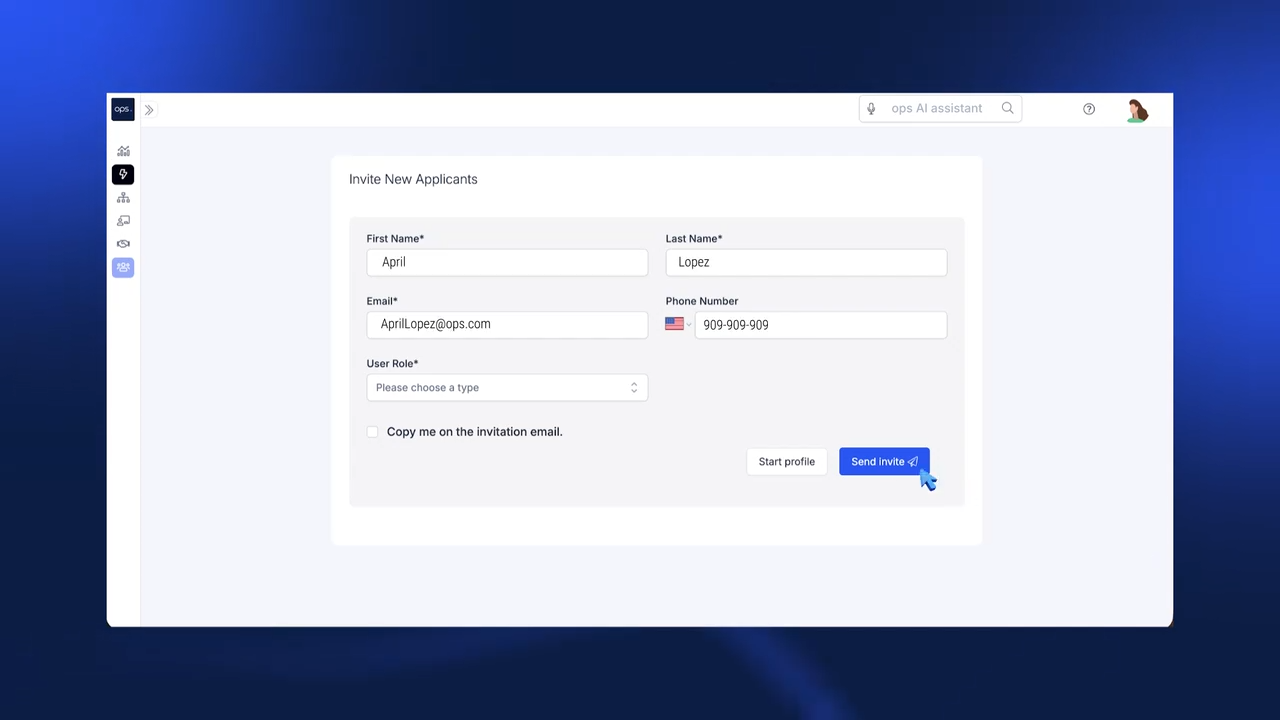
Invite new employees to your ops.work platform
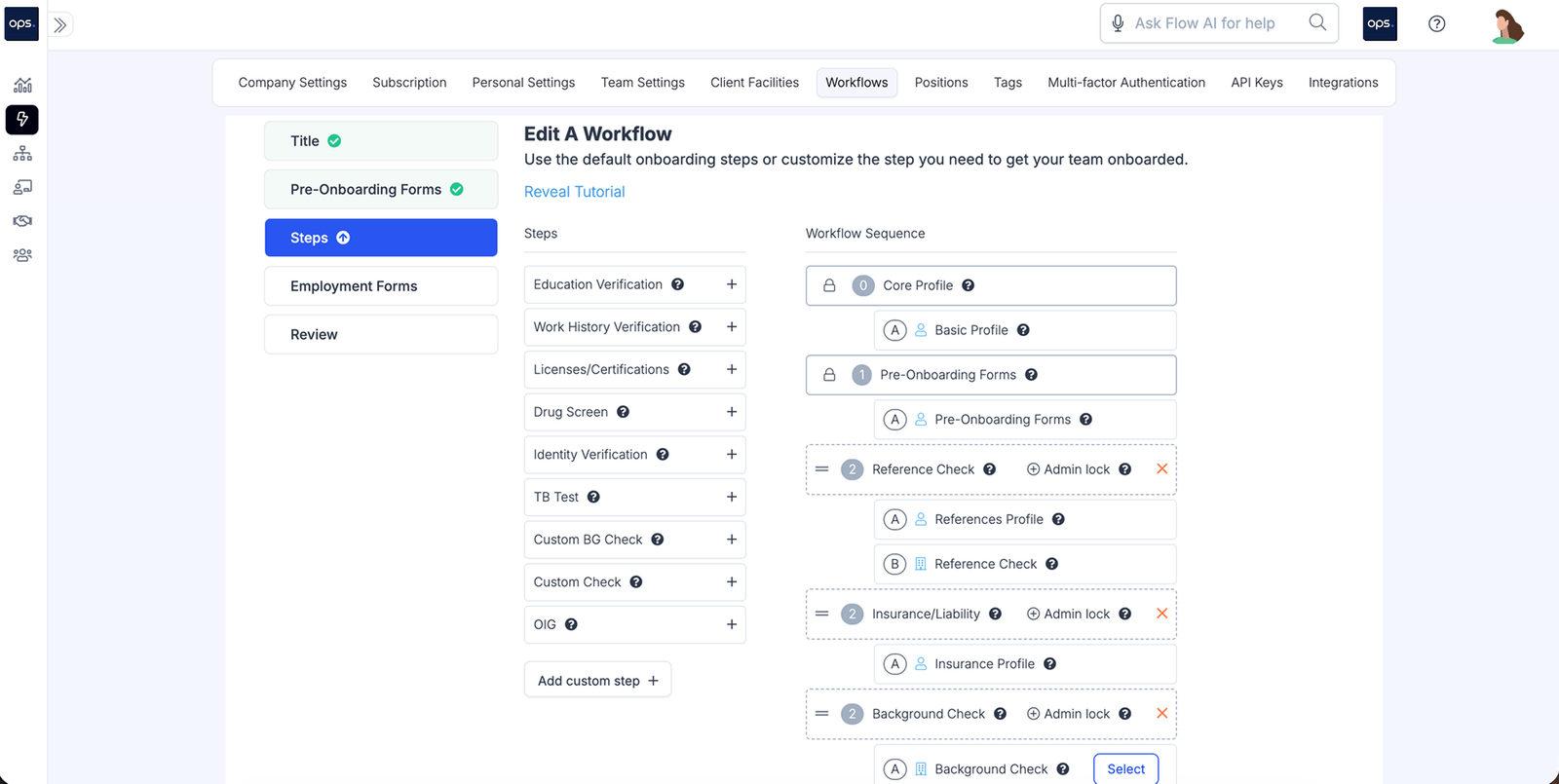
Create an automated workflow to track and assign tasks.
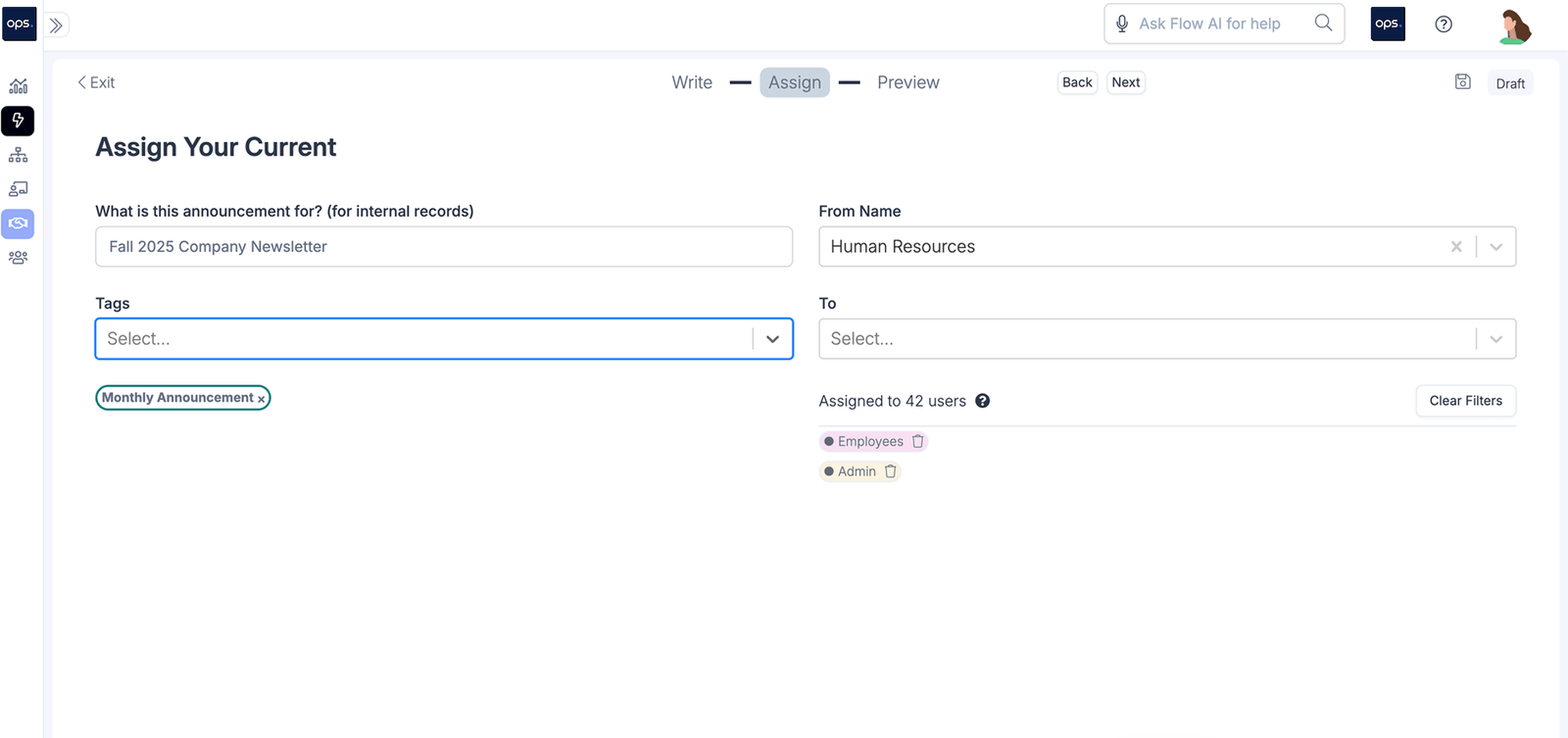
Send an email with information on what to expect on the first day of work and how your new hires can prepare for a smooth transition
Orientation
New hire orientation begins on the first day the new nurse reports for work. The process helps new hires acclimate to their roles and the work environment while providing a positive experience. Some of the activities to complete during orientation include:
- Give the home health nurse a tour of the facility and introduce them to team members
- Clarify the RN's role, responsibilities, and expectations
- Introduce your nurses to their mentors
- Provide essential HR paperwork
- Provide an employee handbook which includes company policies, procedures, and code
- Introduce your home health nurse to your organizational benefits program
- Set up the new RN's work station and the necessary equipment and tools
- Provide a checklist of activities and schedules for orientation and onboarding.
Role-based and Compliance Training
HHAs must provide new hires with compliance and role-based training. Compliance training familiarizes home health nurses with regulations such as HIPAA, ACA, OSHA, and CMS CoPs to ensure compliance.
Role-based training provides the skills and knowledge an employee needs to excel in their role. RN training may include modules that cover:
- Infection control
- Patient confidentiality
- Medication management
- Patient safety
- Using medical equipment and electronic health records
You can use ops.work to improve your training process in several ways:
Create role-based courses in various formats, including text and video
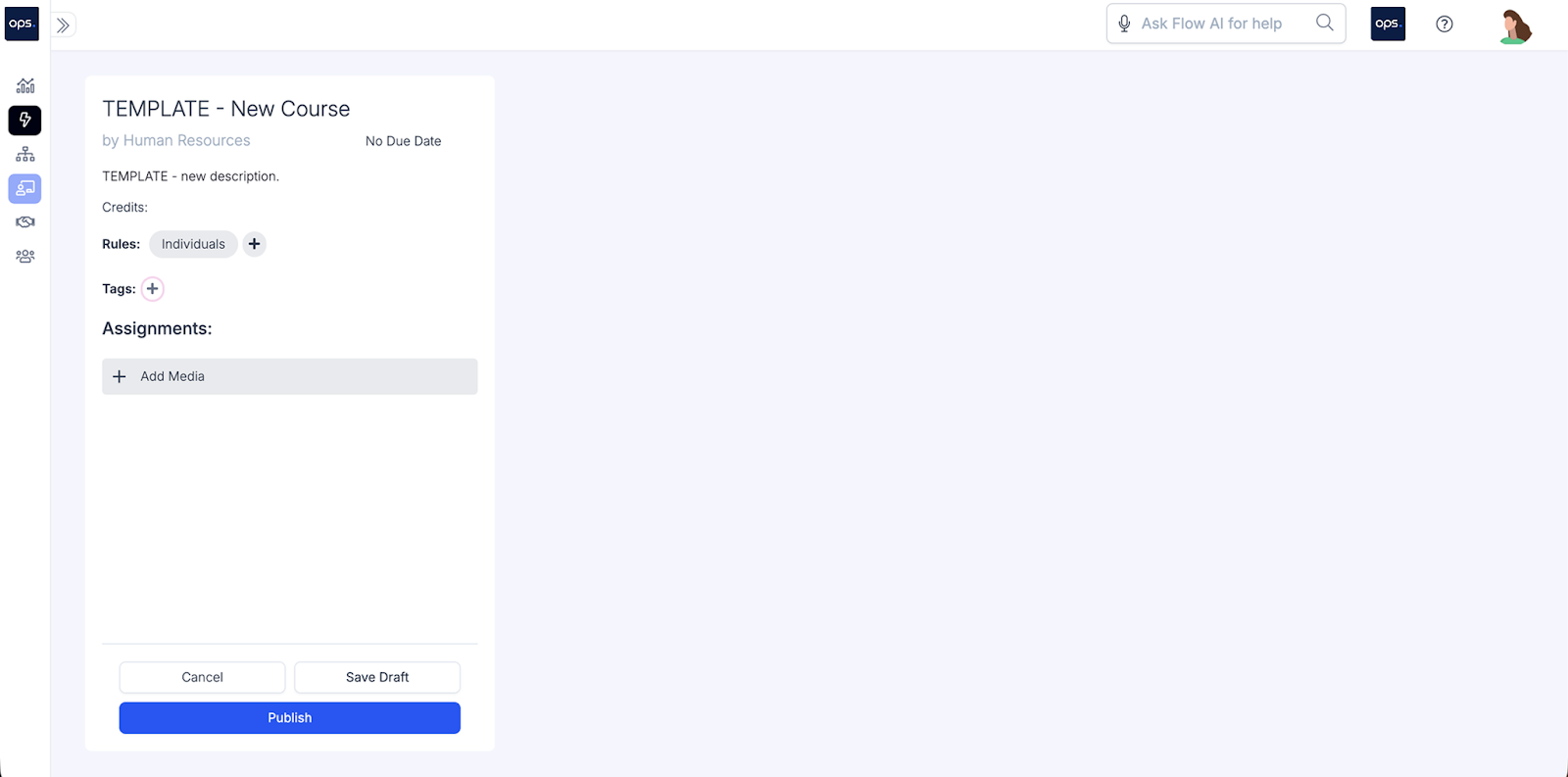
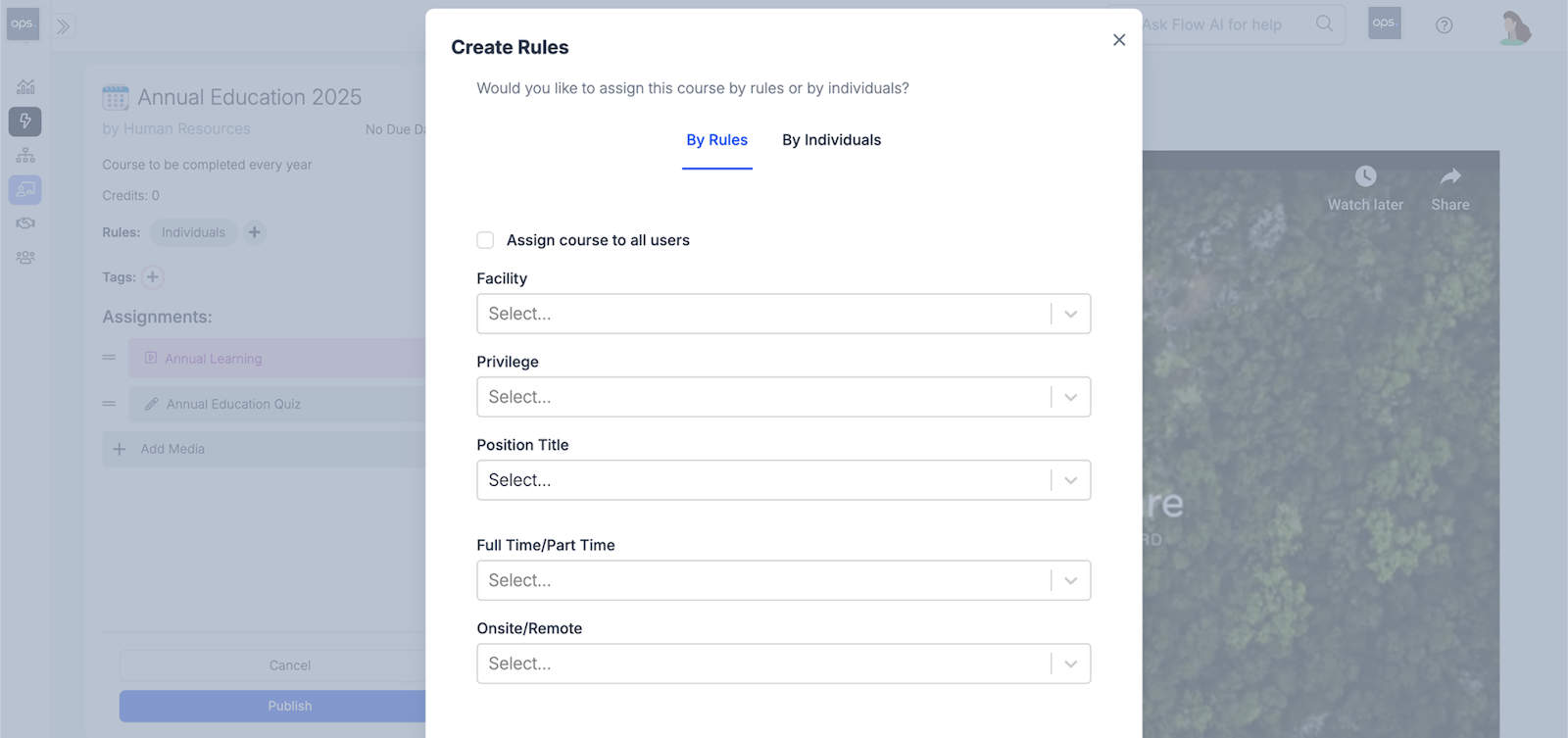
Assign courses to your nurses based on pre-determined rules
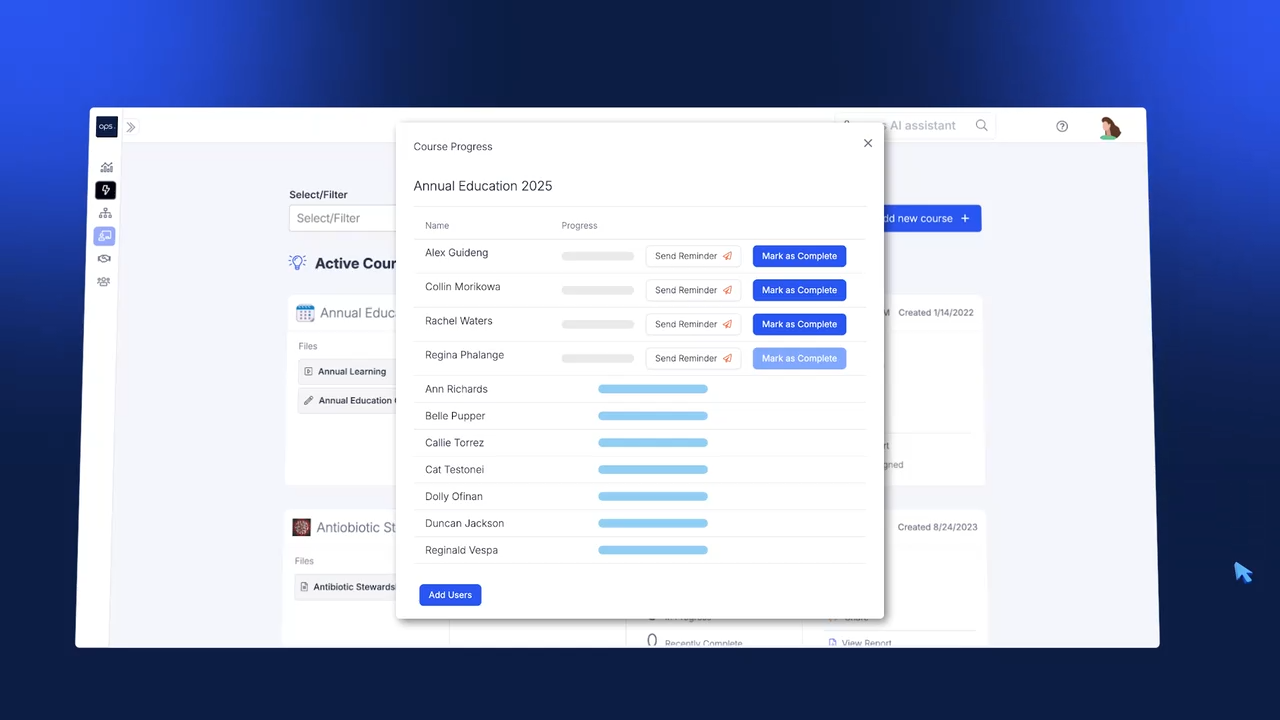
Track the completion progress for each course
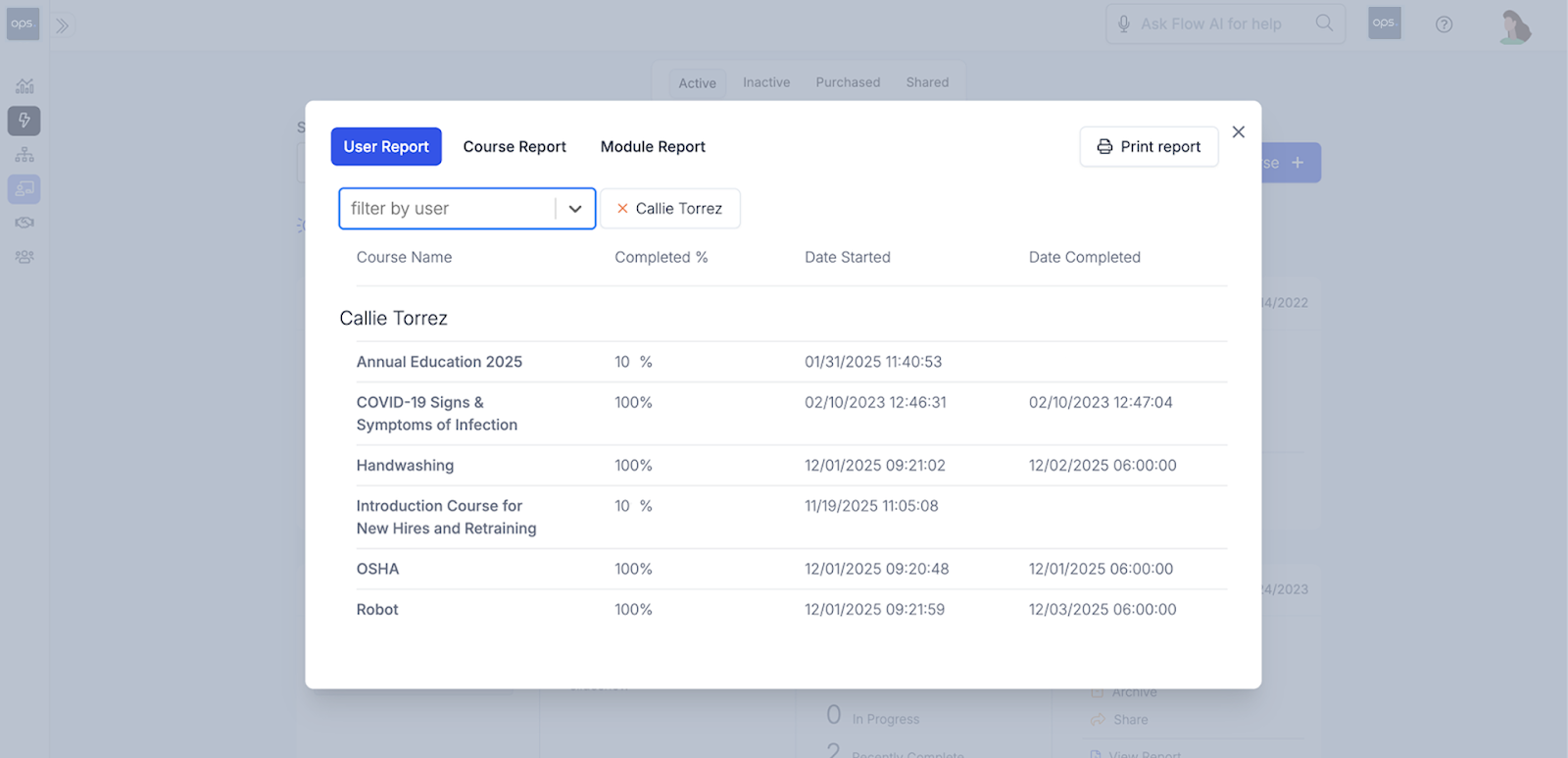
Generate LMS reports to track the impact of your training and onboarding efforts
Performance Monitoring
Employee productivity is an important indicator of the effectiveness of the onboarding program. Done well, home health onboarding reduces the time-to-productivity while improving patient outcomes.
Performance monitoring for new hires allows you to check in with your nurses to:
- Identify areas for improvement and come up with solutions such as personalized training, mentorship, or shadowing
- Set goals, expectations, and priorities
- Address the unique challenges of your home health nurses throughout the onboarding program
To monitor performance, hold regular one-on-one check-in meetings with your nurses. You can also conduct engagement surveys to determine how immersed they are in your organizational culture.
You can access hundreds of survey templates with ops.work's free plan to help you create, send, and track surveys.
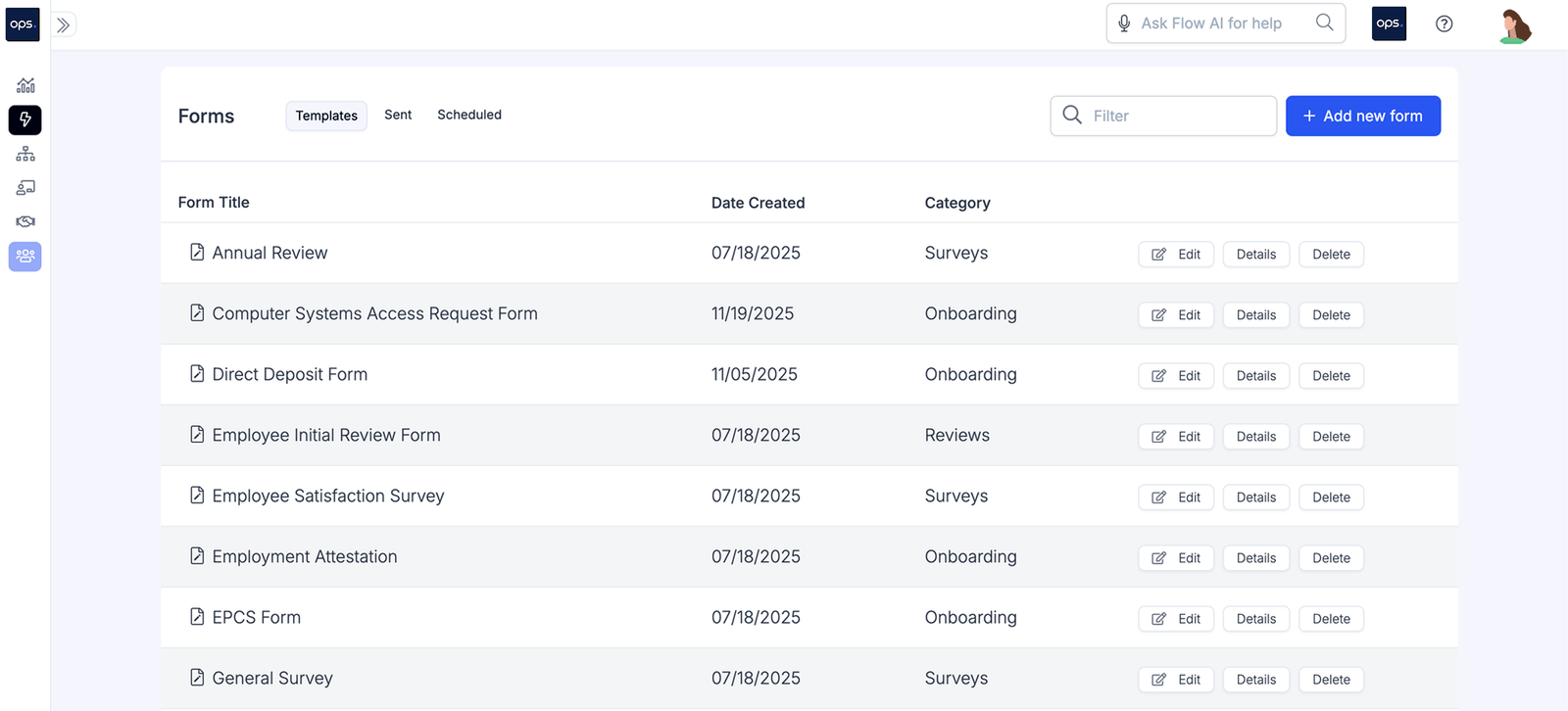
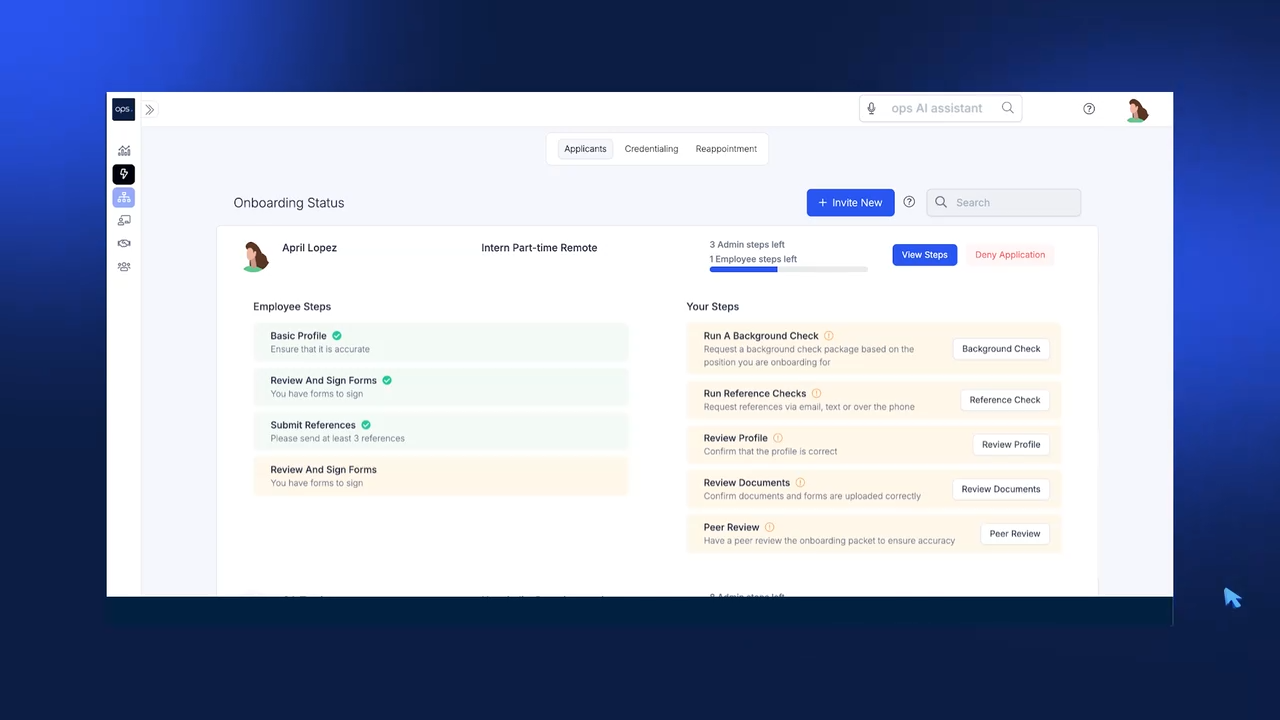
You can also easily track each employee's onboarding status and take the necessary actions.
Post-onboarding Support
The onboarding experience lays the foundation for how your nursing staff engages with your organization.
Schedule a meeting at the end of the onboarding program to set goals and expectations for the next stage of the employee lifecycle: retention.
During this stage, identify professional development opportunities available to you RN staff. These may include leadership opportunities for experienced nurses and continuous education resources for professional growth.
What are the Key Components Of An Effective Home Health Registered Nurse Onboarding Program?
A good program for integrating new hires contributes to higher organizational performance, strong teams, and higher retention rates. A good onboarding program must have the five key components: compliance, confidence, connection, culture, and clarity.
The healthcare landscape has many regulations that an onboarding program must adhere to for consistent quality of care.
Compliance with regulations such as HIPAA, HITECH, OSHA, credentialing, license verifications, and mandatory drug and background screenings ensures your new hires understand their obligation and are qualified to care for patients in and outside hospitals or clinical settings.
Employees succeed when they have clarity about their roles, responsibilities, and expectations. A good practice is to schedule a meeting with your new staff to discuss their role and the resources available to them.
Confidence refers to an employee's belief in their ability to perform their duties. It includes ensuring nurses meet their colleagues, are familiar with the environment, and receive opportunities for professional development and continuous improvement.
Connection refers to the meaningful relationships RN's have with their colleagues. Although home health nurses often work independently in patients' homes, they also interact with other healthcare professionals to deliver quality patient care.
Therefore, you should create an environment that allows your care team to collaborate and develop healthy interpersonal and professional relationships.
Your nurses must integrate with the culture. Your culture is the sum of your company's beliefs, values, and behaviors, whether positive or negative. This culture shapes interactions among new staff, employee success, and retention.
What are the Best Practices For Onboarding New Home Health Nurses?
Onboarding home health RNs prepares them to provide the best care to patients. Improving this process increases retention, boosts employee engagement, and reduces the time and resources required to integrate new employees.
Here are a few tips and strategies to improve how you integrate RNs into your HHA:
- Pair new employees with experienced nurses to provide mentorship
- Create checklists for the key steps in integrating new staff to ensure a consistent experience for all employees
- Automate repetitive tasks in your onboarding process, such as sending reminders and assigning tasks by role.
- Provide ongoing education opportunities to ensure staff continue to learn after the onboarding process
- Use a combination of training delivery methods, including blended, online, and classroom education, to address the unique needs of each employee
Conclusion
Despite the nursing shortages in the healthcare industry, a good employee integration program can enhance nurse engagement, ensuring patients receive exceptional care and employees remain engaged. Ops.work helps you streamline workflows to automate tasks in the integration process, such as credentialing, training, task management, and feedback collection. Try our free plan to onboard your home health nurses efficiently and ensure continuity in your home-based care services.
References
Ortiz Pate N, Barnes H, Batchelder H, Anglin L, Sanchez M, Everett C, Morgan P. Physician assistant and nurse practitioner onboarding in primary care: The participant perspective. J Am Assoc Nurse Pract. 2023 Feb 1;35(2):122-129. doi: 10.1097/JXX.0000000000000823. PMID: 36763465.
Grek, Ami, et al. “Advanced Practice Nurse and Physician Assistant Orientation Program: A Critical Piece in the Onboarding Process.” The Journal for Nurse Practitioners, vol. 18, no. 6, Apr. 2022, https://doi.org/10.1016/j.nurpra.2022.02.028.
NSI Nursing Solutions. 2025 NSI National Health Care Retention & RN Staffing Report. 2025. https://www.nsinursingsolutions.com/documents/library/nsi_national_health_care_retention_report.pdf
Samson, Zoe, et al. “Predictors of Job Turnover among Home Health versus Hospital Nurses: An Observational Study Using the National Sample Survey of Registered Nurses.” International Journal of Nursing Studies, vol. 174, Feb. 2026, p. 105301, https://doi.org/10.1016/j.ijnurstu.2025.105301.
Frequently Asked Questions
A structured plan for integrating new hires turns the success of your recruitment efforts into a streamlined process that enhances the onboarding experience. This increases retention, job satisfaction, and employee morale.
Warning signs such as high turnover rates, burnout, and a longer time-to-productivity help you gauge the overall effectiveness of your new employee integration efforts. Assess your program regularly to ensure you're dedicating your time and resources to initiatives that retain employees and attract top talent.
HHA and other healthcare settings can improve their retention levels by creating structured programs to integrate new staff and develop a skilled nursing workforce.