
Onboarding is a crucial phase for new employees, typically lasting three months to a year, during which they must achieve specific performance milestones. Common reasons for prolonged onboarding at healthcare facilities include complex credentialing, fragmented processes, and unclear responsibilities. A structured program with clear timelines and responsibilities can reduce onboarding time, as can automation.
Key Takeaways
- Onboarding typically takes 3 months for regular roles and up to a year for complex roles
- Tracking onboarding time can help you identify inefficiencies in your processes that are costing your business time and money
- A structured onboarding framework with clearly defined timelines can reduce onboarding time
Employee onboarding sets the pace for new hires to become productive and engaged team members. While onboarding activities in healthcare can be time-consuming, they should not take too long to complete.
Why Onboarding Time Matters
Onboarding takes a minimum of three months for most roles and up to a year for more complex roles. During this period, the employee must meet specific performance milestones and be fully integrated as a productive team member.
The time to productivity can provide key insights into how effective employee onboarding is at your facility. It can help you identify bottlenecks and gaps throughout the onboarding program, from preboarding to credentialing and training.
In addition to measuring the effectiveness of your onboarding program, tracking the time it takes for new hires to become productive:
- Facilitates better recruitment procedures as you can align the skills, knowledge, and competencies required for each role
- Helps your facility allocate financial and human resources adequately to cover the time when an employee needs supervision and guidance in their role
- Facilitates a healthier work environment as existing employees aren't stuck picking up the slack from poorly onboarded hires
- Promotes employee engagement and retention
Why is New Employee Onboarding Taking so Long?
Effective onboarding programs last long enough to make new hires feel confident in their ability to handle their responsibilities. At the same time, it should not last too long that employees disengage along the way.
Healthcare facilities typically have a lengthy onboarding process. Some of the reasons behind the longer onboarding periods include:
- Complex credentialing processes that can take between weeks and months to complete
- Fragmented internal systems and processes due to manual processes and diverse roles, which makes it harder to provide a consistent experience.
- Heavy workloads and high turnover rates make it harder to fully focus on onboarding, resulting in extended onboarding
- Lack of clarity on who handles what tasks of onboarding
What are the Key Best Practices to Reduce Employee Onboarding Time?
A positive onboarding experience increases employee retention by providing new hires with sufficient time to acquire the necessary competencies required to succeed in their new role. It keeps employees engaged from day one and affirms their decision to join your facility.
However, when onboarding takes too long, employees tend to disengage and integrate poorly with the organization.
Here are practical ways to reduce onboarding time:
1. Create a Structured Onboarding Program
Fragmented processes result in inconsistent onboarding experiences. Companies with structured onboarding have higher retention rates since the program:
- Clearly outlines all the onboarding steps and timelines for all new employees
- The duties and responsibilities of hiring managers, team members, and mentors in the onboarding journey
- Ensures new team members receive all the tools and equipment they need to succeed in their roles
- Ensures new hires already know what to expect during their first 90 days on the job
- It makes new hire training easier as managers know the skills and courses to prioritize
2. Automate the Onboarding Process
Onboarding software, such as ops.work makes onboarding more efficient and faster. Healthcare facilities that use our automation software have cut down the time it takes to integrate new hires to as little as four hours. Sign up for our free plan to save time.
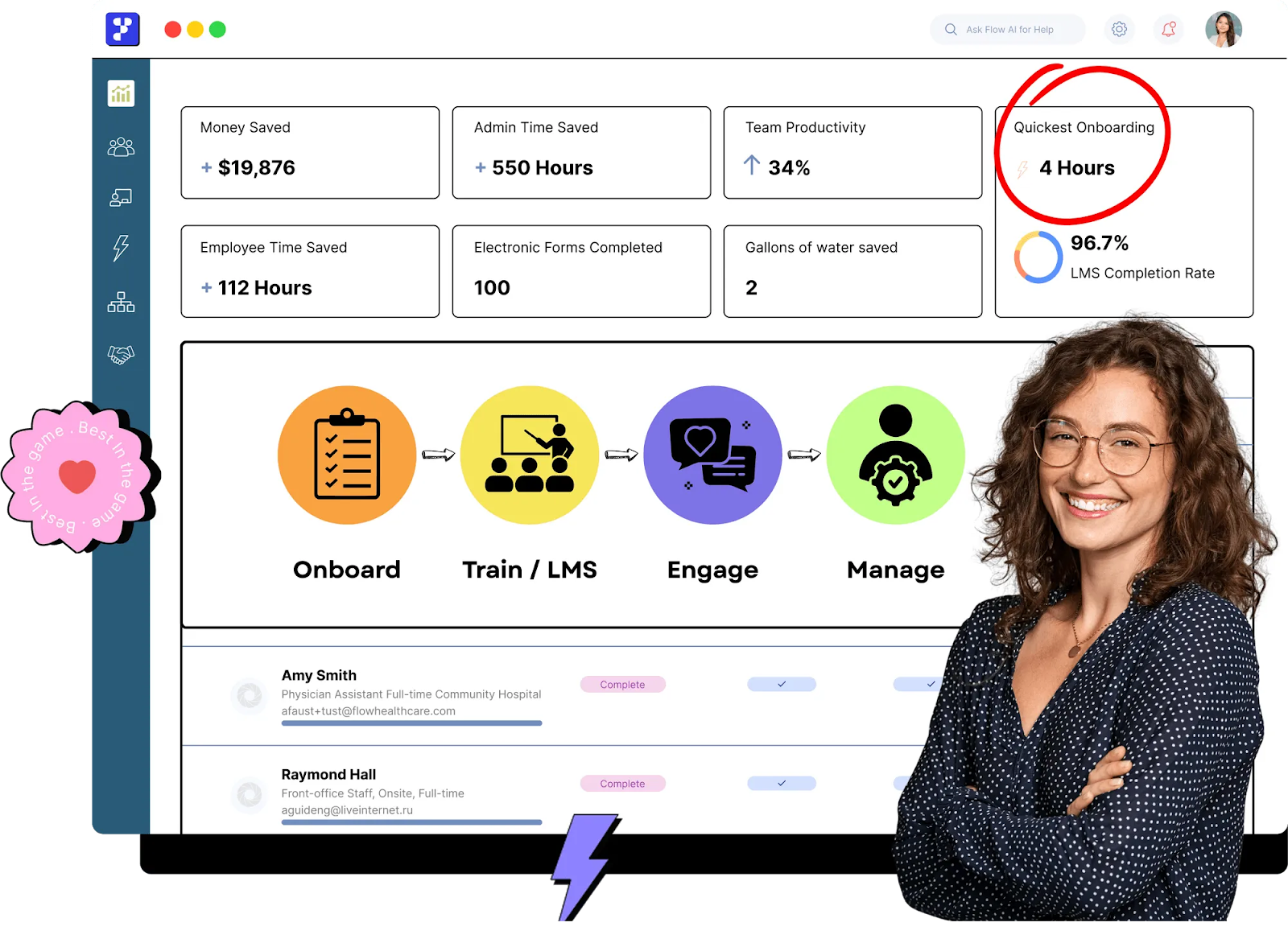
Ops.work achieves this in several ways:
It allows you to create onboarding checklists and workflows that ensure a consistent experience for all employees
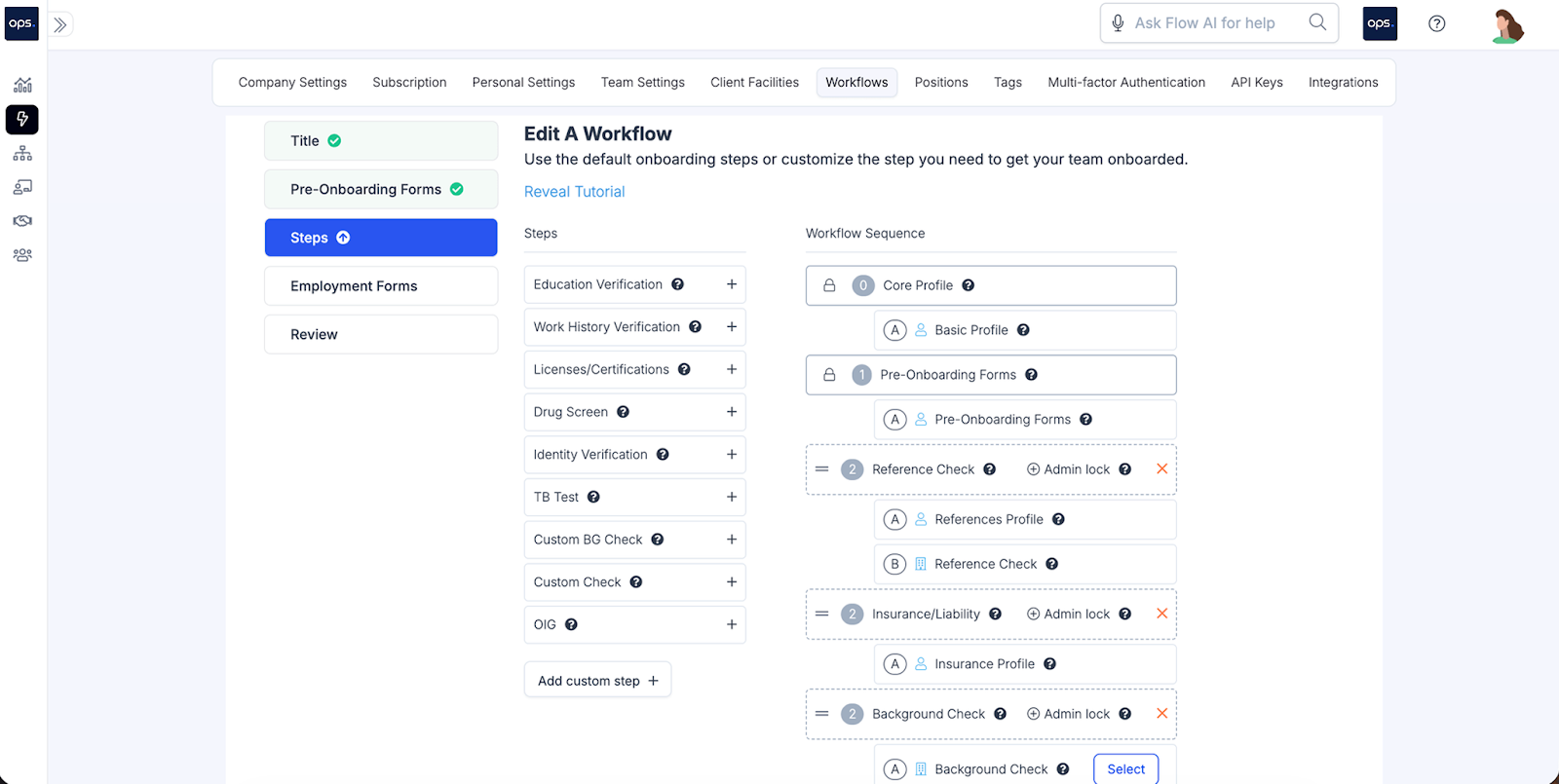
Automates background checks, credentialing, and reference checks, saving you time and resources
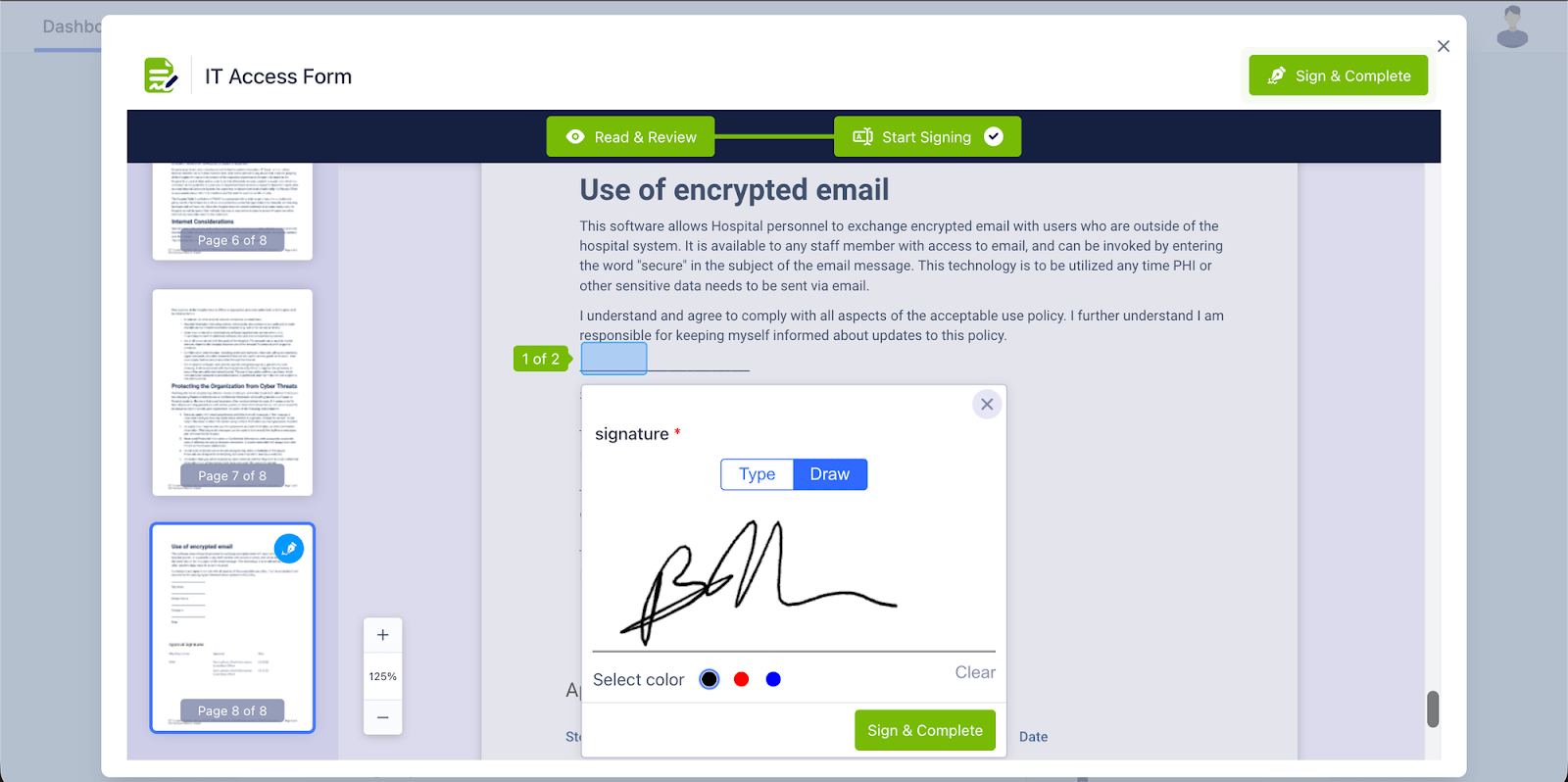
It automates paperwork, allowing onsite and remote employees to sign paperwork securely
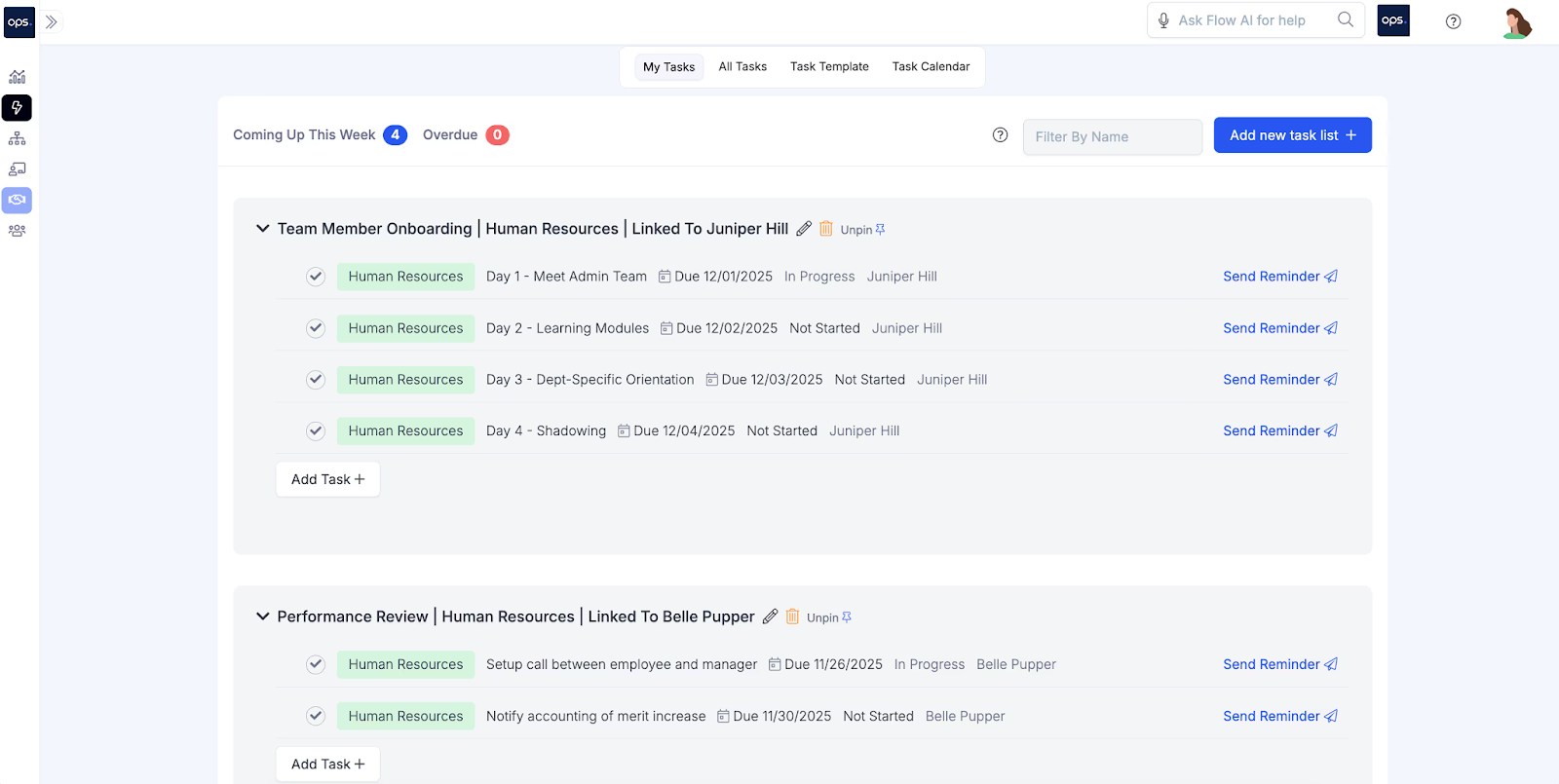
It makes task management easier, ensuring all stakeholders understand their roles and responsibilities in streamlining your onboarding process
3. Create a Gradual Ramp-Up Procedure for New Hires
A gradual ramp-up procedure breaks your onboarding activities into smaller, gradual steps, making it easier for employees to learn and apply new skills with guidance from supervisors or mentors.
It looks like starting the employee on simple tasks before building up to more complex tasks, as they become more familiar and comfortable with team members, the company's culture, and internal processes.
Engage with department leads during the onboarding planning process to identify the basic skills and how you can create learning opportunities that help new employees gain the relevant experience and reduce their time to value.
4. Set Clear Expectations From the Beginning
Role clarity lets new employees understand what is expected of them. They understand what their day-to-day tasks are, who they report to, what goals they're working towards, and what they contribute to the organization.
Role clarity facilitates faster onboarding, as every employee knows what to do and where to seek help. You should meet with new staff within the first week for a one-on-one discussion on their role and responsibilities.
Afterwards, engage in regular feedback sessions to track how they are adjusting, the challenges they're experiencing, and how you can make the onboarding
5. Create Continuous Learning Opportunities
If your onboarding approach focuses on one-time training, chances are your employees are taking longer to gain the skills they need for their jobs. Incorporating continuous learning into employee onboarding reduces the pressure on employees to learn everything at once and fast.
Continuous learning improves the onboarding process and ensures all employees get up to speed with developments in your industry.
Here are training tips to reduce employee integration time and facilitate continuous development:
- Embed training into every stage of the employee lifecycle, starting with simple basics and building on complexity as the employee advances in their role
- Provide blended learning options that employees can access at their own pace
- Create personalized learning pathways curated for the employee's role
6. Develop a Centralized Knowledgebase
A centralized knowledge base decreases onboarding time by helping new hires find answers to their questions and learn more about your company.
LMS tools like ops.work allow you to create a central hub for company resources. You can add materials such as the employee handbook, operational guidelines, software and equipment guides, checklists, and other resources that new employees often need.
A centralized database provides a single source of truth, ensuring a consistent employee experience across the organization.
7. Facilitate Relationship Building Early in the Employee Onboarding Process
An effective onboarding process prioritizes relationship building by pairing new hires with mentors and coaches. These relationships provide employees with a person of reference when they encounter challenges in their new role.
It also allows existing employees to learn new perspectives, driving a company culture of collaboration, continuous learning, and innovation.
8. Track Key Performance Metrics
Setting and tracking performance metrics allows you to measure how effective your onboarding process becomes while gaining new insights to streamline the process. These metrics include:
- employee productivity and independence in handling their duties
- Progress through training courses and knowledge retention rates
- Engagement and satisfaction rates
These metrics help you improve onboarding by identifying bottlenecks in the process that could interfere with speedy onboarding.
9. Provide New Employees with the Tools They Need
Don't neglect providing the tools and equipment needed when you onboard new hires. In addition to training, employees must receive the necessary tools and equipment.
Get your IT team to set up email accounts and provide access to the learning management and communication tools the employee will need for their job. When they report on the first day, provide them with a desk, computer, and access to other onsite facilities they need, including technical training to ensure they understand how to use it.
10. Collect Feedback and Implement Lessons Learnt
Collecting key feedback when onboarding new staff significantly reduces the time spent onboarding the next set of employees.
Connect with key stakeholders, including new staff, hiring managers, and L&D teams, through feedback surveys, one-on-one meetings, and questionnaires to identify the current bottlenecks and potential solutions.
Implement these solutions in subsequent onboarding activities to keep improving your process, employee retention, and productivity.
Conclusion
Managing the time it takes to onboard new employees leads to better cost savings, improved employee engagement, enhanced performance, and reduced turnover rates. Ops.work software to cut onboarding time down by automating manual processes and creating better visibility into tasks, training completion rates, and document management. Get started with our free plan to save time and money.
References
Frögéli, Elin, et al. “Effectiveness of Formal Onboarding for Facilitating Organizational Socialization: A Systematic Review.” PLOS ONE, vol. 18, no. 2, 16 Feb. 2023, pmc.ncbi.nlm.nih.gov/articles/PMC9934447/, https://doi.org/10.1371/journal.pone.0281823.
Nagib, Nicole, et al. “Onboarding and Early Employment Experiences in Healthcare: Implications for Retention.” Health Services Management Research, 18 Oct. 2025, https://doi.org/10.1177/09514848251384273.
Lucin, Babitha, et al. “BENEFITS of on BOARDING as an APPROACH to SUSTAINING HUMAN RESOURCES in ORGANIZATIONS.” Accountancy Business and the Public Interest, vol. 2, no. 8, 10 Nov. 2024, pp. 26–35, www.researchgate.net/publication/385710738_BENEFITS_OF_ON_BOARDING_AS_AN_APPROACH_TO_SUSTAINING_HUMAN_RESOURCES_IN_ORGANIZATIONS.
Frequently Asked Questions
- Clarity in the duties and responsibilities of the employee's role
- Compliance with internal and external regulations
- Confidence in the ability to perform tasks
- Connection with other employees
- Culture - integration with the organizational culture
Onboarding should take a minimum of three months for most roles. Complex roles may require up to a year for the employee to be fully onboarded.
Onboarding remote or hybrid staff should follow the same principles of effective communication, fostering connections, and providing personalized learning paths. In addition, ensure they have the right technology and tools to engage with other staff and excel at their role, without feeling isolated. Automating onboarding also helps facilitate remote onboarding.