
Hospice aides experience high levels of burnout. An effective onboarding program eases hospice aides into their role while providing them with the tools to promote their well-being and reduce burnout. This program includes four phases: preboarding, orientation, training, and feedback.
Key Takeaways
- Training should cover clinical skills, regulations, and role expectations to prepare aides for real duties
- Consistent check‑ins help assess performance, address concerns, and refine onboarding processes
- Tools like ops.work reduce administrative burden and support smooth workflows and tracking
Hospice and palliative facilities provide compassionate end-of-life care to aging and terminally ill patients. The goal is to make patients as comfortable as possible while preserving their dignity.
Hospice clinicians provide a range of services tailored to the needs of the patient and family. This line of work is often prone to burnout, leading to high turnover rates.
Effective hospice onboarding equips new hires with the skills, knowledge, competence, and support needed to succeed.
What are the Responsibilities of a Hospice Aide?
Hospice aides work as part of an interdisciplinary team consisting of hospice nurses, physicians, social workers, and chaplains.
Their main role is to provide end-of-life care to terminally ill patients. They work to meet patients' emotional, physical, and spiritual needs. Among their responsibilities are:
- Assisting patients with activities of daily living, including personal care, grooming, and hygiene
- Support with housekeeping tasks
- Accompanying patients for errands or medical appointments
- Providing toileting and incontinence care
- Monitoring and charting patient symptoms to track when they deviate from the baseline
- Assisting with medication management
They work under the supervision of registered nurses, who assign tasks and monitor whether the aide's services meet the patient's and family's needs, while complying with regulations.
What are the Stages Of the Hospice Aide Onboarding Process?
Onboarding hospice clinicians is an intensive process that ensures your new hires are equipped for success. This process begins as soon as a new employee accepts a job offer and typically ends within the first three months on the job.
In some cases, you may extend the onboarding period to ensure your staff is fully capable of handling their responsibilities.
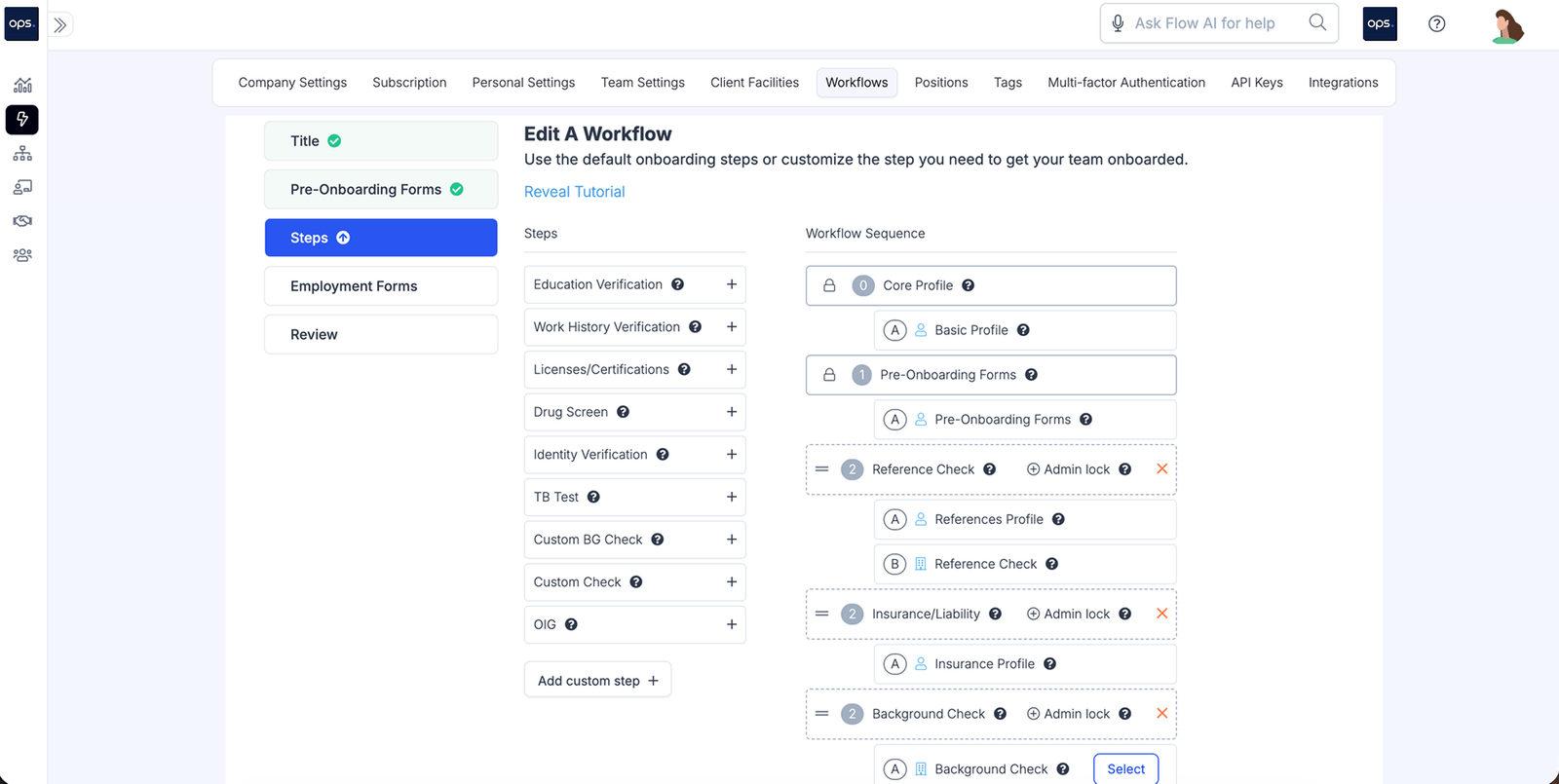
You can automate each stage of the process using ops.work onboarding software, whether it's creating workflows, assigning tasks and courses, or creating forms to collect feedback from new staff.
Preboarding
Preboarding is the first step when onboarding hospice staff. Your preboarding program aims to engage employees and prepare them for their new jobs.
Some of the tasks to complete during this stage include:
- Send a personalized welcome and introduction email. You should send two introductory emails: one to the new employee introducing co-workers, and another to team members introducing their new member.
- Provide access to company information, such as policies and benefits, to help employees familiarize themselves with your home care facility
- Complete administrative tasks such as submitting tax forms, collecting documents for payroll enrolment, and submitting documents for regulatory compliance
- Setting up the employee's workspace, equipment, and software access in readiness for their first day
- Clarify the tasks and responsibilities of different teams during different stages of the onboarding process
- Set up staff profiles
- Create onboarding schedules and checklists
Orientation
Orientation is the second stage of the onboarding process. It begins on the day a new hospice clinician reports for their job. The goal of orientation is to immerse your employees in your organizational culture and work environment. During the orientation stage:
- Inform your new staff about the company's mission, goals, core values, leadership team, and organizational chart
- Give a facility tour and introduce them to the rest of the care team
- Provide the code of conduct, which highlights regulatory and internal standards of practice that guide staff in quality care delivery
- Conduct a meeting with the supervisor, often an RN case manager, to clarify the employee's responsibilities and expectations
- Pair the employee with a mentor
- Introduce your company's safety code
- Provide an onboarding checklist of the activities that your employees must complete within the first 90 days
Training
Hospice clinicians' training can be divided into two broad categories: compliance training and role-based training.
Compliance training involves familiarizing your staff with the regulations they must operate under. These include:
- HIPAA, which governs how they capture, store, process, and share patient data
- OSHA, which familiarizes them with their worker safety rights and responsibilities
- CMS standards
- State regulations for hospice facilities
- OIG regulations
- Internal standards of practice, including admission, record keeping, and reporting requirements
You can find a recommended onboarding curriculum for new clinical staff from various professional and government organizations. These include the Centers for Medicare & Medicaid Services and the National Alliance for Care at Home.
Role-based training equips your clinicians with the clinical skills and knowledge they need to deliver high-quality care that meets each patient's needs. Developing a quality educational program for your staff starts with identifying key training areas in hospice care. They include:
- Patient rights and responsibilities
- Infection prevention and control
- Pain control and management
- Emergency preparedness
- Compliant documentation of patient visits and care plans
- Working with families
- Cultural competency
- Communication
- Self-care to prevent burnout and compassion fatigue
Ideally, an effective onboarding training program should also provide supervised practical training that gives your staff hands-on, real-world experience in hospice care. You can achieve this either through shadowing under an experienced nurse or care provider.
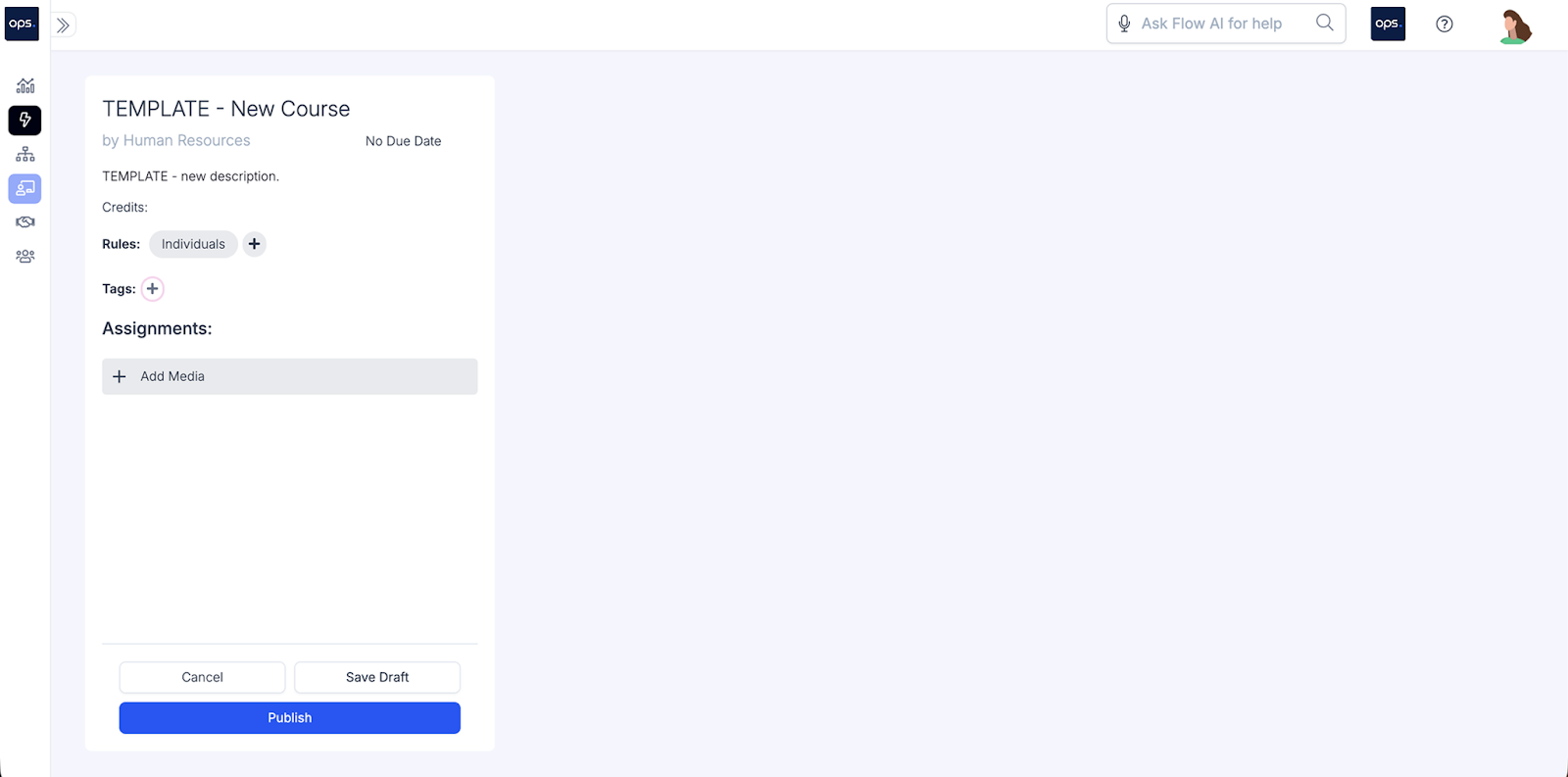
You can create different types of courses for your healthcare teams with ops.work LMS. Ops.work lets you create content in various formats, from indepth targeted training to refresher courses, to keep your workforce up-to-date on emerging and relevant knowledge.
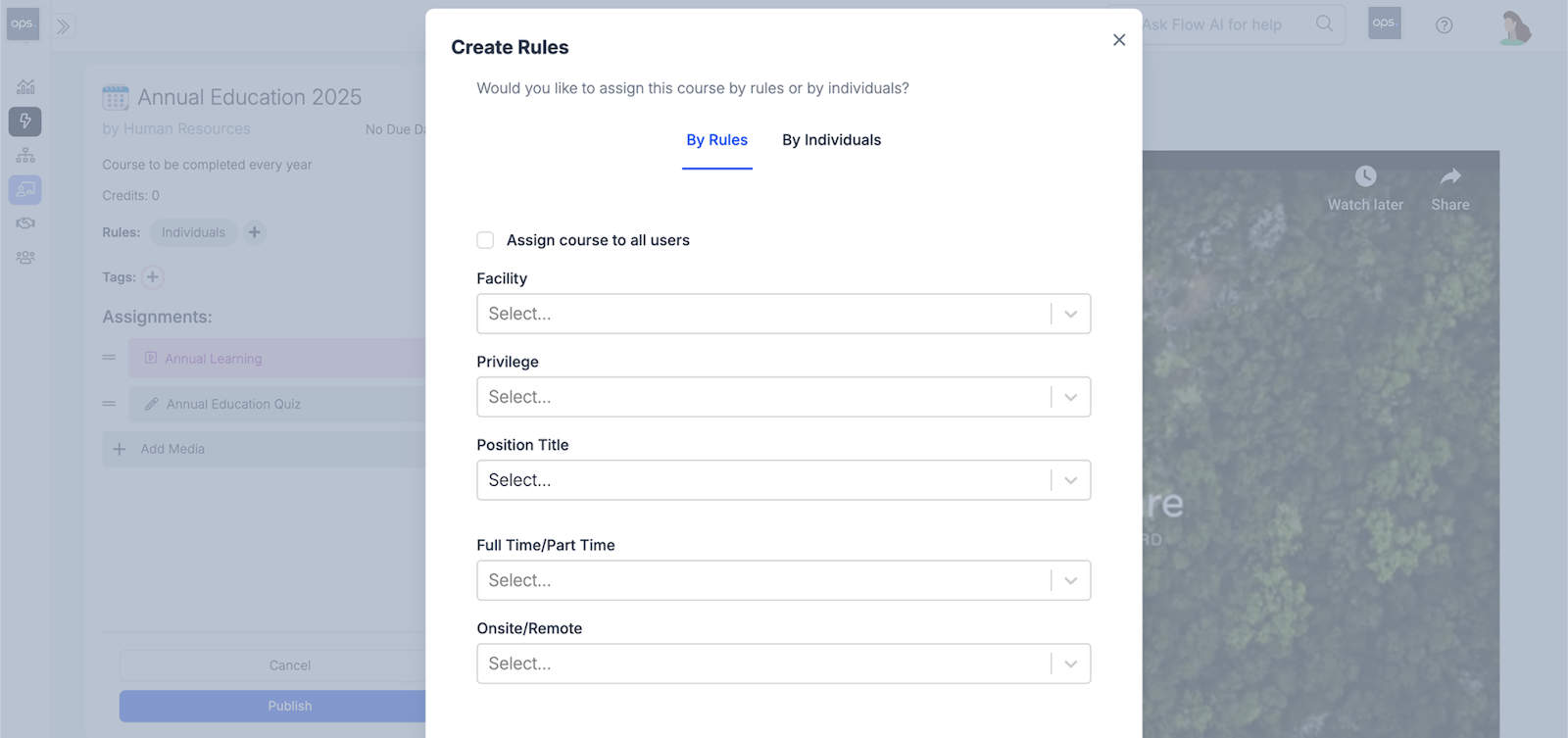
In addition, you can customize how you assign training programs to different hospice care providers based on their role.
Feedback
Onboarding is a critical time period for clinical staff as it shapes their impression of your home care facility and their decision to stay or leave.
Therefore, collecting feedback on the employee's work experience helps you assess the effectiveness of your onboarding program. It also allows you to identify gaps in your processes while building stronger relationships between supervisors and employees.
Schedule regular one-on-one meetings with your new staff. During the meeting, ask for and listen to their feedback on their experience, struggles, and any gaps they notice in the onboarding program.
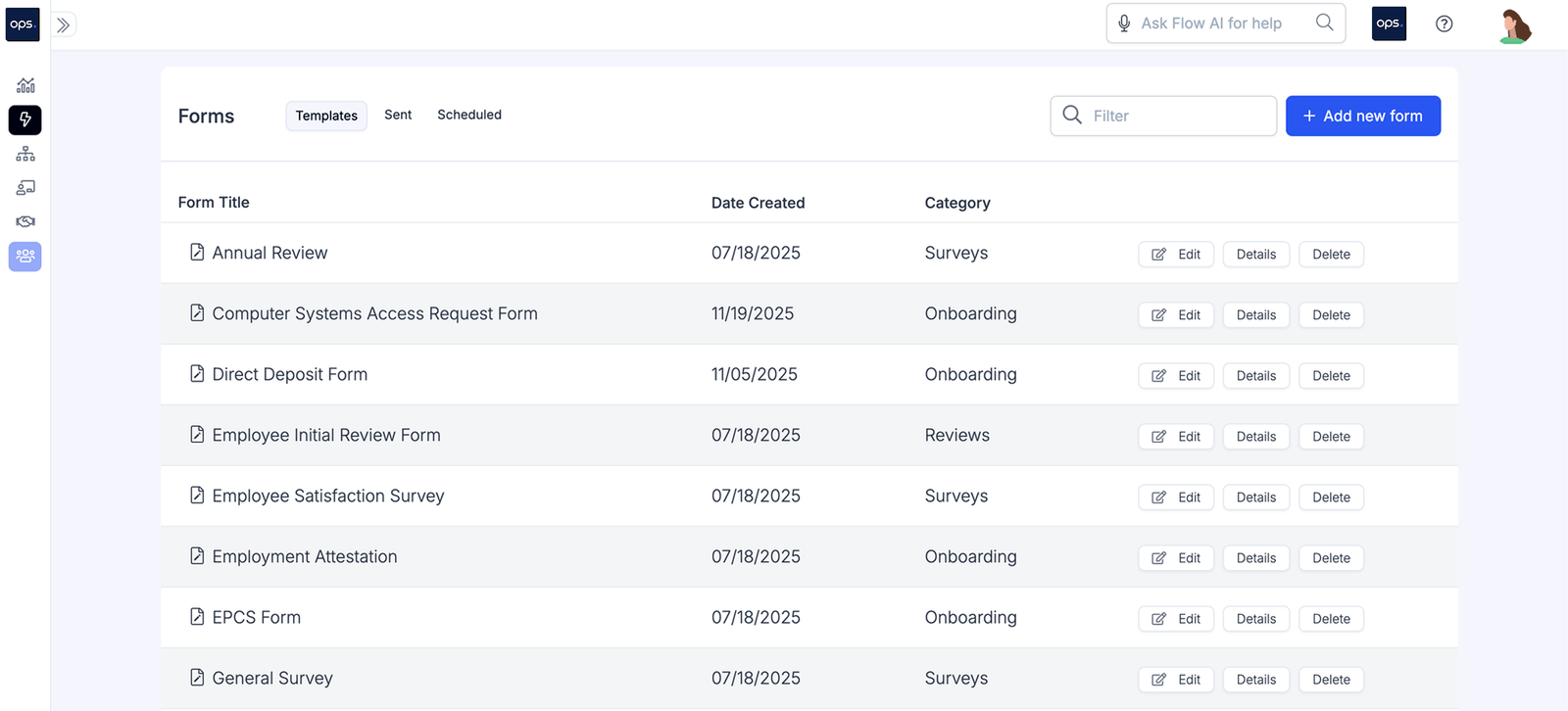
You can use ops.work to create various feedback-collection tools, such as pulse surveys and employee surveys, to collect feedback during and after onboarding.
Conclusion
With ops.work, you can create and implement a comprehensive onboarding program that's beneficial to your facility and employees. It streamlines your processes from creating automated workflows for repetitive processes to creating your agency's custom content and tracking performance. Get started with our free plan to onboard your clinical care team.
References
Interdisciplinary Hospice Onboarding and Orientation Guide Interdisciplinary Hospice Onboarding and Orientation Guide Target Audience. 2023. https://allianceforcareathome.org/wp-content/uploads/Interdisciplinary_Onboarding_and_Orientation_Guide.pdf
“Hire a Hospice Aide Employee Fast.” ZipRecruiter, 6 July 2025, www.ziprecruiter.com/hiring/how-to-hire/hospice-aide.
“Hospice Onboarding Redefined – Create High Performers from Day One.” Eewebinarnetwork.com, Hospice & Home Care Webinar Network, 2025, hospice.eewebinarnetwork.com/creating-high-performers-from-new-hires-successful-onboarding-redefined.
Frequently Asked Questions
Ongoing training for palliative care assistants allows your staff to catch up with new medical knowledge, which improves the quality of care while ensuring regulatory and industry compliance.
The 80/20 rule is a Medicare regulation that requires patients to receive 80% of their care at home and 20% in a hospice care facility.
Some of the skills your hospice caregivers should have include wound care, infection control and prevention, competence in activities of daily living, EHR documentation, and soft skills such as communication, empathy, and cultural sensitivity.