
Employee directory software simplifies how healthcare facilities manage employee data. It centralizes employee profiles, allowing colleagues, HR teams, and executives to access staff information for collaboration, employee management, and talent strategy development.
Key Takeaways
- An employee directory is a centralized database of employee information, and employee directory software is the tool that facilitates the management of employee data
- Employee directory software improves team collaboration, makes it easy to find colleagues, mentors, and subject matter experts
- A good employee directory software should have access controls, search capabilities, integration with business systems, audit trails, data security, and org chart functions.
- Ops.work lets you manage incoming, current, and past employees on one platform and track their certifications, training, and bibliographic information.
Employee engagement begins with knowing who they are. Organizations achieve this by creating detailed employee profiles that can be used to quickly find the right people based on parameters such as their department, skills, names, or job title. While manual processes, such as spreadsheets, can be used to manage employee data, advanced employee directory solutions, such as ops.work, simplify the process for small to medium-sized businesses.
What is Employee Directory Software?
An employee directory is a centralized database that contains essential employee information, such as their names, contact details, job titles, and department. All directories must have fields for basic information, including the employee's:
- Full name
- Job role
- Department
- Work email
- work phone
- Office location (including the building, room number, or whether they are remote)
- Direct supervisor
Advanced people directory tools also allow additional information, such as:
- The employee's headshot
- Preferred pronouns
- Skills and expertise
- Professional background
- Certifications
What are the Benefits of Employee Directory Software?
Using staff directory software facilitates quick access to accurate information about the organizational chart and employees. Directories centralize employee information, allowing teams to find people to collaborate with.
Employee lookup capabilities are essential during onboarding, as they allow new hires to find peer mentors. New hires also have a better understanding of the organizational structure and company culture.
L&D teams can also use this data to locate subject matter experts to help develop impactful training programs.
These directories give executives and HR teams full visibility into their workforce, allowing for better resource allocation, recruitment practices, and better management of distributed teams. When integrated with performance management systems, employee directories facilitate performance management, peer recognition, promotions, and professional development planning.
What Features Should Employee Directory Software Have?
Top employee directory software should have a number of basic and advanced features for efficient employee management:
- Basic and advanced search capabilities to make it easy for individuals and teams to find employee information when needed
- Org chart tools to help clarify hierarchies, team structures, reporting lines and relationships, the span of control for managers, and career paths for different roles
- Data security features, including access permissions that control who can access employee data and what they can see. Data security also extends to protecting sensitive data such as SSNs, home or personal mailing addresses, emergency contact information, compensation information, performance reviews, health information, and personal contact information.
- Audit trails to facilitate legal compliance and track people search patterns, including who has searched what information. These audit trails also help track updates to staff information, the people responsible for the changes, and the exact changes made.
- A user-friendly interface that makes it easy to navigate the directory to access or manage your data
- Customization features to facilitate detailed people data. Custom fields allow organizations to customize their employee profile software to their organizational needs.
- Integration with HR systems to enable easy updates to employee data and prevent fragmented data from siloed HR software. The tool should also integrate with team collaboration tools to enhance connectivity between teams.
- Scalability in enterprise directory apps ensures that the tool grows with small and mid-sized businesses, reducing the cost of managing employees.
Ops.work: Best Employee Directory Software
Ops.work is a top solution for healthcare facilities looking for a digital employee management tool. The software lets you manage staff from the recruitment process onward. You can invite new employees directly from the applicant's dashboard:
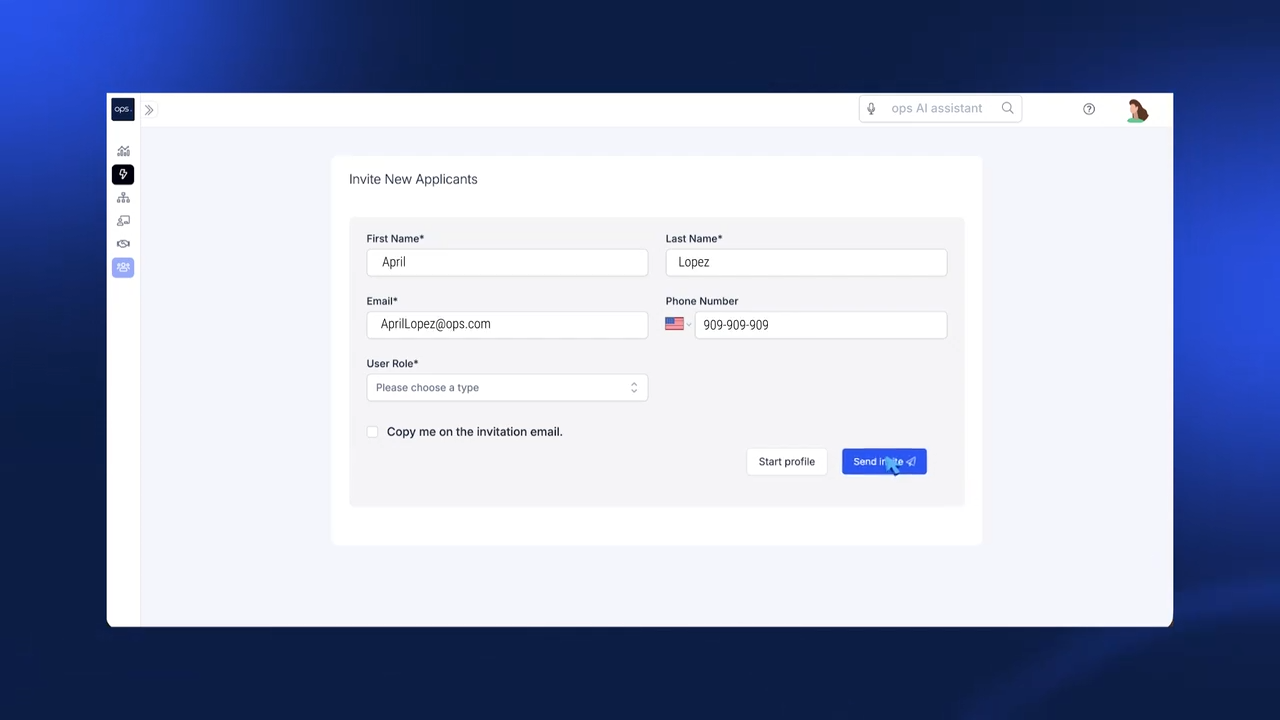
Once they accept the invitation, you can create comprehensive employee profiles with their information.
For each employee profile, you can track information such as professional summaries, submitted documents, accommodations, education, training courses they've enrolled in, and administrative actions related to each employee, and generate reports.
Ops.work gives you visibility into your upcoming, current, and past employees. The archive features allow you to retire employee profiles while maintaining compliance and shaping your long-term talent strategy.
You can also track the employees you have invited to your organization and take additional actions such as sending reminders or follow-up communications. This can shape the employee experience and perception of your facility.
Try our free plan to get started.
Conclusion
Employee directory software simplifies employee management. It provides accessible, customizable employee profiles, enabling teams and staff to find and connect quickly. Directory software like ops.work integrates with various HR systems, making it easy to track employee performance, training, and productivity throughout their lifecycle. Sign up for our free plan to improve how you manage employees.
References
Ramesh Nyathani. “Safeguarding Employee Data: A Comprehensive Guide to Ensuring Data Privacy in HR Technologies.” International Journal of Computer Techniques, Nov. 2023, p. 2023, www.researchgate.net/publication/376134134_Safeguarding_Employee_Data_A_Comprehensive_Guide_to_Ensuring_Data_Privacy_in_HR_Technologies.
Wang, Ao. “Enhancing HR Management through HRIS and Data Analytics.” Applied and Computational Engineering, vol. 64, no. 1, 7 June 2024, pp. 223–229, https://doi.org/10.54254/2755-2721/64/20241394.
Frequently Asked Questions
Automated employee directory tools allow you to maintain up-to-date employee records by integrating with your HRIS and incorporating employee self-service tools to allow employees to update their profiles.
A comprehensive employee directory includes detailed information, including the employee's full name and preferred pronouns or honorifics, job title, skills, job history, department, location (for organizations with multiple locations, and remote or hybrid teams), reporting hierarchies, and personalization information such as a profile photo, work anniversary, hobbies, and interests.
Some of the security features that a good company directory software should have include role-based access control, data encryption, comprehensive audit trails, and multifactor authentication to protect sensitive employee data.
Using employee directory software solutions makes communication and collaboration easy by providing visibility into a company's staff, their skills, contact information, and location. This makes it easy for teams to reach out when they need their contribution.