
A performance management system serves as a structured framework for setting goals, monitoring outputs, and managing operations to achieve strategic objectives. The benefits of a performance management system include tracking achievements, measuring performance metrics, and fostering a positive work environment. Tools like ops.work streamline recruitment and onboarding processes, ensuring a consistent experience and efficient documentation with features like e-signing.
Key Takeaways
- Performance management is an ongoing process that aligns employee behaviors and outcomes with organizational goals
- The performance management cycle includes four key stages: performance planning, performance monitoring, employee development, and ratings and rewards
- Performance management spans the entire employee lifecycle, including attraction, recruitment, onboarding, development, retention, and offboarding
- Managers and employees have a role to play in performance management
Organizations that actively manage employee performance tend to adapt better to change and provide the best experience for both customers and staff. With a sound performance management framework in place, you can help employees identify, develop, and apply their abilities towards achieving career and company goals.
What is Performance Management
Performance management is the ongoing and systematic management of employee behaviors and outcomes to ensure they align with organizational goals. It involves regular communication between managers and employees to:
- Set goals
- Clarify expectations
- Support employee development
- Assess progress and collect feedback
- Evaluate results
It is a collaborative process that spans the entire employee lifecycle: attraction, recruitment, onboarding, development, retention, and offboarding. Throughout this cycle, employees and managers maintain a collaborative relationship, rather than one that is controlling or coercive.
Managers do the following:
- Set goals and expectations for each role
- Provide general and role-based training to employees to equip them with the skills to excel at their roles
- Delegate tasks based on employee skills and abilities
- Provide constructive feedback on individual and team performance
- Conduct performance reviews and use the feedback to set new expectations
Employees also play a crucial role in performance management. They:
- Engage in performance conversations with managers to understand their roles, including who they report to and their role boundaries
- Seeking support from mentors
- Seeking feedback from managers
- Self-monitoring their outputs against the goals they set with their managers
- Completing performance review tools, such as surveys
What are the Stages of Performance Management?
Performance management is an ongoing process that ensures the organization has the necessary skills, knowledge, and behaviors to achieve its goals. The performance management cycle includes the following stages:
1. Performance Planning
Performance planning is a collaborative activity where employees and managers determine what needs to be done, the capabilities needed to perform the tasks, the roles and responsibilities of managers in supporting employees, and the expected results.
Here are the best practices to keep in mind:
- Set clear objectives for the organization and individuals
- Develop capability profiles to outline the competencies, knowledge required to achieve the set objectives
- Measure the overall performance for each employee, team, and department
- Set organizational, team, and individual performance goals that align with the company's strategic objectives
- Create an employee development plan to help staff acquire the capabilities and knowledge necessary to improve their productivity
2. Performance Monitoring
Performance monitoring is a systematic and ongoing process of collecting feedback and data on employee and team progress in meeting various expectations. It allows managers to check in on how employees are doing, so they can offer guidance or assistance as needed.
Here are tips to keep in mind:
- Define and communicate what KPIs are
- Conduct regular monitoring meetings to track progress, collect feedback, and modify action plans as necessary
- Automate performance data collection to save time and ensure accuracy
- Create plans to improve performance to address underperformance
- Maintain accurate and up-to-date documentation
3. Employee Development
Development in performance management includes all the activities that improve employee capacity to perform better. It includes training, coaching, and task delegation. It is also an ongoing process that prepares employees for career development and professional performance.
Here are the best practices to keep in mind when developing employees:
- Provide access to continuous learning opportunities
- Create coaching and mentorship programs
- Schedule development check-ins to monitor training and learning progress
- Provide timely feedback to teams to facilitate their growth
- Encourage collaboration and knowledge-sharing
4. Ratings and Rewards
Rating involves assessing an employee's or team's output against a set standard. These ratings help you identify your performers and underperformers, facilitating informed decisions on employee development, promotion, and rewards.
Here are considerations to keep in mind when rating and rewarding employees:
- Assess outputs against a standardized criterion across teams for fairness and transparency
- Schedule reviews to avoid rushing through them
- Encourage self-assessments
- Use data from ratings to determine staff development needs
- Provide constructive feedback and support to underperformers and reward the best performers
What is a Performance Management System?
A performance management system is a structured framework that helps you set goals, monitor employee outputs, collect feedback, and manage operations to meet your company's strategic goals.
It consists of processes and software tools that facilitate setting goals and monitoring organizational performance.
What are the Benefits of an Employee Performance Management System?
Performance management systems track employees' achievements. Depending on the tool you use, you can measure performance metrics such as:
- Skill development, including the competencies and skill gaps in your company
- Behavioral outcomes such as how well employees align with your organizational culture
- Achievement towards your company's strategic goals
- The quality of services provided, including compliance with internal and external regulations.
A good performance management tool helps you improve employee performance. It also helps create a positive work environment where staff feel supported and recognized for their efforts. Other benefits include:
- Facilitating accountability and transparency as both employees and managers understand individual, team, and strategic goals
- It promotes clarity in performance expectations, allowing greater autonomy in their work, and therefore, improved job satisfaction
- Performance management systems facilitate collaboration between employees and managers. Instead of acting as bosses, managers act as coaches to their team members, allowing the whole team to grow together
How Do You Track Performance Using Performance Management Software?
A performance management system helps you track the performance of employees throughout the employee experience journey. This journey includes key touchpoints from recruitment to offboarding.
Here are the best practices for performance tracking through each stage of the employee experience journey:
Recruitment
The recruitment process is the first step in the employee experience journey and also the first touchpoint for managers to shape expectations and lay the foundation for high productivity.
Performance management allows you to:
- Clearly define the capabilities required for each role
- Build a sustainable recruitment pipeline by understanding the capability gaps in your current workforce and planning future hiring needs
- Streamlining the candidate screening process by defining the capabilities required based on your current performance data
Using a performance management solution such as ops.work can help you streamline the recruitment process, saving you time and money. The software allows you to create checklists to track job descriptions and workflows in the recruitment process. You can choose templates from our database or through our free integration with Jotform.
With these checklists and job descriptions, you can provide a consistent recruitment experience for all candidates. Once you've found a candidate who meets your hiring requirements, you can present them with the job offer.
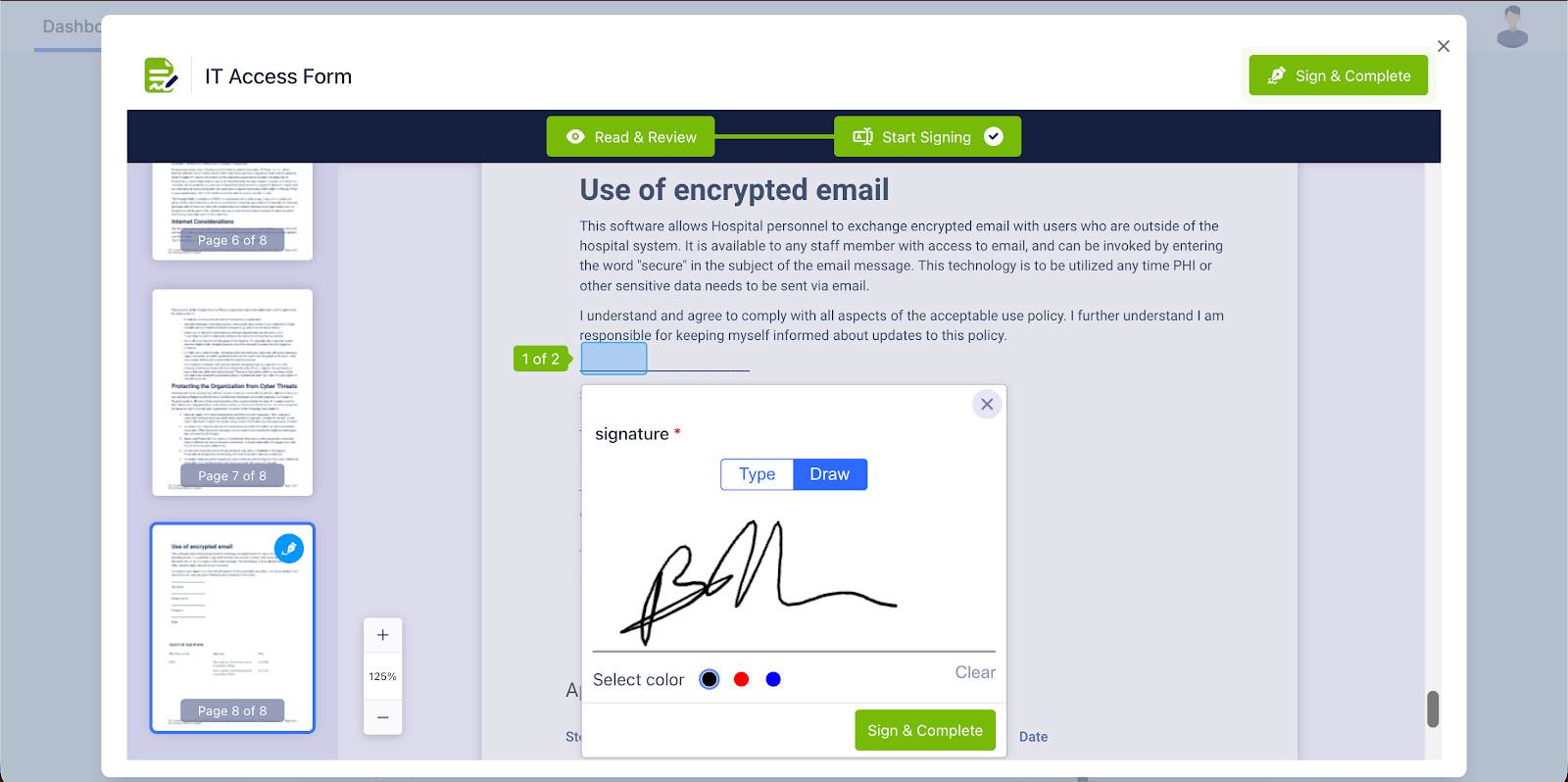
Ops.work makes this easy with the e-signing feature, allowing them to sign your offer letter and other hiring paperwork conveniently. Combined with other document management features, ops.work makes it easier to connect with remote staff and complete paperwork faster.
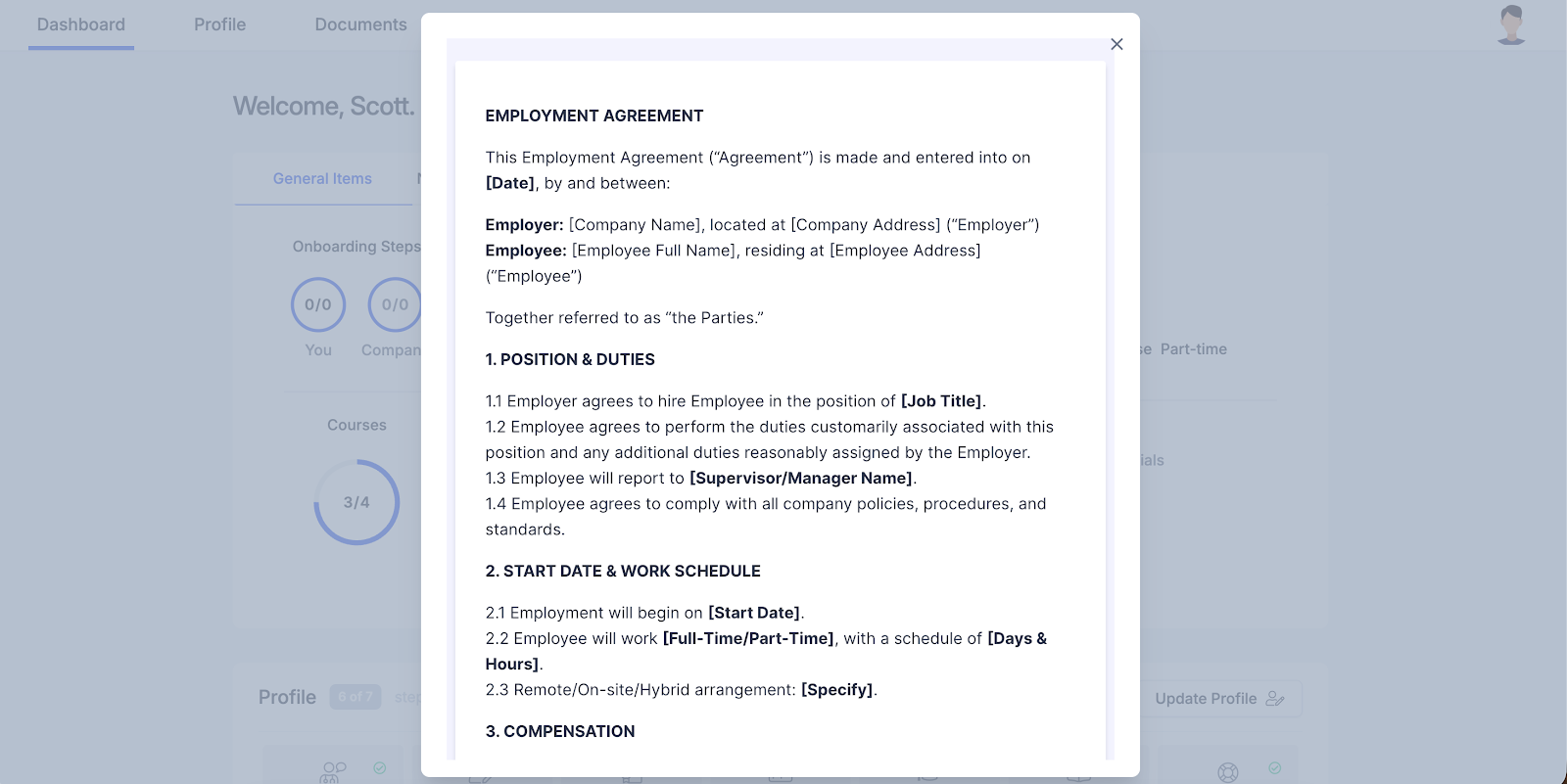
You can also send them their employment contract as part of your preboarding process once they accept the job offer:
Onboarding
Onboarding is the process of integrating new hires into the organization. It continues to build on the experience during recruitment, allowing new hires to further engage with your company.
Onboarding in healthcare is a detailed process that involves a range of activities. Therefore, it's easy to overlook performance management in the rush to get documents signed and employees working.
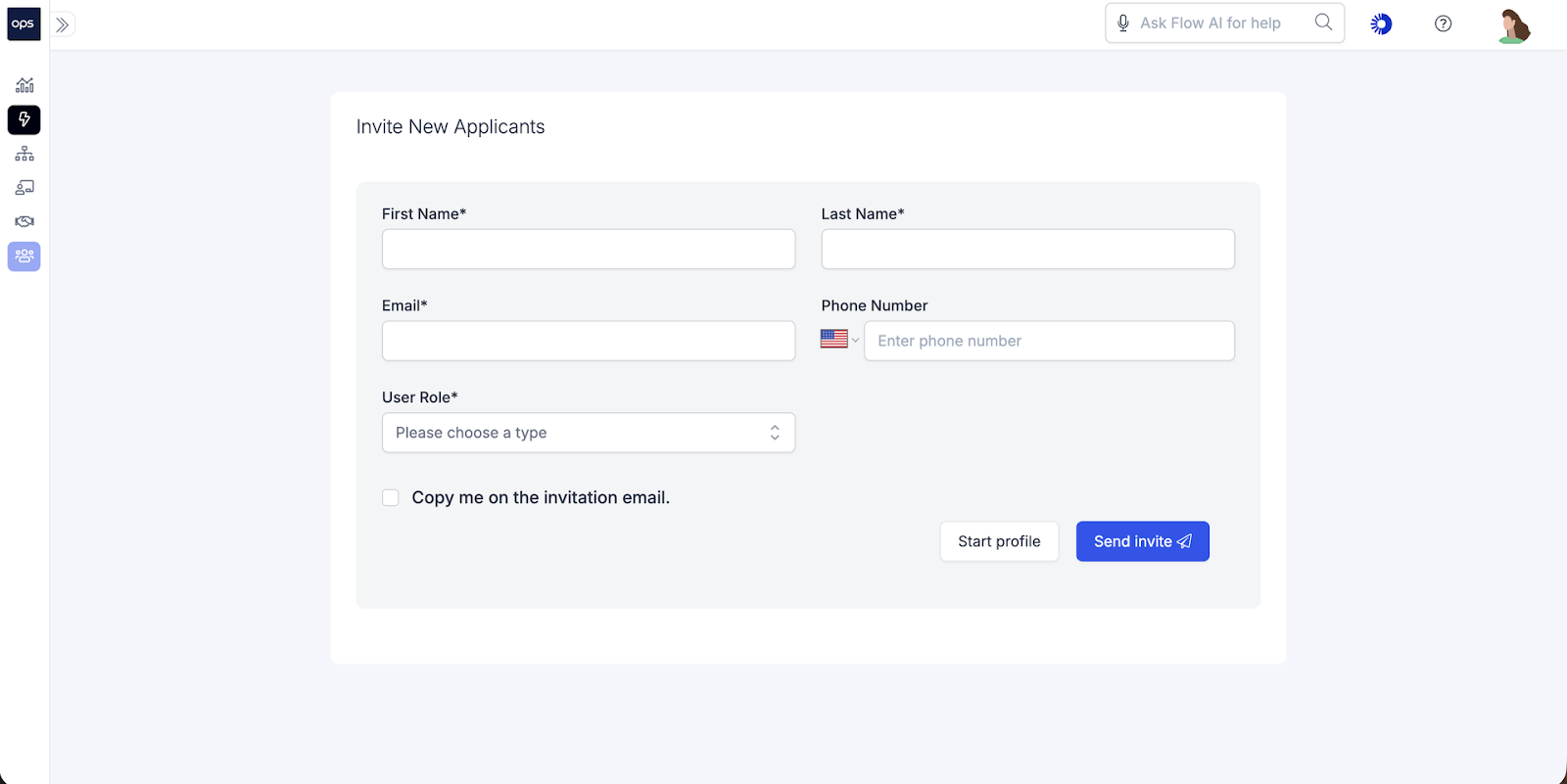
Ops.work is a robust performance management system that allows you to automate various onboarding activities. With the tool, you can invite new applicants to the platform to begin the onboarding:
The tool also allows you to create onboarding checklists to track what needs to be done and pending assignments.
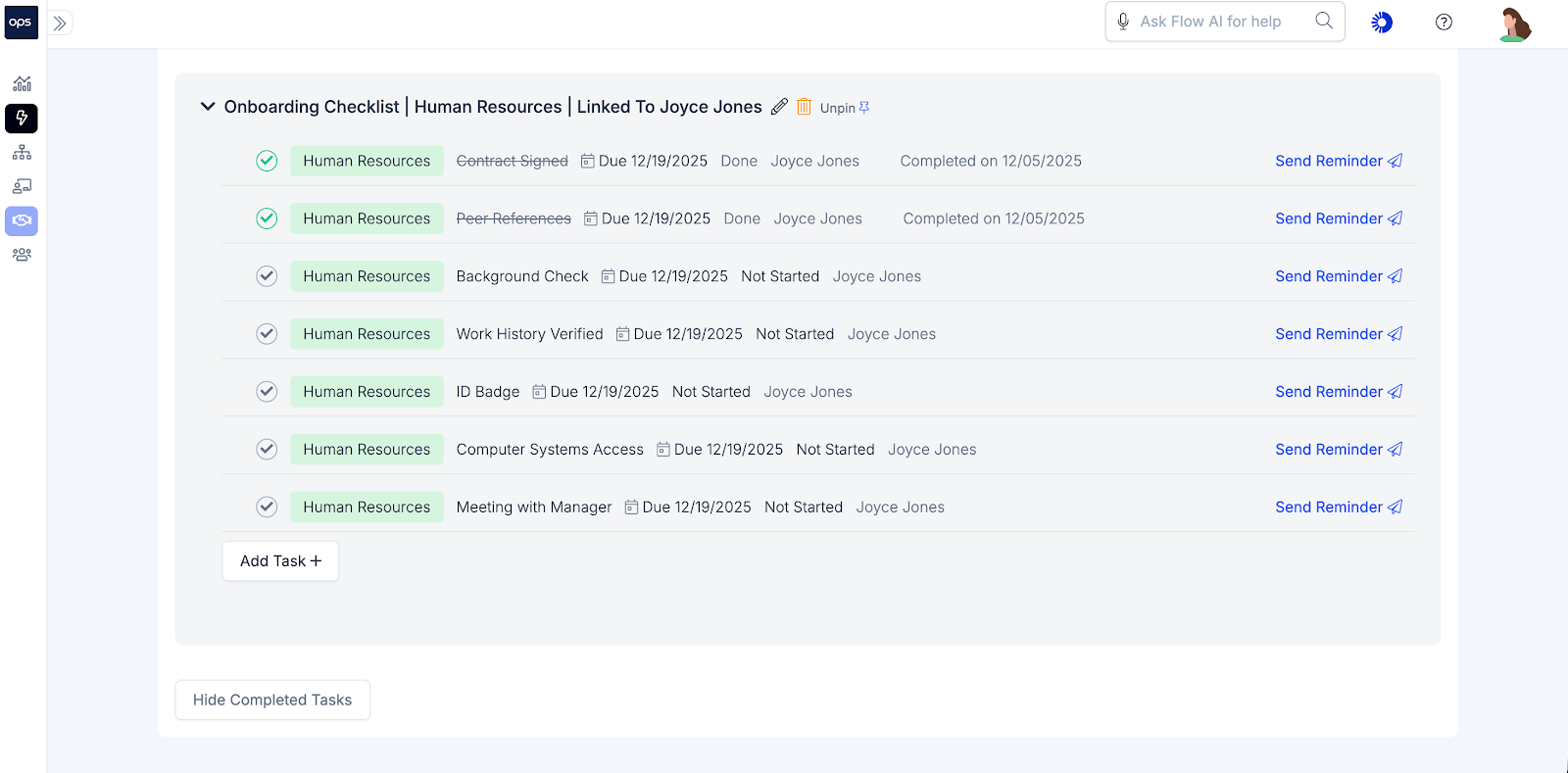
Ops.work lets you turn these checklists into onboarding workflows to ensure you never miss a step when onboarding your staff.
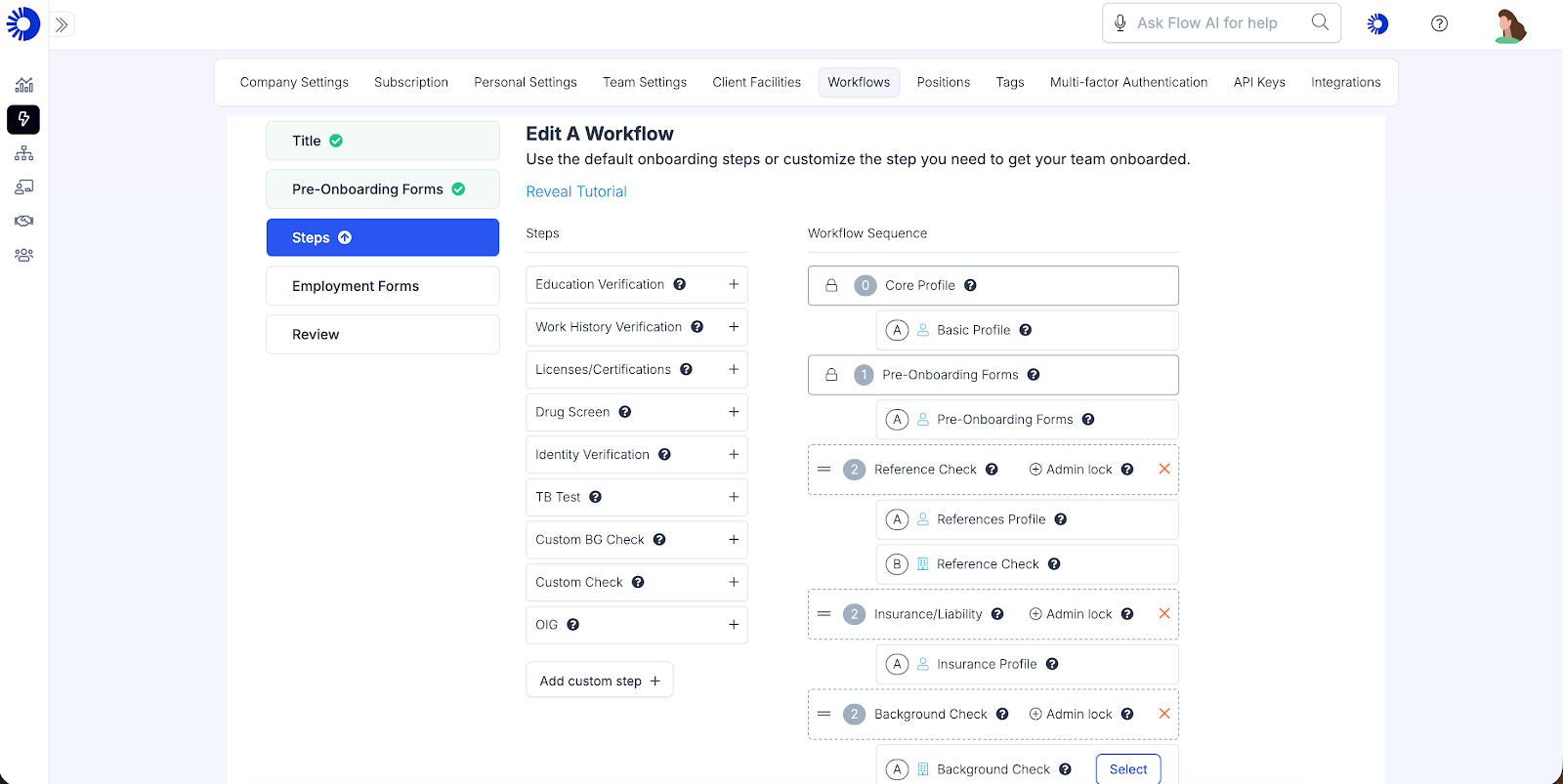
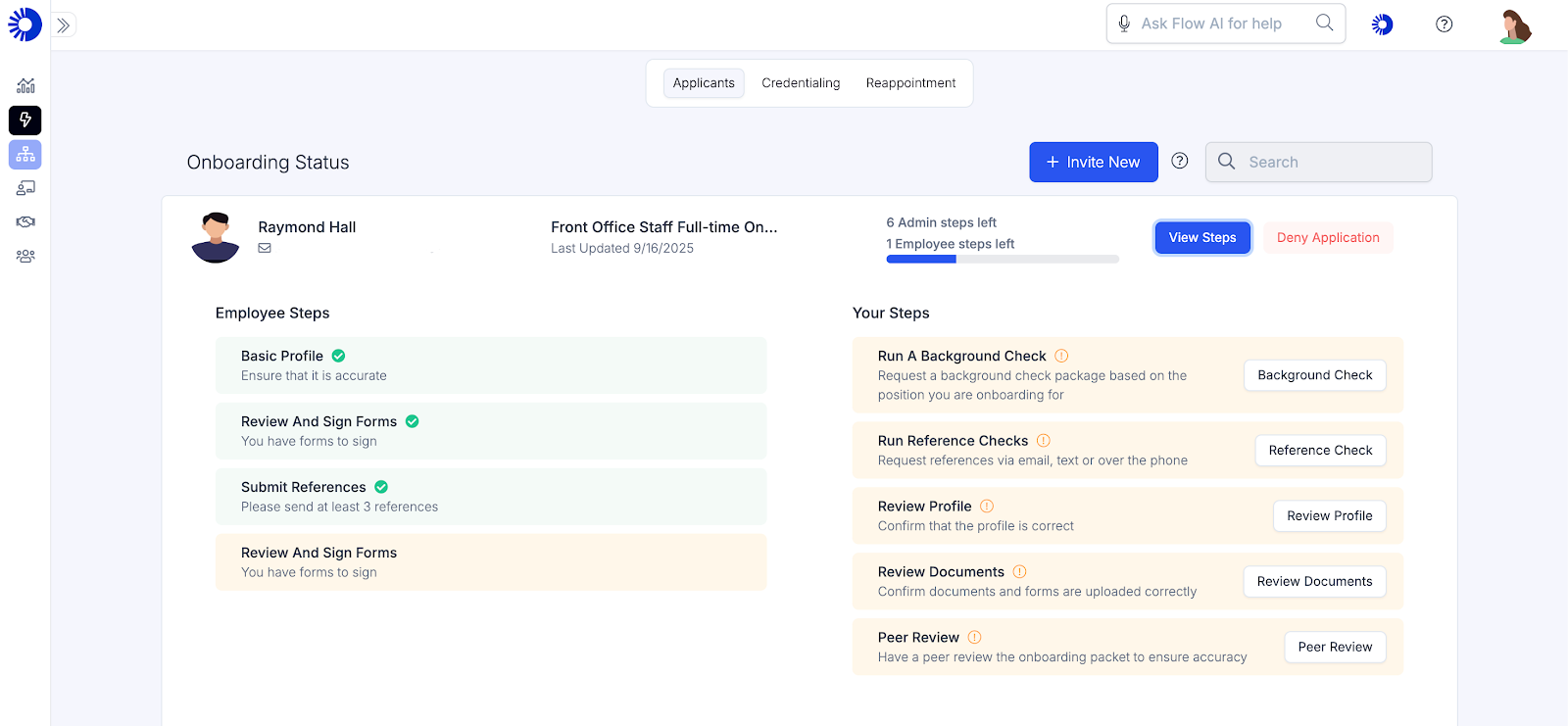
You can also monitor the onboarding and credentialing status of each employee to ensure they have the certifications and licenses required to care for patients.
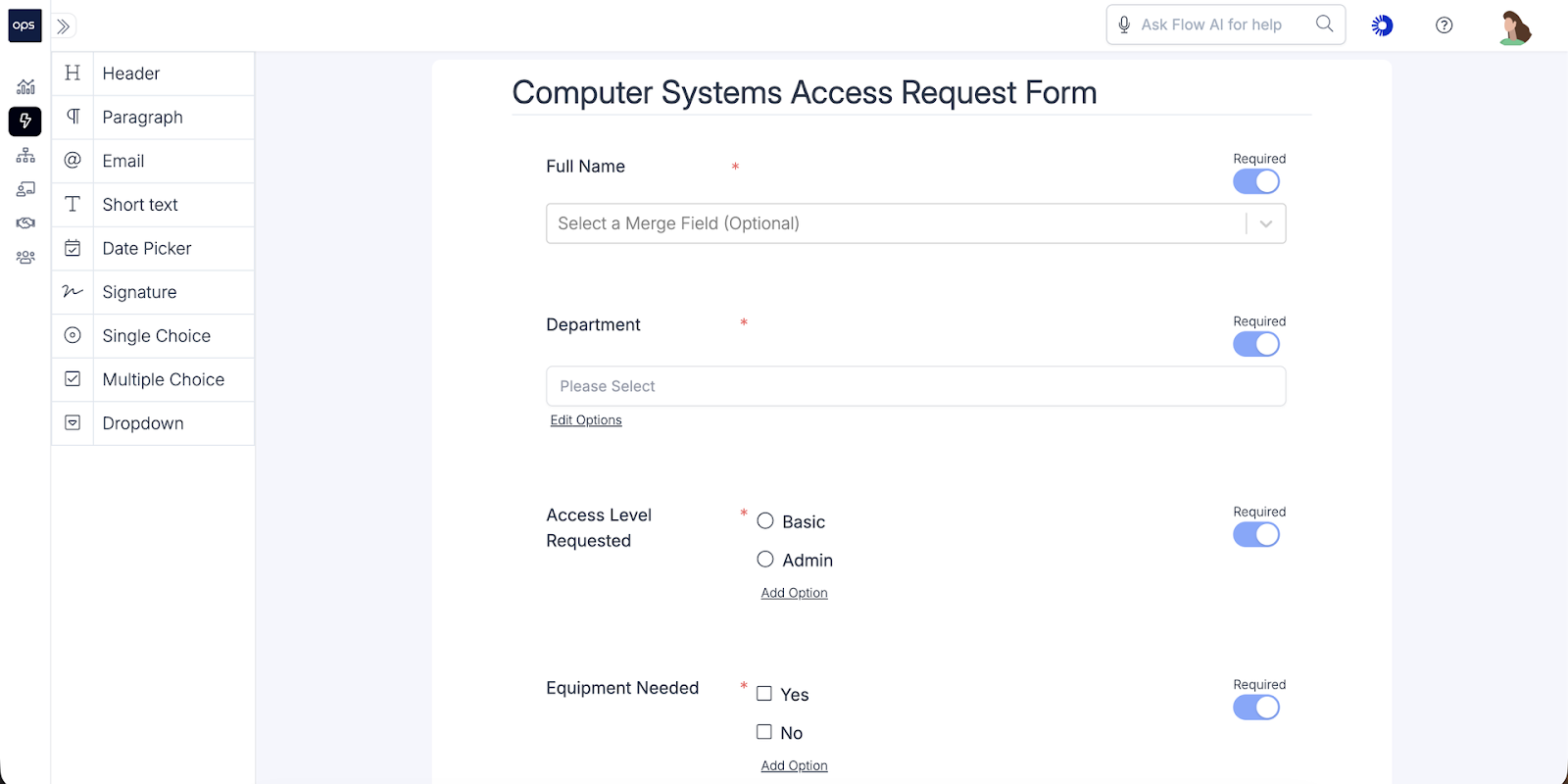
In addition to verifying the credentials of your new hires, onboarding allows you to set up your employees for success. This includes providing them with the necessary tools to succeed in their roles.
With ops.work, your new hires can request access to the systems they need:
Onboarding also provides the first chance for managers and employees to communicate expectations and set goals for the next 30, 60, and 90 days of the onboarding process.
During this first meeting, the manager gives new hires a detailed description of their role, how it ties to the company's goals, key milestones, and KPIs. They also provide employees with mentors to support them as they adjust to the new role.
It also sets the pace for continuous performance management, allowing you to build staff engagement by connecting employee performance to the organization's objectives.
During your meeting with new hires, you also set dates for the next one-on-one feedback session. These sessions make them accustomed to regular check-ins, and with time, they begin to assess their own performance for career development and to improve their performance.
Development
Effective performance management includes employee development, which provides employees with opportunities to enhance their competencies through learning. It helps employees perform better at their current jobs, grow professionally, and prepare and adapt to change.
The training component of employee development provides employees with the necessary competencies to excel in their roles. This is done through formal courses, peer mentorship, coaching, and job experiences through assigning individual and team projects.
The talent management part of employee development is usually voluntary. It is designed for employees whose career goals include transitioning to managerial roles.
During the development phase of the employee journey, managers and employees meet to discuss:
- What they need to know to succeed in their role
- What they should be able to do
- The type of behavior needed to turn what they know and what they can do into the desired outputs (how your organization operates)
It's during these discussions that managers and employees map out career goals and create personal development plans towards these goals.
Ops.work performance management software provides education and management capabilities to streamline your team development efforts. Our free plan allows you to provide, monitor, and report on your efforts seamlessly.
Here's how ops.work helps you manage employee outputs through training and continuous development:
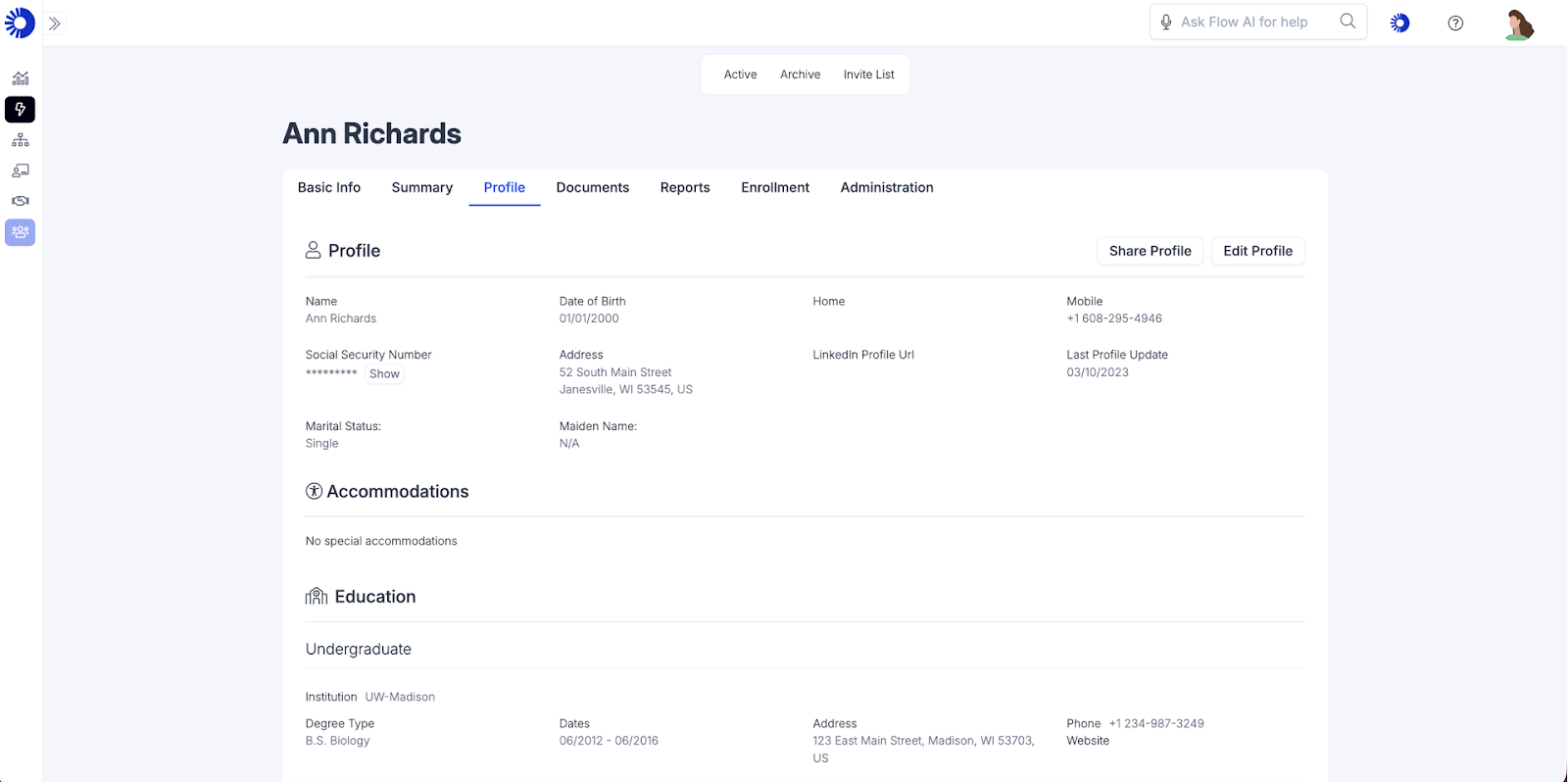
The software offers a comprehensive employee directory that lets you manage all your employees from one place. It integrates seamlessly with existing HRIS, preventing duplication.
The employee profile dashboard allows you to invite new employees, track active employees, and archive those who have left your company.
Ops.work is one of the best performance management systems with robust LMS tools to create, deliver, manage, and host various training and development courses. The course builder allows you to upload existing courses or create new ones using our range of templates.
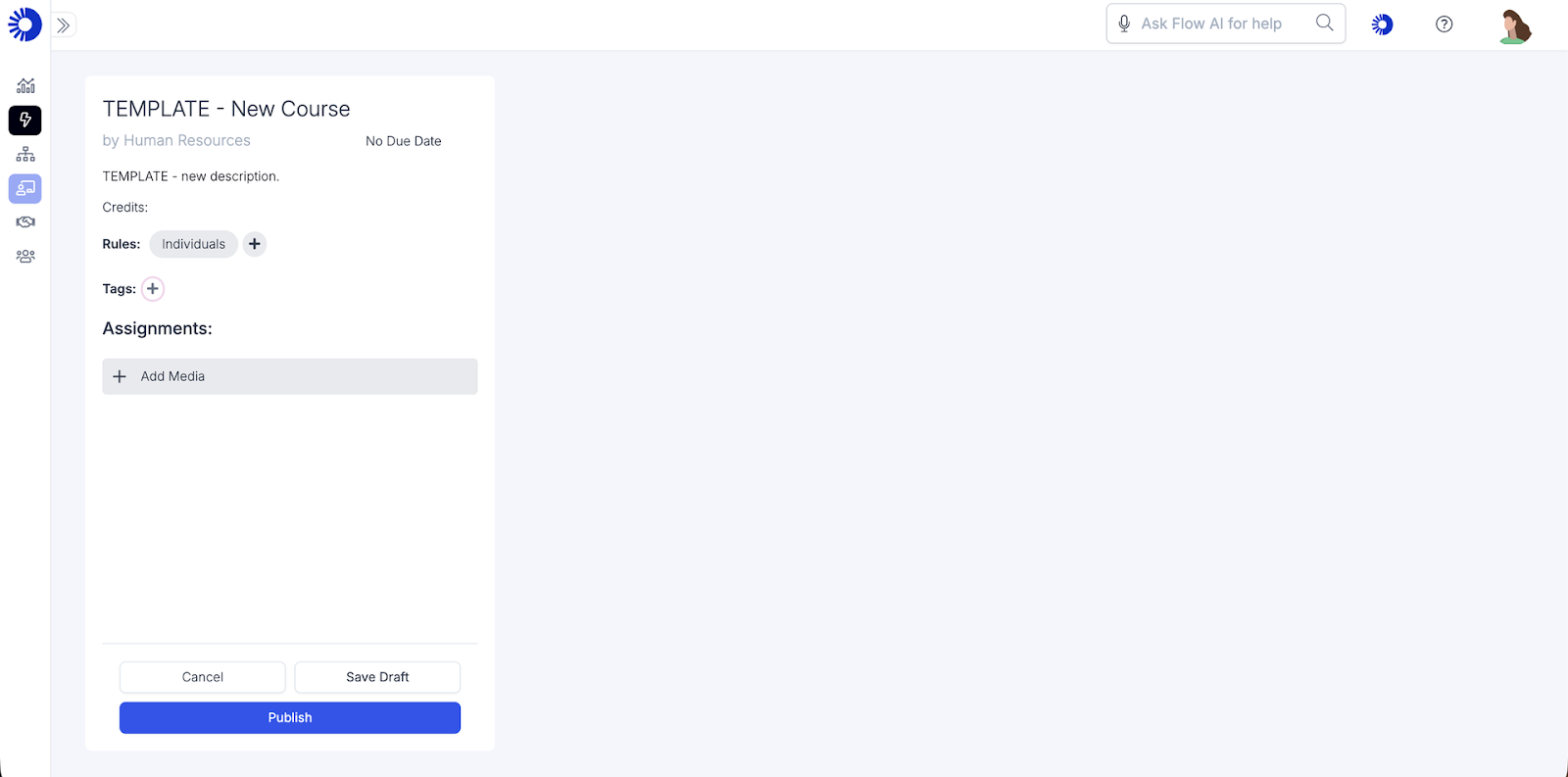
Once you create a course, you can set rules that determine who can access the course. This feature makes it easy to assign role-based courses to specific individuals based on your learning management goals.
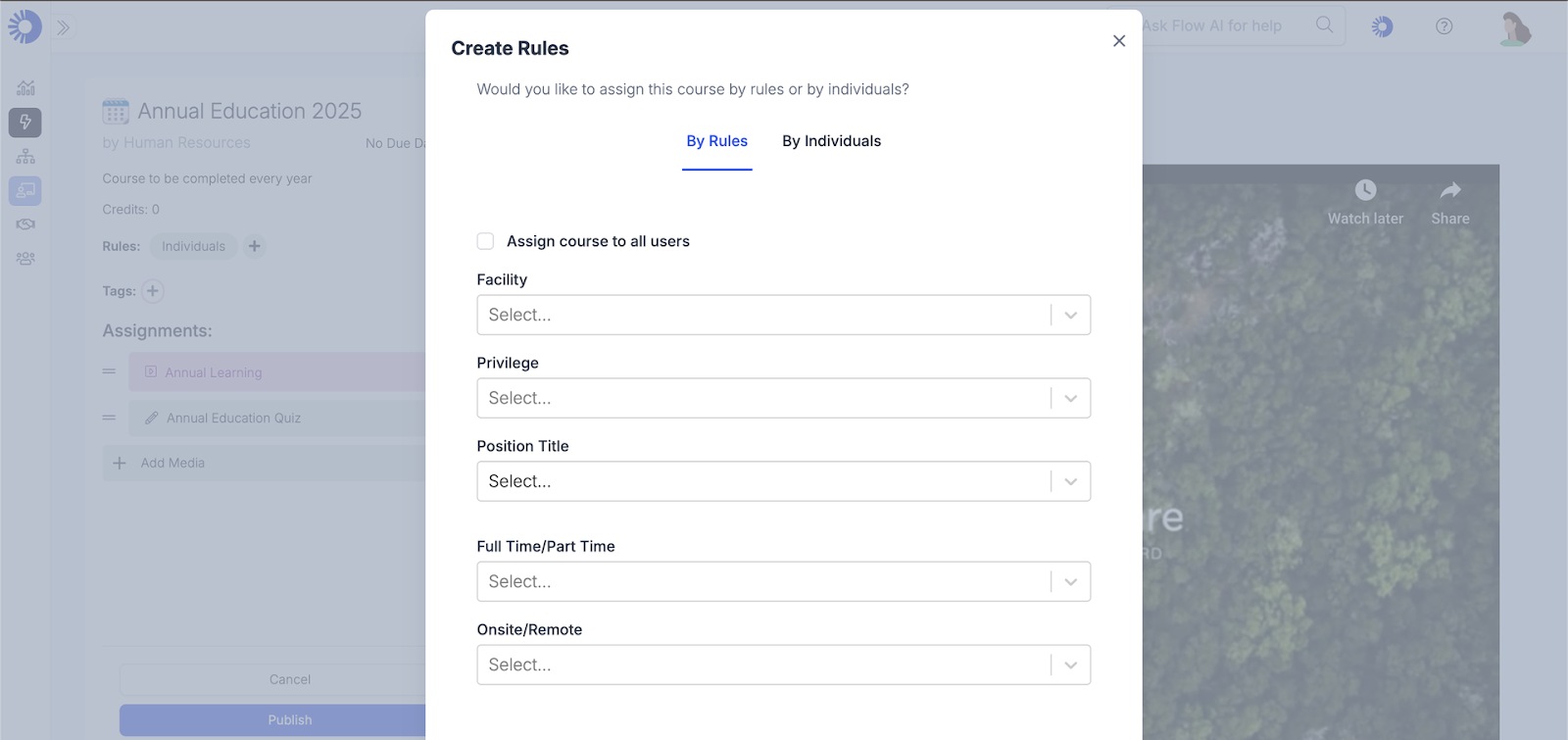
The performance management platform lets you track the completion progress for each course. This data is key in measuring the impact of your staff development efforts and how they contribute to your organization's performance.
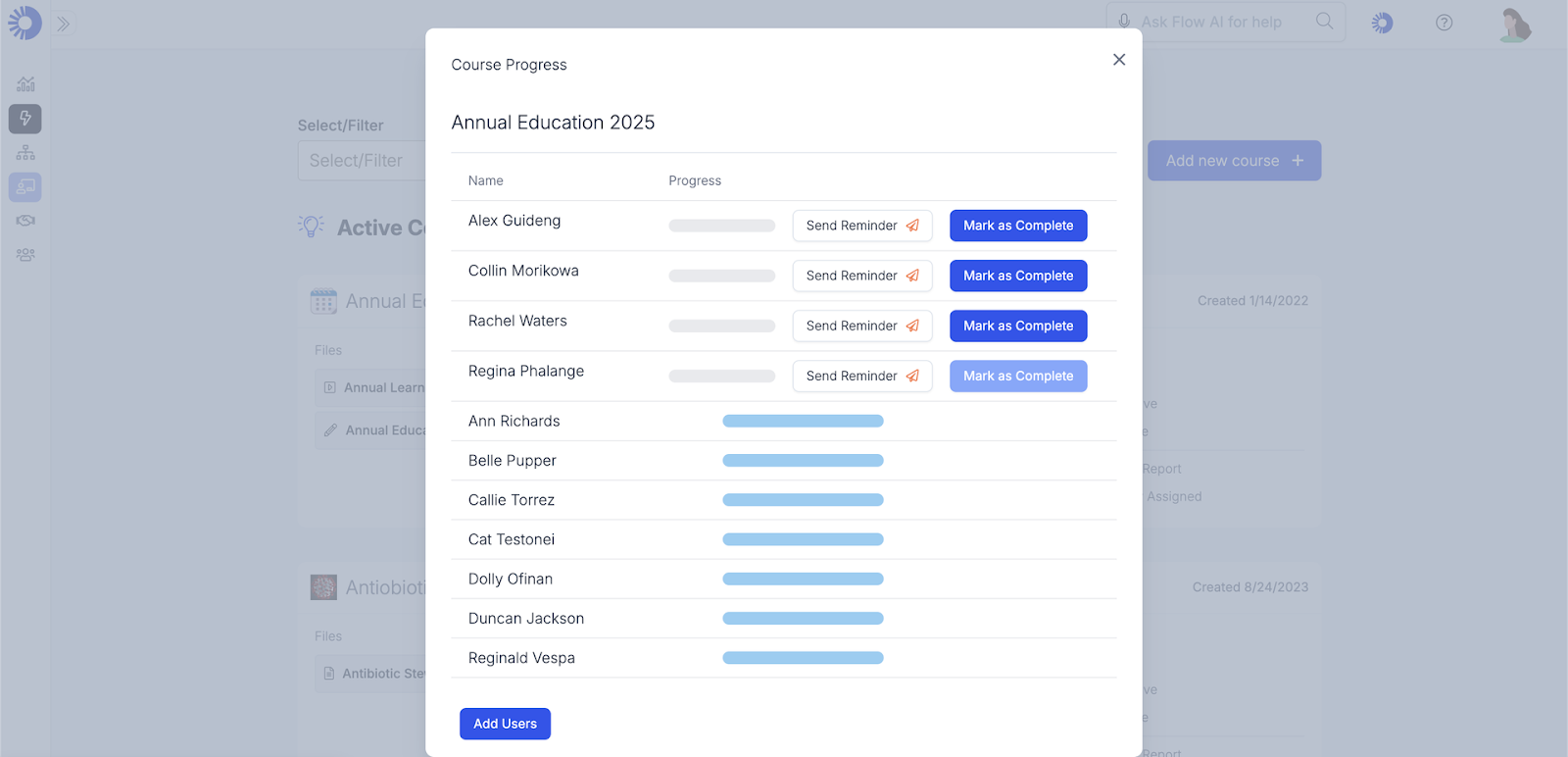
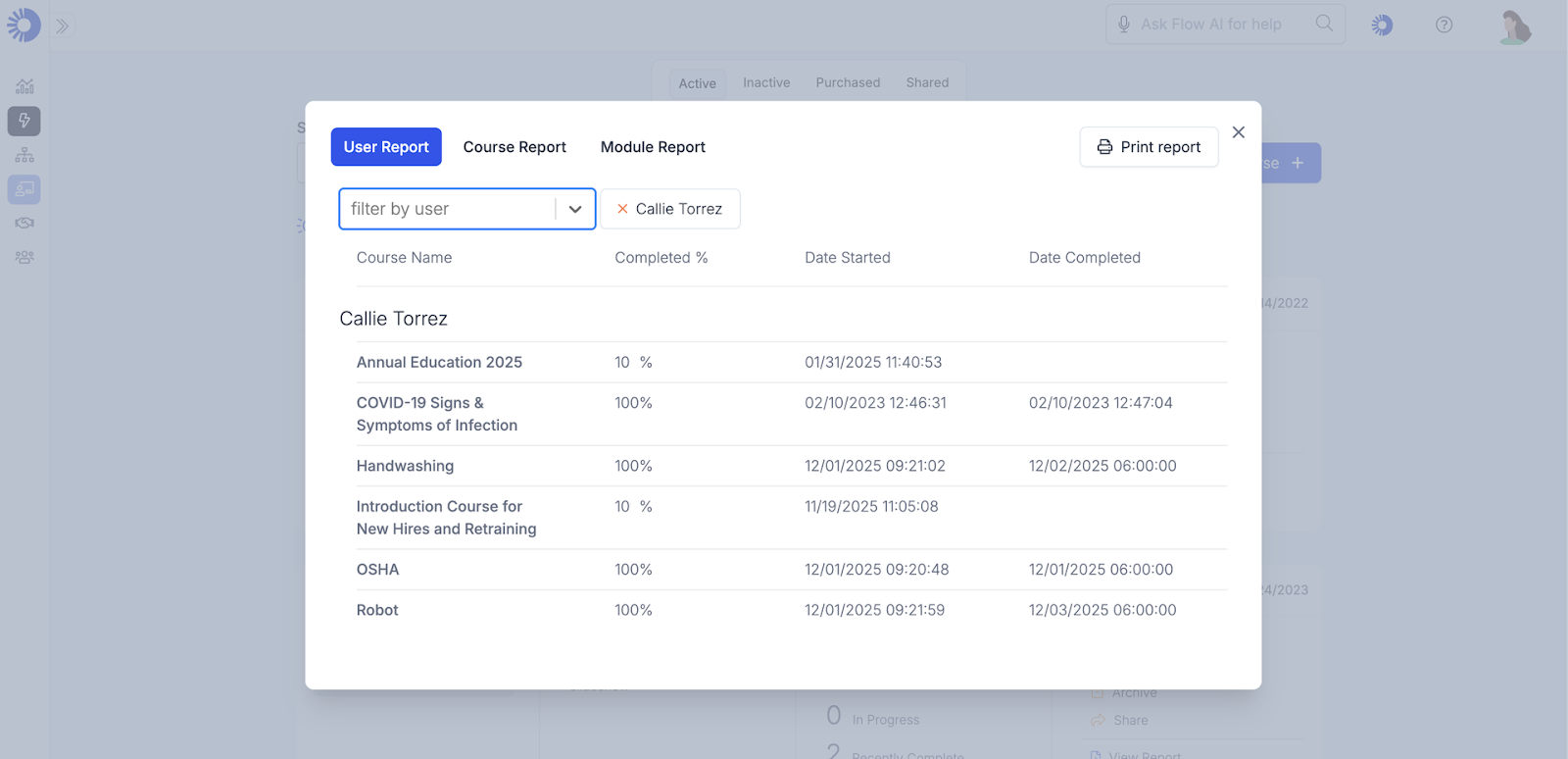
Finally, you can generate reports for each course. Our software enables you to generate analysis charts based on various metrics, including individual employee reports, specific course reports, and overall training uptake reports.
Such data is key for measuring your progress towards organizational goals and maintaining compliance training records.
Retention
Employees are more likely to stay in companies where they feel engaged and receive recognition and rewards for their efforts. For staff retention, you must adopt regular feedback as part of your performance management strategy.
This feedback goes beyond the annual performance review. Instead, plan formal and informal feedback sessions, including one-on-one meetings, real-time feedback as part of coaching, mentorship, or supervision, and regular performance reviews.
An effective performance management system, such as ops.work has the tools to support your staff retention strategies.
The software allows you to develop and assign performance evaluation tools. Such tools help you collect key performance feedback.
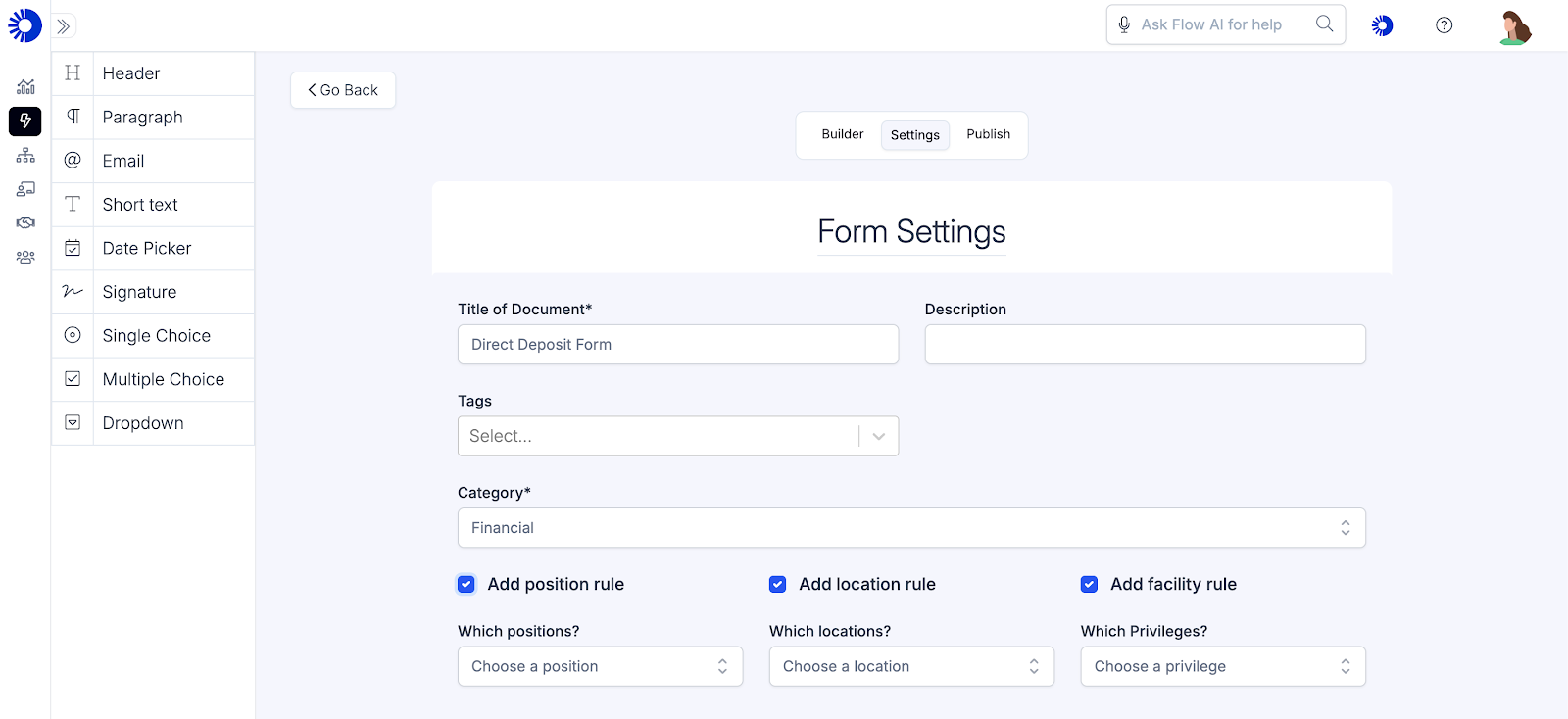
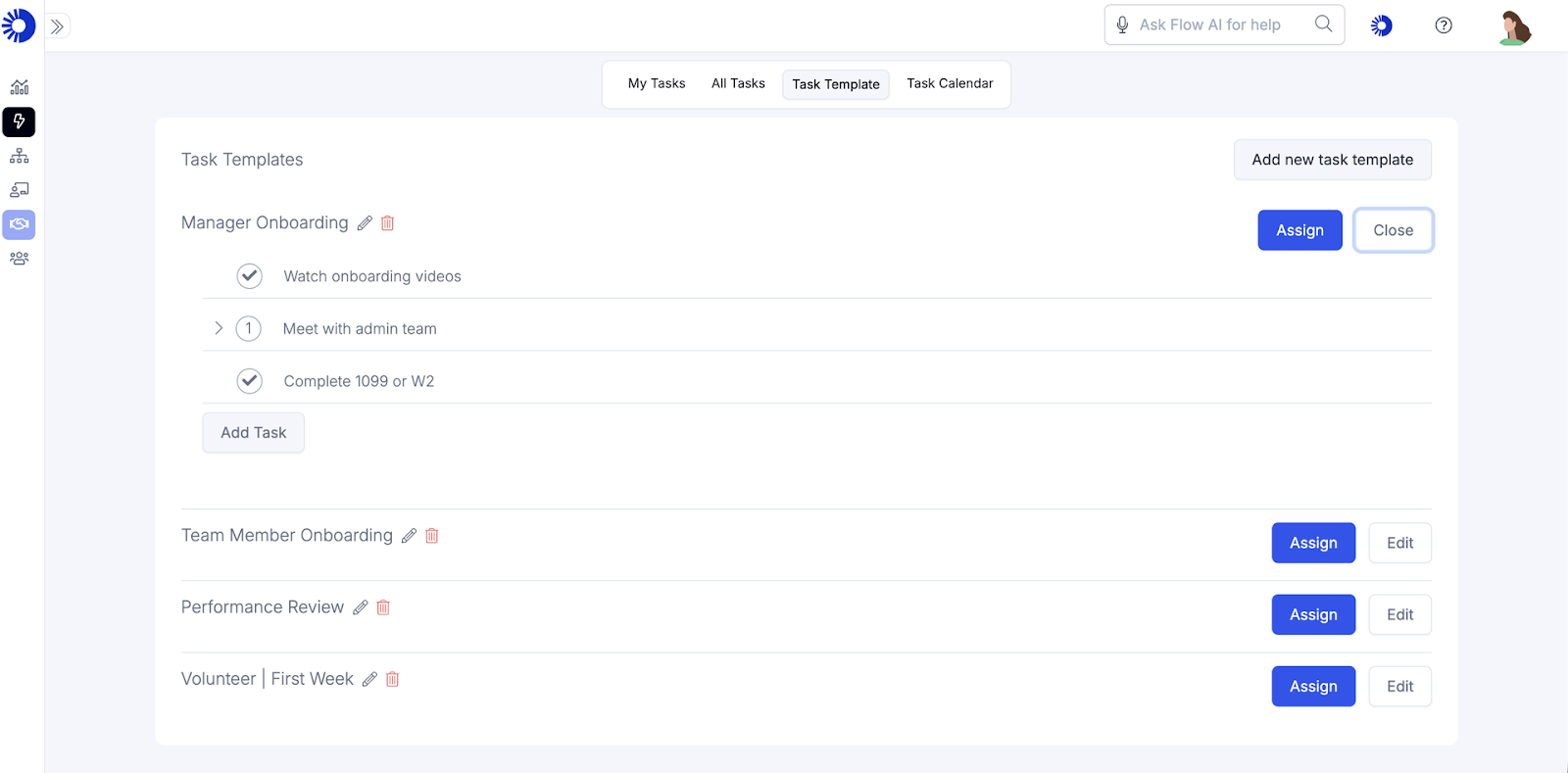
Ops.work workflow automation features let you create and assign projects to employees. Employees stay engaged and fulfilled when handling assignments that align with and grow their competencies.
Ops.work's project calendar keeps staff informed about upcoming assignments, ensuring greater autonomy and flexibility in their roles.
Offboarding
Employee exits provide crucial data on the impact of your current performance management strategies. Creating a positive offboarding experience allows you to collect key feedback on your performance management system through exit interviews.
This feedback allows you to address performance issues and improve your performance management process.
Through ops.work, you can manage your offboarding procedures by creating a checklist of all the activities staff must complete before they are successfully offboarded.
Conclusion
Effective performance management thrives on two-way communication between managers and employees. It keeps them on the same page regarding company goals and the steps to achieve them. Performance management systems such as ops.work provide the frameworks and automation capabilities that eliminate the inefficiencies and inaccuracies of manual systems. Try our free plan today.
References
Lasa, Amaia Noguera, et al. “Performance Management That Puts People First.” Mckinsey & Company, 15 May 2024, www.mckinsey.com/capabilities/people-and-organizational-performance/our-insights/in-the-spotlight-performance-management-that-puts-people-first.
Brown, Travor C., et al. “Performance Management: A Systematic Review of the Literature and an Agenda for Future Research.” Academy of Management Proceedings, vol. 2017, no. 1, Aug. 2017, p. 11987, www.researchgate.net/publication/320795372_Performance_Management_A_Systematic_Review_of_the_Literature_and_an_Agenda_for_Future_Research, https://doi.org/10.5465/ambpp.2017.11987abstract.
van Elten, Hilco, and Berend van der Kolk. “Performance Management, Metric Quality, and Trust: Survey Evidence from Healthcare Organizations.” The British Accounting Review, 16 Oct. 2024, p. 101511, www.sciencedirect.com/science/article/pii/S0890838924002919, https://doi.org/10.1016/j.bar.2024.101511.
Frequently Asked Questions
There are two broad types of performance management systems: traditional performance management and modern performance management systems.
- Planning and setting goals
- Continuous monitoring and feedback
- Staff training and development
- Performance reviews
- Recognizing and rewarding top performers
Performance management is a continuous and flexible process that occurs throughout the year, whereas appraisals are formal assessments of employees by managers, typically conducted during an annual performance review meeting.
To develop a performance management system for your small to medium organization:
- Determine why a performance management system is important for your organization
- Analyse the current organizational structure and how it supports organizational productivity
- Decide on your approach to performance management. The most common methods of performance management are management-by-objectives, Objectives & key results, balanced scorecards, and 360-degree feedback
- Create and execute your implementation plan
- Monitor and improve your performance management system