
Cross-functional healthcare teams rely on collaboration tools to communicate and coordinate patient care. These tools serve different functions, including communication, document storage and management, project management, and productivity. A good collaboration tool must be easy to use and integrate seamlessly with other business systems.
Key Takeaways
- Healthcare teams thrive through collaboration
- Team collaboration tools allow various employees to communicate, share data, and exchange ideas, resulting in better patient outcomes
- Healthy collaboration includes seven elements: communication, cooperation, coordination, cognition, capabilities, and coaching
- Team collaboration tools should be easy to use, offer automation, and allows integrations with other business systems
Healthcare is one industry where cross-functional teams often come together to achieve a specific objective. Therefore, having a performance management system that tracks their performance allows you to create a collaborative environment.
Importance of Collaboration in Teams
Medical facilities succeed when healthcare teams work together. Collaboration brings individuals with varying skill sets, expertise, and knowledge to deliver high-quality patient care. Collaboration creates a sense of shared responsibility for the outcome of tasks.
Such collaboration is important for several reasons:
- Collaboration improves patient outcomes. When healthcare teams can share patient information and observations openly, patients receive better care. Different experts offer different perspectives on diagnosis, leading to better treatment options for the patient.
- Collaboration helps teams work together, resulting in a sense of belonging, job satisfaction, and boosting employee morale. When employees are motivated to work, they are more likely to stay in your organization for longer.
- By collaborating, healthcare teams can provide faster patient care. Team communication tools make it easier to pass information across the team, keeping everyone on the same page when caring for patients and completing other projects.
What are Collaboration Tools?
Collaborative tools are software that allow team members working from different locations to communicate and manage projects in real-time. Many collaboration tools include collaboration features like video conferencing, file sharing, task management, instant messaging, and team chat features.
Tools like Google Drive, Google Workspace, Google Meet, Microsoft Office, Google Calendar, and Zoom Workplace facilitate virtual collaboration among distributed teams.
These tools offer features that help remote or hybrid teams stay on top of tasks and deadlines. Many of these tools are cloud-based, which is valuable for teams that require a single source of truth to streamline project planning and productivity.
These platforms also provide a centralized document storage that teams can access across multiple devices. They also allow users to leave comments on files, facilitating knowledge sharing, idea exchange, and higher-quality work.
Ops.work offers a free project management platform that allows you to:
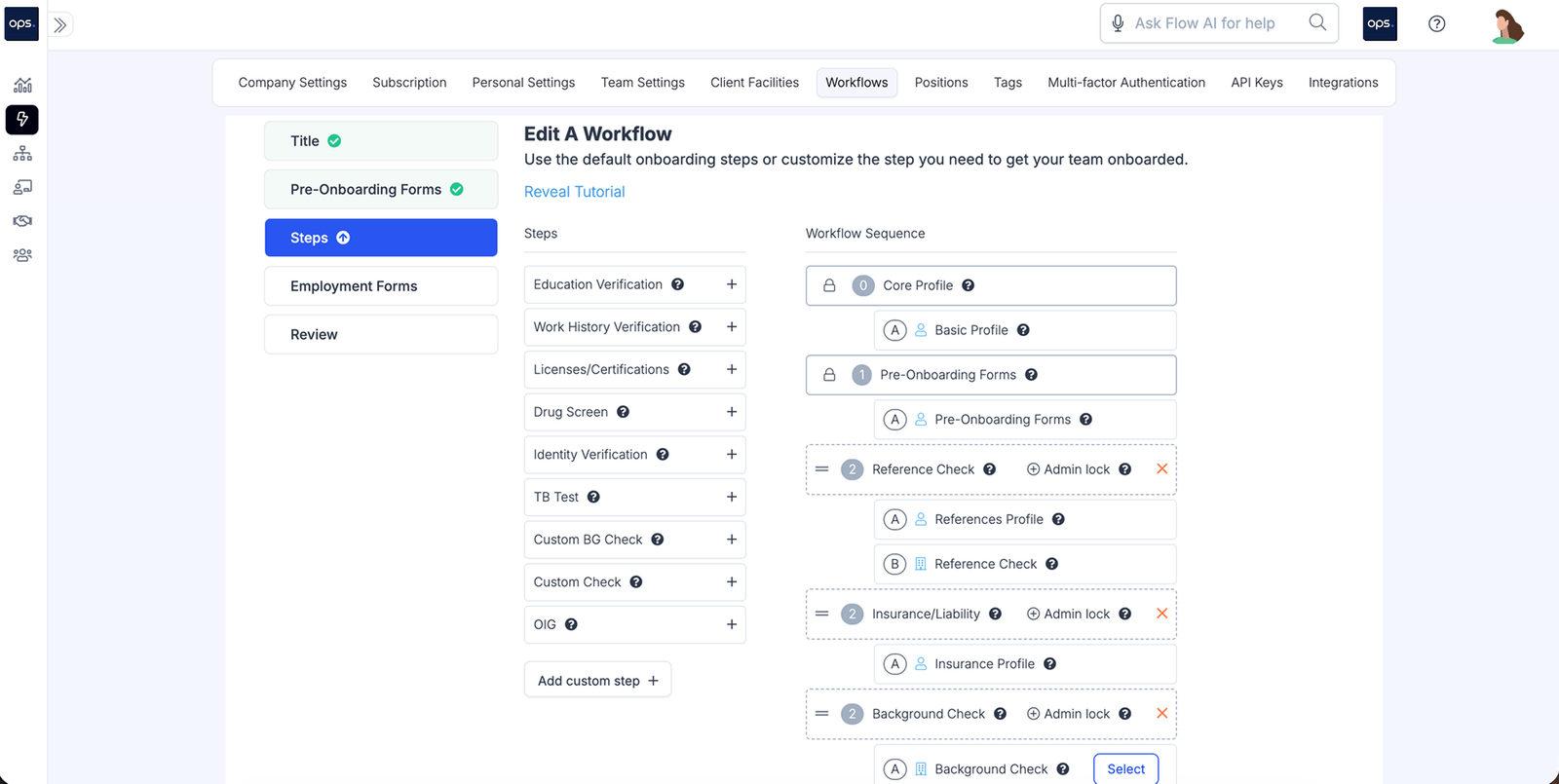
Create customized workflows
Create tasks, assign tasks to every team member, and track the progress of different tasks
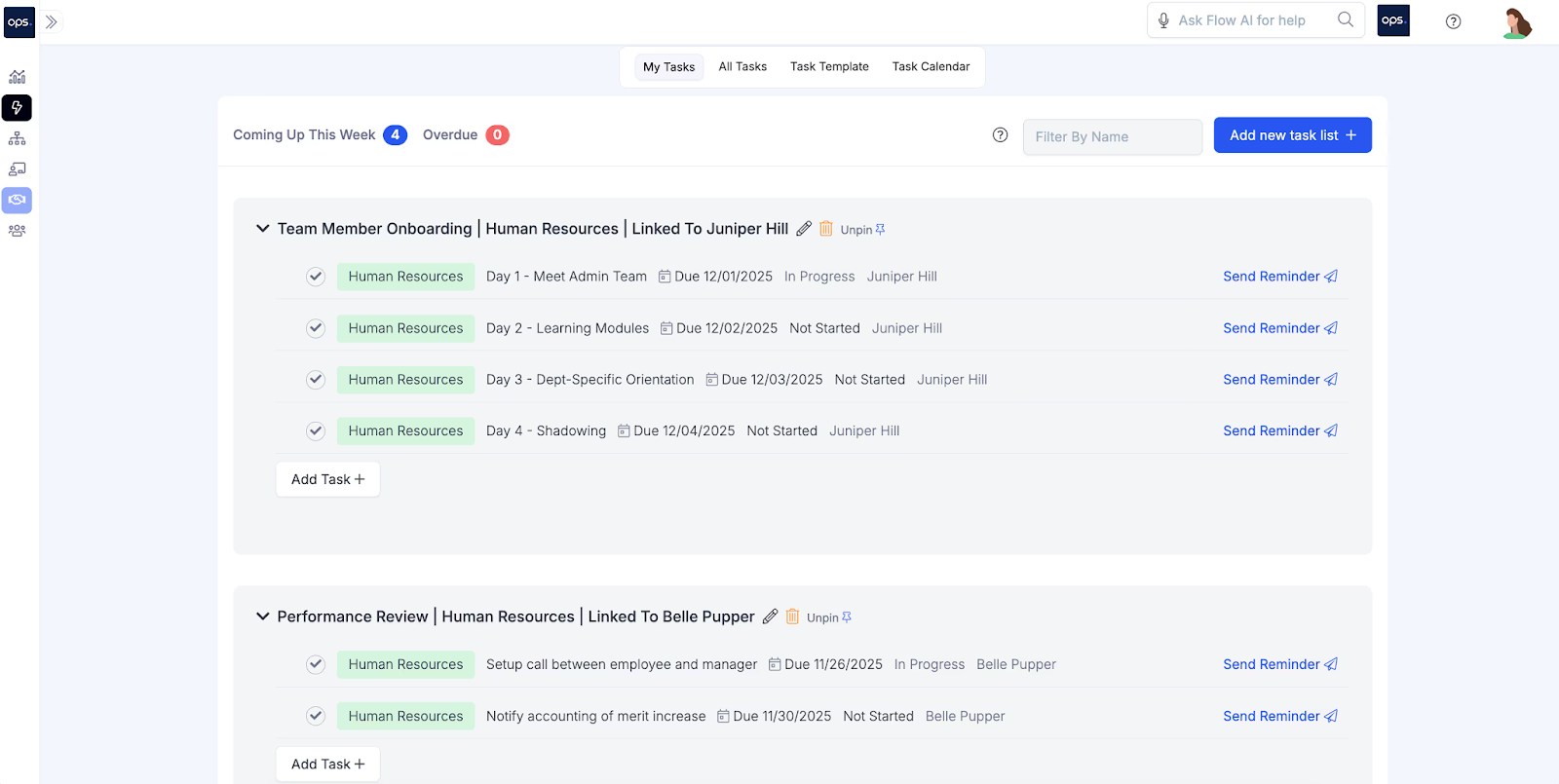
Send reminders to ensure teams adhere to task and project timelines
The 7C's of Workspace Collaboration: Strategies for Effective Workspace Collaboration
The 7C's of workplace collaboration provide a framework for teams that want to work together to meet a shared objective. Here's how each of these elements contributes to collaborative work.
Open and clear communication is the backbone of any collaborative effort in an organization. It allows team members to share ideas, express concerns, resolve conflicts, and share knowledge.
Teams that communicate effectively make better decisions, increasing productivity, morale, and employee satisfaction.
Effective communication in teams begins with understanding the barriers that can lead to misunderstandings and conflict. These include cultural and generational differences, language barriers, and communication styles, which influence how messages are delivered and received.
Here are ways to overcome communication barriers:
- Active listening to ensure you get the content and context of the message communicated
- Cultural sensitivity
- Using emotional intelligence skills when giving feedback
- Providing communication skills training
Cooperation is the process of working together towards a shared goal. When employees collaborate, they enter into a tacit or explicit agreement to cooperate by contributing their individual strengths toward a common goal.
This unity thrives in workspaces with a culture of mutual support and cooperation. You can create such a culture in your organization in several ways:
- Define goals clearly to ensure teams understand what they are working towards
- Create channels for open, transparent communication among peers, employees, and managers. This ensures that teams can share ideas vertically and horizontally without the fear of judgment.
- Create an inclusive workplace culture
- Acknowledge and reward teams' efforts to collaborate. This reinforces the behavior and creates a culture of collaboration
- Adopt project and task management tools to help teams navigate complex workflows and improve how they manage tasks
Coordination streamlines how teams work together. Coordination is the integration of team functions into a cohesive unit with clearly defined roles and hierarchies (who leads the team). Coordination facilitates collaborative work when:
- Goals are clear
- Teams have a clear delegation and prioritization framework
- Teams embrace automation, including creating workflows for efficiency
- Resources are judiciously allocated to prevent wastage and improve performance
Cognition refers to the collective intellect that employees contribute to a team, including how they think, learn, and make decisions. A team's cognitive functions enable it to process information and apply its knowledge and skills to solve a work problem.
Collaboration brings together members of a team who want to share diverse capabilities with their peers.
When building and managing effective teams, you must understand each team member's skills, knowledge, and abilities, and how to harness them toward organizational objectives and employee satisfaction.
Here are the best practices to help you harness individual capabilities to enhance team productivity:
- Conduct an employee skills assessment to determine the strengths, weaknesses, and performance gaps of each team member
- Create opportunities for peer-to-peer learning to encourage knowledge sharing, which increases opportunities for employees to collaborate
- Invest in job design and assignments that leverage an employee's skills, knowledge, and expertise. Employees thrive in environments that tap into their strengths while creating room to improve on their weaknesses.
- Provide continuous development opportunities for teams that need to improve their skills and knowledge to improve productivity
Coaching helps teams align their efforts with organizational goals and access the support they need to succeed in their roles. Effective coaching for team performance includes:
- Creating an environment where employees are comfortable asking for feedback
- Create a work culture around recognizing and rewarding team efforts
- Provide opportunities for continuous development that include training, mentorship, shadowing, and other coaching initiatives
Conditions refer to the physical and psychological environments in which teams operate. A healthy environment promotes employee well-being and psychological safety, allowing them to focus on productive work. Here's how you can create the best working conditions:
- Design ergonomic workspaces
- Provide flexible work arrangements where possible
- Control lighting, noise, and the climate in the office for a comfortable work environment
- Create spaces that facilitate collaboration
What are the Features to Look For in Team Collaboration Tools?
The right collaboration software improves how your teams interact within your organization. Choosing the right one can make a difference in team productivity and efficiency. Here are the features to look for in a collaboration platform:
Choose a tool whose interface makes it easy to navigate, share documents, and send messages to team members.
Choose a tool that automates processes such as creating workflows, task management, progress tracking, and sending reminders and notifications to ensure teams complete tasks by the due dates.
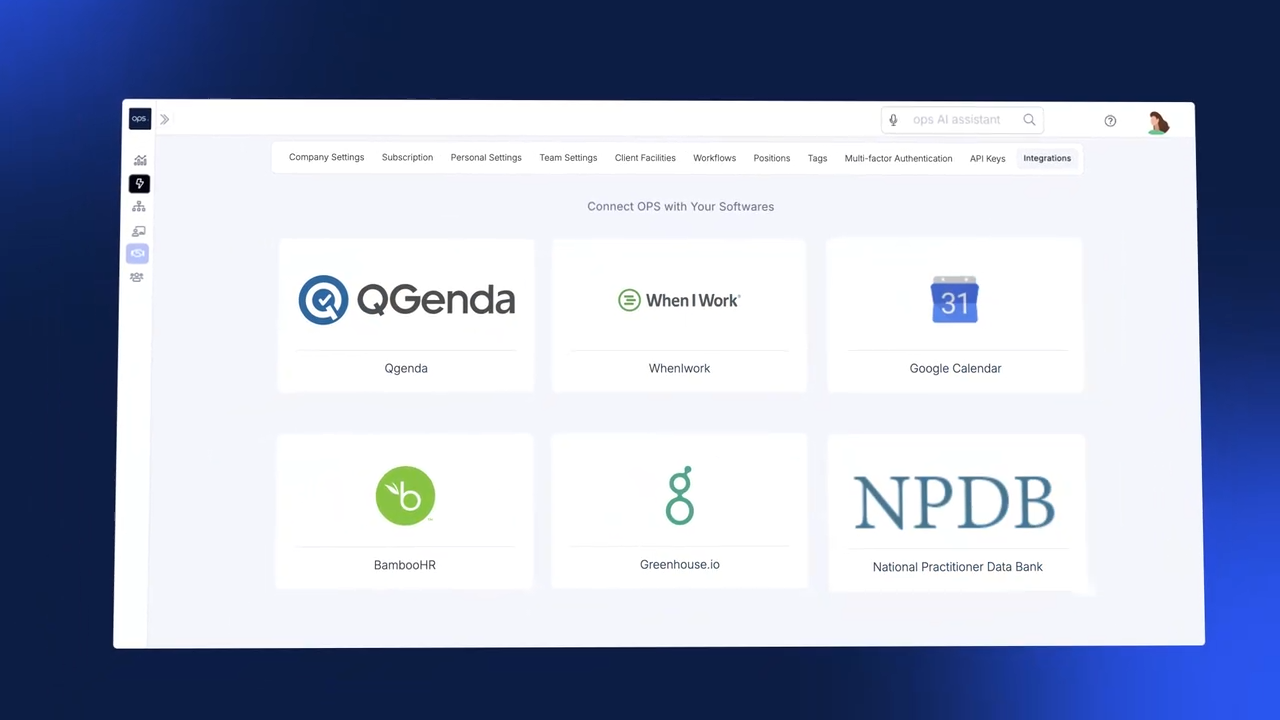
Choose a tool that allows integrations with third-party tools. While it's possible to find all-in-one tools such as Google Workspace, a tool that supports integrations enhances functionality while preventing data silos.
A tool such as ops.work facilitates integrations with other tools via Zapier, Make, and Webhooks, allowing your teams to add tools to work with the software systems in your organization. Try our free plan to improve your team's performance.
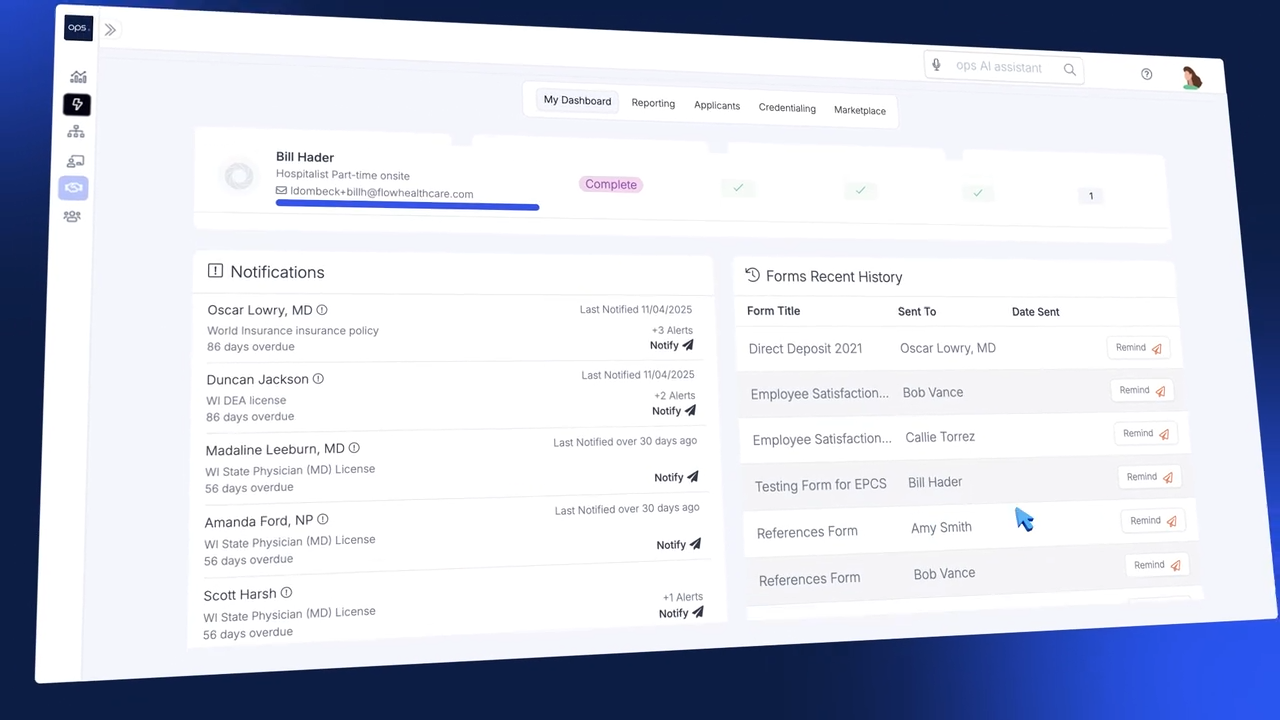
The tool you choose should also have comprehensive dashboards which help you visualize different real-time collaboration metrics at a glance. Choose dashboards with customizable views that let you track multiple data points.
Conclusion
Using tools such as ops.work helps you improve team performance by creating workflows, delegating tasks, tracking completion progress, and generating task management reports. Our tool helps your team access the resources they need to succeed in their teams. Get started with our free plan.
References
Schubert, Petra, and Susan P. Williams. “Enterprise Collaboration Platforms: An Empirical Study of Technology Support for Collaborative Work.” Procedia Computer Science, vol. 196, 2022, pp. 305–313, www.sciencedirect.com/science/article/pii/S1877050921022419, https://doi.org/10.1016/j.procs.2021.12.018.
Vreede, Gert-Jan de, et al. “Collaboration Technology in Teams and Organizations: Introduction to the Special Issue.” Information Systems Frontiers, vol. 18, no. 1, Feb. 2016, pp. 1–6. Springer, link.springer.com/article/10.1007/s10796-016-9632-3, https://doi.org/10.1007/s10796-016-9632-3.
Obodozie, Nkechi Mariette , and Ikechukwu Josephat Nwabufo. “Promoting Collaboration in the Modern Workplace: A Path to Productivity and Resilience.” World Journal of Advanced Research and Reviews, vol. 25, no. 2, 28 Feb. 2025, pp. 524–533, www.researchgate.net/publication/389206650_Promoting_collaboration_in_the_modern_workplace_A_path_to_productivity_and_resilience.
Frequently Asked Questions
They include many remote work platforms that allow employees to collaborate across locations and teams:
- Video conferencing tools such as Zoom
- Project collaboration systems such as Microsoft Teams
- Productivity tools such as Google Workspace
- Cloud storage tools such as Google Drive
- Live collaboration software such as Zoom
Google Workspace, Slack, and Asana. These tools provide comprehensive project management features to ensure successful collaboration.
You can measure the effectiveness of your collaborative work through metrics such as project completion rates, knowledge-sharing behaviors, and the quality and frequency of employee meetings, whether they are in person or via Zoom.
The collaboration platform you choose depends on your goals, budget, team size, available integrations, available communication channels, work management features, and AI features.