
Effective onboarding programs can significantly reduce costs by improving employee satisfaction and accelerating time to productivity. A well-structured onboarding process accelerates new hires' productivity, reducing costs. Consistent monitoring through feedback from new hires, HR, and other stakeholders can uncover bottlenecks, allowing companies to enhance their onboarding strategies continually.
Key Takeaways
- Direct onboarding expenses include administrative costs, employee benefits, compliance costs, software, equipment, training costs, and HR salaries
- Indirect costs involve time and productivity losses, employee anxiety, and the cognitive load on both new hires and trainers.
- Using software like ops.work can streamline onboarding tasks and reduce manual processes, thereby saving time and money
Onboarding is a critical step in the employee journey. However, it can also be expensive, especially when your company relies on outdated strategies and systems to integrate new hires. Monitoring and actively implementing onboarding best practices can help you minimize onboarding costs while improving employee retention, engagement, and productivity.
How to Calculate the Cost of Onboarding a New Employee
How much does it cost your company to onboard a new employee? The average cost of onboarding an employee varies depending on their position, industry, and the effectiveness of the onboarding program.
According to SHRM, hiring new employees costs an average of $4,129, but the costs can be as high as $28,000. Onboarding costs encompass direct and indirect expenses
Direct Onboarding Expenses
Direct onboarding expenses include the administrative costs associated with onboarding, such as:
- Employee benefits such as health insurance premiums
- Perks paid to staff during onboarding
- Welcome kits and branded merchandise that you give to new hires during orientation
- Compliance costs like background checks, OIG exclusions monitoring, and paperwork that new employees need to complete during hiring and onboarding
- Software and equipment costs
- Costs of employee training
- The salaries and other benefits paid to HR and L&D teams to facilitate onboarding
Calculating these costs is straightforward, as it is easy, requiring you to sum up the respective costs of each item.
Indirect Costs of New Employee Onboarding
Indirect (or soft) costs include all the intangible expenses associated with onboarding. These costs also include the time and productivity lost during the onboarding of new hires. These costs show up as:
- Anxiety in new employees which affects how fast they learn and become productive
- Stress on your existing teams as they adjust to accommodate new members. This could result in missed tasks and lost productivity as some members take on onboarding roles.
- An increased mental load on new hires as they need to absorb a significant amount of new information. Trainers and mentors also experience this cognitive load, which may impact their regular tasks
Quantifying these soft costs is not as straightforward as calculating hard costs. But it is still achievable. Most managers quantify their soft costs by assessing the amount of time spent on onboarding tasks, the productivity losses as a result, and the corresponding dollar value based on the employee's hourly rate.
What are the Steps to Reduce the Cost of Onboarding a New Hire?
Hiring and retaining top healthcare staff can be expensive, especially if you have poor onboarding systems. The first step in reducing the costs of integrating new staff is to provide a satisfactory experience that leaves employees feeling confident and valued.
Here are 5 ways to reduce costs when onboarding new employees:
Automate Your Onboarding Process
Companies with poor processes tend to incur higher onboarding costs, as they often lack clarity, direction, and support. Automating the process with onboarding software helps you eliminate manual processes, thus reducing the time and costs spent on integrating new hires.
Tools such as ops.work streamline onboarding, allowing HR and other staff to focus on the tasks that matter while ensuring they recruit and retain the right people for their teams.
Facilities that use ops.work for their onboarding reduce their onboarding time and costs significantly, while maintaining compliance. Here are other ways onboarding automation helps manage the costs of integrating new employees::
- It automates manual tasks such as data entry and sending reminders. With ops.work, you can invite new hires to join the onboarding platform directly
- It makes it easier for employees to request the software and tools they need
- Ops.work automates the paperwork process, allowing you to deliver and sign documents remotely.
Create Standardized Onboarding Workflows and Processes
Standardizing onboarding allows you to provide a consistent onboarding experience to new employees. It also helps HR teams onboard employees effectively, maintain compliance, and reduce the costs associated with disorganized processes.
To create structured onboarding workflows and processes:
Define the goals you want to achieve by onboarding employees. These include increased employee engagement, reduced turnover rates, and higher job satisfaction.
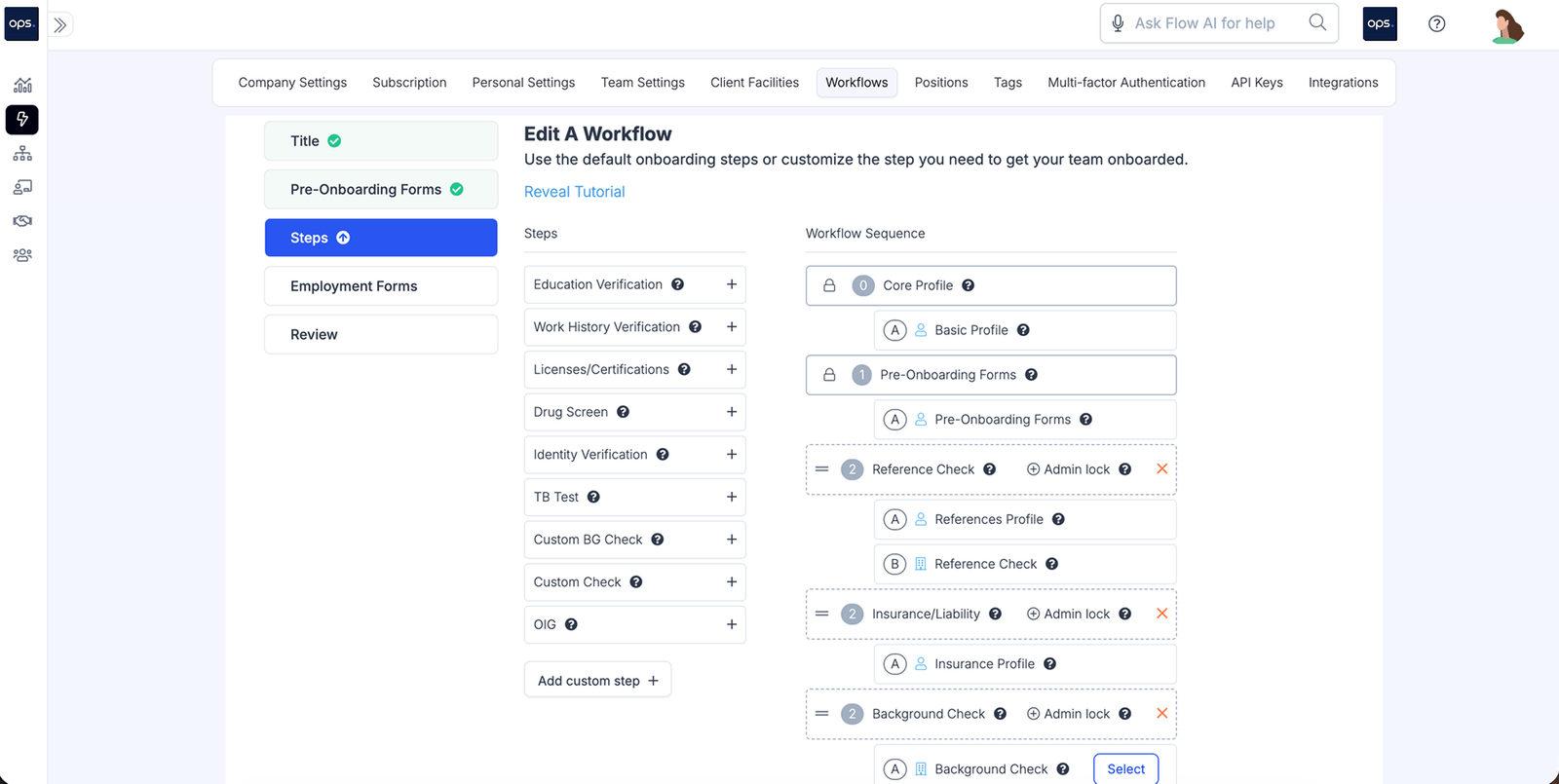
Outline all the onboarding stages, such as preboarding, orientation, training, and feedback. Each step should include a list of activities to complete and defined timelines. Seek the input of cross-departmental teams to ensure you create a comprehensive onboarding checklist to make the onboarding process more efficient.
Assign onboarding roles and responsibilities. Your workflow should clarify which team and individuals will be involved in the onboarding process. Role clarity reduces duplication and missed tasks, and thus the cost of onboarding new employees.
Monitor the workflows to identify bottlenecks and areas for improvement. Use the feedback you collect to improve and optimize your workflows for efficiency and a great onboarding experience.
With ops.work, you can create various onboarding workflows to streamline tasks such as credentialing and employee training. You can also create checklists to guide the hiring process and reduce the costs of replacing an employee.
Invest in Mentorship Programs
Mentorship programs are necessary for efficient onboarding. They help your new staff integrate faster, thus saving time and money spent on onboarding. When implemented effectively, they can also reduce employee turnover, improve performance, and boost employee engagement.
Mentorship works well when combined with other training efforts. Traditional or online training provides the knowledge your staff needs, while mentorship facilitates its application in their tasks.
Through peer-to-peer or top-down mentorship, your employees can bounce ideas off one another or seek guidance when they are stuck on a project.
Reduce Time to Productivity
An effective onboarding process helps new employees become productive faster. Reducing the ramp-up time ensures that new hires are less likely to leave your company and significantly reduces what it costs to onboard a new employee.
The time it takes before a new hire is fully productive varies depending on the overall onboarding experience. Other factors that can affect the time to competency include:
- The complexity of the role
- The previous experience of the employee in the same or a similar role
- Clarity in the role, expectations, and goals
- The support available from current employees and managers
- The readiness of your processes for online onboarding
Your company culture is an important aspect of onboarding, which helps reduce the time to competence and associated costs. A culture that encourages learning and collaboration creates a supportive environment where current employees can support new staff as they integrate into their roles.
Other ways to improve ramp-up time include:
- Communicate performance targets clearly
- Check in with new staff regularly to collect and provide feedback on both their experience and performance
- Provide access to the tools and equipment new hires need for their job
- Develop an employee recognition and reward system
Evaluate and Improve your Employee Onboarding Process Regularly
Regular monitoring is the best way to get onboarding right. By monitoring your onboarding efforts and outcomes, you can identify the bottlenecks in the process.
Here is how to evaluate your company's onboarding efforts and how they contribute to the cost of your employee integration programs:
Identify the people to survey for accurate data on your process. Talk to your new staff about their recent onboarding experience, what they liked, and the areas that you could improve. Use tools such as surveys and one-on-one meetings to collect data.
In addition to new hires, HR teams, managers, trainers, and existing employees can provide key insights into your processes.
Track the right onboarding metrics, including training costs, employee satisfaction, performance, retention rates, training completion rates, and knowledge retention rates.
You can collect data on these metrics using various tools for onboarding evaluation, including employee engagement surveys, performance evaluation reports, and LMS training reports.
Ops.work has the features to help you create feedback collection tools. It also integrates with Jotform, which lets you access a database of more than 1000 templates.
The software also allows you to generate LMS reports for metrics such as course progress and completion rates.
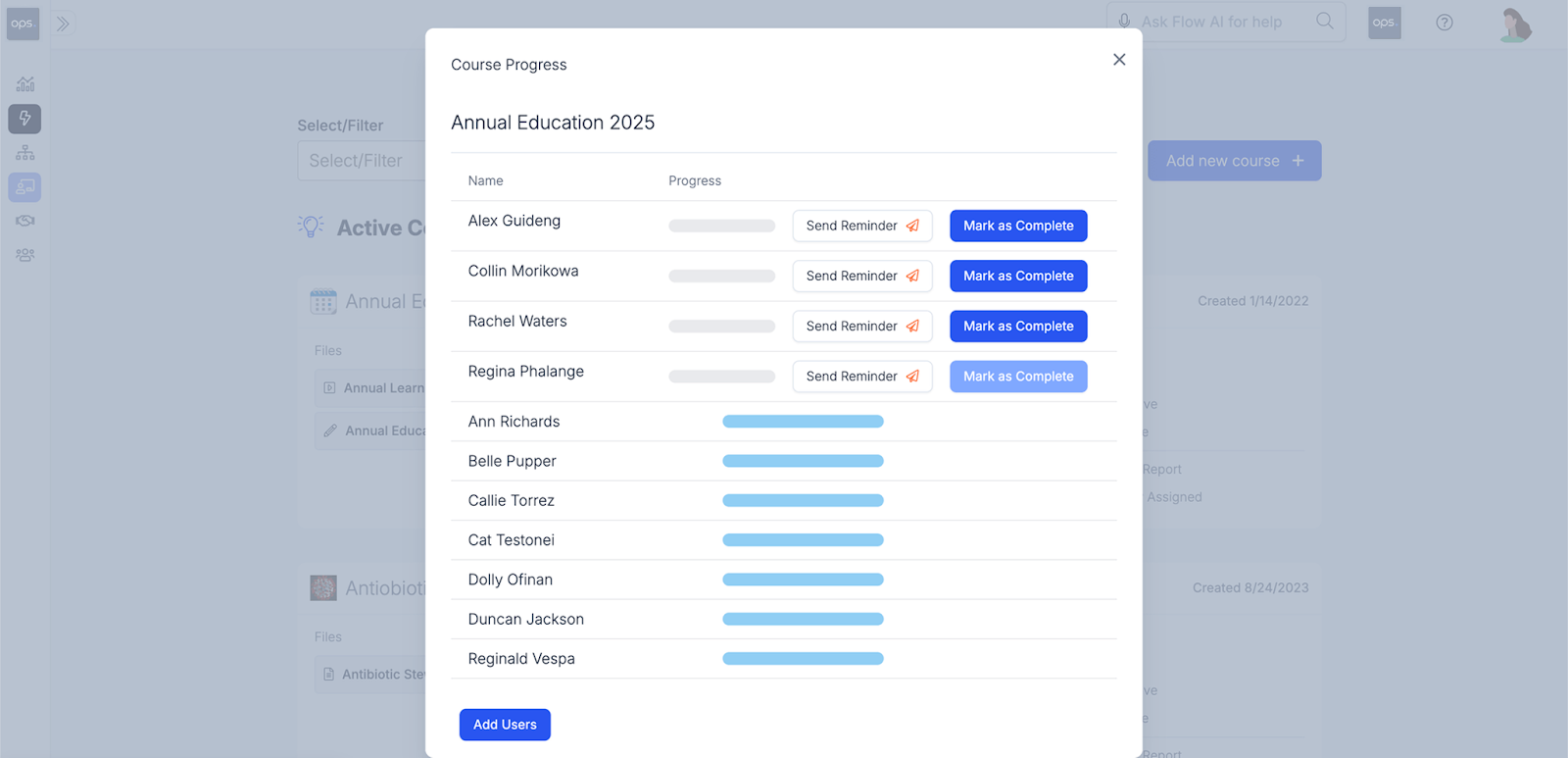
Draw insights from the data and optimize your onboarding workflows. analyse the data you have collected and use the insights to improve onboarding in your company.
Which Employee Retention Strategies Improve Productivity and Reduce Turnover?
Poor onboarding is the leading cause of high employee turnover. With the total costs of hiring a new full-time employee being as high as $28,000, it pays for your company to have efficient onboarding systems and retention strategies in place.
These strategies help you retain more staff and reduce turnover costs. They include:
- Plan for the employee's arrival before their first day. Keep a running preboarding checklist with everything your team should do before the new hire reports for duty
- Begin engaging the employee from the first day to affirm their decision to join your company
- Ensure your hires understand their roles fully from the first day
- Create a clear career development plan that allows your new staff to visualize a long-term career path in your organization
- Invest in a company culture that supports a healthy work-life balance and professional development
Conclusion
Companies that invest in employee training and onboarding have better outputs, satisfaction, and engagement. While these programs can have high overhead costs, you can reduce how much you spend by implementing a few best practices, such as automating onboarding with tools like ops.work. Try our free plan to reduce the time and money spent on onboarding.
References
Boushey, Heather, and Sarah Jane Glynn. “There Are Significant Business Costs to Replacing Employees.” Center for American Progress, 16 Nov. 2012, www.americanprogress.org/article/there-are-significant-business-costs-to-replacing-employees/.
Navarra, Katie. “The Real Costs of Recruitment.” Society for Human Resource Management, 11 Apr. 2022, www.shrm.org/topics-tools/news/talent-acquisition/real-costs-recruitment.
“Cost of Poor Onboarding as New Hires Eye Resignation in next Six Months – Report.” Hcamag.com, 2025, www.hcamag.com/us/specialization/employee-engagement/cost-of-poor-onboarding-as-new-hires-eye-resignation-in-next-six-months-report/548219.
Frequently Asked Questions
The total onboarding costs for new employees can range from thousands to tens of thousands of dollars. The costs vary depending on the industry, the onboarding steps, and the level of training required for each employee to be productive.
The cost-per-hire refers to the amount of time and resources spent during the recruitment process up to the time the employee accepts a job offer. Onboarding expenses refer to the direct and indirect resources spent to integrate an employee into a company, typically after they accept a job offer.
You can measure the success of your onboarding program through metrics such as new hire productivity, satisfaction, engagement, and knowledge retention.
The onboarding process for most roles takes up to 90 days. However, complex roles require extensive onboarding that can take up to a year.