
Physician onboarding is a necessary process that shapes the employee experience, productivity, and retention. A good program involves preboarding, orientation, training, feedback, and ongoing support and improvement. Automation streamlines the process, eliminating manual processes and simplifying how you onboard new physicians.
Key Takeaways
- A structured physician onboarding facilitates a smooth transition to clinical practice and increases job satisfaction and retention
- Onboarding physicians should begin before the physician reports for their first day and continue for at least 90 days and up to a year on the job
- Automation, a standardized onboarding plan, and regular monitoring can help streamline the onboarding process
An onboarding program for physicians influences their first impression of your facility. For young physicians, it can pave the way for a fulfilling career by providing the support and resources they need to succeed.
What is Physician Onboarding and Why is it Important?
The onboarding process for physicians includes all the activities a healthcare facility completes to help a new provider transition to practice and comply with relevant regulations.
According to the AAPPR report, facilities that invest in a formal onboarding process have higher job satisfaction among their medical staff. This process typically begins long before the formal start date to accommodate credentialing and, in some cases, the new hire's relocation.
According to the same report, most physicians expect the onboarding process to begin before they report for their new role. Some of their expectations include:
- Clear information about where to report and credentialing requirements
- A comprehensive review of their job duties, responsibilities, expectations, and the organizational structure and facilities on their first day
- Introductions to other staff members
- Ongoing support, especially for young physicians
An effective onboarding program benefits your facility in several ways:
- It increases retention by providing the support and resources to facilitate physician success
- It reduces the clinical ramp-up time, allowing new physicians to provide quality patient care sooner
- It facilitates positive patient care outcomes by familiarizing new physicians with regulatory, internal, and ethical standards
- Onboarding gives new hires a sense of belonging by integrating elements of workplace culture, such as communication, teamwork, and knowledge sharing
- It saves your facility money by reducing new-hire turnover
What are the Key Steps in the Physician Onboarding Process?
On average, onboarding new physicians begins as many as 100 days before the official start date and continues for the first 90 days on the job. Some facilities may extend the onboarding period based on the complexity of the role and the progress a new physician has made.
Creating a structured process allows you to personalize onboarding efforts and create a positive experience for new hires. Here are the key steps for an optimal onboarding process:
Credentialing and Privileging
Credentialing and privileging are necessary preboarding tasks that happen immediately after the recruitment process. The Medical Staff Office verifies education, licensure, training, and experience to ensure that providers are qualified to provide physician services.
Privileging involves providing access to clinical privileges based on the physician's qualifications and experience.
Both credentialing and privileging are important for maintaining compliance and providing quality care. Here are some of the requirements a new physician must meet:
- Have completed an MD or DO program
- Have successfully completed an approved residency program
- Valid State license
- NPI
- DEA license
- Training and safety certifications such as ACLS and BLS
- Malpractice insurance
- CME attestation
- ECFMG certification (for foreign physicians)
- Reference information
- Work experience
- Criminal background checks
With this information, you can verify a new physician's qualifications through primary source verification. The American Medical Association (AMA) provides comprehensive profiles of physicians, which can cut down verification time.
Once you've verified their credentials, begin the privileging process. This process defines the physician's scope of practice, including admitting and treating patients and performing outpatient and OR surgical procedures.
Part of privileging includes reviewing the physician's skill and competence in each area in which they claim expertise. This process should be rigorous and involve multiple stakeholders to ensure compliance and patient safety.
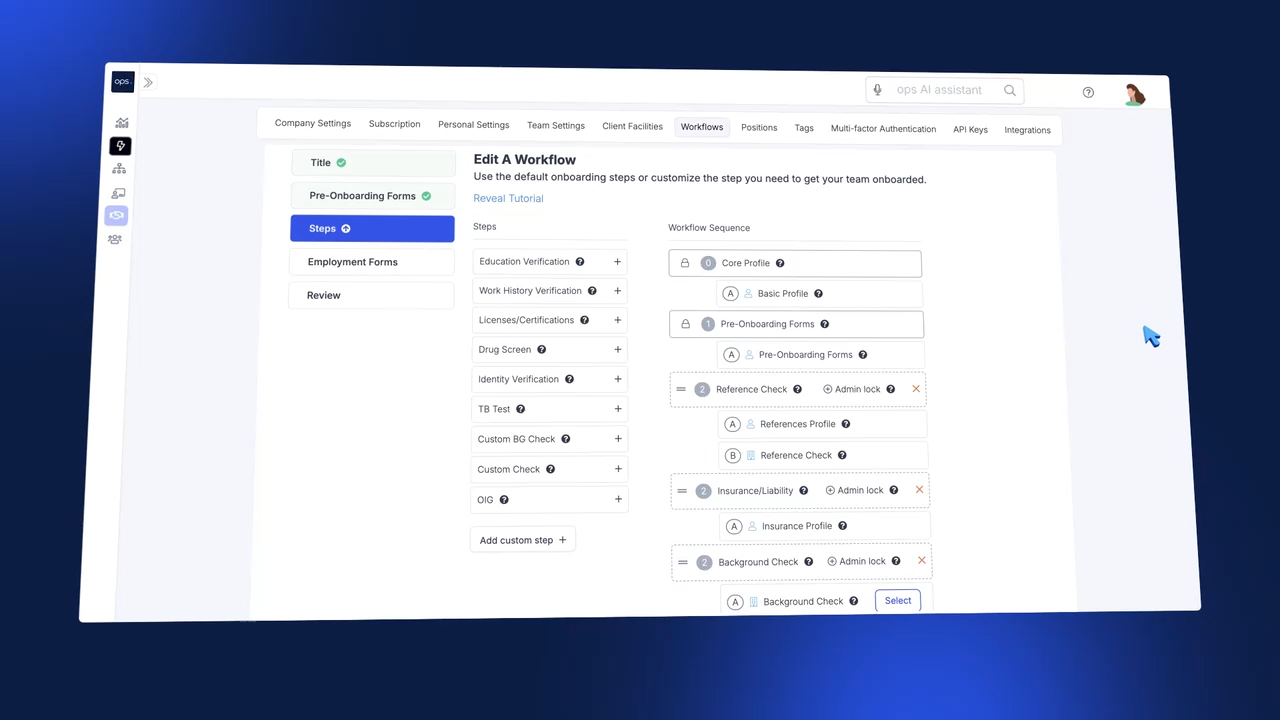
You can create workflows to track how you verify physician credentials using ops.work onboarding software.
Our customizable workflows let you track required documents, send reminders for missing ones, and alert your onboarding teams when a physician submits all required documents.
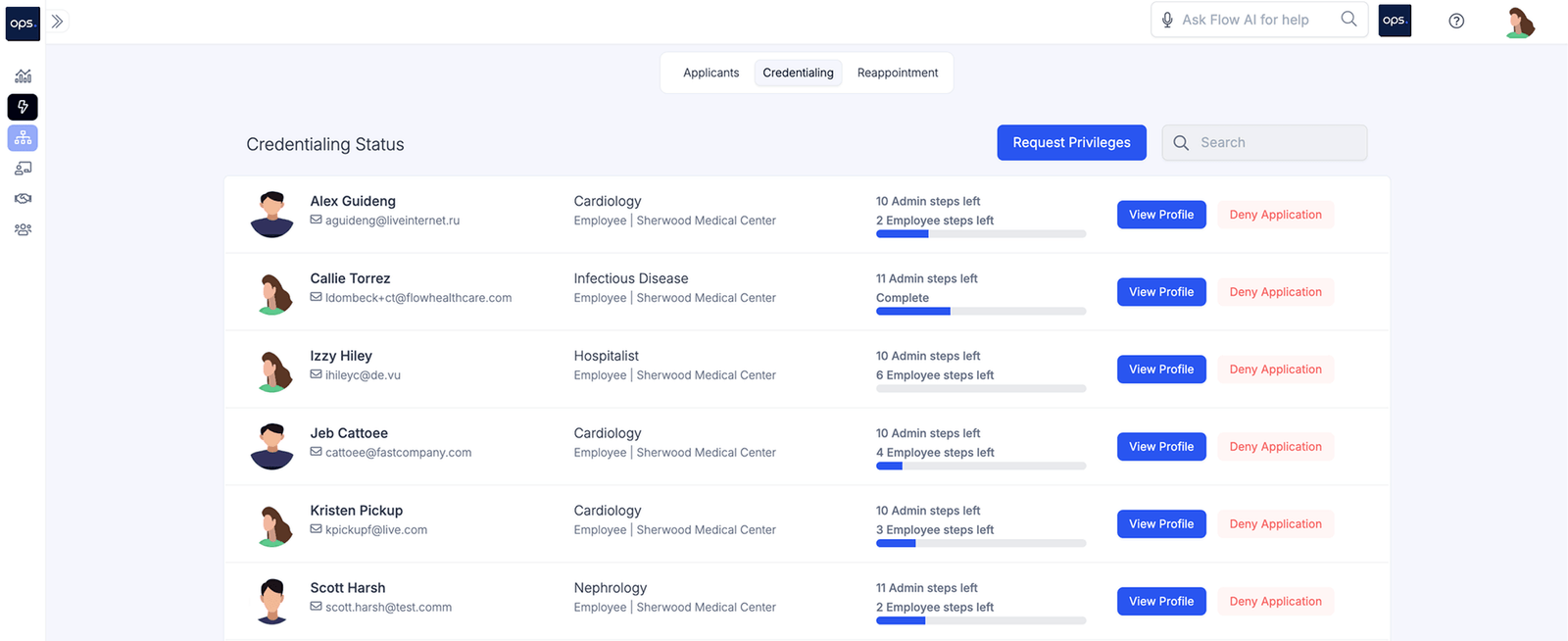
You can invite applicants to ops.work, allowing them to submit their documents and request privileges easily.
Orientation
The orientation process improves a new hire's familiarity with the organization, their job, and the environment. Done well, it improves physician well-being and productivity while helping them adjust to their new position faster.
Here are some activities during physician orientation:
- Clarify their new role, responsibilities, performance expectations, and reporting duties
- Provide a health systems orientation to familiarize your staff with the software and equipment used at your facility
- Provide training on mandatory compliance regulations and internal policies, and clinical best practices
- A review of the patients they will be seeing
- Provide a comprehensive facility tour and staff introduction
- An overview of the organization's mission, vision, core values, and workplace culture
- Meeting with the medical or clinical coordinator for the onboarding and orientation schedule and expectations
- Linking the new hire to a clinical quality coach to provide mentorship during the onboarding process
- Provide a fully equipped workspace
Training
Training is necessary when providers join a new organization, regardless of their experience level. Each provider must receive mandatory compliance training to introduce them to policies such as HIPAA, OSHA, CMS, billing and coding regulations, and referral procedures.
Ideally, your organization should provide paid time for learning and access to key stakeholders as providers complete mandatory training. This gives them an incentive to complete training while promoting work-life balance.
Provide your staff with role-based training to facilitate skill development. Your training should cover:
- New EHR and other health systems
- Emergency medical response (EMR)
- Hands-on training and shadowing
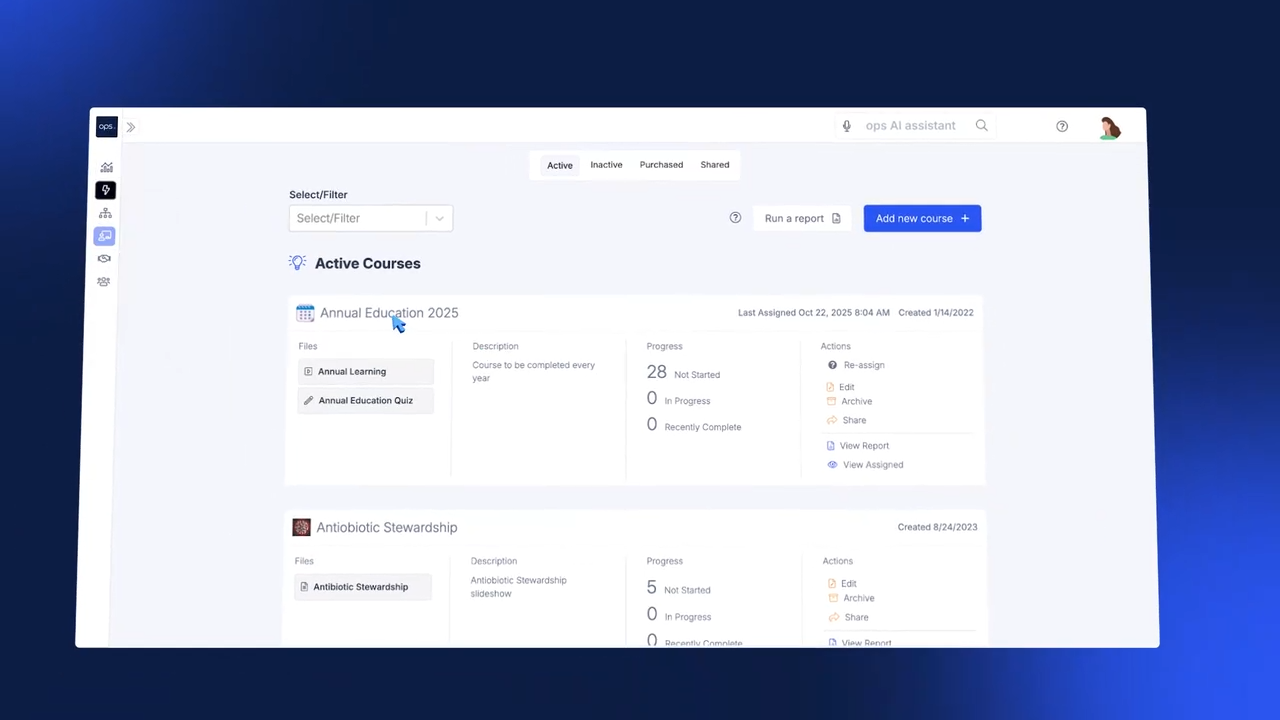
You can create courses directly through ops.work LMS or find third-party physician courses. Try our free plan if you're running a new practice and need to onboard a few physicians to your facility.
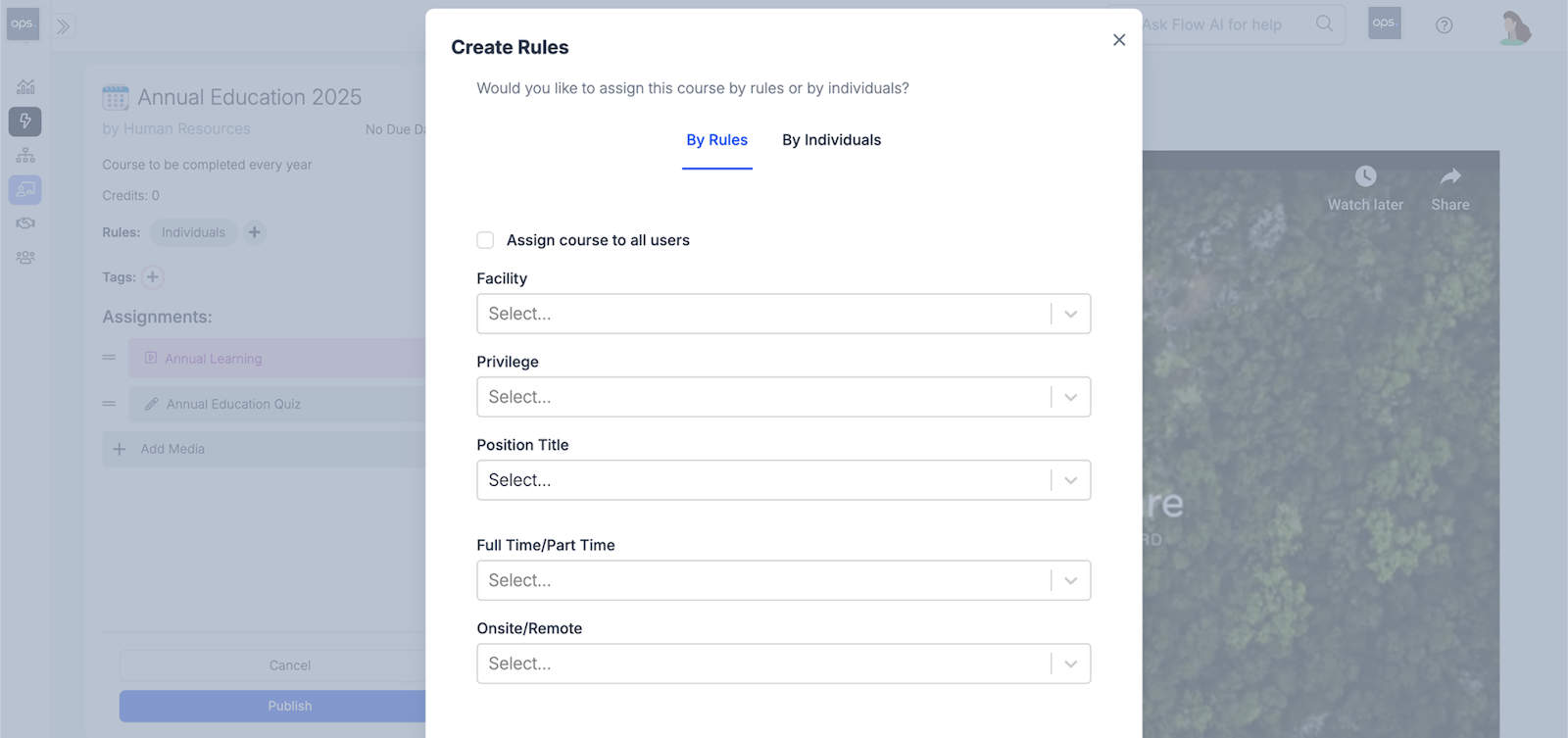
Once you've created the courses, assign them to your staff based on pre-set rules.
You can also generate LMS reports to track the impact of your training efforts, identify training needs, and track compliance.
Feedback and Optimization
Optimizing onboarding is an ongoing process that builds on the lessons you learn from each onboarding cycle. A good practice is to schedule regular meetings between physicians and stakeholders, such as:
- HR
- Compliance or Coding teams
- Accounting and payroll team
- Supervisors
During these meetings, ask questions about the new physicians' onboarding experience, the challenges they're experiencing, and areas they feel the program falls short.
At the same time, reiterate expectations and set goals to guide the next steps taken during and after onboarding.
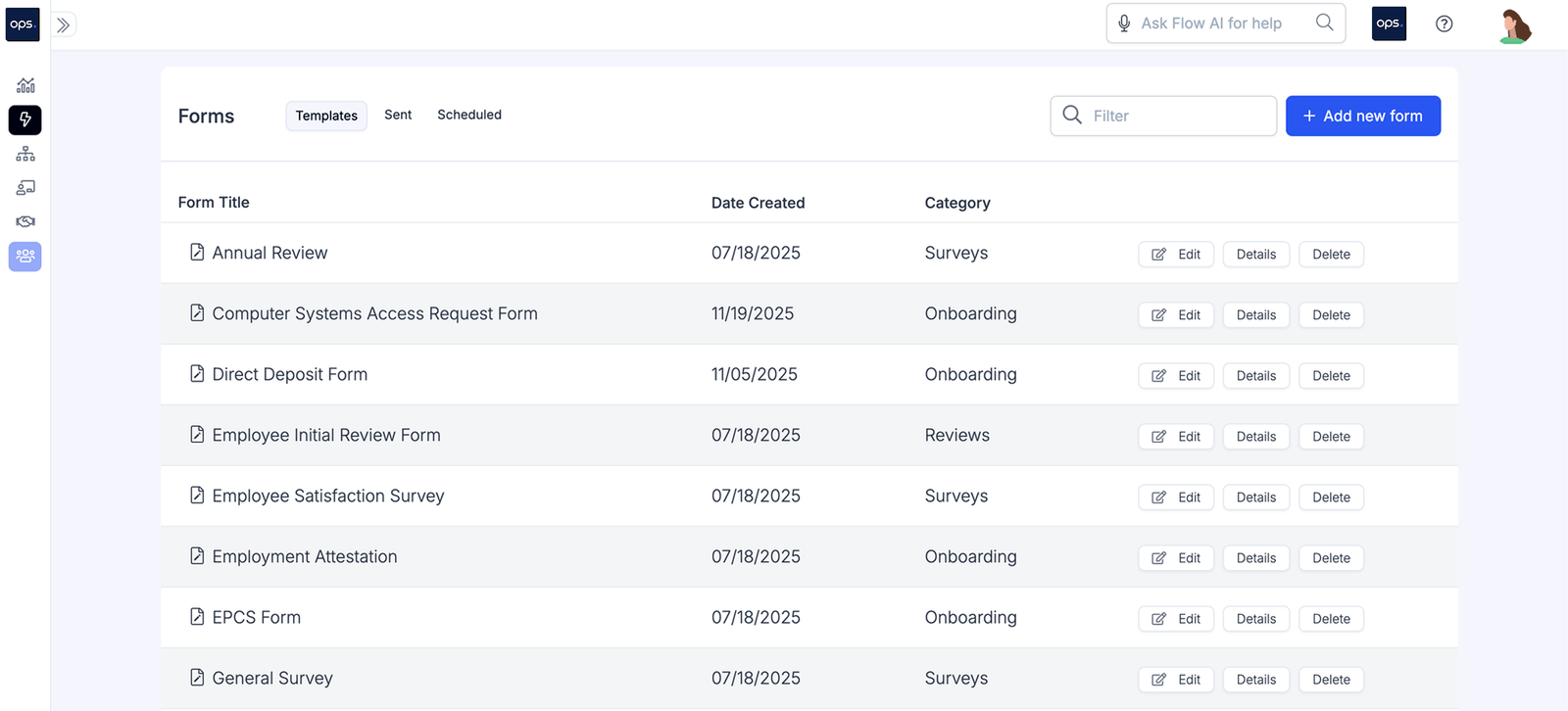
Ops.work offers various templates to help you create feedback collection tools such as surveys. You can also customize your templates based on your organizational needs.
Best Practices to Streamline Healthcare Onboarding
You can streamline physician onboarding in several ways:
- Automate repetitive onboarding tasks such as credentials verification, progress tracking, reappointment scheduling, document management, and task assignment. Tools such as ops.work let you customize workflows that simplify and reduce errors during onboarding. Automation also reduces onboarding costs.
- Create a standardized onboarding plan that provides adequate clinical ramp-up time for your clinicians. Start by creating a checklist of all onboarding activities and use one of our free templates to create a custom plan tailored to your organization. At the same time, clarify the people responsible for each task.
- Determine the metrics that matter to your practice. This makes it easier to assess the impact of your onboarding efforts and identify areas of improvement. Some of the metrics to track include time-to-productivity, engagement rates, training completion rates, and new hire turnover.
- Provide self-paced learning materials to allow physicians to fit their learning into their busy schedules. Where possible, include training resources that support continuous medical education to keep your physicians up-to-date and compliant with training requirements.
Conclusion
An effective physician and advanced practice provider onboarding program facilitates compliance. It also emphasizes provider engagement, ensuring your new employees are fully equipped for their new role. Ops.work provides a robust onboarding solution that helps you automate repetitive and time-consuming tasks. Get started with our free plan to set your staff up for success.
References
Lagoo, Janaka, et al. “Safely Practicing in a New Environment: A Qualitative Study to Inform Physician Onboarding Practices.” The Joint Commission Journal on Quality and Patient Safety, Mar. 2020, https://doi.org/10.1016/j.jcjq.2020.03.002.
Osseck, Tara, and Jenny Binner. “Intentional Onboarding for Physicians: A Comprehensive Approach for Medical Practices.” MedicalEconomics, 11 Sept. 2024, www.medicaleconomics.com/view/intentional-onboarding-for-physicians-a-comprehensive-approach-for-medical-practices.
“Physician Recruitment Process | AAPPR | Association for Advancing Physician and Provider Recruitment.” AAPPR - Association for Advancing Physician and Provider Recruitment, 2024, aappr.org/research/onboarding-report/.
Frequently Asked Questions
According to the 2024 Association for Advancing Physician and Provider Recruitment (AAPPR) report, most organizations have similar onboarding programs for both locum tenens and permanent physicians. However, locum tenens typically prefer more information about their scope of practice, while permanent physicians prefer understanding the organization better, opportunities for social interaction, and regular check-ins with supervisors.
Mentors support new physicians as they adjust to their work and understand the unwritten rules of the workplace. Managers, on the other hand, oversee the operational processes involved in healthcare onboarding.
Some indicators of successful onboarding include faster time-to-productivity, higher retention rates, improved patient outcomes, and employee engagement.
The 30-60-90-day onboarding plan provides a guide for managers and new physicians during the onboarding period. You can improve your plan by engaging key stakeholders before the process starts and collecting and acting on regular feedback.