
Employee pulse surveys are essential in collecting real-time and continuous feedback to improve organizational performance and employee engagement. Best practices include keeping them short, focused, and confidential. The survey should include a mix of questions. Organizations must act on feedback collected to prevent survey fatigue and distrust from employees.
Key Takeaways
- Pulse surveys should be short, focused, and easy to complete
- Communicate survey purpose clearly and maintain confidentiality
- Use a mix of open- and closed-ended questions to collect qualitative and quantitative data
- Act on feedback promptly to strengthen trust, morale and engagement
- Using employee survey tools like ops.work streamlines feedback collection
Healthcare facilities report high levels of employee turnover, 94% of which is voluntary turnover. The common reasons for employees leaving are career advancement, relocation, work conditions, including workloads, and salary.
Healthcare facilities can reduce voluntary turnover by implementing well-designed employee engagement strategies. Surveys provide a starting point for developing initiatives that align with employee needs.
What is an Employee Pulse Survey?
Pulse surveys are short, frequent surveys designed to gauge the overall employee experience. Most organizations conduct monthly pulse surveys, gather employee feedback, and make data-driven decisions to drive employee engagement.
The shorter intervals of pulse surveys give organizations greater visibility into employee engagement trends by gathering real-time employee feedback.
Compared to traditional surveys, pulse surveys may be more appropriate for:
- Taking your organization's engagement pulse check and employee experience
- Planning staff engagement initiatives based on employee feedback from pulse surveys
- Tracking how much of the organization lives out the core values
- Monitoring employee sentiment during ongoing organizational changes
Pulse surveys are often the best employee listening strategy, as they allow you to track your team's changing needs and respond in time.
What are the Different Types of Employee Surveys?

Employee surveys are a great way to keep track of your company culture and levels of employee satisfaction and engagement. Organizations can use one or more types of surveys as part of their engagement initiatives.
Here are the common types of employee surveys:
Employee Engagement Surveys
Employee engagement surveys track how enthusiastic and involved employees are in their work. Annual engagement surveys provide deeper insight into the psychological well-being of employees.
Employee engagement surveys are typically longer and seek to answer questions such as:
- Are employees clear on their roles, responsibilities, and expectations?
- How much do employees feel that their role contributes to the organization's purpose?
- Do employees feel supported and cared for by their managers?
- Do employees have accessible opportunities for professional and personal development?
- Do employees feel recognized for their contributions?
Pulse Surveys
Pulse surveys are typically used to regularly assess employee sentiment, such as weekly, monthly, or quarterly.
Conducting employee pulse surveys allows you to:
- Track the progress on engagement goals
- Track the impact of new programs or organizational changes on employee morale
- Catch early signs of disengagement and dissatisfaction among employees
While there are several advantages of pulse surveys, they should not be used as the only tool to measure engagement or satisfaction. They should be used alongside other feedback collection tools to provide well-rounded data.
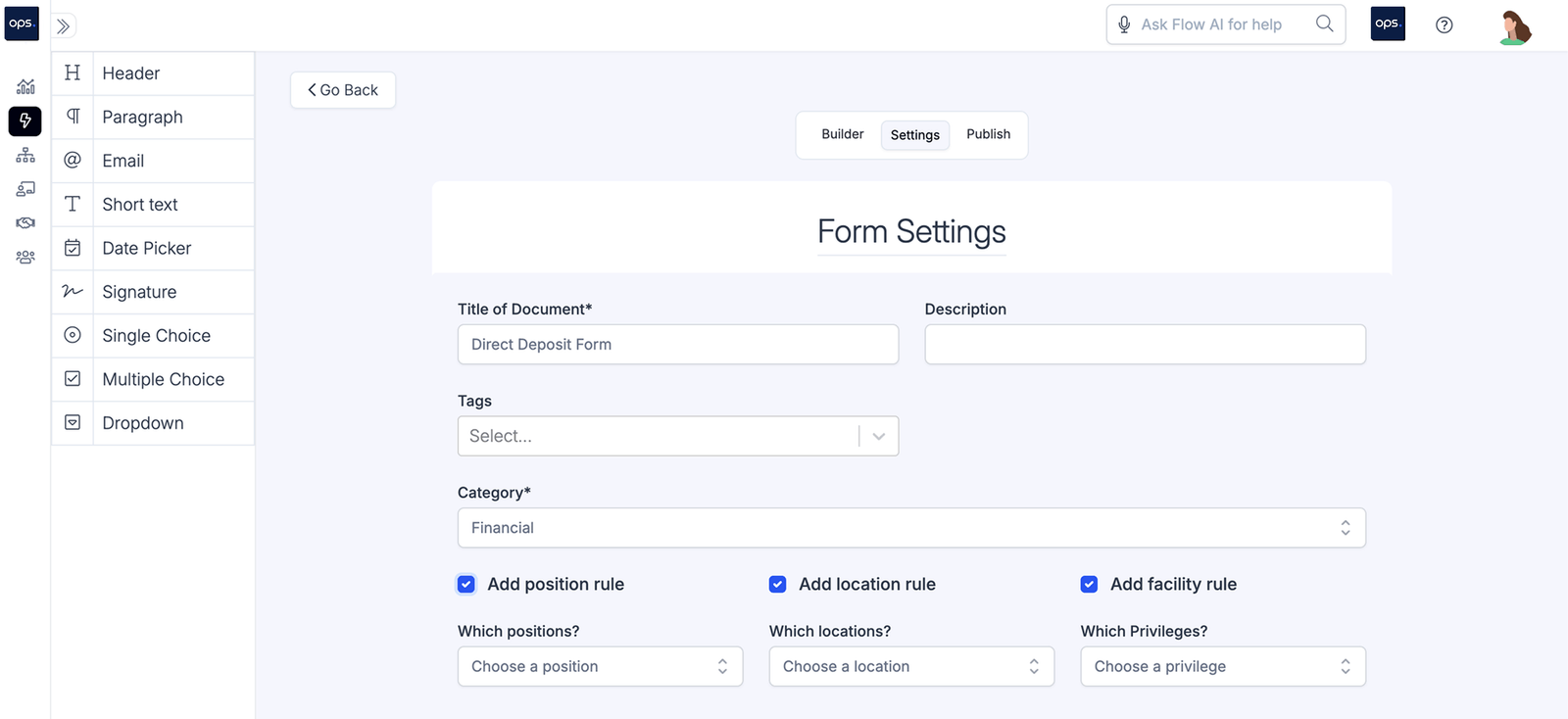
Ops.work is a pulse survey tool that lets you create various types of staff surveys. You can customize our form builder templates to include questions relevant to the employee group you're surveying.
Employee Satisfaction Surveys
Satisfaction surveys measure the contentment employees have in their jobs through indicators such as:
- How valued employees feel (including the autonomy and purpose they derive from their work)
- The level of support they receive from colleagues and managers
- Whether the compensation and benefits they receive feel fair compared to the work they do
- Whether they have a good work-life balance
Company Culture Surveys
The culture pulse survey measures employee sentiment across various indicators to gauge employees' perceptions of the organization and work environment. Some of the themes these pulse surveys include:
- Alignment of their work with the organization's goals
- Perceptions of leadership behavior
- Their sense of inclusion and belonging in the organization
- Their views on communication within the company
Onboarding Surveys
Your onboarding program has a great impact on employee turnover rates. Running onboarding surveys lets you track the new-hire experience. These surveys can be great conversation starters between managers and new employees.
Done well, they also communicate to new hires that your facility is committed to creating a healthy and supportive work environment. You can use these surveys to identify and address gaps in your onboarding strategy, ensuring you meet your employees' needs.
Exit Surveys
Exit surveys are often given to employees who are either leaving or have left the organization. They ask questions about:
- The reasons for an employee's departure
- The levels of satisfaction while they were on the job
- Their opinions on colleagues, leadership, and the company's compensation and benefits policies
Although exit surveys are important, you must put your exiting employees at ease. You can do this by ensuring their survey responses are kept confidential and do not affect their future job prospects.
What are the Benefits of Employee Pulse Surveys?
Employee pulse surveys provide the best way for companies to evaluate employee sentiment on an ongoing basis. By tracking employees' perceptions of leadership and the work environment, you can identify and address issues before they escalate into disengagement or turnover.
Acting on pulse survey feedback lets employees know you care about their opinions. This increases employee engagement and satisfaction as they feel valued for their contribution, skills, knowledge, and innovations.
Employees who feel listened to have higher levels of motivation, productivity, and an overall positive attitude towards their work and the organization. Therefore, they are more likely to stay, effectively reducing your turnover rates.
Effective pulse surveys help companies collect timely employee feedback at every stage of the employee lifecycle. This feedback helps improve the employee experience and improve retention rates.
Which Pulse Survey Questions Should You Include?
Pulse surveys are designed to collect regular employee feedback to provide your leadership team with actionable insights. Since pulse surveys are shorter, their design matters, including the number and types of questions you ask.
Most pulse surveys come with closed questions, often with a five-point Likert scale. However, they should include one or two open-ended questions. Including open-ended questions in your pulse survey offers employees a chance to provide further context to their workplace experience.
Here are essential pulse survey questions to include for accurate pulse checks:
- I understand what is expected of me at work
- I have the resources and support I need to do my work right
- I am satisfied with the recognition I receive for my work
- My supervisors and colleagues care about me as a person
- I have opportunities for personal and professional development
- I would recommend the company as a great place to work
- My manager keeps our team informed of business decisions
- My work contributes to the organization's mission, values, and purpose
- The work I do aligns with my skills, knowledge, and abilities
- I feel connected to my team and peers
Focus on a few thematic areas when designing employee pulse survey questions. This allows you to get more targeted results without tiring your employees.
For example, if you are onboarding new healthcare staff, you can tailor your first engagement pulse survey to assess how well employees are integrating with colleagues. Questions may include:
- I feel welcomed by my new team
- I understand what my role is
- I feel confident in my new role
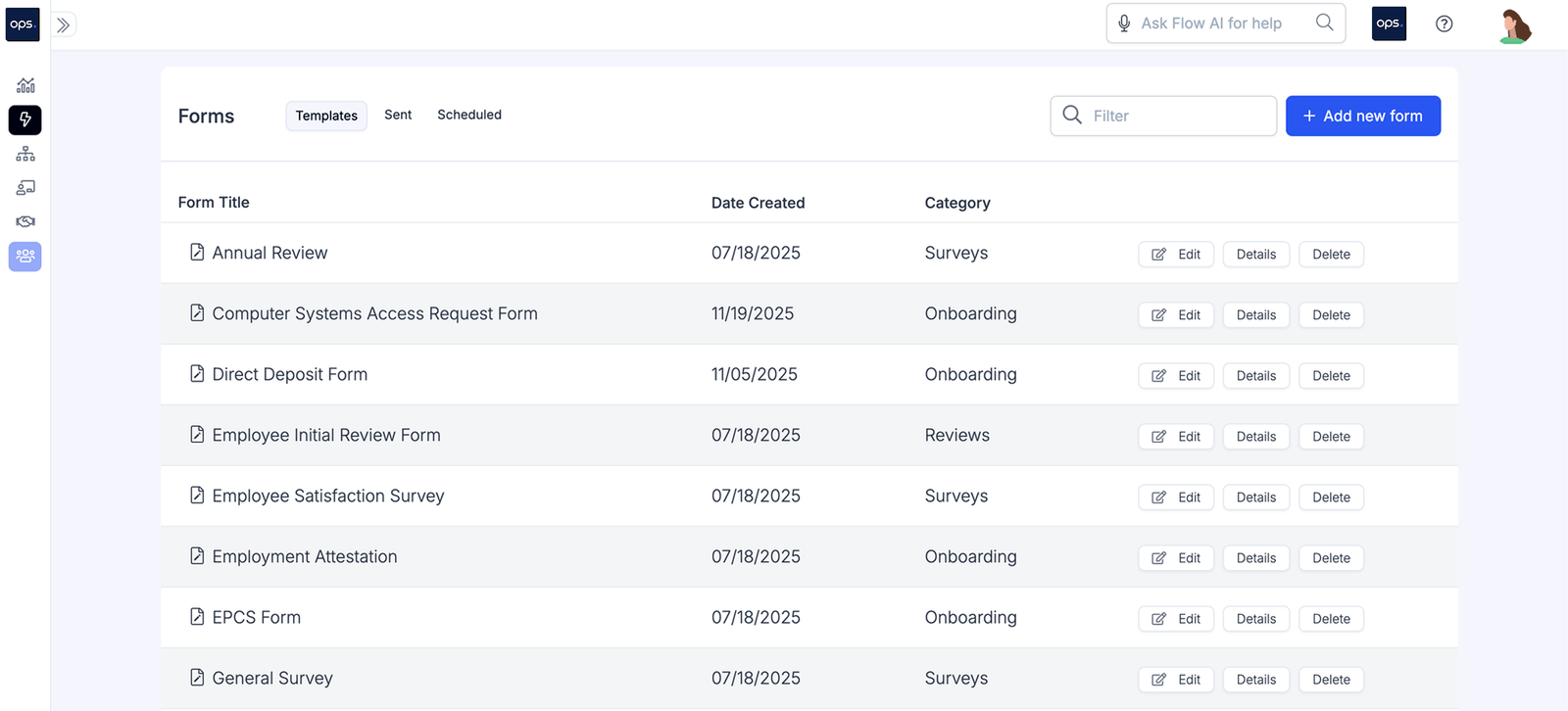
Ops.work offers thousands of pulse and employee survey templates to simplify survey creation. You can try these templates with our free plan or unlock more templates with our free Jotform integration.
What are the Best Practices for Using Pulse Surveys to Measure Employee Engagement?
Discover best practices to help you identify engagement issues in your organization and resolve them before they turn into serious problems such as disengagement and turnover.
Set Clear Goals
Pulse surveys are popular for tracking engagement. The goals of your employee pulse surveys depend on what you want to measure and the information you want to collect.
It also involves identifying your survey's audience. For instance, if you want to reduce turnover among your nursing workforce, sending a pulse survey to your lab technicians might not be the best strategy.
Communicate Survey Results
Communicating results from employee pulse surveys can help build transparency and trust. It lets employees know that you care about what they have to say. In addition to enhancing transparency, communicating these results makes it easier to collect feedback in the future.
When communicating employee survey results, customize your message to ensure it's relevant to each stakeholder (senior managers, team leads, and employees.
Here are the must-have elements of your communication strategy:
- A thank you message to employees for their participation (within the first 24-48 hours after survey completion)
- The preliminary results from the survey, including the strengths and weaknesses identified
- A timeline of when to expect the final in-depth results and action plan. Ideally, the timeline should be within two to four weeks.
- Recommendations and an action plan on how to improve engagement
- Follow-up messages to update employees and managers on the progress made in acting on survey responses
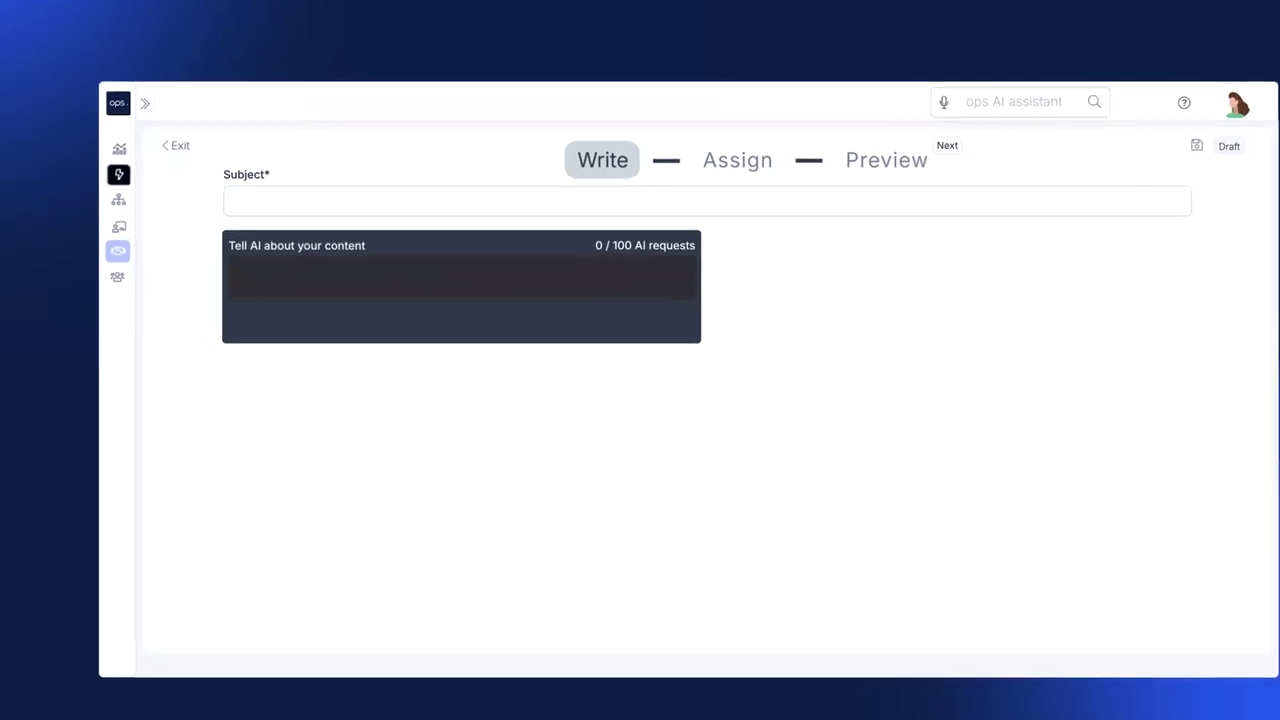
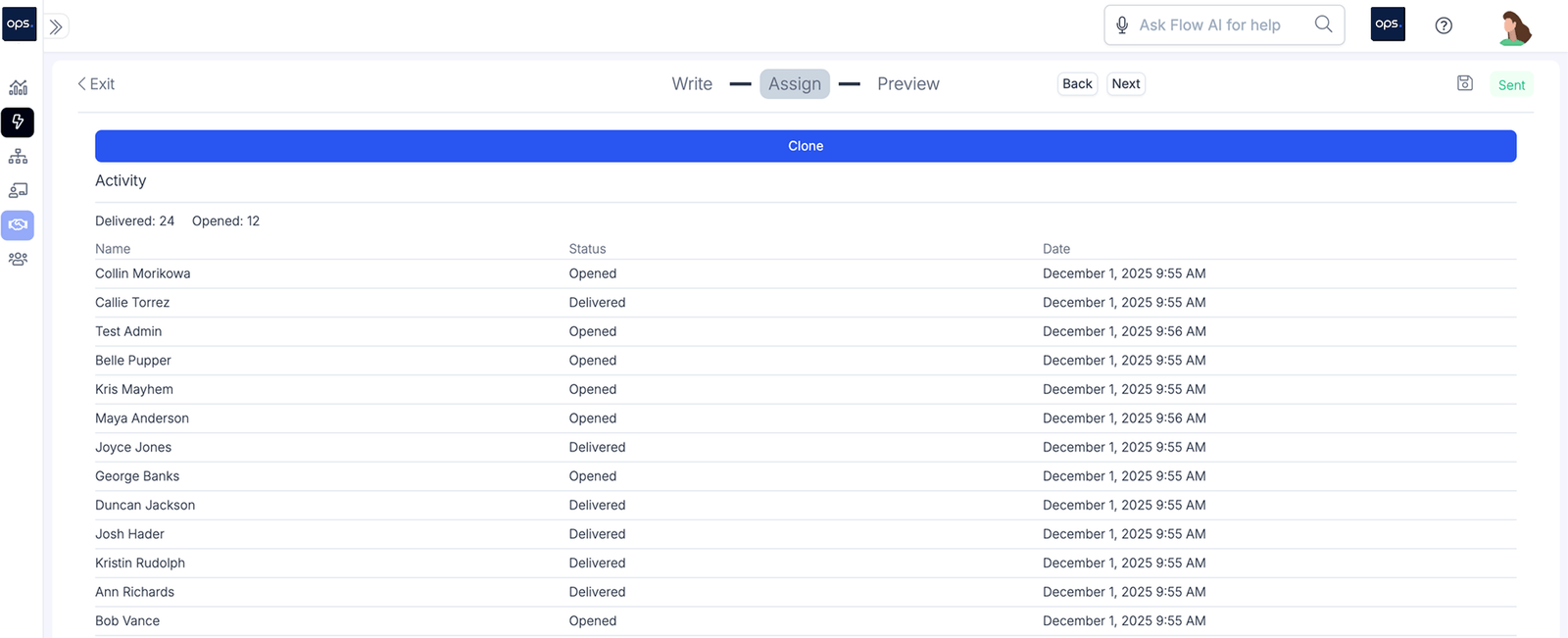
Ops.work lets you create and send company-wide emails to notify employees about surveys to take or to update them on the results and actions taken after the survey.
Our survey platform has built-in tracking features that let you know whether your messages are delivered and opened.
Act on Feedback
Only 8% of employees agree that their companies take action after conducting employee surveys. Failing to take action after a pulse survey reduces engagement and increases turnover.
The first step in acting on feedback is analyzing results to identify the aspects of employee engagement that can significantly improve your business.
Once this is done, involve the relevant stakeholders in creating an action plan. Schedule a meeting to discuss the results and come up with actionable steps you can take.
These actionable steps help you formulate goals and assign tasks and responsibilities. For example, if your pulse survey reveals issues like employee dissatisfaction with their compensation and benefits, an action plan would be to develop a rewards and recognition program.
For such a task, responsibilities would be assigned to:
- Upper management for resource planning and budget allocation,
- Managers for program implementation and performance evaluation, and
- Employees for participating in the program
Balance the Cadence to Prevent Survey Fatigue
Conducting pulse surveys often can leave your employees suffering from survey fatigue. This fatigue happens when your employees become disinterested in completing surveys. The common reasons employees may lose interest in your surveys include:
- Conducting too many surveys within a short time
- Poor communication about the purpose of the survey
- Poor survey design
- Failure to act on employee feedback, which communicates to employees that their voice doesn't matter
- Too many questions in the survey, overwhelming your employees
Conclusion
Maintaining high levels of employee engagement is important for healthcare organizations, given their higher risk of staff turnover. Pulse surveys help you collect timely, relevant data on engagement metrics, enabling you to improve performance and create a healthy, supportive workplace. Get started with our free plan to create the best surveys for your staff.
References
Gallup, Inc. “Employee Surveys: Types, Tools and Best Practices.” Gallup.com, 2025, www.gallup.com/workplace/692474/workplace-employee-surveys.aspx.
Berthelsen, Hanne, and Tuija Muhonen. “Taking the Pulse: A Qualitative Study on Pulse Survey Implementation.” Frontiers in Organizational Psychology, vol. 3, 27 Jan. 2026, https://doi.org/10.3389/forgp.2025.1696769.
Jolton, Jeffrey A., and Cameron Klein, 'Exploring the Universe of Pulse Surveys and Continuous Listening Opportunities', in William H. Macey, and Alexis A. Fink (eds), Employee Surveys and Sensing: Challenges and Opportunities (New York, 2020; online edn, Oxford Academic, 21 May 2020), https://doi.org/10.1093/oso/9780190939717.003.0004
Frequently Asked Questions
Pulse surveys are meant to be anonymous for honest feedback. You can ensure anonymity by not collecting PII and by adhering to ethical and regulatory privacy and data security guidelines.
Pulse survey scores are measured through Employee Net Promoter Scores. For healthcare, an eNPS of 15 is considered good.
Significant organizational changes and a sudden decline in productivity are among the common triggers for a sudden pulse survey.
The survey cadence depends on the organization. They can be weekly, monthly, or quarterly.
The length of a pulse survey depends on the frequency at which it is conducted. The more frequent they are, the lower the number of questions to include to prevent survey fatigue.
Group the data you collect from the survey into groups, identify trends, and correlate the data with other business metrics such as retention rates. From the analysis, identify action areas and break them down into tasks.