
According to Gallup's 2023 Report, companies lose USD 8.8 trillion annually due to low employee engagement. Companies with engaged employees benefit from enhanced performance, job satisfaction, and productivity. Creating an engagement plan, providing mentorship and opportunities for professional development, creating a strong onboarding program, and investing in a rewards and recognition program improve engagement and retention.
Key Takeaways
- Benefits of high employee engagement include improved performance, job satisfaction, productivity, work-life balance, and employee retention
- Employee engagement encompasses emotional, cognitive, behavioral, and social dimensions
- Engagement levels can be categorized into three types: highly engaged, not engaged, and actively disengaged employees
- Recognition and rewards can keep employees engaged by making them feel appreciated
- Companies should have an environment that supports relationships between colleagues
Companies lose USD 8.8 trillion annually, according to Gallup's State of the Global Workplace 2023 Report, due to low employee engagement or total disengagement. On the other hand, companies that prioritize employee management efforts tend to have higher levels of employee satisfaction, engagement, and retention.
What is Employee Engagement and Why It Matters
Employee engagement refers to the level of enthusiasm, commitment, and involvement that employees have in their jobs. The nature of employee engagement can be emotional, cognitive, social, or behavioral.
Emotional engagement refers to an employee's emotional connection to their work. It manifests as a deep sense of purpose and enthusiasm for the work they do. Emotional engagement means the employee has aligned their personal values with the company's mission and values.
Cognitive engagement refers to the willingness of employees to invest their intellectual capabilities in their work. Such employees are committed to their work and show a willingness to solve problems, take on new challenges, and seek learning opportunities.
Behavioral engagement refers to an employee's willingness to adopt the behaviors and culture of the organization in which they work. Such engagement is impactful in companies with a positive company culture that allows employees to perform at their best.
Social engagement refers to the nature and quality of relationships an employee has with colleagues and team members. Socially engaged staff communicate effectively, collaborate more, and engage in social learning more.
There are three employee engagement levels in companies:
- Highly engaged employees are more likely to collaborate, offer discretionary effort, innovate, and show an overall positive attitude.
- Not engaged employees are still productive, but they do only what's expected of them and nothing more. They're going through the motions with neither energy nor passion for the work they do.
- Actively disengaged employees openly express their dissatisfaction and, in some cases, actively sabotage the efforts of their colleagues and teams. When not addressed, they can lower team morale and productivity.
Companies with engaged teams and employees experience the following benefits:
- Improved individual, team, and business performance
- Higher levels of job satisfaction result in higher retention
- Increased employee productivity and a greater quality of work delivered
- Improved work-life balance resulting in lower burnout and employee turnover rates
- Engaged employees become your brand ambassadors, which makes it easier to attract and retain top talent
Employee Engagement Best Practices: What are the 5Rs of Engagement?
High employee engagement doesn't just happen. It results from intentional efforts by managers and leadership to create an environment that builds a sense of belonging and helps employees perform better at their jobs.
Here's a framework of best practices that you can use when implementing employee engagement strategies:
Reason or Purpose
A sense of purpose gives employees something to work towards. It goes beyond setting objectives to understanding the impact of their role on themselves, their colleagues, the company, and the community.
As a manager, creating a sense of purpose means connecting each employee's role to the company's success. It means being clear on why your organization exists and the goals it's working towards beyond making a profit.
Once this goal is clear, leadership must create an organizational structure that allows all employees across the organization to contribute meaningfully to the purpose. Such a structure clearly outlines:
- Work specializations ensure that all employees understand what they are responsible for within their teams and the organization
- The chain of command, which ensures that each employee knows who to go to for support
- The standards and procedures that employees must adhere to. These standards are important, especially in healthcare settings, where their behavior impacts patient outcomes and compliance.
Different employees will be motivated by different things. Therefore, managers should communicate with employees to understand what motivates them, then communicate the organization's values in a way that connects to their personal values.
Responsibility
Responsibility means aligning an employee's skills with their job responsibilities. Job skill alignment should start before a new hire joins your facility. The process begins with assessing the skills required for a specific job and creating matching job descriptions to guide the hiring process.
Once hired, assess the current skills and competencies during the earlier stages of employee onboarding. This helps you identify the training and support your new employee needs to be productive in their role.
It also helps you identify and create employee development opportunities to help your staff gain and improve the skills they need to succeed in their role.
For employees, job skill alignment lets them know that your organization appreciates their knowledge and competencies and provides the environment to apply them. This drives employee engagement and improves the quality of their work.
Ops.work lets you assign tasks and training that match an employee's skills and role.
Recognition
Employees thrive when their contributions are recognized and appreciated for their efforts. Employee recognition can be social, formal, or informal.
Social recognition happens when employees can appreciate the value each team member brings and commend them for it. It boosts employee motivation and encourages collaboration and teamwork.
Social recognition is more common in organizations that seek to create a more inclusive environment that encourages collaboration and healthy competition.
Formal recognition includes all official and structured employee recognition programs. These include employee of the month lists, performance bonuses, and annual awards. They are more public in their appreciation of employee efforts.
Formal recognition is often included as part of performance management initiatives such as leadership development for promising employees.
Informal recognition is typically less public and often more personalized for the recipient. It may include a thank-you note for helping a colleague or a one-on-one meeting between a manager and employee.
Rewards
Employee rewards are monetary and non-monetary incentives that companies offer employees to improve engagement and performance.
They include bonuses, extra time off, free perks, employee benefits, flexible work arrangements, promotions, company-sponsored experiences, and salary increases.
The approach you take with your rewards program leads to high or low engagement, depending on how your employees perceive it. Ideally, your program should align with the effort.
For instance, employees are likely to disengage if you consistently give low-value rewards for high-return achievements. Rewards should be customized to match the effort employees put into their work.
Here are other elements to improve your employee reward system:
- Have a clear and transparent reward criterion that each employee understands
- Implement an ongoing reward system to help you recognize employees in time and reinforce the behaviors that lead your company closer to its strategic objectives.
- Scale your rewards system as the company grows. This allows employees to feel and be rewarded for the impact of their efforts.
Relationships
Organizations where staff members have strong relationships tend to have higher employee engagement rates, job satisfaction, and employee well-being.
Strong employee relationships enhance employee engagement by fostering open communication among team members, promoting trust, and fostering acceptance.
Relationship building should begin during onboarding by including activities that allow new staff members to interact with their co-workers face-to-face. Some of these activities include team-building initiatives and team lunches.
Other ways for managers to foster social relationships between employees include:
- Effectively managing conflict between employees
- Create communal areas within the organization to facilitate informal relationships between employees
- Lead by example by demonstrating positive interactions with other managers and staff
6 Effective Employee Engagement Strategies
Companies that want to enjoy the benefits of employee engagement must also invest in comprehensive employee engagement programs. Such a program fosters employee engagement by encouraging management practices that create a positive workplace culture. Here are the top employee engagement strategies:
1. Conduct an Employee Engagement Survey and Create an Engagement Plan
You must conduct an employee engagement survey before implementing any employee engagement strategies. Tools such as pulse surveys let you collect feedback on the rates of employee engagement within your organization.
Some of the metrics to track in your survey include:
- The level of role clarity
- How connected employees feel to the organizational culture
- Whether every employee has the tools and resources to facilitate their work
- Whether employees feel recognized and adequately rewarded for the work they do
You can simplify this process using automation software such as ops.work, which allows you to create surveys from our in-built form templates. Alternatively, you can use free templates from our Jotform integration. After creating your survey, assign the form to the relevant employees.
The survey gives you key employee feedback on what they think about your staff engagement. It also provides key data to help you plan your employee engagement efforts.
2. Create Mentorship Programs
Mentorship programs boost employee engagement by providing employees with opportunities for personal and professional development. It should be ongoing, flexible, customizable, and accessible to all employees.
Here is how to develop mentorship programs that increase employee engagement:
- Identify the goals you want to achieve with the mentorship program, such as training new employees or improving performance
- Select the appropriate mentorship program based on your goals. Mentorship can be peer-to-peer or traditional (eg, from an experienced employee to an entry-level employee).
- Choose the mentors and mentees
- Clarify the eligibility requirements for both mentors and mentees
- Create a structure for your mentorship program with clear goals, an outline of procedures such as how and when mentors provide mentorship, and feedback collection.
- Evaluate and improve the program.
3. Empower Your Employees to Make Decisions
Employee participation in making company decisions significantly improves employee engagement. When employees have a voice in the direction a company goes, they have less resistance to change and greater engagement.
One way to involve employees in decision-making is by using tools such as suggestion boxes and surveys. Another way is to give them autonomy over their role.
Autonomy means your employees are free to make decisions on how they perform their work. This fosters a sense of ownership in the work they do, leading to strong engagement. It also reduces the frustration, burnout, and disengagement that come with micromanagement.
4. Create Internal Career Advancement Opportunities
Career advancement opportunities play a great role in employee engagement. When employees know that their career can grow within your organization, they are more likely to adopt the behaviors that drive growth.
These behaviors include constantly learning and upgrading their skills, as well as seeking alternative positions that may offer them greater satisfaction.
Here is how to drive high engagement through internal career mobility opportunities:
- Identify the potential lateral and vertical career paths available in your facility
- Develop training courses that allow your employees to develop the skills they need to make lateral or vertical moves
- Set internal hiring targets to ensure HR assesses or develops internal employees before reaching out to external applicants
- Provide ongoing training and incentives to improve your employee engagement
- Invest in succession planning through executive education
5. Recognize and Reward Employees Accordingly
Recognizing and rewarding employees is one of the most effective employee engagement strategies. It lets your employees know that you value their contributions and will reward them appropriately.
Rewarding employees also includes offering fair compensation for the work they do. The salary and benefits they receive, without additional bonuses and perks, provide financial security, which in turn drives engagement and satisfaction.
Review your rewards and compensation systems regularly to ensure they match your company's growth and changing market needs.
6. Develop a Strong Onboarding Program
Onboarding sets the pace for employee engagement by shaping the experience employees have of your company's culture. This experience begins long before their first day at work and determines whether new hires stay or leave your company.
A good onboarding program allows your employees to feel welcomed and supported. It provides a soft landing and offers ongoing support until they are fully integrated into the organization.
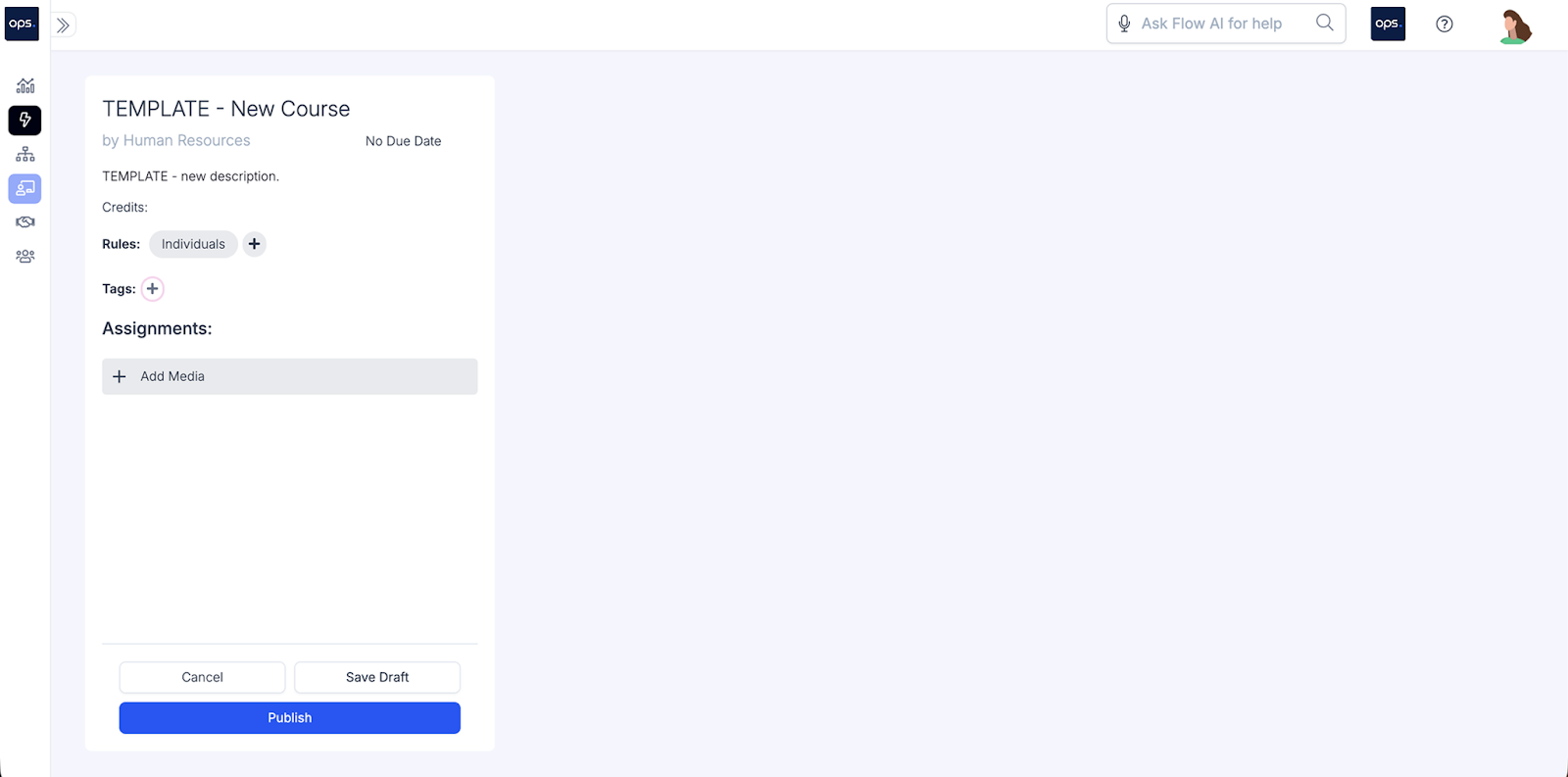
Since onboarding can be overwhelming, especially in fast-paced environments such as healthcare, ops.work provides a comprehensive software that helps you build employee engagement from day one. Try our free plan for efficient onboarding and increased employee engagement.
It includes a robust set of LMS features that help you create and deliver training materials to drive employee engagement.
Conclusion
Employee engagement offers benefits to individuals and companies. For individuals, it creates satisfaction, reduces burnout, and promotes overall well-being. For companies, it improves productivity, retention, and innovation.
References
“Improving Employee Engagement: HR Strategies to Foster Growth, Wellness, and Retention | the University of Scranton.” The University of Scranton, 31 Aug. 2023, gradadmissions.scranton.edu/blog/articles/human-resources/improving-employee-engagement.shtml.
Hartley, Morgan. “Enhancing Employee Engagement and Retention: The Critical Role of Psychological Safety in the Onboarding Process.” Strategic HR Review, no. 1475-4398, 24 Dec. 2024, https://doi.org/10.1108/shr-10-2024-0080.
Esaki, Nina, et al. “An Exploratory Study of Employee Engagement in Human Service Agencies.” Journal of Human Services, vol. 43, no. 1, 13 Oct. 2023, journalhumanservices.org/article/89008-an-exploratory-study-of-employee-engagement-in-human-service-agencies, https://doi.org/10.52678/001c.89008.
Frequently Asked Questions
Managers can make employees feel engaged by clarifying expectations, setting realistic goals, and providing ongoing support to employees.
You can measure the levels of employee engagement in your organization using engagement metrics such as Net Promoter Scores, turnover, and employee retention rates. Tools to help you measure engagement include employee surveys, one-on-one feedback sessions, and stay interviews.
How engaged employees are depends on factors such as the work environment, the organization's culture, the relationship between managers and employees, and the level of trust and communication within the organization.
Your employee engagement initiatives are likely to fail if you have a negative work environment, a poor reward structure that lowers employee morale, and poor communication. You should focus on employee engagement activities such as building trust, open communication, a healthy work culture, and offering rewards and incentives to high-performing employees.