
Company culture is the foundation of what your company is and how you do things. It allows you to attract and retain top talent. A positive and healthy company culture requires planning and continuous reinforcement after implementation. Employee engagement, retention rates, productivity, and training completion are indicators of the health of your company culture.
Key Takeaways
- Company culture shapes the way an organization functions
- Company culture can be collaborative, hierarchical, an adhocracy or a high-performance culture
- A healthy company culture has four key components: core values, leadership, employees, and workplace structures
- Building a healthy company culture begins with understanding your core values, mission, and vision
Company culture is the foundation of what your company is and how you do things. It determines how employees interact with one another and with patients, as well as the resulting experience.
It can be intentional, accidental, healthy, or toxic, depending on what the company encourages. Proactively creating an outstanding company culture sets you up for success by fostering a healthy environment in which employees can work and thrive.
Read on for more on how to build, improve, and sustain a culture that drives employee engagement, satisfaction, and business growth.
What is Company Culture?
Company culture refers to the shared beliefs, values, and attitudes that exist within a workplace environment. They may be written or unwritten, but they shape the way an organization operates.
In a healthcare setting, workplace culture influences the kind of care patients receive and the level of collaboration between multi-disciplinary teams. It can be healthy or toxic, depending on which attitudes are allowed to dominate.
Why is Company Culture Important?
Company culture benefits your company in several ways:
- It helps your company attract better candidates, as you know the soft skills to look for to ensure a culture fit during hiring
- It allows you to retain top talent by keeping them engaged and rewarding their efforts
- It allows you to provide better employee experiences, resulting in increased engagement and productivity
- It enhances inclusion and diversity both in your teams and approaches to problem-solving and patient experience
What are the 4 Types of Company Culture?
The type of culture a company has is shaped by how it embodies its organizational mission and values. The dominant elements shape how this culture presents itself. Therefore, there are many cultures to choose from, but here are the four common types:
1. Collaborative Culture
A collaborative or clan culture prioritizes deliberate and regular teamwork. Such teamwork goes beyond brainstorming sessions and shows up in how employees share knowledge, highlight company problems, and come up with solutions.
In a collaborative environment, the effort of each employee is directly tied to organizational outcomes. Each employee clearly understands their roles, duties, responsibilities, and organizational goals.
This collaboration also shows up in the interactions between management and employees. Instead of a top-down approach to decision-making, company leaders involve employees in various ways, including:
- Mentoring employees
- Delegating tasks and trusting employees to tap into their strengths
- Collectively identifying issues in the company and correcting them instead of assigning blame
Collaborative environments have an ingrained culture of trust which fosters a sense of community, drives employee engagement, and increases job satisfaction.
However, it can also encourage conformity and may not be suitable for all projects. Without the right checks in place, it can create more distractions and discourage employees from working on their skills gaps as they focus more on their strengths.
2. Hierarchical Culture
A hierarchical company culture is one with clearly defined organizational structures, procedures, and processes. In hierarchical environments, the organization has a clear chain of command, with decisions made at the highest levels of authority, trickling down to entry-level employees.
Organizations with this type of culture prioritize risk management, stability, and doing things the right way. Such a corporate culture is ideal for healthcare companies, which must comply with federal, state, local, and internal regulations.
While a hierarchical organizational culture can become inflexible and slow to innovate, it also has several benefits:
- It fosters a stable work environment with predictable routines and clear roles
- It offers a clear chain of command, making accountability easy
- Employees have clear career and promotion paths, which can create a sense of security, therefore, improve employee morale
3. Adhocracy Culture
In an adhocracy culture, the company focuses on flexibility, innovation, and adaptability. Such organizations lack a traditional hierarchical culture, giving teams more power to make decisions.
Such autonomy means teams have a greater sense of ownership and accountability for their work and the decisions they make. It also means the organization focuses on recognizing and rewarding employees for their contributions.
Adhocracy as a workplace culture prepares your company to respond quickly to emerging challenges. It also fosters a culture of continuous learning and development.
However, the lack of clear structures results in inconsistent decisions. These inconsistencies can lead to non-compliance, particularly for companies operating in highly regulated environments, such as the healthcare sector.
4. High-Performance Culture (Market-driven)
Market-driven cultures are highly competitive and results-oriented. Companies that rely on this structure encourage high levels of competition, as performance dictates an employee's progress within the organization.
Such an environment can be beneficial for ambitious, innovation-driven teams and employees. However, they can also lead to high levels of burnout and turnover as employees can begin to feel like machines, expected to deliver results at all times.
What are the 4 Key Components of a Healthy Company Culture?
A healthy culture is good for the company, employees, and customers. It provides a psychologically safe environment for your employees, allowing them to deliver their best while growing personally and professionally.
It doesn't matter what the culture at your organization looks like as long as it has the key elements of a healthy company culture. These include:
1. Core Values
Shared values are the foundation on which a great company culture is built. They act as the moral guide for teams across your organization, telling employees which behaviors are acceptable.
These values also guide the decisions employees and management make on a day-to-day basis, ensuring alignment with the organization's mission and vision
2. Leadership
Your company's leadership heavily influences the direction your culture takes. Leaders play a crucial role in creating a great culture by communicating the company's vision.
Once they set this vision, their behavior influences how the rest of the company adopts or rejects the culture.
When leaders embody a positive culture, such as taking accountability, listening to employees, and rewarding and recognizing employee successes, employees pick up on it and embrace the same values.
3. Workplace Structures
Strong workplace structures are one of the ways to develop a strong culture. These structures answer the "how are things done" question, allowing employees to focus on delivering results instead of figuring out the process.
In sensitive industries such as healthcare, having predictable systems not only improves productivity and ensures consistent patient care but also ensures regulatory compliance.
Automating these structures takes it a step further, making workflows efficient, reducing errors, and ensuring consistent results across teams. Here's how ops.work facilitates efficient workplace structures:
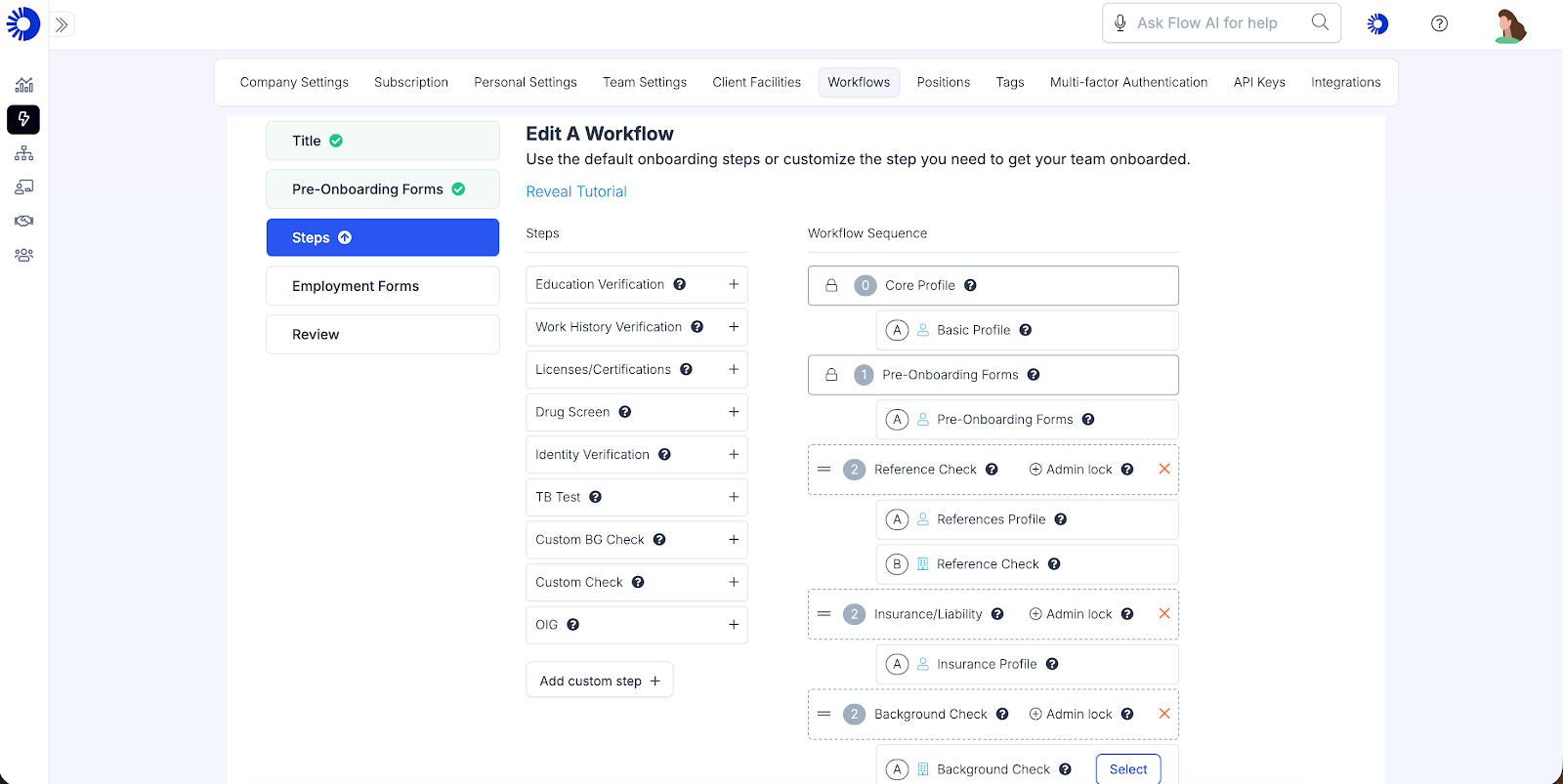
Ops.work allows you to customize workflows so your employees spend less time figuring out what to do. You can choose the steps and sequence for each workflow. Here's an example of a credentialing workflow:
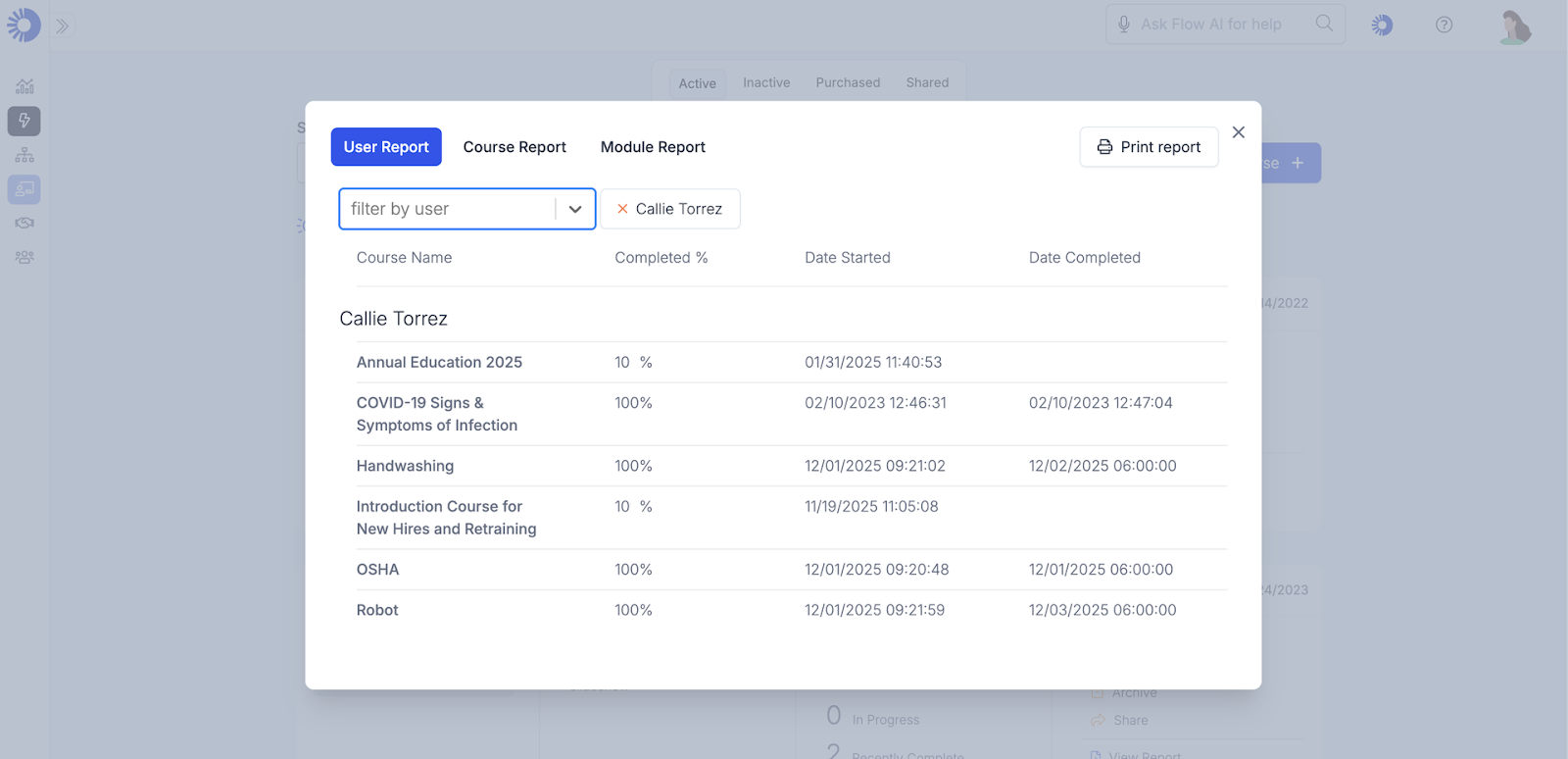
Ops.work also automates reporting and tracking, especially for your cultural and compliance training efforts. You can generate comprehensive reports on which employees have completed what courses and what this means for your compliance and efforts to develop a company culture.
Other workflows you can automate include:
- Staff scheduling
- Patient onboarding workflows
- Claims processing
- Referrals management
- Medical billing
4. Employees
A company culture matters because of your employees. Without them, your culture cannot exist or be actualized. They keep your culture healthy in several ways:
- Collaborating with other employees or teams
- Sharing ideas and feedback openly
- Supporting their peers through constructive feedback, recognition, and appreciation of team effort, and mentorship to new employees
Employee behavior that is not aligned with the company's values can result in a toxic company culture. In such a culture, employees are emotionally checked out, going through the motions to do the bare minimum.
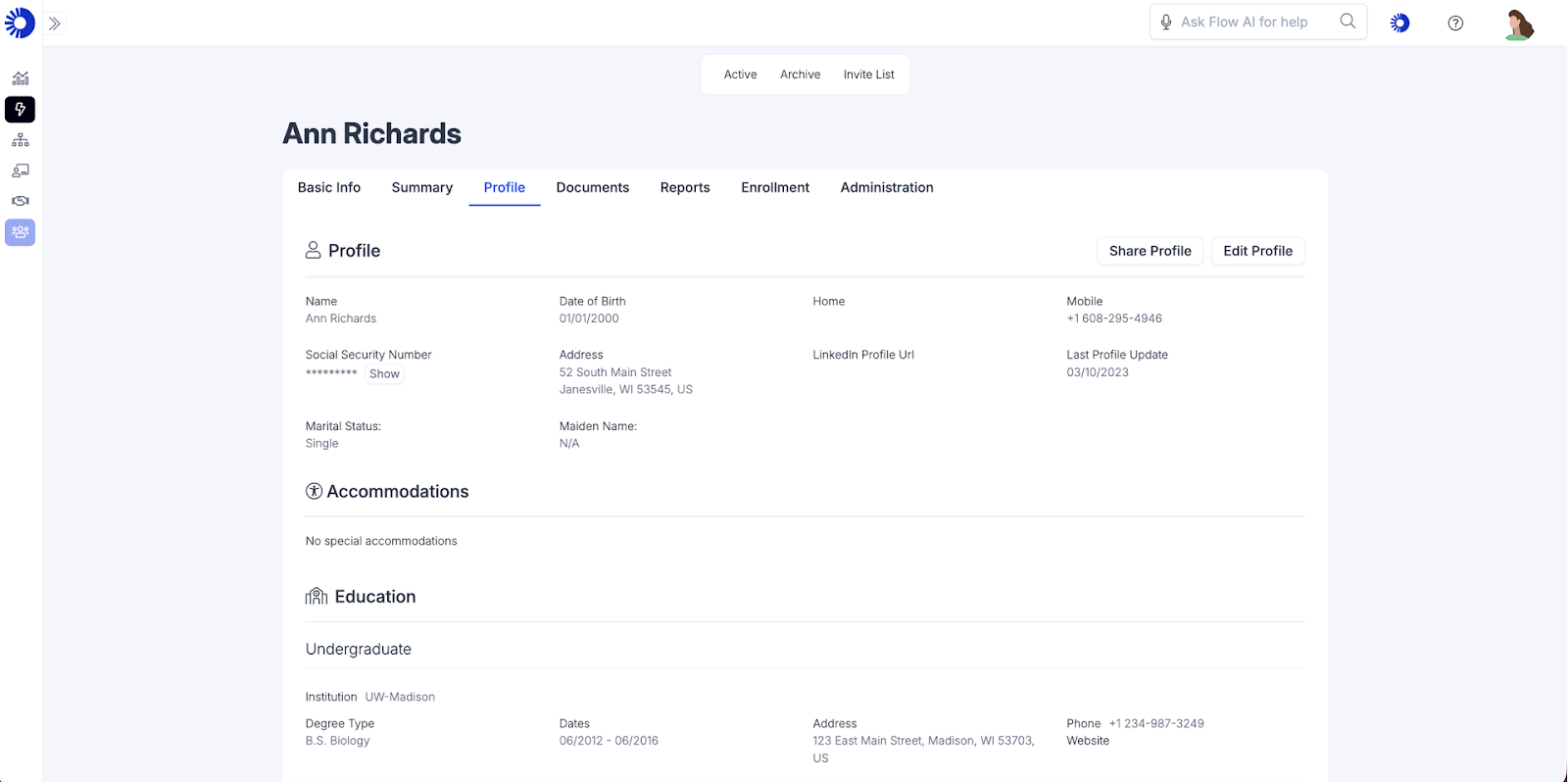
Ops.work provides a centralized database of employees, making it easy to track how each employee is adapting to the company culture and the resources they may need to keep them engaged and improve their experience:
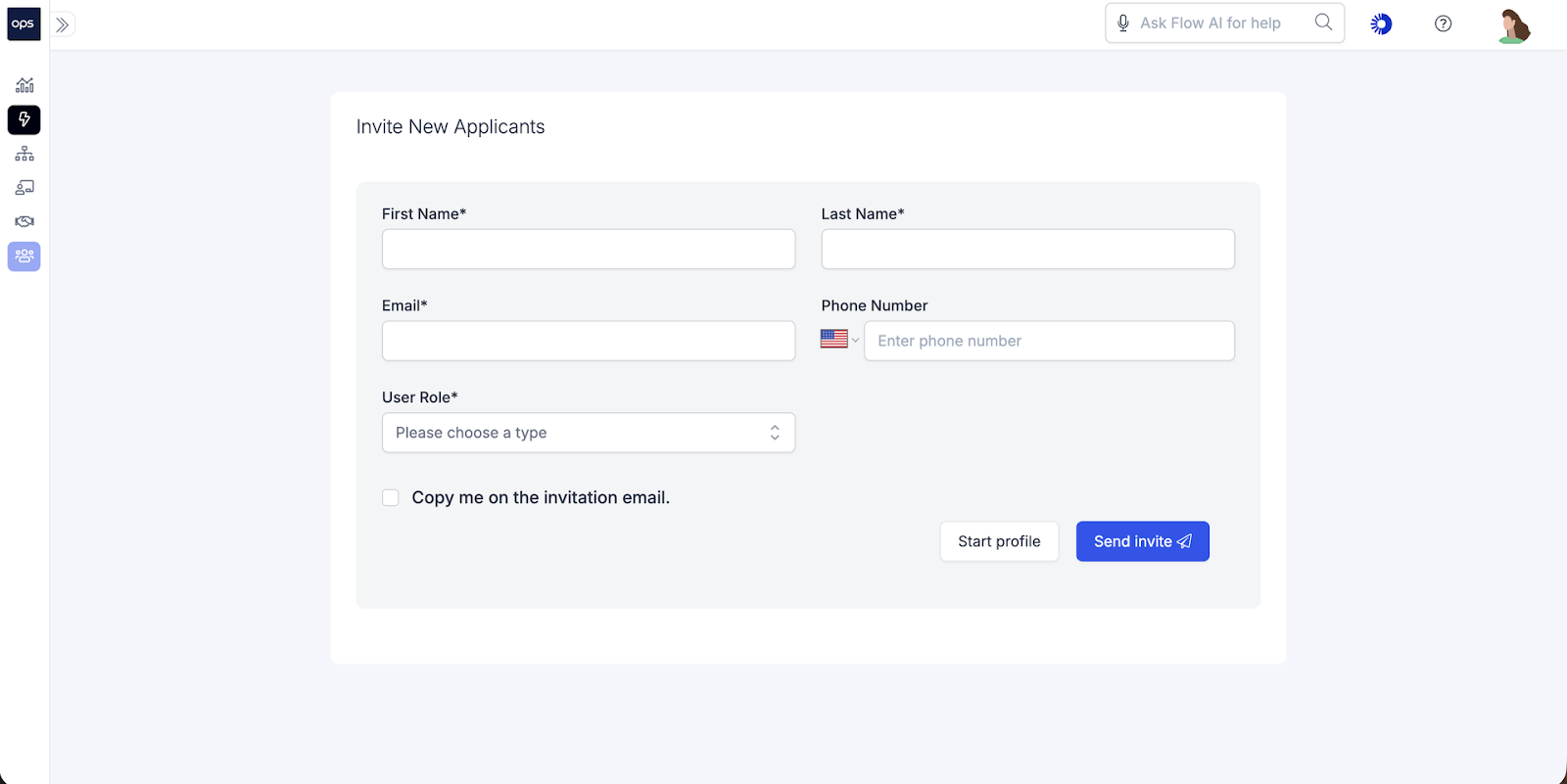
As part of employee management ops.work allows you to:
Invite new hires to your platform
Manage employee profiles from a centralized location:
What are Some of the Best Strategies for Building a Strong Organizational Culture?
Each organization has a company culture, whether you built it strategically or allowed it to develop organically. Each organization's culture is unique as it includes a unique set of values, beliefs, and norms.
Actively creating your company's culture means you can shape the experiences employees, customers, and partners have when interacting with your company. Here are proven strategies to create a strong workplace culture:
1. Define Your Mission, Vision, and Core Values
Your vision, mission, and core values form the foundation of your culture. The vision defines your overarching, long-term goal, while the mission outlines how you intend to achieve it. Your company values create guidelines for organizational behavior.
Here are questions to help you define your mission, vision, and core values:
- Why did you start your organization?
- Who are your customers?
- What does your company do?
- What do you want to achieve in the next 5, 10, or 20 years?
- What do you want your organization to be known for?
- Which behaviors do you want to encourage, recognize, and reward in your employees?
- What are your non-negotiable principles?
2. Build a Workplace Environment Based on Mutual Trust
Trust is an important aspect of your company's culture. It gives your employees a sense of psychological safety by knowing what to expect.
Cultivating mutual trust fosters strong relationships and promotes open communication. Employees can depend on managers to provide a safe and productive environment, where they can receive the recognition they deserve for their efforts.
Cultivating trust within the organization involves:
- Listen to your employees. Let them know that their ideas and concerns matter
- Embrace a culture of recognition for employee efforts
- Mentor your employees. If mistakes arise, provide constructive feedback that helps them grow
- Include accountability for management and employees
- Encourage open communication within the organization, whether it's from management to staff or across teams
- Be consistent in communication and actions
3. Set up Structures that Promote Role Clarity
Employees are more productive and engaged when they understand:
- Their roles and responsibilities
- The expectations they must fulfil
- How their role relates to other team members
- How their role contributes to the organization's goals
You start laying the foundation for role clarity from the hiring process through clear job descriptions. Once you hire the right fit for the role, you provide them with a clear description of their roles and duties during their first meeting with HR.
In addition, ongoing training and performance reviews provide further opportunity to clarify what you expect from each employee.
In healthcare settings, role clarity contributes not only to a strong work culture but also to effective patient care. It creates clear boundaries in who does what, making accountability and compliance easier.
4. Create a Learning Culture
Healthcare workers must continually upgrade their education to meet licensing requirements and stay current with the evolving regulatory environment. Therefore, continuous learning and development are key components of a great company culture in healthcare settings.
You can build a learning environment in your facility in several ways:
- Streamline your hiring process to attract employees who are keen on their professional and personal development
- Create learning opportunities for your current personnel through mentorship, coaching, and training programs
- Invest in an employee training platform, such as ops.work, to allow staff to access various self-paced learning materials
- Make learning a part of your organization's values
- Set up systems to encourage knowledge documentation and sharing
- Set learning goals with each employee during and beyond the onboarding phase
5. Streamline Your Hiring and Onboarding Processes
You begin shaping your employee's experience from the time you're hiring, through onboarding, and their time in the organization. Without a consistent and strong company culture, they may feel disconnected from your company.
The hiring phase is an opportunity to introduce your company culture to candidates. Ensure your job description and hiring materials reflect cultural elements that attract the right fit to your company.
While hiring for cultural fit is important, you should also foster a culture of inclusion and diversity. This way, new hires can bring diverse perspectives to problem-solving, thus improving service delivery, employee productivity, and satisfaction.
Once you've hired the candidates, create an onboarding program that affirms their decision to join your company, keeps them engaged, and provides a clear roadmap for their career progression.
6. Sustain Company Culture
Once you build a culture that you desire for your organization, the final and continuous step is to sustain it, especially in high-growth environments.
Here is how you can sustain a good company culture:
- Create consistent rewards and recognition programs to reinforce desired behaviors and performance
- Create an onboarding program that immerses new hires into your culture
- Conduct regular team-building activities to maintain trust, collaboration, and open communication across teams
- Conduct regular surveys to collect feedback and track employees' cultural engagement
What are the Key Metrics to Measure Your Organizational Culture?
Taking the pulse of your culture lets you know whether your beliefs and norms match what you intended to create, and potential areas of improvement. You can track your company culture based on the following key indicators:
Employee Engagement
A good organizational culture fosters high levels of employee engagement. When your employees feel welcome, confident in their role, and appreciated for their effort, they become more productive and engaged.
This translates to better patient outcomes and low turnover rates. You can measure employee engagement through surveys, pulse reviews, promotion rates, training completion rates, performance reviews, feedback interviews, and exit interviews.
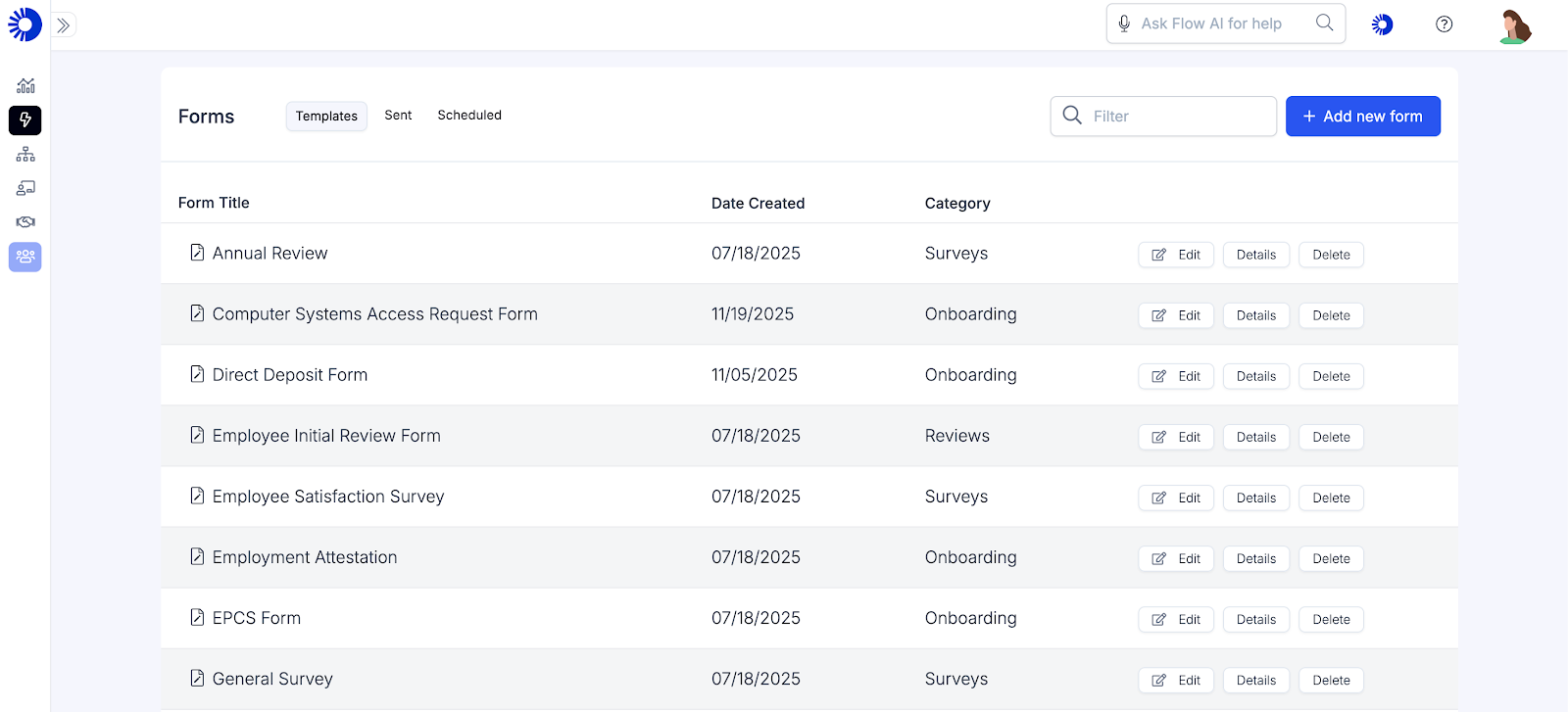
You can create survey and interview tools using ops.work form builder. The form builder lets you customize templates, whether you're creating role-based questionnaires or planning an exit interview. You can also expand your templates library with our free integration to Jotform. Start with our free plan to gauge the level of commitment across your teams.
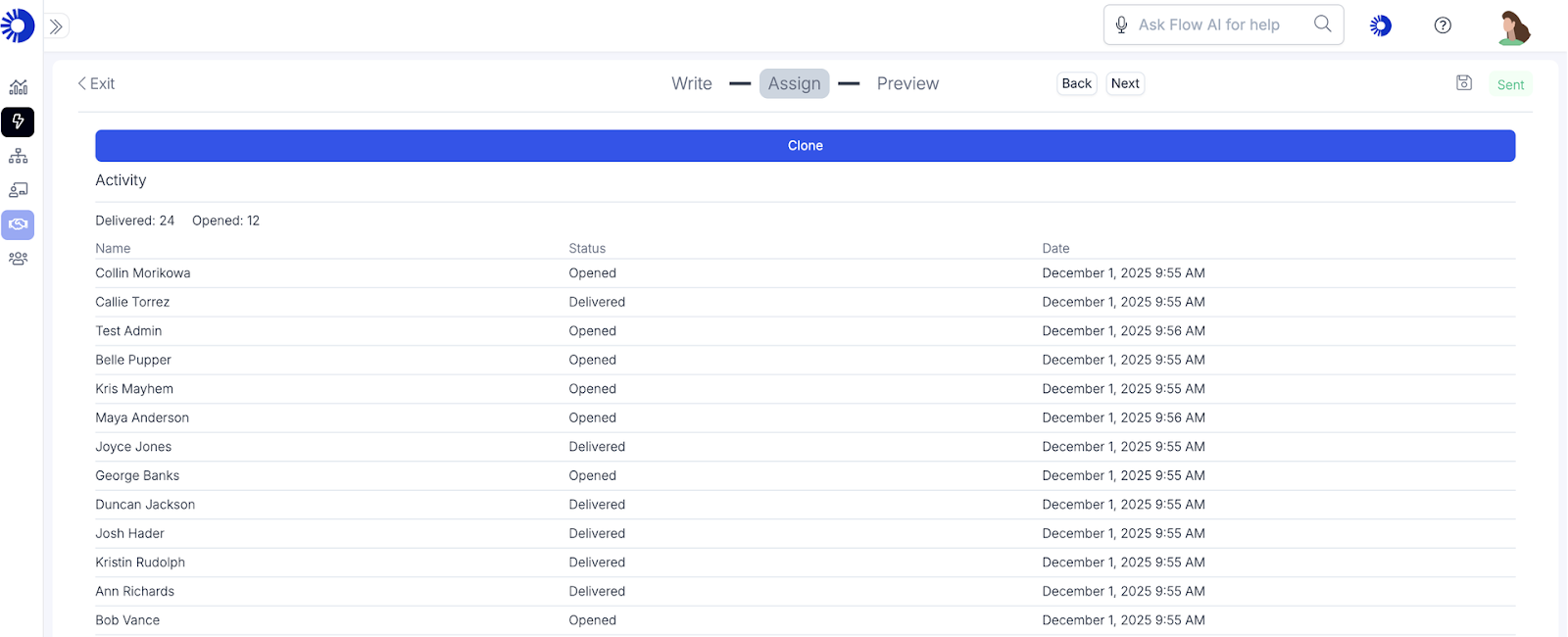
You can also track how engaged your staff is based on how well they receive and interact with internal communications. You can do this with ops.work currents reports as shown:
Retention Rates
Your retention rates reveal how engaged and satisfied your staff is. If your employees are leaving your company at high rates, it means your culture does not support their professional development and psychological wellness.
Reducing turnover rates through culture begins with the hiring process, continues through onboarding, and beyond.
Training Completion Rates
Engaged employees are more likely to take up and complete the training materials your company provides. It shows that your organization has an environment that encourages learning, continuous development, and work-life balance, which leaves time for learning.
You can track completion rates through your ops.work LMS dashboard:
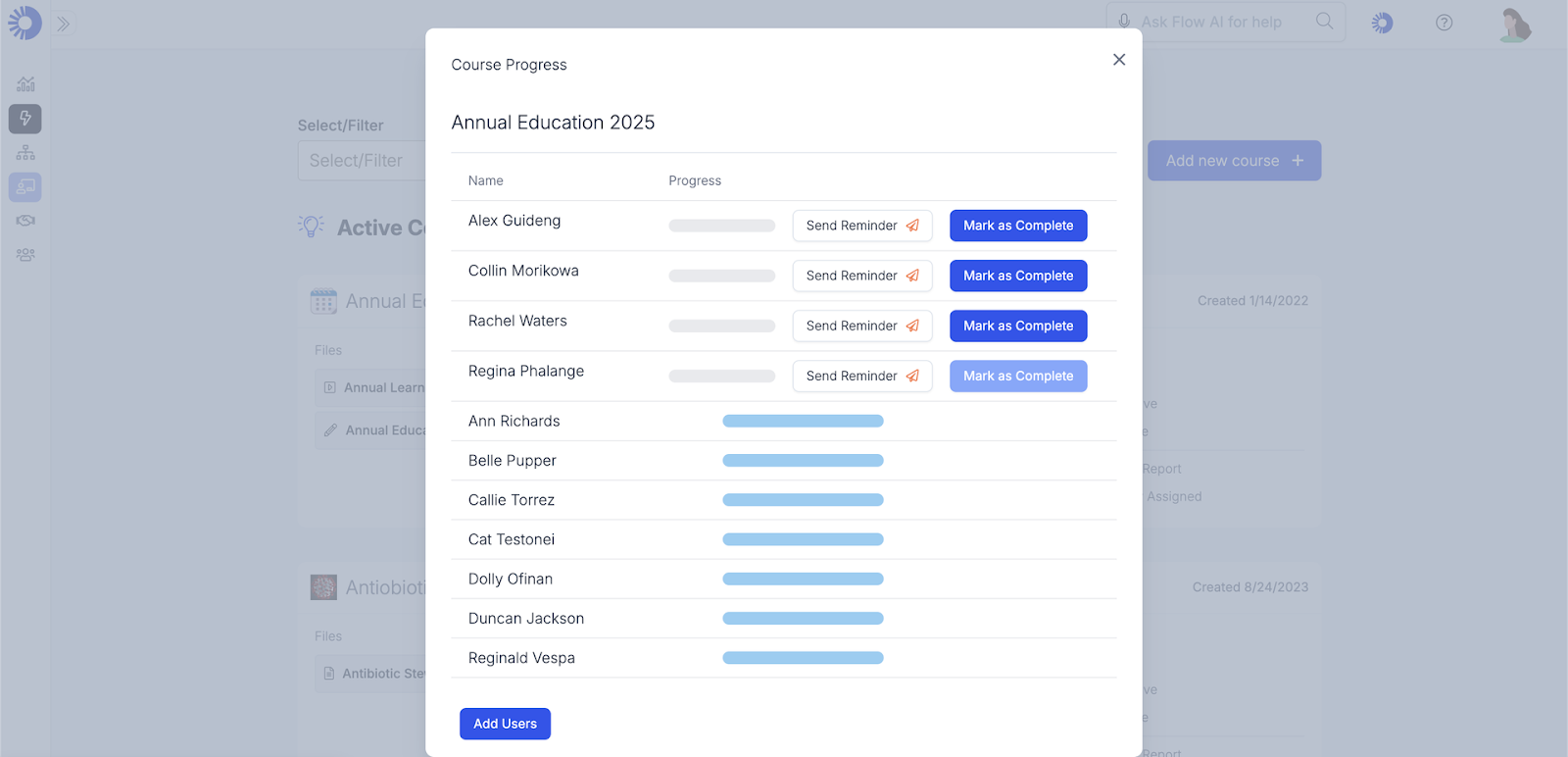
You can also track the progress of each specific course for deeper insight into what employees are engaging with:
Employee Productivity and Performance
Employees perform better when they are in an environment where they feel valued. If you have developed a culture of appreciation, your employees will be more productive. Here's how you can measure productivity and performance in healthcare:
- Patient fulfillment rates
- Number of billed hours
- Staff absentee rates
- Patient referral rates
- Wait times
How to Improve Company Culture
You can improve your company culture in several ways:
- Create a personnel recognition and reward system that all staff understand. This way, you can reward staff for valuable contributions
- Communicate the organization's values to each member of your team
- Initiate activities that enhance psychological well-being
- Be open to feedback from your staff about what is working and what isn't, including recommendations on ways to improve the workplace environment.
- Create opportunities for collaboration between multidisciplinary teams.
Conclusion
Your organizational culture is the sum of values, behaviors, and norms at your company. Shaping them intentionally allows you to curate the experience you want employees, customers, and partners to have. Ops.work lets you automate and track certain aspects of your culture, including training, employee onboarding, automating workflows, and generating various reports. Get started with our free plan to try these features for your company.
References
Bogale, Addisalem Tadesse, and Kenenisa Lemi Debela. “Organizational Culture: A Systematic Review.” Cogent Business & Management, vol. 11, no. 1, 2024, pp. 1–23, https://doi.org/10.1080/23311975.2024.2340129.
Tsai, Yafang. “Relationship between Organizational Culture, Leadership Behavior and Job Satisfaction.” BMC Health Services Research, vol. 11, no. 1, 14 May 2011. BMC, bmchealthservres.biomedcentral.com/articles/10.1186/1472-6963-11-98, https://doi.org/10.1186/1472-6963-11-98.
Topic, Martina. “Editorial 29.3: Workplace Culture.” Corporate Communications, vol. 29, no. 3, 2 Apr. 2024, pp. 281–284, https://doi.org/10.1108/ccij-05-2024-181.
Frequently Asked Questions
A toxic culture develops in environments where trust, respect, and accountability are lacking. You can address a toxic workplace by adopting various strategies to foster a positive work environment, such as creating a psychologically safe environment, setting realistic and clear expectations, and encouraging your employees to voice their concerns.
- Purpose - why do you do what you do?
- Philosophy - what are your core principles?
- Priorities - what are your most important goals?
- Practices - how do you interact with employees, customers, and partners?
- Projection - what image does the public have of your brand?
Yes. You can change how teams interact within your company by assessing your mission, vision, and values, and laying the groundwork for open communication, trust, and support among your staff.
Company culture examples range from collaborative and innovative to horizontal (start-up) environments to hierarchical ones, depending on which features are most dominant. A work environment may have elements of different cultures; for example, a hierarchical environment could also have high levels of collaboration between staff and teams.
Yes. You can manage and shape your company culture by identifying the norms and behaviors you want to adopt, communicating them to your staff, and setting up workflows to support these changes.
Company culture influences employee safety, productivity, and commitment. In a positive environment, employees become happier and more productive. In a toxic environment, they experience higher levels of burnout and dissatisfaction.