
Employee feedback systems enable managers to collect insights and suggestions from staff, fostering a culture of communication and improvement. This continuous feedback loop involves gathering, analyzing, communicating, and implementing feedback, which builds trust and encourages open dialogue among employees. Effective feedback mechanisms, such as surveys, one-on-one meetings, and 360-degree feedback, help identify engagement issues and enhance employee loyalty.
Key Takeaways
- Employee feedback system allows managers to gather suggestions from employees to identify areas for improvement and foster a culture of valuing employee input
- Continuous feedback builds trust and transparency, encouraging honest communication about workplace issues that affect performance and engagement
- Employee feedback tools should feature customizable data collection tools, analytics and reporting capabilities, communication channels, data security, and workflow automation
Collecting and acting on feedback is one of the best ways to communicate the value of employees to your organization. It lets your employees know that their opinions count and that they contribute to the bigger organizational goals. When done right, employee feedback reinforces a positive company culture built on trust, transparency, and collaboration. It also boosts employee satisfaction and engagement.
What is an Employee Feedback System?
A staff feedback system allows managers to gather information, opinions, and suggestions from employees. When done right, these systems allow managers to identify potential areas for improvement and make employees feel valued.
Collecting regular feedback from employees is an ongoing activity that facilitates communication between managers. It allows them to understand employees' needs rather than imposing their own wishes.
Building a culture of continuous feedback takes time, especially in environments where employee opinions are rarely considered. It involves demonstrating, through action on employee feedback, that they matter.
Regularly acting on employee feedback builds trust and transparency. This encourages other employees to speak up honestly about the work environment and potential issues that may hinder their performance and engagement.
This process of collecting, analyzing, and implementing feedback creates a feedback loop. An employee feedback loop consists of four distinct stages:
- Gathering feedback using employee feedback tools, such as surveys
- Analyzing employee feedback to glean actionable employee insights
- Communicating the findings to key stakeholders such as executives, managers, HR teams, and employees
- Putting actionable insights from the feedback into action
While continuous, you must close each feedback loop. You do this by communicating the actions you took and the resulting changes from implementing the insights from employee feedback.
What are the Benefits of Effective Feedback Systems?
Employee feedback provides valuable insights into employee engagement and productivity. It helps you identify potential issues in your employee retention strategy and develop possible solutions to enhance employee engagement.
Implementing efficient feedback mechanisms encourages communication and collaboration, which become key drivers of employee engagement. When employees are accustomed to having their voices heard by managers, they are more open to giving and receiving feedback from their colleagues.
These systems also improve problem-solving and innovation by identifying and addressing problems before they become unmanageable.
By creating clear channels for ongoing feedback, you can identify employee sentiments, find solutions that improve employee engagement, address interpersonal conflict, and provide resources to support your staff.
Implementing employee feedback is essential for building a healthy workplace that fosters employee loyalty. Loyal employees are more likely to remain in your organization longer and encourage talent to join your facility.
What Types of Employee Feedback Mechanisms Exist?
Feedback mechanisms include the formal and informal feedback systems that allow you to collect employee feedback. The most popular ones are surveys, one-on-one meetings, team meetings, exit interviews, and 360-degree feedback.
Employee feedback surveys are the most common mechanism for collecting feedback. They present employees with a set of questions that tell you what they think about your company. Some of the areas that an employee survey tool should cover include views on:
- Your company's mission and vision
- The current communication and feedback mechanisms
- Role satisfaction
- Overall employee enthusiasm
- The effectiveness of leadership and executive teams
Using tools like pulse surveys can help you collect real-time employee feedback at shorter intervals, such as weekly, monthly, and quarterly. Such real-time feedback allows you to identify and address employee concerns immediately, which improves the employee experience.
One-on-one meetings are often underestimated as tools for employee feedback collection. When done right, they can transform the relationship between managers and their direct reports. These meetings fill the gaps left behind through survey tools.
Surveys are often used to collect anonymous employee feedback. This can make it harder to pinpoint the support individual employees need.
One-on-one meetings bridge this gap by fostering a trusting relationship that allows employees to open up about the challenges they're facing. It also makes it possible to offer personalized resources and support for individual employee development.
360-degree feedback is an anonymous feedback system often used to collect comprehensive feedback from various sources, such as managers, peers, and employees. It is one of the best tools that provides honest employee feedback due to its anonymity.
It provides feedback data on employees' and managers' behaviour and actions. The data collected is crucial for improving employee performance and development.
What are the Features of the Best Employee Feedback Tools?
Employee feedback tools are essential in collecting, analyzing, and communicating powerful employee feedback. The best employee feedback software streamlines the feedback process, making it easy to collect frequent feedback and improve staff engagement strategies.
When used in performance management, these platforms enable you to provide timely feedback and recognition, thereby improving team and individual performance.
Here are the top features to look for in an employee management platform:
1. Customizable Employee Feedback Collection Tools
An employee feedback platform should have customizable tools to gather feedback from your staff. These tools help you collect data at different frequencies and with varying scopes.
Ops.work employee feedback tool offers ready-made templates for creating engagement surveys and other data-collection tools. You can also use our free Jotform integration to access thousands of data collection tools that you can incorporate into your employee feedback process.
Once you've created your forms, you can assign them to individuals based on your preset rules. You can also share the forms across multiple locations.
2. Analytics and Reporting
Using an employee feedback tool to collect data becomes meaningful if you can glean actionable insights to improve your employee experience. But this process can be overwhelming, especially when you don't know what to look for in your data.
An employee feedback platform with powerful analytics and reporting capabilities helps you:
- Track real-time employee data
- Analyze trends in the data
- Identify strengths
- Pinpoint areas of concern
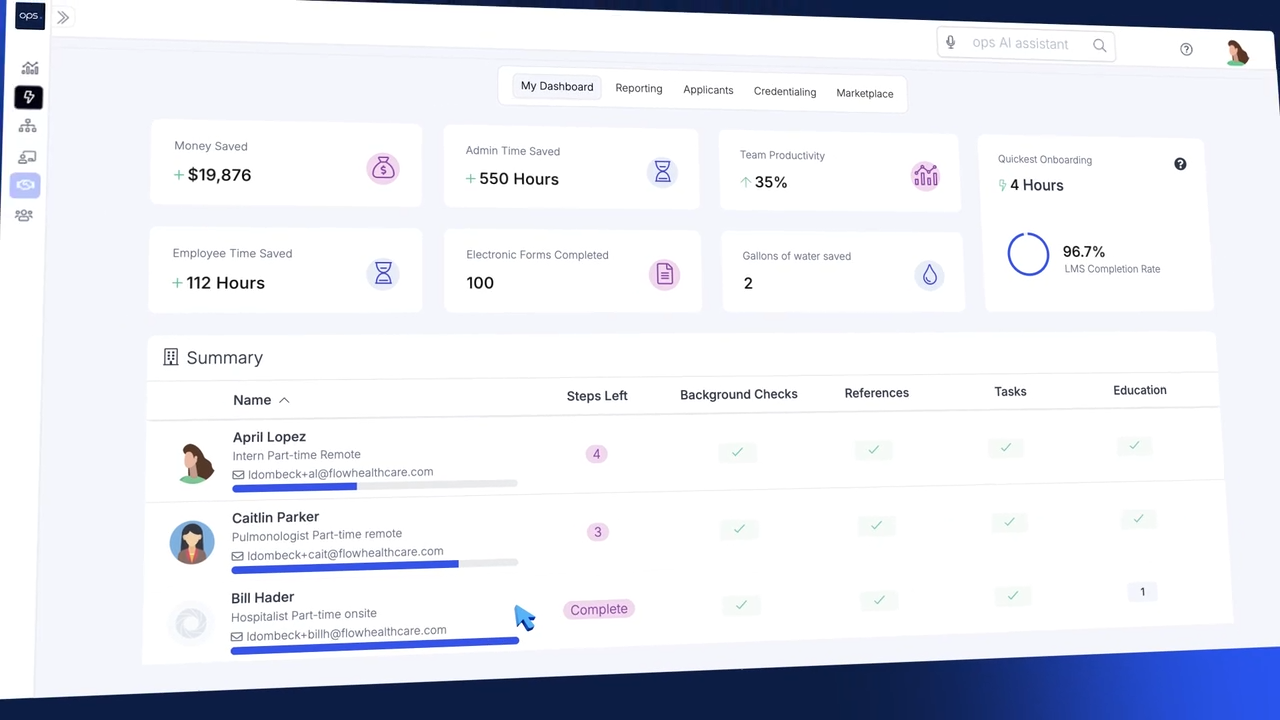
Ops.work has robust analytics and reporting features that let you track key insights faster. The tool offers customizable dashboards that let you track, visualize, and analyze data in real time to improve your staff engagement processes. Try our free plan to track your staff engagement efforts.
3. Communication Tools
Engaging employees means communicating with them about your data collection efforts. Therefore, you should choose an employee feedback tool that allows you to seamlessly communicate with employees before, during, and after the data collection period.
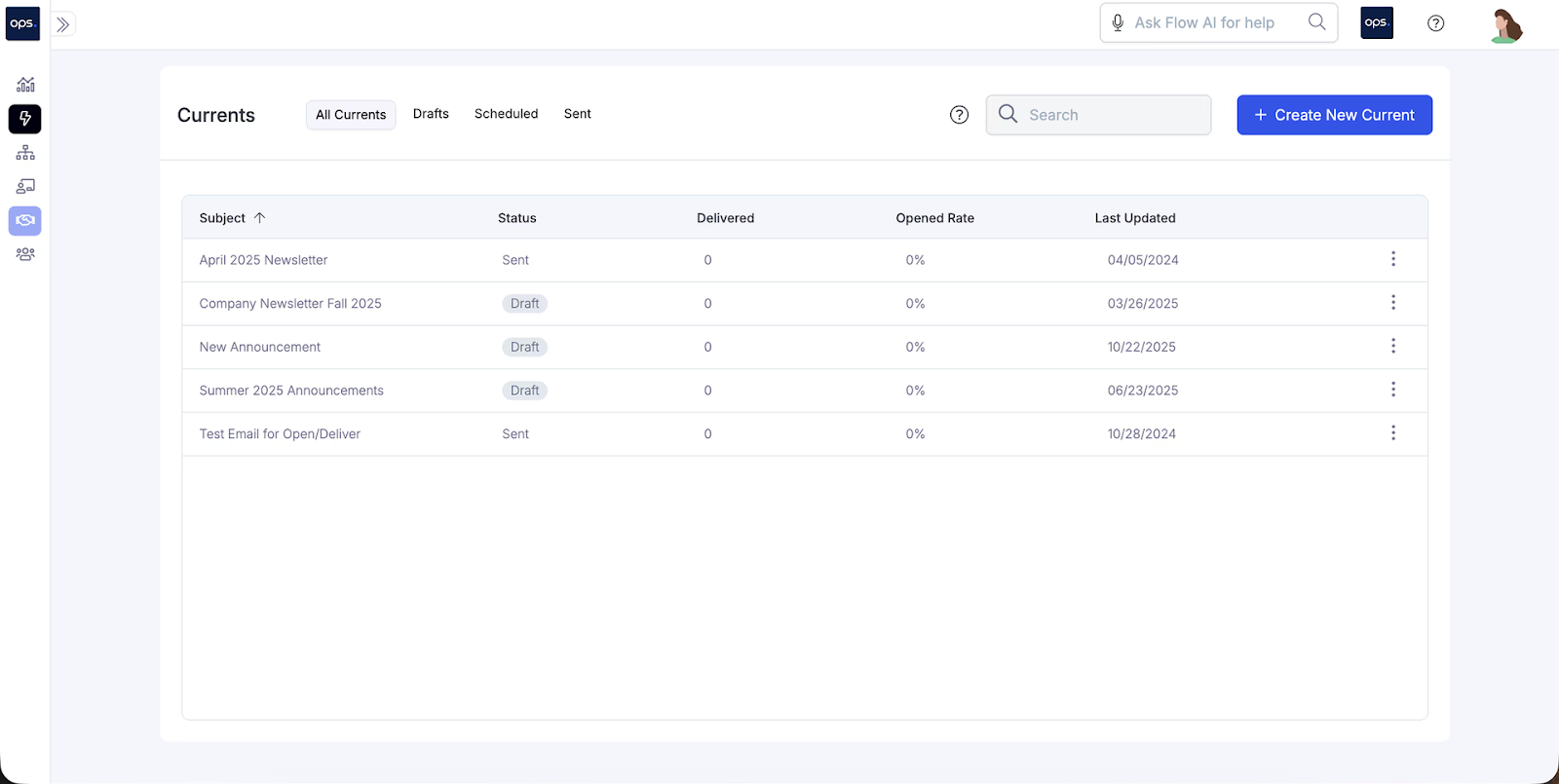
Ops.work has an in-built email channel that lets you send and track messages to your teams.
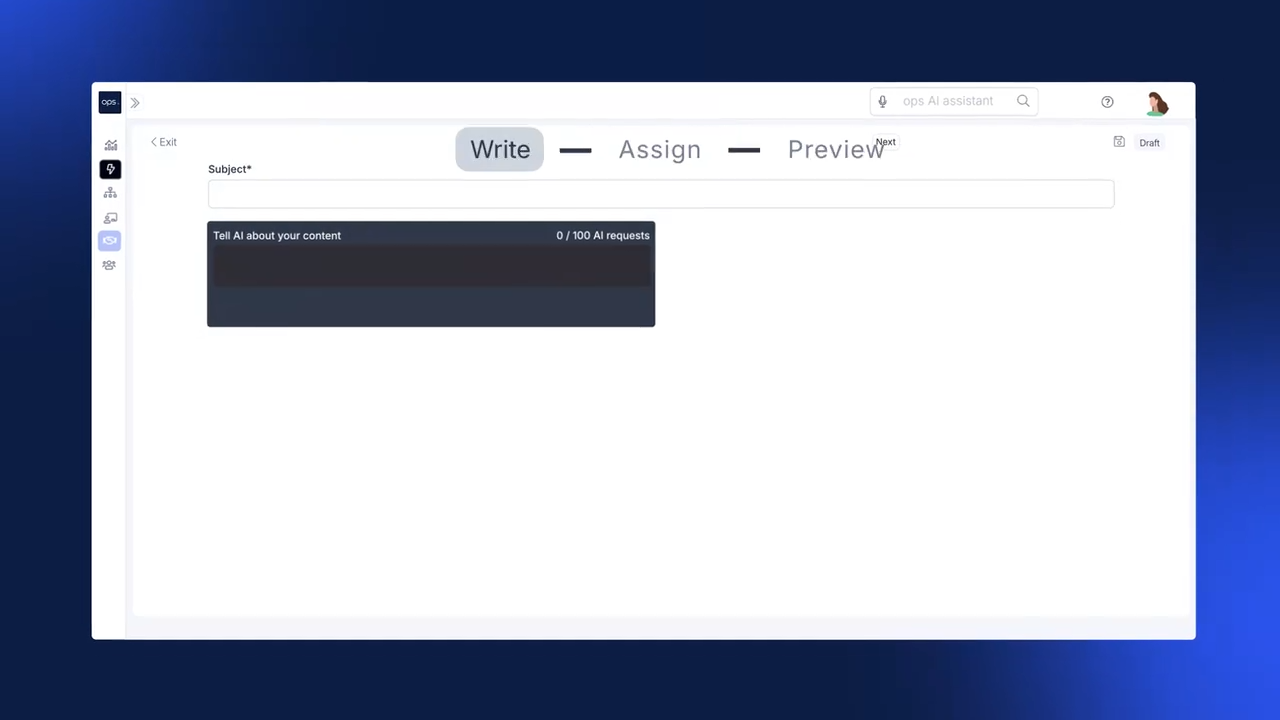
You can use our built-in AI-assistant to craft engaging emails to notify them about the upcoming survey. Communicating before the survey provides employees with context for why the survey is important and the goals it aims to achieve.
Our platform also lets you send reminders before the survey period ends to help you capture as many responses as possible.
You can also use our platform for post-survey communication to inform stakeholders about the engagement survey results, the actions implemented, and the changes resulting from those actions.
4. Anonymity and Data Security
Data security protects employees and your organization. Anonymity is important, especially when soliciting feedback that employees would be reluctant to provide for fear of retaliation. Anonymous employee feedback and performance review tools enable employees to be honest in their feedback.
In addition to anonymity, the platform you choose should protect your survey tools and results using measures such as encryption, access controls, and compliance with internal and external cybersecurity standards.
Since the survey might include company-specific information, ensure the platform protects your data from breaches, including through AI training programs.
5. Workflow Automation
Employee feedback helps you improve processes in the employee lifecycle. Once you have analyzed the survey data, you should identify actionable steps to improve your processes.
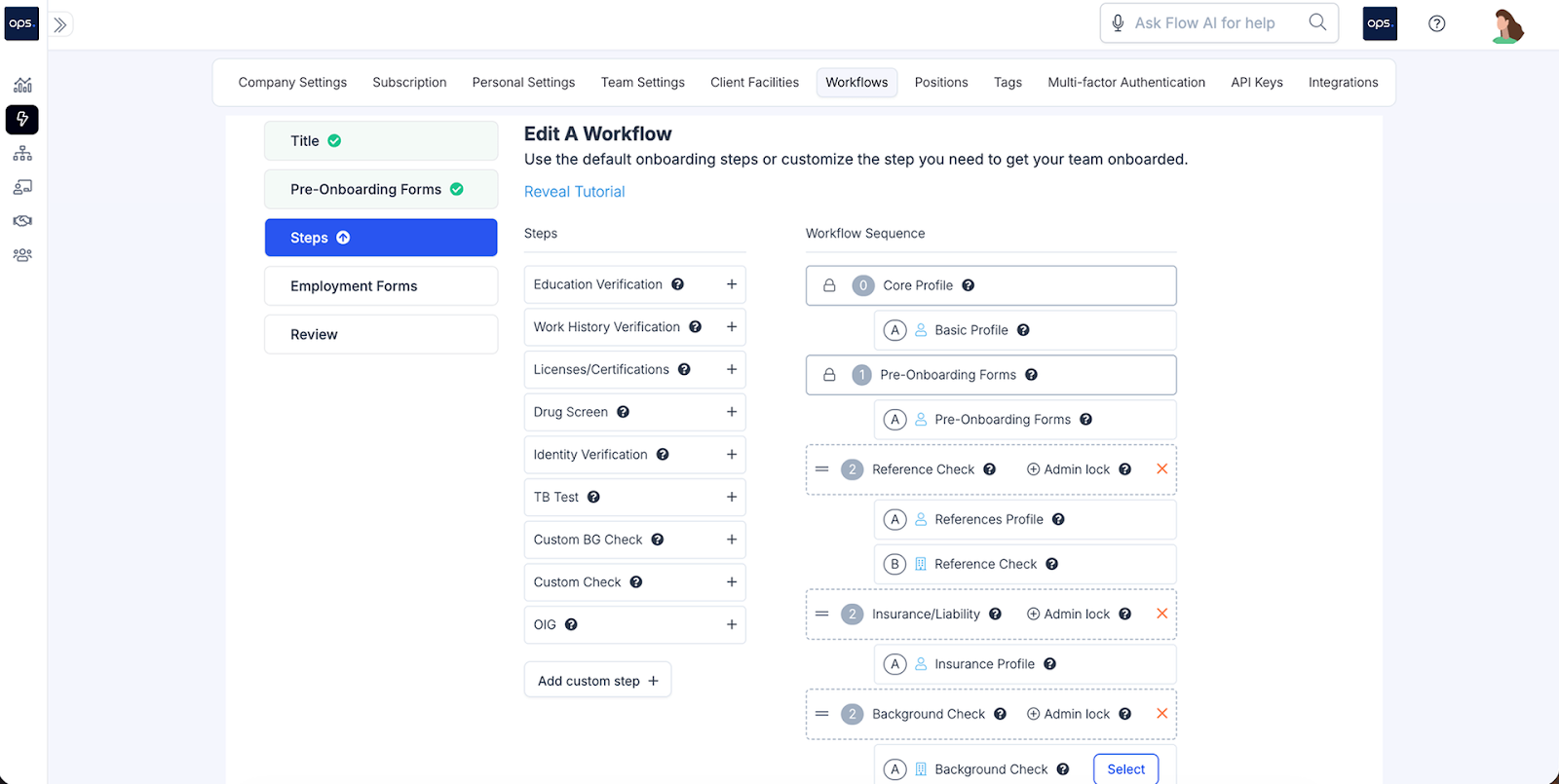
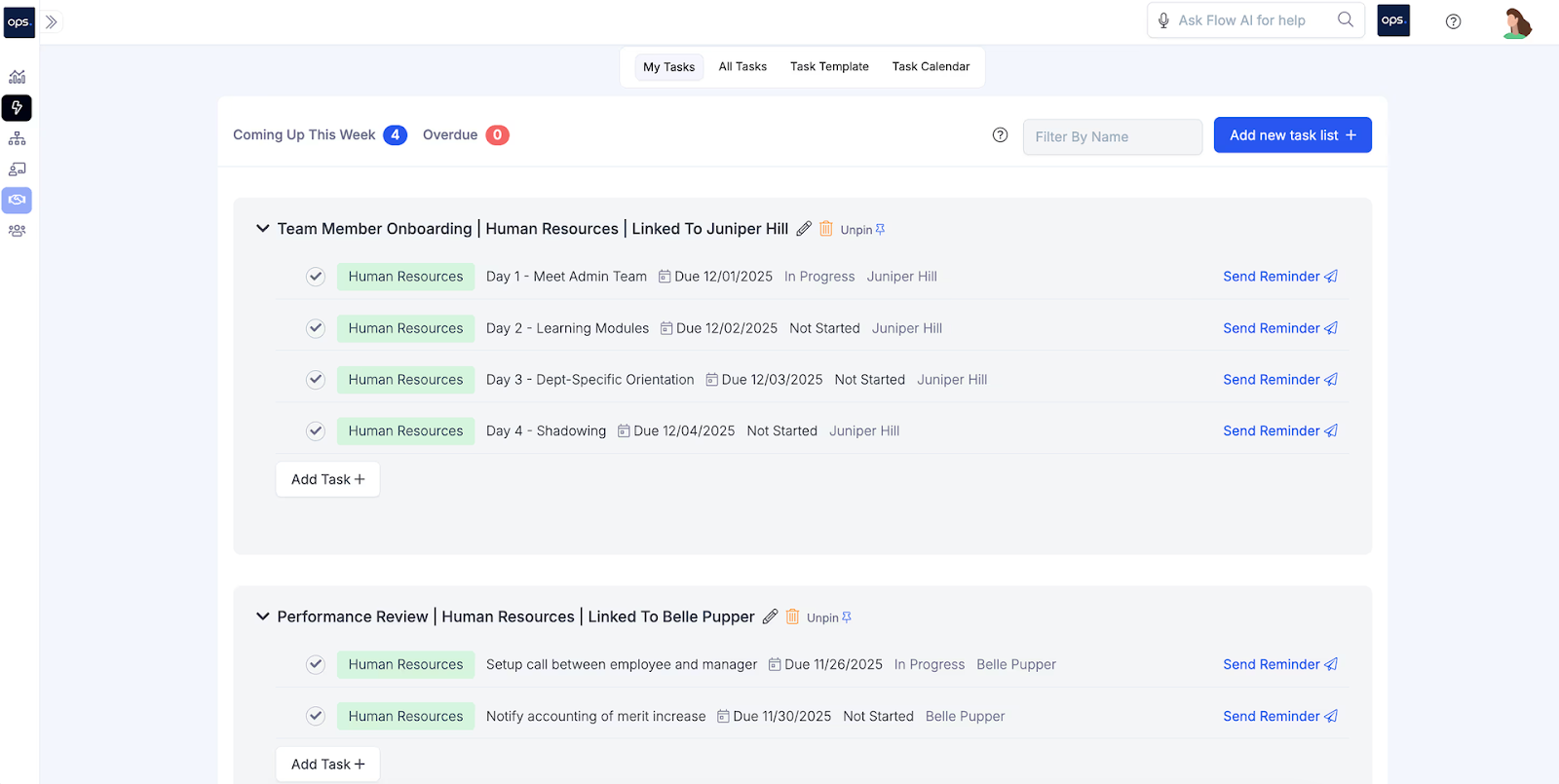
You can document these processes as part of your workflows through checklists and templates. Ops.work has dedicated workflow automation features that allow you to automate different operations from onboarding to performance management.
Here's an example of a credentialing workflow:
In addition to automating workflows, you can assign tasks to employees based on their role.
Best Practices for Collecting and Implementing Employee Feedback
Employee feedback is a goldmine for insights to boost employee engagement. However, ineffective systems and processes are likely to generate useless data. Here are the best practices for gathering and analyzing feedback:
- Gather employee feedback regularly to help you create a positive employee experience throughout the employee lifecycle.
- Provide a variety of feedback channels. Some popular choices include internal chat platforms, private social media groups, feedback forums, virtual suggestion boxes, and anonymous emails. If you provide an anonymous feedback channel, ensure that senders cannot be disclosed to ensure employees provide honest feedback.
- Make your feedback mechanisms and channels easy to use and accessible to eliminate friction.
- Act on feedback to encourage employees to provide feedback in the future
- Train managers on how to collect, analyze, and implement feedback
- Ensure all stakeholders understand their role in the employee feedback process
- Use the right employee feedback tools to automate steps in the feedback loop, such as collecting and analyzing feedback
Conclusion
Employee feedback provides important insights into your staff engagement, sentiments, and turnover risks. Done right, it can help you retain employees and build a happier, productive workforce. Using tools such as ops.work streamlines the process of soliciting feedback from employees. Try our free plan to explore our employee feedback tools.
References
Burris, Ethan, et al. “Turn Employee Feedback into Action.” Harvard Business Review, Nov. 2024, hbr.org/2024/11/turn-employee-feedback-into-action.
Walker, Kate. “Employee Feedback: How to Provide Feedback and Recognition Regularly.” Strategic HR Review, vol. 23, no. 2, 18 Jan. 2024, www.emerald.com/insight/content/doi/10.1108/shr-12-2023-0069/full/html, https://doi.org/10.1108/shr-12-2023-0069.
Fletcher, Kristin. “Reimagine Feedback to Drive Engagement and Growth.” Shrm.org, 2025, www.shrm.org/topics-tools/flagships/all-things-work/reimagine-feedback-drive-engagement-growth.
Frequently Asked Questions
The 5 R's of feedback are a framework for collecting and receiving feedback. They include:
- Request - take the initiative to solicit feedback
- Receive - listen actively to what the other person has to say
- Reflect - Take time to think through the feedback you have received before reacting to it
- Respond - Provide a thoughtful response to the feedback you have received
- Resolve - address or resolve the issues raised
The 3 C's of feedback are a model for giving good feedback:
- Clarity - give feedback that is specific and unambiguous
- Context - connect the feedback to employee behavior and business goals? Why does your feedback matter?
- Composure - apply emotional intelligence to give thoughtful and constructive feedback.
The 5-point rating system is a simple technique for collecting quantitative feedback in which respondents rate their experience on a scale from 1 (lowest) to 5 (highest). It makes feedback collection and analysis easy and can be applied across multiple tools and metrics.
To analyze employee feedback effectively, organize your results by key performance metrics, identify patterns in the data, and identify the key issues raised and their root causes. You can use analytics tools to speed up the process and ensure accuracy. Once you've analyzed the feedback, take note of suggestions and create an implementation action plan.
Giving and receiving feedback should be a two-way conversation that focuses on the behavior, its outcomes, and clear steps for improvement.