
Organizations show appreciation for their employees through formal and informal recognition programs. Done well, they boost employee morale, engagement, productivity, and relationships between peers and management.
Key Takeaways
- Employee recognition boosts morale, productivity, and engagement
- Showing appreciation for employees can be formal or informal
- A good recognition program should matter to your employees to be impactful
- Good formal recognition programs have a set of criteria that all employees know and can qualify for
Companies where employees feel recognized and appreciated have high levels of engagement, performance, and employee retention. When done right, recognizing and rewarding employees lets them know that you value their contribution. Here's a complete guide on how you can use recognition programs to boost employee engagement.
What is an Employee Recognition Program?
Employee recognition programs are the formal and informal processes that show appreciation for the dedication and hard work of your employees and teams.
Employee recognition programs aren't simply telling an employee you appreciate their work. It is a continuous and ongoing process that must be timely, specific, go beyond monetary rewards, and connect to the company's strategic objectives.
What are the Types of Employee Recognition Programs?
Employee recognition programs are initiatives that make employees feel seen and appreciated by HR leaders, peers, and management. There are two main types of recognition programs in companies: formal and informal recognition.
Formal recognition programs are structured company-wide recognition efforts, often with a clearly defined criterion for how employees are recognized and rewarded. They include:
- Employee of the month awards
- Service awards
- Milestone work anniversaries
Formal programs usually involve public recognition primarily to build employee motivation by demonstrating that the company values and rewards top performers. It involves top-down recognition from leaders to employees on behalf of the organization.
While these programs are beneficial, they are often drawn out, and rarely tied to a specific performance outcome. Therefore, they need to be compensated for by other informal and timely recognition programs.
Informal recognition is a type of spontaneous social recognition. It includes peer-to-peer recognition where colleagues show appreciation for each other's contributions or support. This recognition can come from managers, who can celebrate small wins in a timely manner.
An effective employee recognition program incorporates both formal and informal recognition to make employees feel appreciated, improve employee experience, and create a sense of belonging.
Why are Employee Recognition Programs Important?
A positive company culture is one of the benefits of employee recognition programs. Recognizing and appreciating employees' contributions creates an environment where they feel valued and respected.
Recognition helps tie their efforts to the larger organizational goals, which can boost morale, increase employee engagement, and facilitate better relationships between managers, employees, and peers.
The changing nature of the workplace makes employee recognition important. More employees draw a sense of purpose and fulfillment from their work. Therefore, they are likely to go above and beyond for organizations that value their work and reward them for it.
Employee recognition and appreciation create a psychologically safe work environment. Such an environment allows employees to be themselves, voice their ideas, and make contributions beyond their duties.
Creating a work culture around employee appreciation helps you attract top talent who desire to see and be recognized for the impact of their work or ideas.
What are the Steps to Start an Employee Recognition Program
Employee recognition is an ongoing process for companies that want to foster a culture of employee appreciation and improve employee engagement and morale. Here are the steps and best practices to keep in mind when building an employee recognition program.
1. Define the Goals of Your Program
Formal and informal recognition programs exist to serve a purpose. It could be improving engagement, morale, developing a healthy culture, or celebrating milestones.
Figuring out why you want to recognize employees helps you develop the right reward and recognition strategies that align with your company's mission and vision.
2. Collect Feedback from Employees and HR Leaders
Your recognition and rewards program should matter to your employees. Not all employees want a gift card to a coffee shop. Some may appreciate monetary incentives or opportunities for career advancement.
Collecting feedback from employees and HR teams is the best way to understand what matters to employees and the ways in which your company can make them feel appreciated. You can use recognition software to collect employee feedback.
Ops.work lets you collect feedback through surveys and feedback forms. Our free Jotform integration also provides additional templates for feedback tools.
3. Choose the Types of Recognition Methods and Criteria
The best employee recognition methods include both peer-to-peer recognition and recognition from management.
For formal recognition, all employees should understand the recognition criteria. This makes it something employees can aspire to, instead of a mysterious process they aren't aware of. Not only does this encourage transparency, but it also builds trust between managers and employees.
As part of this step, plan the financial resources needed to facilitate recognition and rewards.
4. Announce the Program
Announcing your new recognition program motivates your employees to do their best. Your announcement should include:
- The reason why you are launching the program, for example to reward employees for small and big contributions to the organization's goals
- The key features of the program include the recognition or reward categories, the eligibility or nomination process, the timelines, and the stakeholders responsible for overseeing the formal recognition program
- The ways in which your employees can participate in the recognition program, such as providing feedback or recommending their peers for recognition
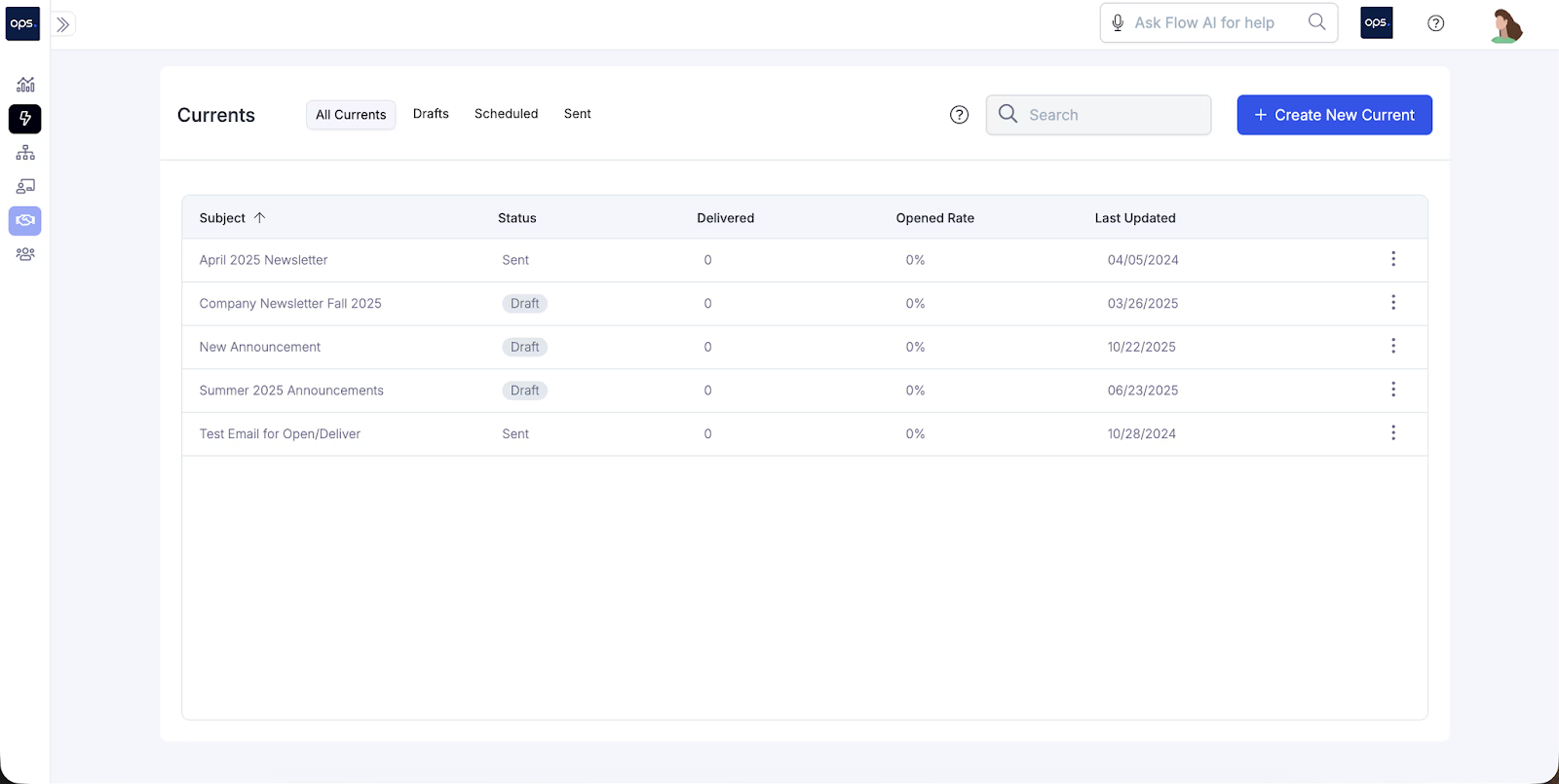
Ops.work offers an email feature that lets you send, track, and manage internal communications.
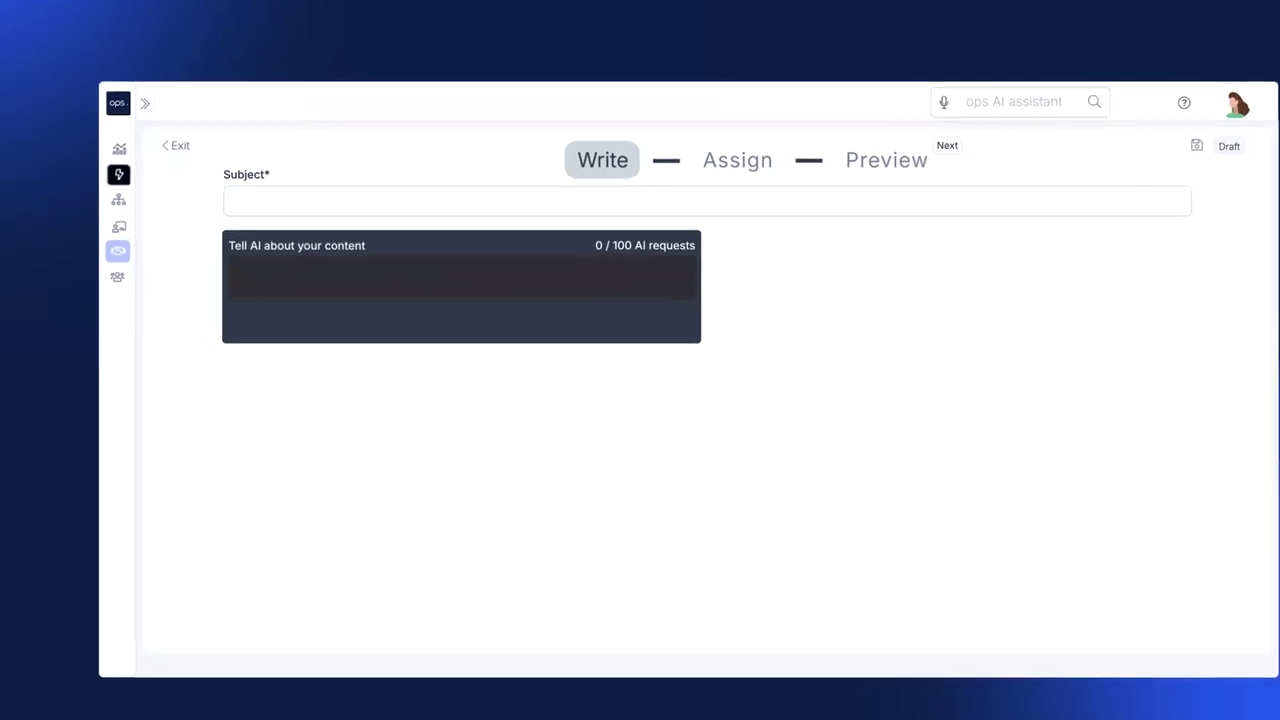
You can also use the ops AI assistant to create a compelling announcement message.
5. Implement Your Employee Appreciation Program
Begin implementing the program after its launch. Part of this includes training managers on how recognition is given, how to collect feedback, how to identify recognition moments, and how to ensure fairness and transparency.
You can incorporate employee recognition software in the implementation phase to streamline your efforts.
6. Track the ROI of Employee Recognition and Improve Your Program
Measuring the ROI of recognition is even more important, as it helps you determine its impact on business goals. Some of the metrics to track include:
- Employee morale
- Retention rates
- Productivity and performance levels
- Participation rates in recognition initiatives
- Utilization of your rewards budget
- Employee satisfaction levels
- Observable behavior changes
- Customer satisfaction levels
- Impact on business outcomes
Tracking these metrics will help you identify areas for improvement and employee engagement issues that require solutions beyond recognition or rewards.
Conclusion
Companies without recognition programs produce low quality work and higher turnover rates, as employees do not feel valued for their contributions. Investing in recognition and engagement initiatives lets your employees know that what they are doing benefits the organization. Ops.work offers dedicated features to improve employee engagement. Get started on our free plan.
References
Jo, Hyeon, and Donghyuk Shin. “The Impact of Recognition, Fairness, and Leadership on Employee Outcomes: A Large-Scale Multi-Group Analysis.” PLOS ONE, vol. 20, no. 1, 2025, p. e0312951, pmc.ncbi.nlm.nih.gov/articles/PMC11717283/, https://doi.org/10.1371/journal.pone.0312951.
Rusin, Natalia, and Tomasz Szandała. “The Power of Peer Recognition Points: Does It Really Boost Employee Engagement?” Strategic HR Review, vol. 24, no. 1, 8 July 2024, https://doi.org/10.1108/shr-06-2024-0040.
Lewis, Virginia, et al. “Does Acknowledgement Matter? An Exploratory Study of the Value of a Healthy Workplace Recognition Scheme.” Health Promotion Journal of Australia, vol. 31, no. 3, 13 Nov. 2019, pp. 518–524, https://doi.org/10.1002/hpja.299.
Frequently Asked Questions
You can recognize your employees through formal and informal methods, such as public shout-outs during meetings or employee-of-the-month/year awards.
Some creative employee recognition ideas include personalized gifts, themed events, curated employee experiences, and flexible schedules.
A great employee recognition program is timely, consistent, authentic, and aligned with your company's core values and workplace culture.