
For home healthcare facilities, physician onboarding is critical for retention. The process begins with preboarding, followed by a formal orientation that introduces new physicians to your facility and other staff. Providing training and mentorship helps with retention and productivity. Using technology tools such as ops.work streamlines the physician onboarding process, making it easier to monitor progress, assign courses, and collect feedback.
Key Takeaways
- Developing a clear, consistent, and repeatable onboarding process is critical for consistency, efficiency, compliance, and physician retention
- A gradual onboarding process that allows home health physicians to gradually take up clinical responsibilities to help them adjust without burning out
- Technology tools can optimize the onboarding process, helping you automate manual and repeatable process such as credentialing and training assignment
Home health care physicians supervise the skilled nursing and therapeutic services provided by HHAs. They are also responsible for creating and reviewing care plans and certifying and recertifying patients as homebound (for Medicare-funded facilities).
As the demand for home-bound health care grows, so does the need for experienced physicians in HHA to oversee patient care. This also means that healthcare organizations must invest in robust onboarding programs to reduce the cost of physician turnover.
Why Does Physician Onboarding Matter for Home Health Agencies?
According to the Association for Advancing Physician and Provider Recruitment (AAPPR) report, physicians who have a positive onboarding experience also have high job satisfaction. This satisfaction comes from the clarity they get when your facility has an efficient onboarding process that clarifies their responsibilities and expectations.
In contrast, new physicians who have a negative onboarding experience are more likely to leave your facility within the first year, resulting in high recruitment costs and wasted time.
A comprehensive onboarding strategy can help you improve retention rates by ensuring new hires feel appreciated and supported in their roles from day one. It builds on the impression built during the interview process, reaffirming your physician's decision to accept your job offer.
HHAs that provide onboarding for their new physicians are better placed to comply with regulations. HHAs operate within various federal and state regulations. Onboarding new hires ensures they are familiar with these regulations, facilitating compliance and delivering quality patient care.
How do You Create an Effective Physician Onboarding Process?
Clinician onboarding is the best way to communicate to new hires the value they bring to your organization. You can achieve this through a structured onboarding process tailored to your home health agency. Here are the steps to creating an effective onboarding program:
Create a comprehensive checklist and timeline for your process
Ideally, use the 30-60-90 day plan to identify the tasks your clinicians and administrators must complete for a successful onboarding process.
Here's an example of a task breakdown:
Preboarding (3 months before start date)
- Credentialing and privileging
- Completing HR documentation (Employment and tax forms)
- IT and workspace set up
- Sending a welcome packet (must include an employee handbook, the orientation schedule, and first day requirements)
Orientation (first week)
- Introduce the new hire to their team members and other physicians
- Provide a comprehensive facility tour
- Provide information to services such as parking
- Provide them with a security badge for facility access
- Provide the necessary equipment and tools they need for their job
- Assign a mentor
- Provide IT and EHR onboarding to familiarize them with your systems
- Introduce them to their mentor
- Introduce them to your organizational policies and patient care standards
- Review the employee handbook
- Review the physician's job description to provide clarity around their duties, responsibilities, and expectations
First 30 Days
- On-the-job training, including shadowing and hands-on training
- Reviewing workflows
- Weekly touchpoint sessions to review progress and identify challenges
- Cultural immersion
- Provide mandatory compliance training
- Review of your home health patient population/groups
Day 31 - 60
- Gradually increase the physician's workload
- Provide role-specific training to build up relevant skills and knowledge
- Conduct a monthly meeting with supervisors to track progress, identify challenges, and set goals for the next stage
Day 61-90
- Full transition to patient responsibilities
- Ongoing training and support
- Receiving formal and informal feedback from other staff, patients, and supervisors
- Performance reviews
- Long-term career planning
How Do You Use Technology to Optimize the Onboarding Process?
Incorporating onboarding software helps you standardise your formal onboarding process. This ensures that new employees receive the same experience, which improves physician satisfaction and productivity and reduces burnout.
Technology tools such as ops.work streamline the onboarding process in several ways:
It allows you to create physician profiles by inviting them directly to your platform
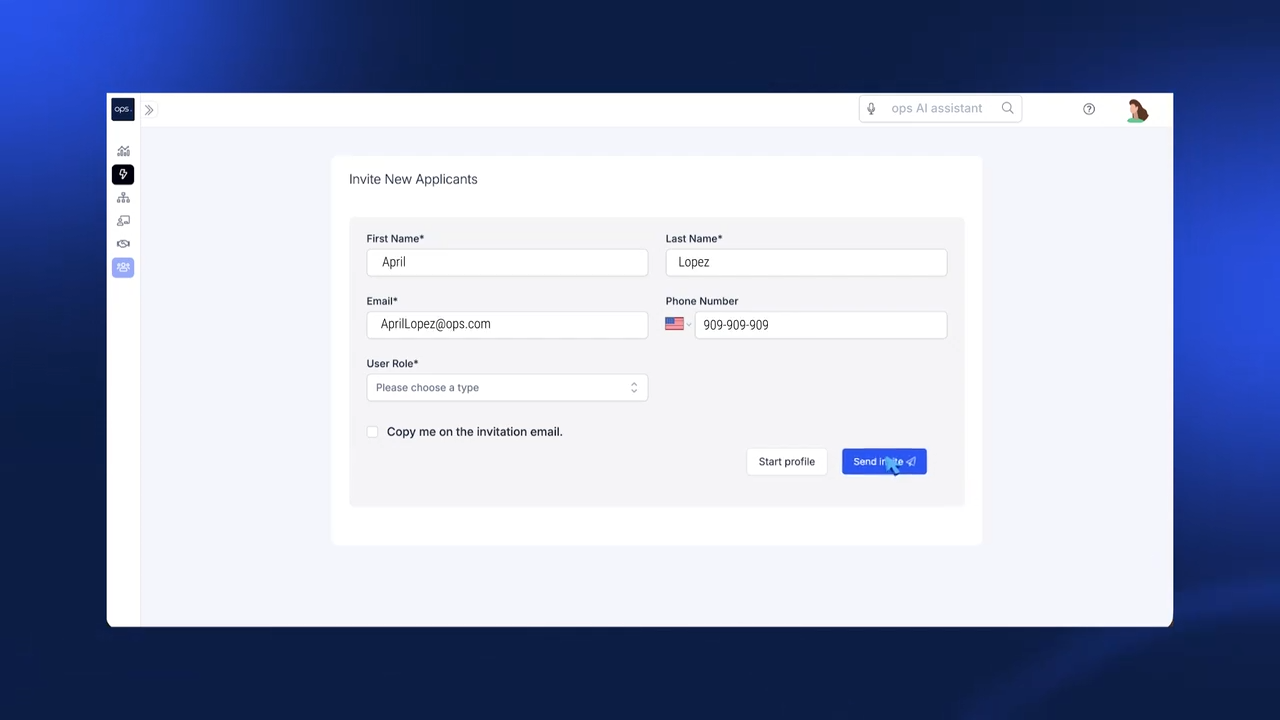
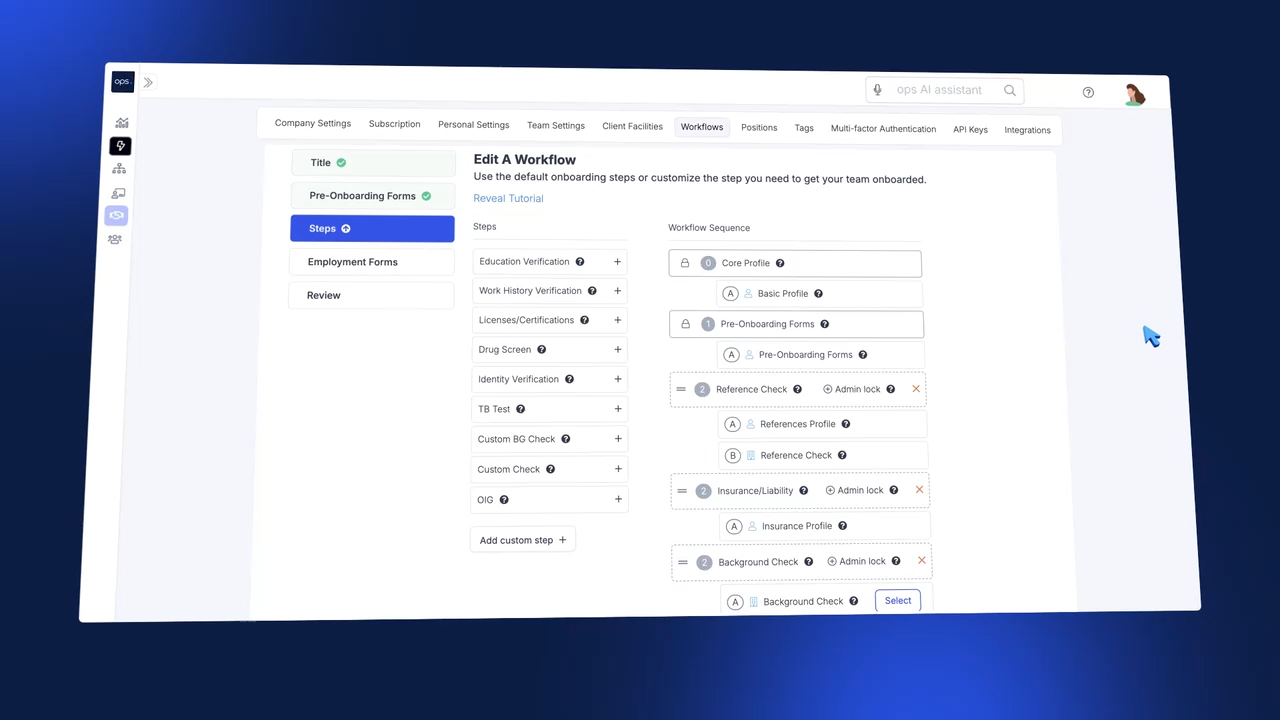
Once invited, you can set up automated workflows to handle time-consuming and sequential tasks such as credentialing new physicians and assigning role-based training materials.
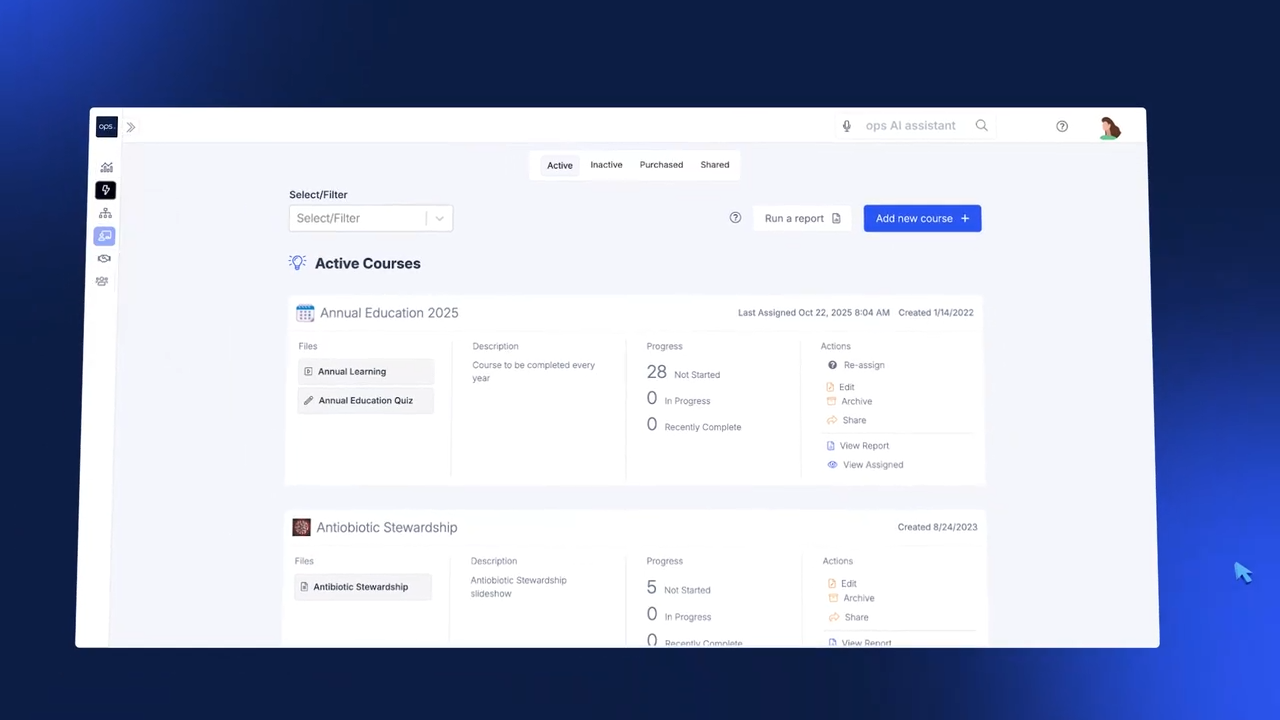
Ops.work simplifies training by providing a centralized platform to create focused training materials tailored to your healthcare providers. You can create training resources in various formats to cater to different learning approaches.
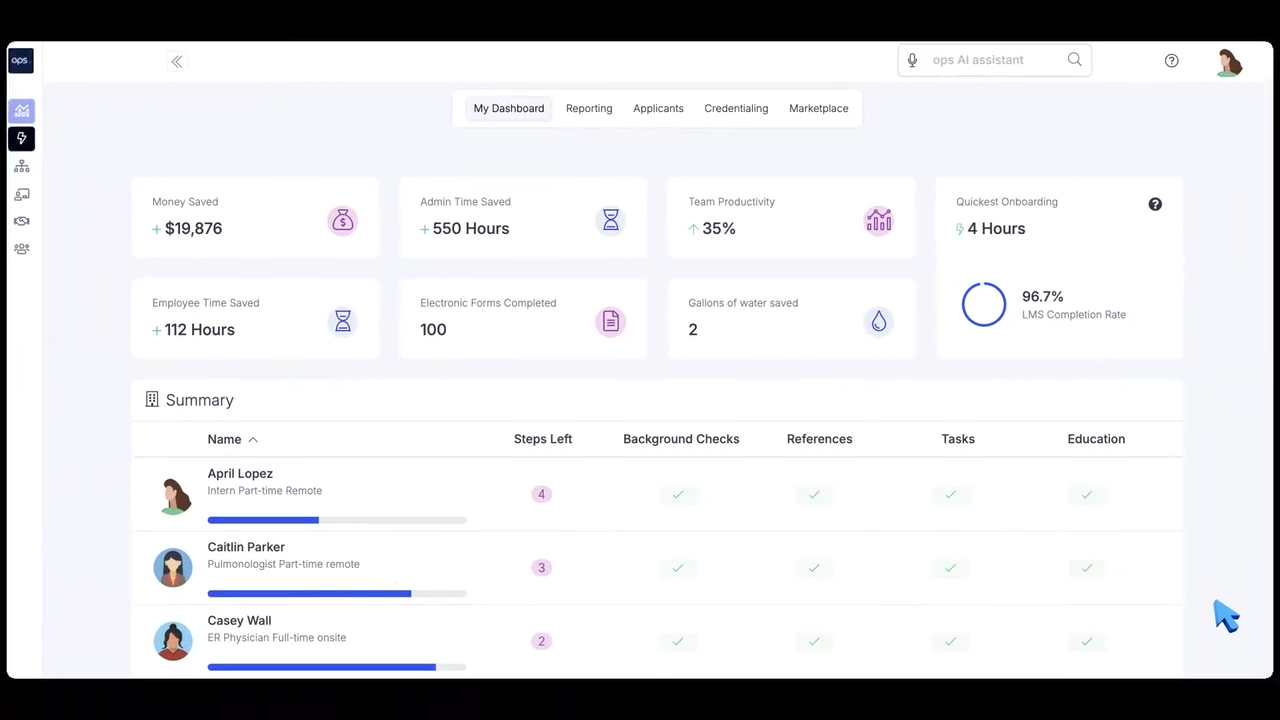
Ops.work lets you track the efficiency of your onboarding plan using metrics such as the money and time saved during the onboarding period, and training completion rates.
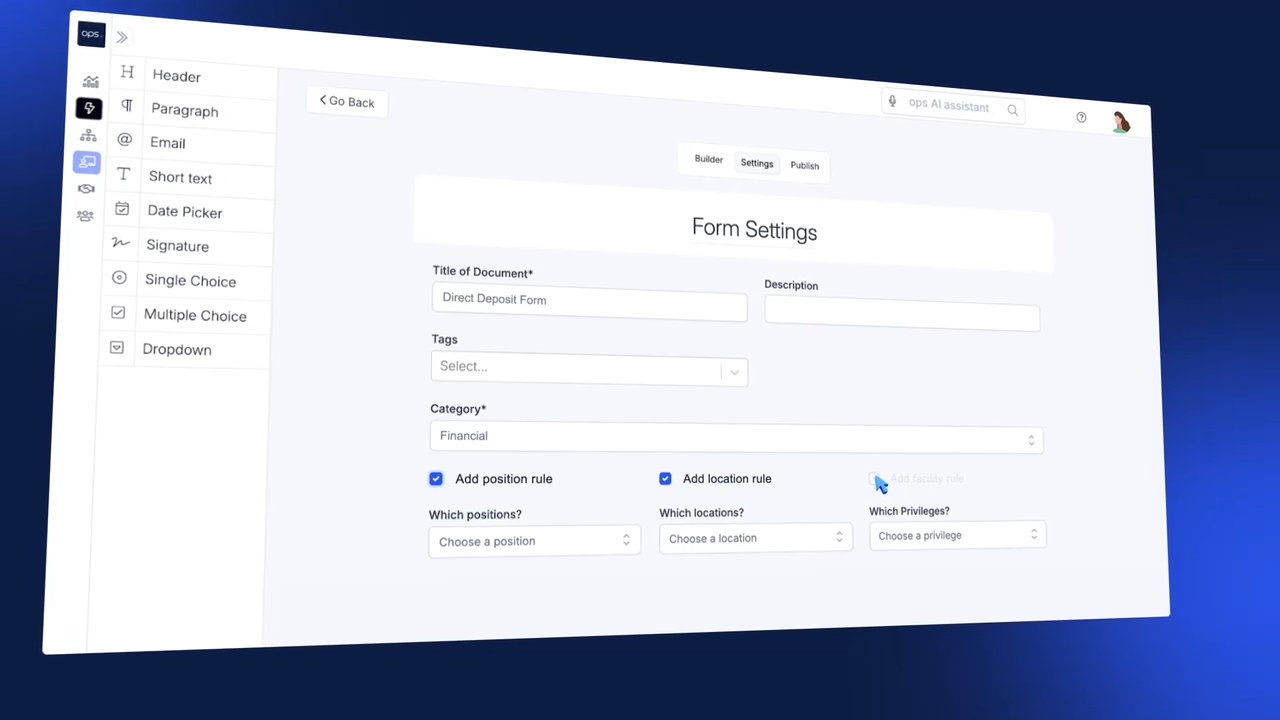
With the tool, you can ask for feedback from physicians once the onboarding process is complete. You can use ready-made feedback form templates or create your own for data collection.
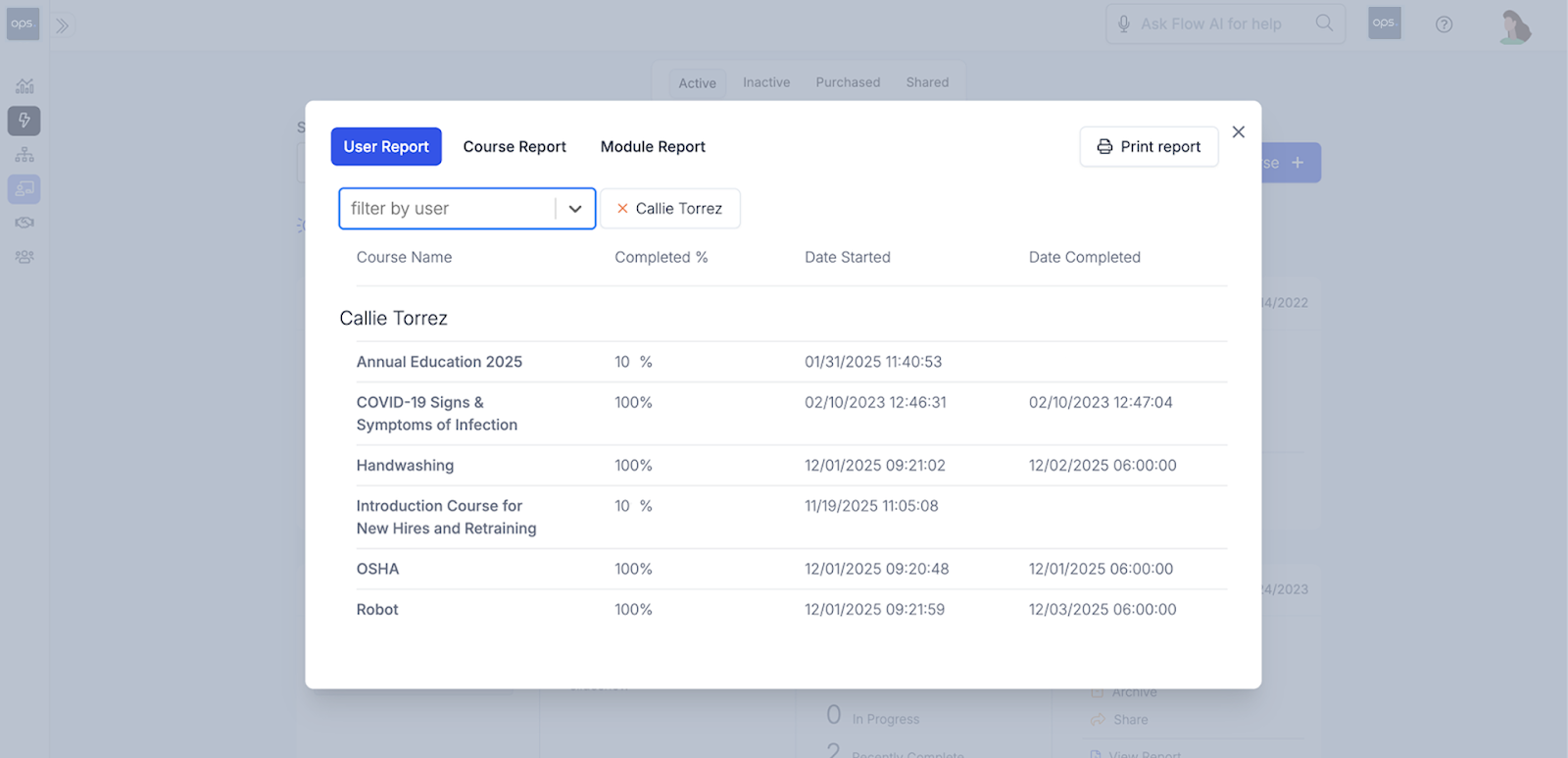
Since compliance is an important part of the onboarding process, ops.work features audit-ready reporting for various activities, including training.
How Do You Review Your Processes to Identify Onboarding Best Practices for Physician Retention?
Onboarding is an ongoing and constantly evolving process. By constantly reviewing your practices, you can identify what you're doing right and the problems you can fix.
Here is how you can find best practices that apply to your organization:
- Review industry standards and regulatory requirements to identify what your facility should be doing. For example, a standard practice is to provide new EHR training to physicians and other roles each time you change your EHR system.
- Research what successful home health facilities are doing to optimize how they onboard physicians. You can reference industry reports from thought leaders in physician and advanced practice recruitment, such as AAPPR.
- Communicate with key stakeholders from recruiters to healthcare trainers and c-suite to identify their objectives, and your the process can meet them
- Create an internal environment that facilitates knowledge sharing to ensure teams involved in onboarding can share their challenges and solutions with each other
- Identify the metrics that matter to you and what they say about your onboarding process. These may include retention rates, physician and patient satisfaction levels, and training completion rates.
Conclusion
Providers who are satisfied with the organization's onboarding are more likely to stay and deliver quality home-based care. Developing a robust onboarding process facilitates a smooth transition for new staff into your organization. You can optimize your formal processes using tools like ops.work, which help new hires adjust to their new jobs faster. Get started with our free plan.
References
Nagib, Nicole, et al. “Onboarding and Early Employment Experiences in Healthcare: Implications for Retention.” Health Services Management Research, 18 Oct. 2025, https://doi.org/10.1177/09514848251384273.
“Powerhouse Strategies for Physician Onboarding and Retention – Healthcare Experience Foundation.” Healthcareexperience.org, 25 May 2023, healthcareexperience.org/onboarding-retention/
“Powerhouse Strategies for Physician Onboarding and Retention – Healthcare Experience Foundation.” Healthcareexperience.org, 25 May 2023, healthcareexperience.org/onboarding-retention/.
Newton, Laurie, and Cecille Sulman. “Implementation of a Phased Onboarding Program for Novice Advanced Practice Providers.” International Journal of Pediatric Otorhinolaryngology, vol. 193, 22 Apr. 2025, p. 112363, www.sciencedirect.com/science/article/abs/pii/S0165587625001508, https://doi.org/10.1016/j.ijporl.2025.112363.