
Internal medicine physicians benefit from a comprehensive onboarding process, which begins shortly after recruitment. Facilities that onboard their physicians have better retention and engagement rates, resulting in high-quality patient care.
Key Takeaways
- Internal medicine physicians are specialized primary care doctors who treat adults with complex health conditions
- Onboarding internal medicine physicians improves productivity, retention, role clarity, and reduces burnout
- A good onboarding program includes preboarding, orientation, training, and ongoing support. Each stage fulfills the 5 onboarding elements: culture, compliance, connection, confidence, and clarity.
- Using software such as ops.work, streamlines the onboarding process, automating manual tasks and making it easier to resolve common onboarding challenges such as credentialing delays and inefficiencies from manual processes.
Internal medicine physicians specialize in preventing, diagnosing, and treating complex health conditions in adults (18+ years). They have specialized knowledge and skills in internal organs, allowing them to provide comprehensive patient care. They also work alongside other physicians to solve complex medical conditions.
A comprehensive onboarding fosters a sense of belonging among new physicians while providing a gradual clinical ramp-up timeline to give them enough time to adjust to your facility.
What is Physician Onboarding and Why is it Important?
Onboarding is the formal process through which healthcare organizations facilitate a smooth transition to practice. They achieve this by providing new physicians with the tools, resources, and support they need to succeed in their new roles.
Creating a successful onboarding process benefits physicians and healthcare organizations in several ways:
- It reduces burnout by allowing new staff enough time to adjust to the organization and their clinical duties
- An effective onboarding process provides new physicians with clarity on what their responsibilities, permissions, and reporting expectations are, reducing friction and improving job satisfaction levels
- A good onboarding program improves retention by making new staff feel appreciated and supported in their new role.
- It improves productivity by making the physician confident in their knowledge, skills, and competence
What are the Stages of the Physician Onboarding Process?
Onboarding of new physicians is one of the important touchpoints in the employee lifecycle. It provides new hires with the skills, confidence, and resources they need to thrive in their role. For healthcare facilities, it reduces the time-to-productivity and enhances patient care outcomes.
An effective onboarding program has four main stages, each of which contributes to the key components of the onboarding process. These include:
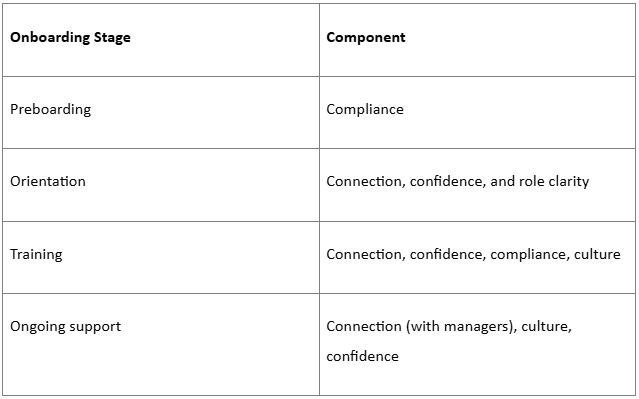
Preboarding is the first stage of integrating physicians into your practice. It starts shortly after the recruitment process and is primarily focused on ensuring the new provider has the right credentials to practice. Some of the preboarding activities for internal medicine physicians include:
- Sending an introduction email welcoming the new hire to the organization and familiarizing them with key stakeholders
- Credentialing and privileging. Credentialing involves verifying the physician's education, licensing, work experience, and legal standing. Privileging involves deciding on their scope of practice depending on their training and education.
- Enrolling the physician with payers to facilitate billing when they start seeing patients
- Completing pre-employment paperwork, such as tax forms
- Providing an orientation checklist with detailed first-day logistics
- Providing relocation support where necessary
Physician orientation is the second step in onboarding. It involves familiarizing the new staff with the organization while creating opportunities for building relationships. Orientation begins on the first day and continues throughout the first week. Here are some activities during this stage:
- The practice manager reviews the job description with the physician
- Introducing the organization's culture, policies, and procedures
- Providing EHR training
- Providing hardware and login credentials to EMR systems
- Introducing the new staff to clinical leaders
- Providing compliance trainings
- Pair the physician with a mentor
- Conduct formal and informal social gatherings to facilitate peer connections
Training is the longest phase of the onboarding process. It takes several forms depending on the organization. Training should cover specific topics tailored to internal medicine and equip employees with the skills to use various health systems. Such training includes:
- EMR training
- Supervised clinic sessions for hands-on training
- Emergency response
- Patient safety
It should also cover compliance training areas such as HIPAA, OSHA, and the organization's SOPs.
The last stage of the onboarding process involves gathering feedback and providing ongoing support to physicians. Collecting feedback should happen during every onboarding stage to keep track of employee sentiment and help physicians navigate challenges.
Ongoing support shows your commitment to their growth. It looks like:
- Supporting physicians who are pursuing continuing medical education (CME) certifications
- Creating an inclusive environment that accommodates their skills, abilities, and unique differences
- Keeping physicians updated on new EHR trends
- Providing professional development opportunities, including helping them become part of the physician leadership team
How Can Technology Help Improve the Physician Onboarding Program?
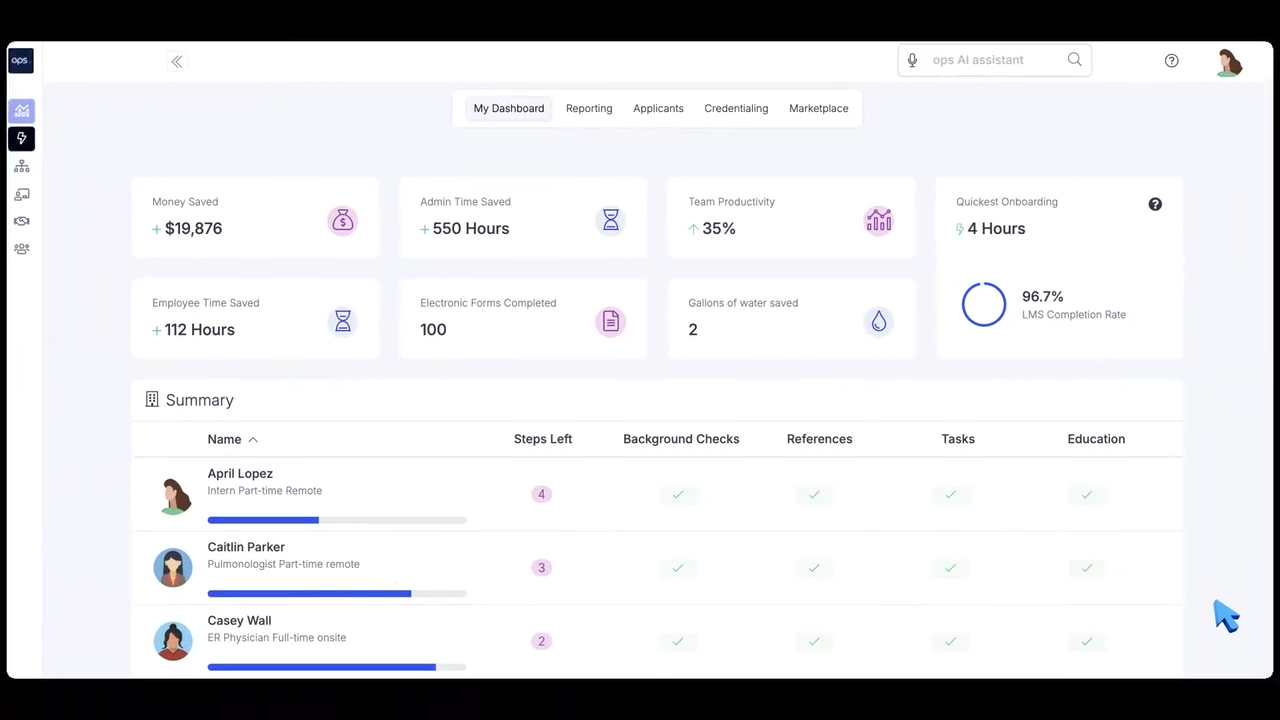
Using onboarding software is the best way to streamline onboarding and get new physicians productive faster. Tools like ops.work streamline the process, reducing errors, improving consistency, and providing a positive experience from day one.
You can try our free plan to explore the various ways ops.work facilitates successful onboarding:
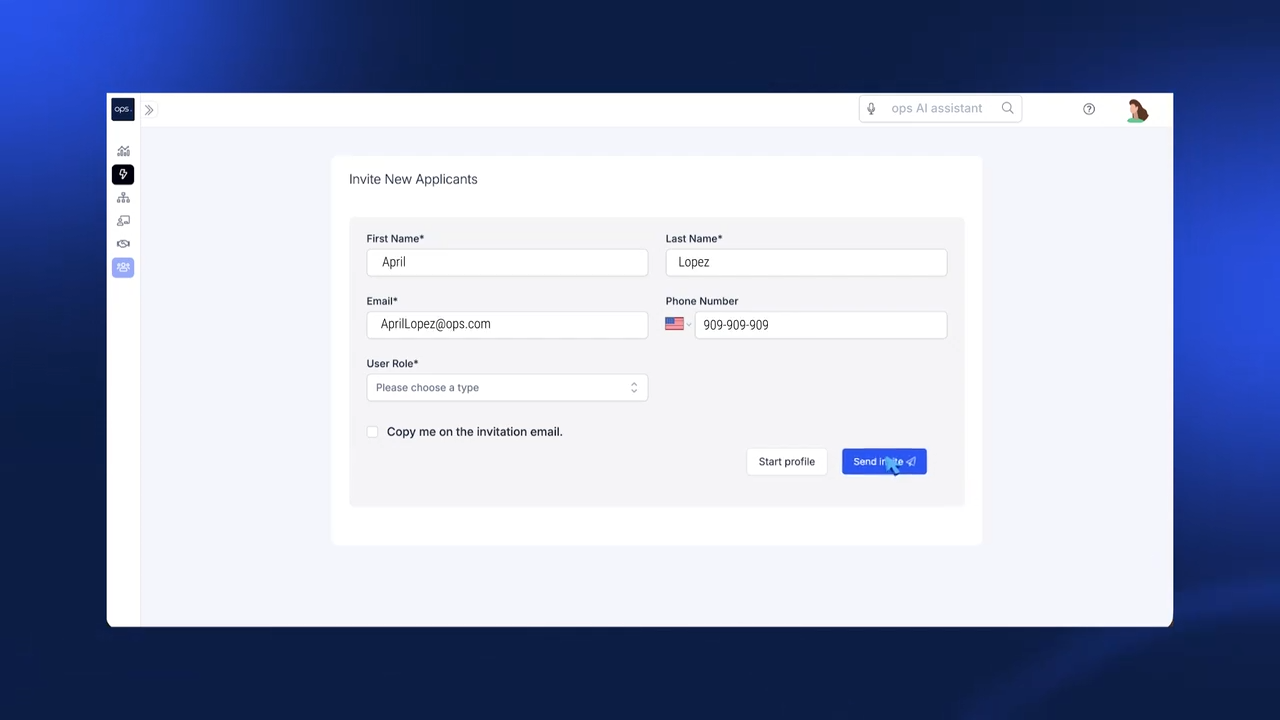
Invite new applicants onto your platform and create comprehensive employee profiles.
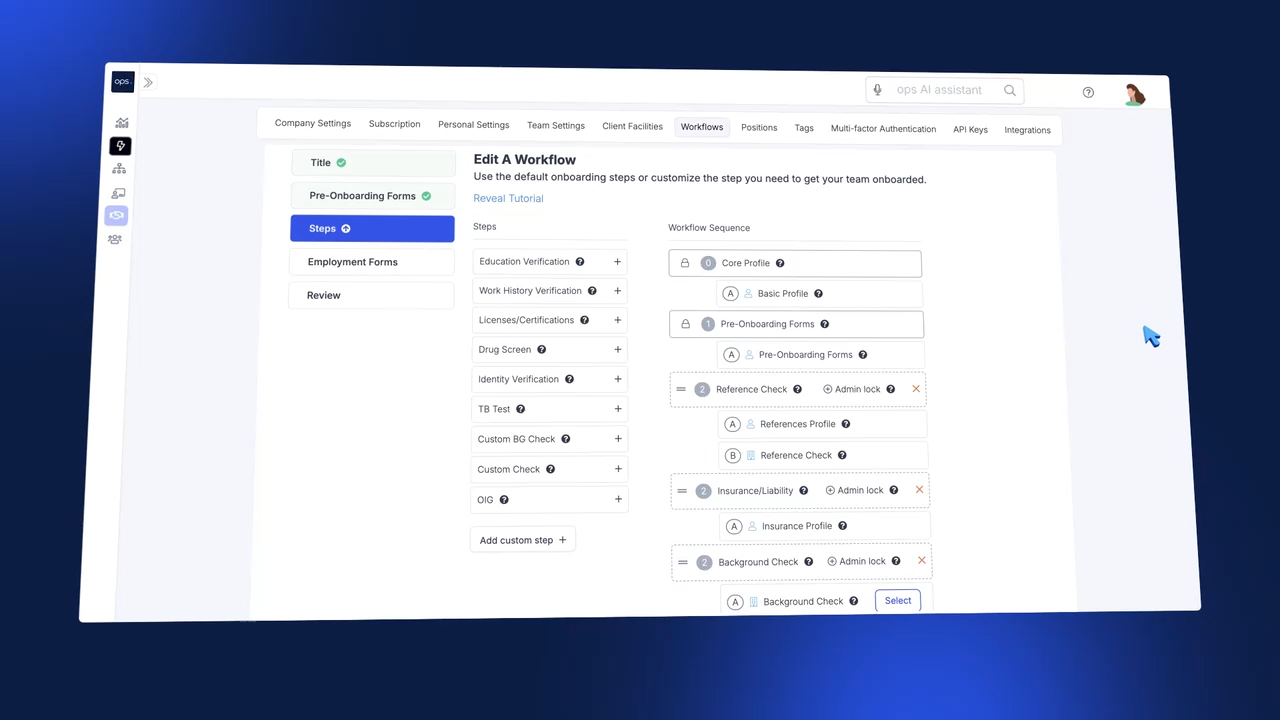
Create automated workflows to optimize manual processes such as credentialing and task management.
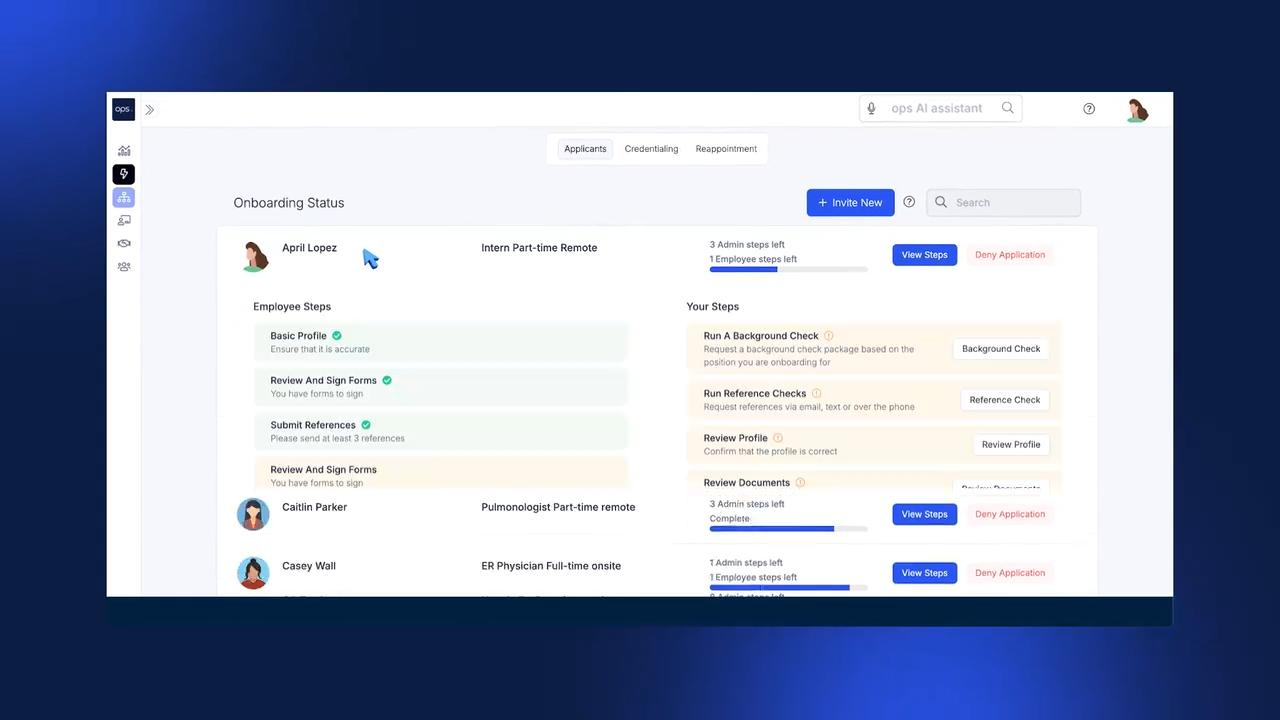
Track the progress of onboarding a new physician
Create comprehensive training modules to equip your care team with the technical and soft skills needed to succeed
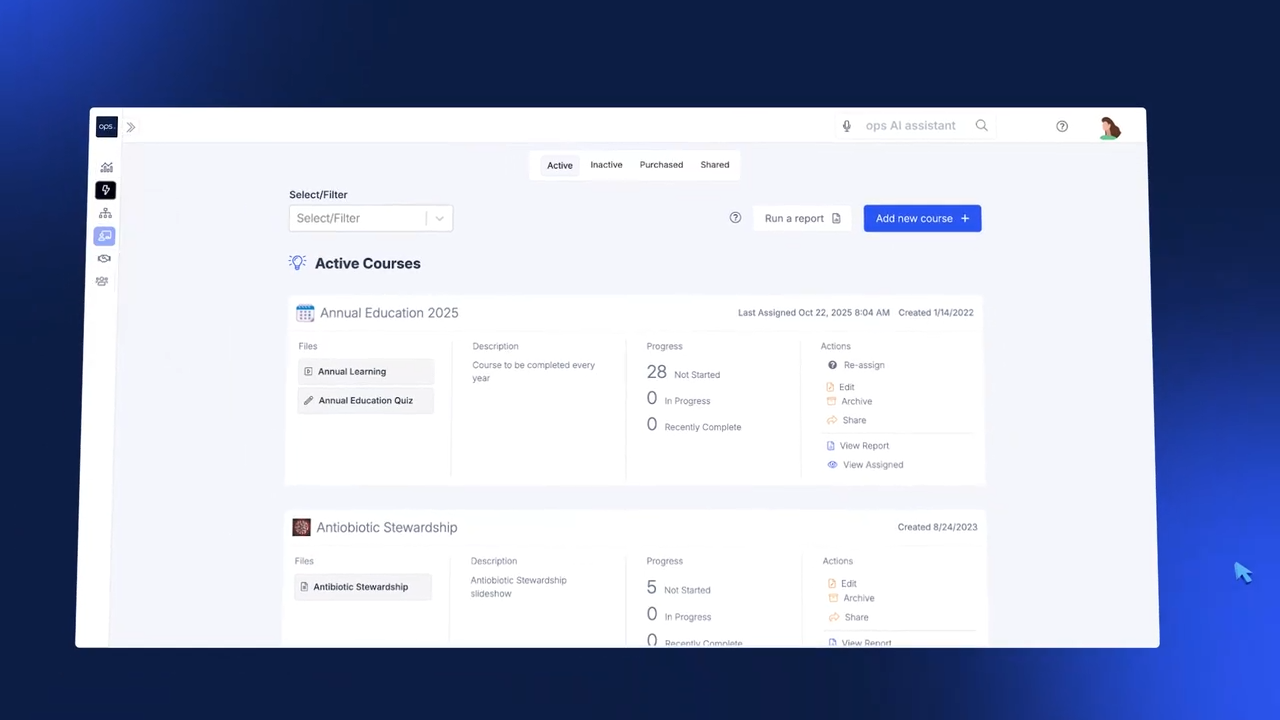
Assign specialty-specific training resources based on predetermined rules

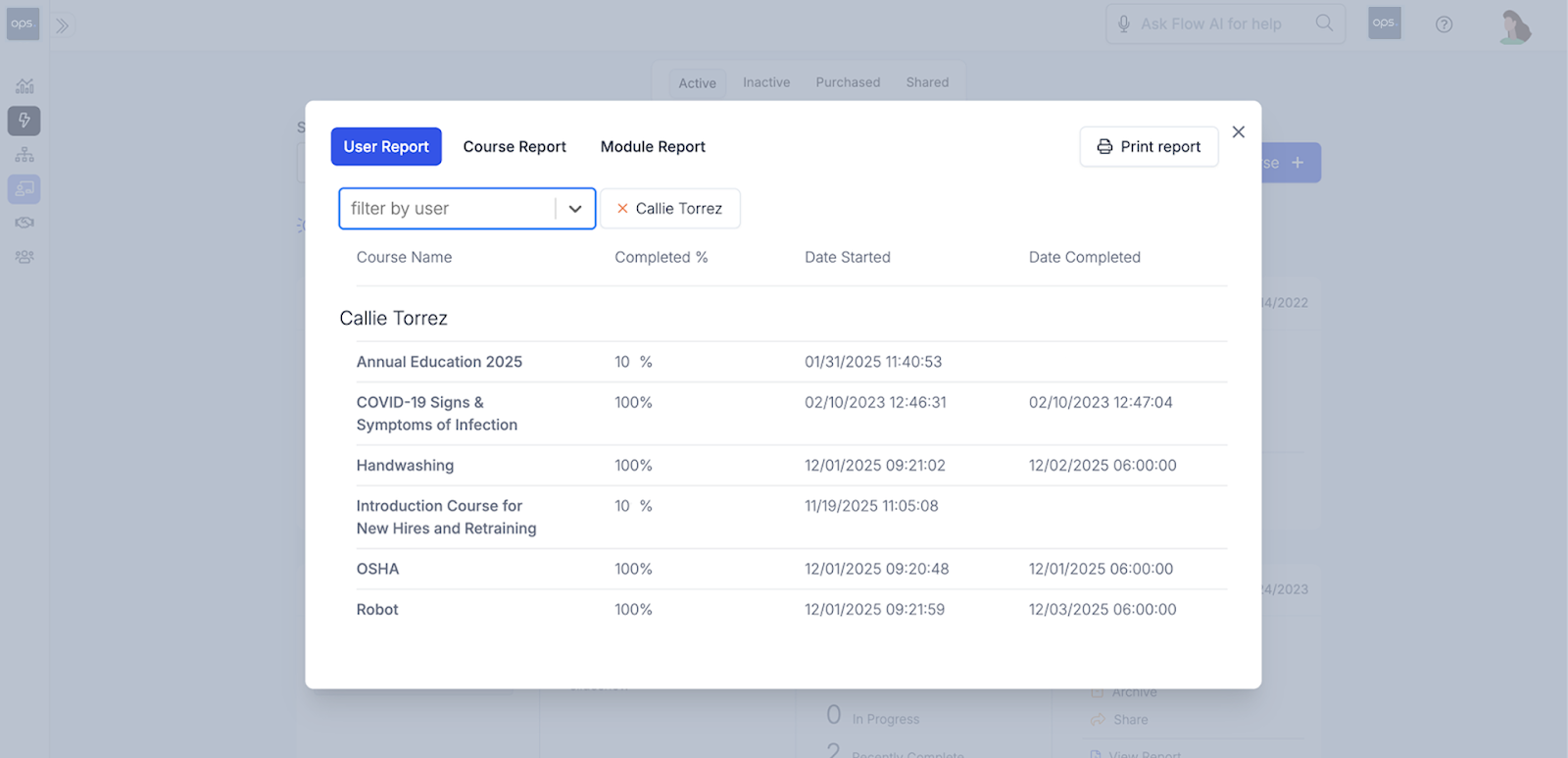
Generate LMS reports to gather insights on the impact of your training programs
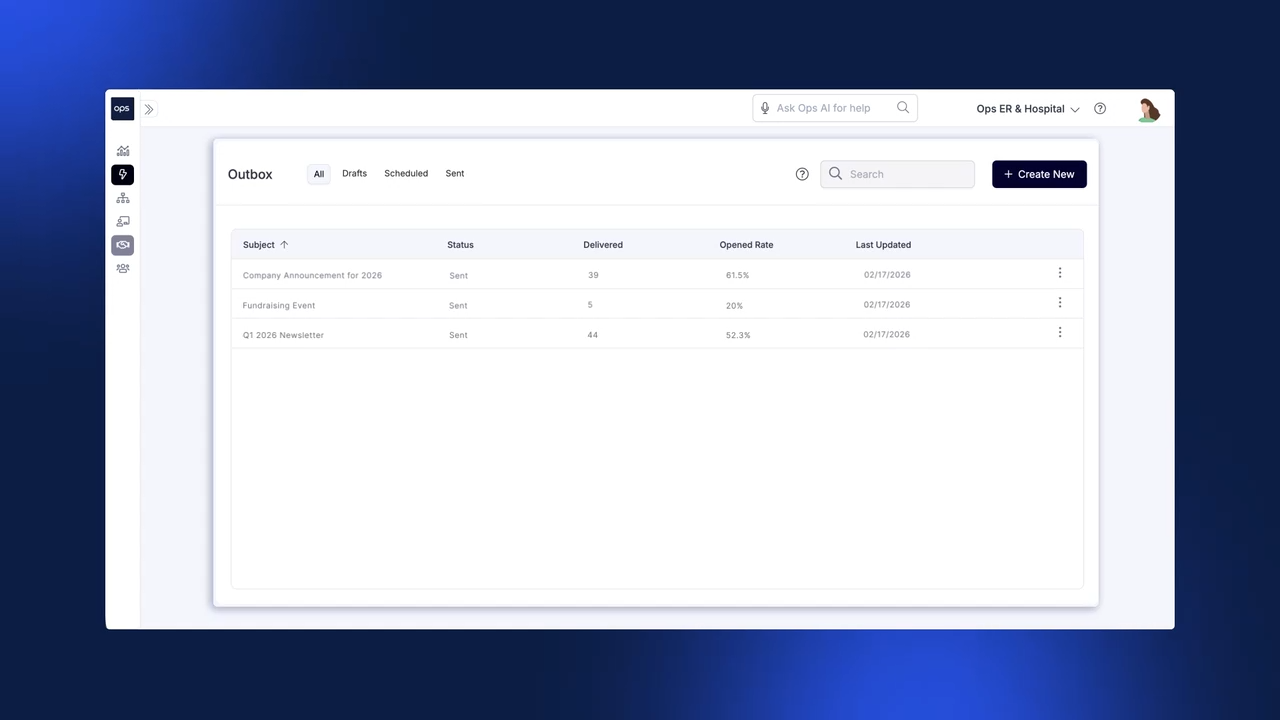
Send company-wide communication about your programs or other company resources
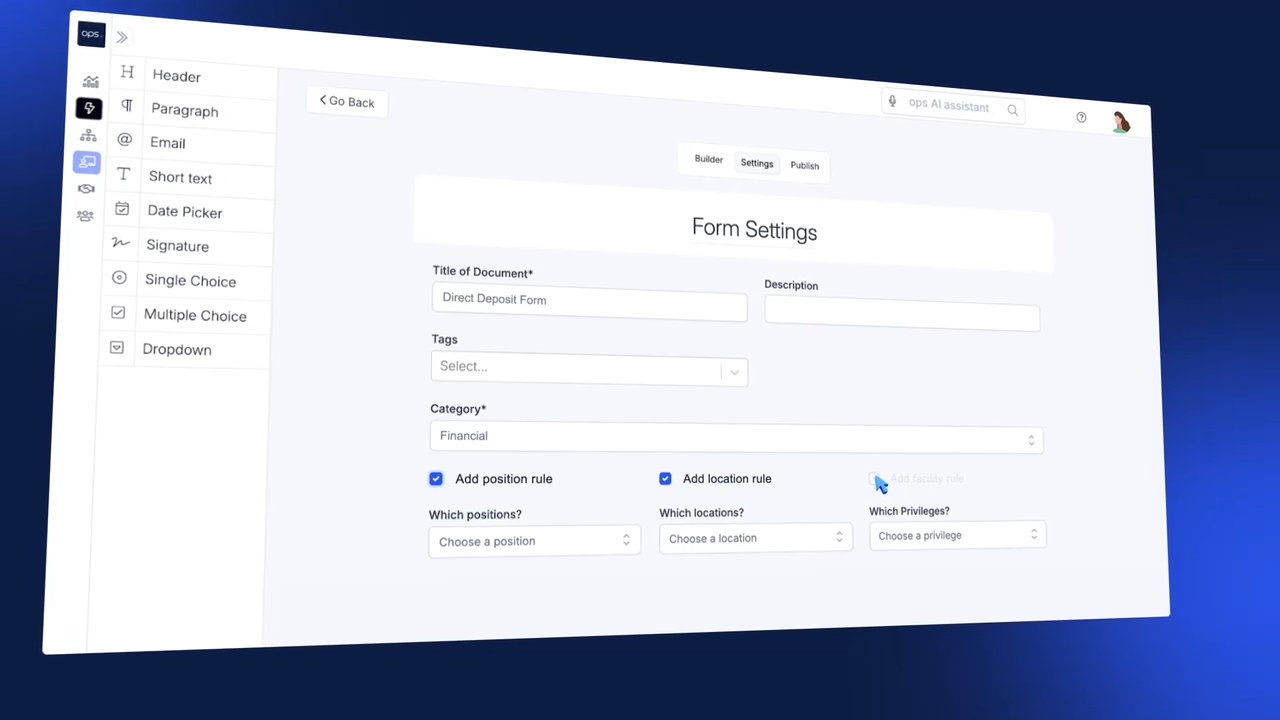
Create and send feedback collection tools to understand your employees' experience and track physician well-being
Track various metrics to measure the impact of your onboarding efforts on cost savings, training uptake, and ROI.
What are the Common Challenges in Physician Onboarding?
Some of the common challenges in internal medicine doctor onboarding include:
- High turnover rates, especially in facilities with short onboarding timelines, force physicians to take up full clinical responsibilities before they are fully confident or comfortable in the new environment.
- Delays in the credentialing process slow down onboarding and increase onboarding costs
- Failing to clarify expectations or provide feedback to new doctors results in a disconnected experience
- Lack of networking opportunities
- A rushed orientation process that fails to provide physicians with the right information or confidence in their role
- Overloading the physicians with too much information that overwhelms them
Conclusion
Poor onboarding has long-term effects on the quality of care clinical facilities provide. When onboarding advanced practice providers, you should provide the necessary tools and resources physicians need to provide high-quality care. While this process may encounter challenges such as the inefficiencies of manual processes, tools such as ops.work improve the process, allowing new physicians to focus on patient care. Get started with our free plan to improve how you integrate employees.
References
Berggren, Amy, et al. “Standardized Onboarding Increases Intention to Stay with the Organization.” The Journal of Nurse Practitioners/The Journal for Nurse Practitioners, vol. 20, no. 6, 1 June 2024, pp. 105011–105011, https://doi.org/10.1016/j.nurpra.2024.105011.
Bond, Amelia M, et al. Physician Turnover in the United States. 11 July 2023, https://doi.org/10.7326/m22-2504.
Janaka Lagoo, et al. “Safely Practicing in a New Environment: A Qualitative Study to Inform Physician Onboarding Practices.” Safely Practicing in a New Environment: A Qualitative Study to Inform Physician Onboarding Practices., vol. 46, no. 6, Mar. 2020, p. 314, psnet.ahrq.gov/issue/safely-practicing-new-environment-qualitative-study-inform-physician-onboarding-practices.
Frequently Asked Questions
A new physician integration process must have five key components, including immersing new hires into the organizational culture, facilitating connections, improving physician confidence, providing role clarity, and ensuring regulatory compliance.
Successful integration of new physicians starts with a structured onboarding plan, clarifying responsibilities and performance expectations, and automating the process.
You can improve the onboarding experience by starting before the start date and personalizing the program to the needs of every physician.
Onboarding new physicians starts with credentialing, sending welcome emails, providing company tours, reviewing job descriptions, providing mentorship and training, and collecting feedback.