
A well-structured onboarding program aids in speeding up productivity while improving patient care outcomes. According to a 2024 report, 56% of newly onboarded physicians who have a satisfactory experience report higher job satisfaction. The process includes four key stages: Preboarding, Orientation, Training, and Ongoing Development. Onboarding software like ops.work, automates tasks, streamlines processes, and improves data management, making the integration of new physicians more efficient.
Key Takeaways
- An effective onboarding program facilitates quicker productivity and better patient outcomes
- Onboarding software like ops.work, can streamline the onboarding process by automating tasks and managing employee information
- Best practices for onboarding include pre-engagement, structured programs, technology integration, clear role definition, cultural immersion, and mentorship
Physician retention is an ongoing concern for healthcare facilities. Healthcare professionals face high levels of burnout, increasing their likelihood of leaving a facility. Therefore, installing preventive measures to keep them engaged can help reduce turnover. A formal onboarding process is the first step toward long-term retention in care facilities.
What is the Importance of Onboarding New Geriatricians?
Geriatric medicine doctors specialize in providing medical care for older adults. They can be primary care or internal medicine specialists based on their medical education.
How you onboard these physicians can make a difference in their experience, satisfaction levels, and retention.
According to the 2024 Physician and Clinician Onboarding Research report, 56% of new physicians who receive a satisfactory experience report higher job satisfaction than those who don't.
These high levels of satisfaction also translate to higher retention rates over time, thus reducing an organization's recruitment costs.
An effective onboarding program provides the tools, resources, and knowledge healthcare professionals need to succeed in their role. This results in a shorter time to productivity while enhancing patient care outcomes.
Without an effective program, your physicians spend more time making up for the poor onboarding experience than on care planning, resulting in high levels of dissatisfaction, disengagement, and turnover.
A formal onboarding program enhanced patient safety by familiarizing physicians with internal and regulatory policies and procedures that support patient safety. By incorporating these lessons into their care planning, they have better patient outcomes.
What are the Stages of the Geriatric Physician Onboarding Process?
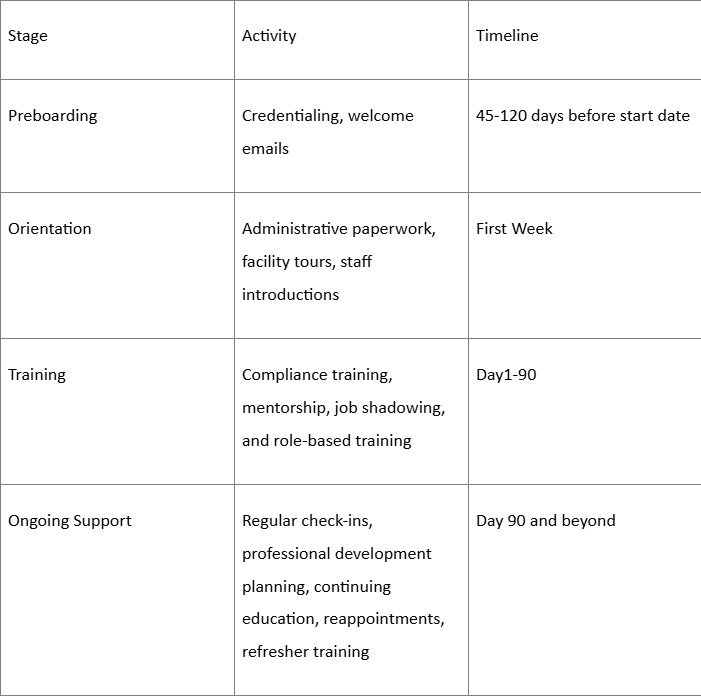
Integrating new team members into your medical center must follow a well-designed program to be impactful. Ideally, your program should start before your new employees report for their first day and continue at least through the first 90 days of employment.
This gives your new employees enough time to acclimate to the environment, learn core skills, and familiarize themselves with their role, to the point where they are comfortable taking up their full clinical responsibilities.
A good program includes four key stages:
- Preboarding
- Orientation
- Training
- Ongoing development
How can Technology Streamline the Onboarding Process?
Onboarding software improves how you integrate physicians into your facility by automating manual tasks and providing a centralized storage for your employee data and training materials.
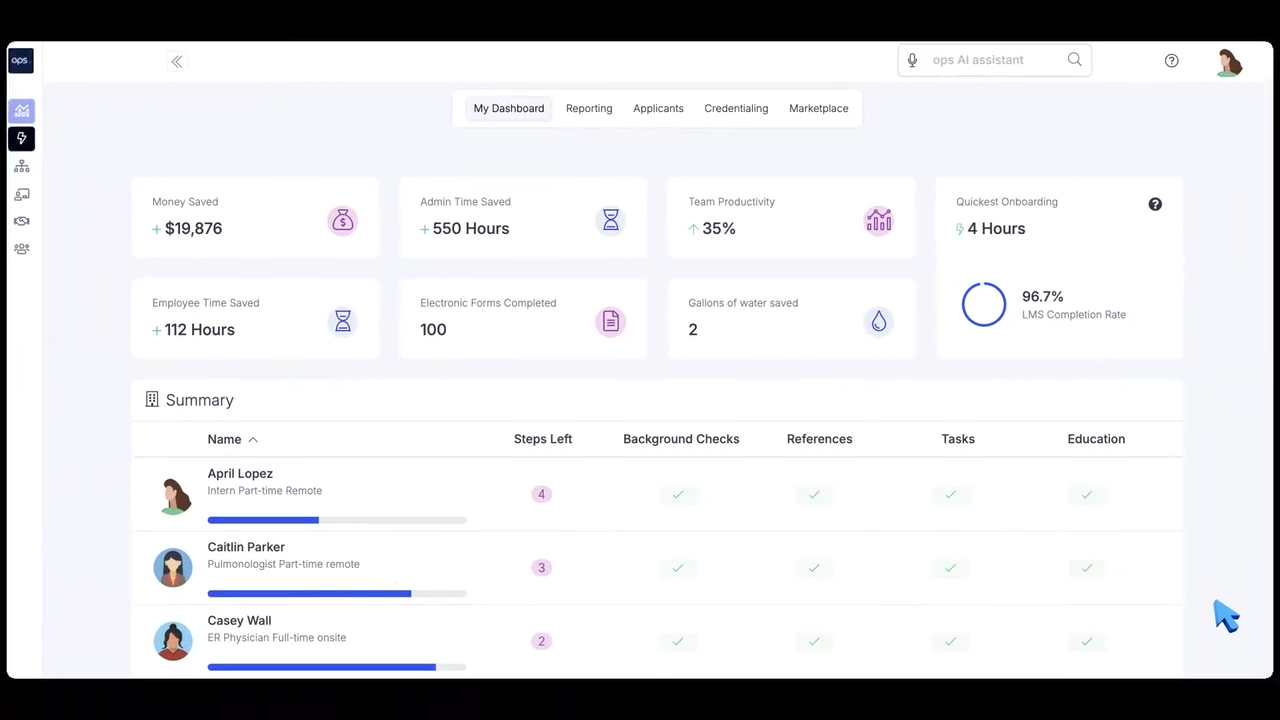
Solutions such as ops.work are tailor-made for the healthcare industry, enabling you to automate critical, time-consuming processes and achieve remarkable time and cost savings. Here are some of the functionalities in ops.work that make it easier to onboard new employees into your medical practice.
Ops.work lets you create employee profiles and invite them to join your automated platform. Once they join, you can fill out their employee information to have detailed staff profiles. In addition, you can take advantage of HRIS integrations to export your existing employee data onto the platform.
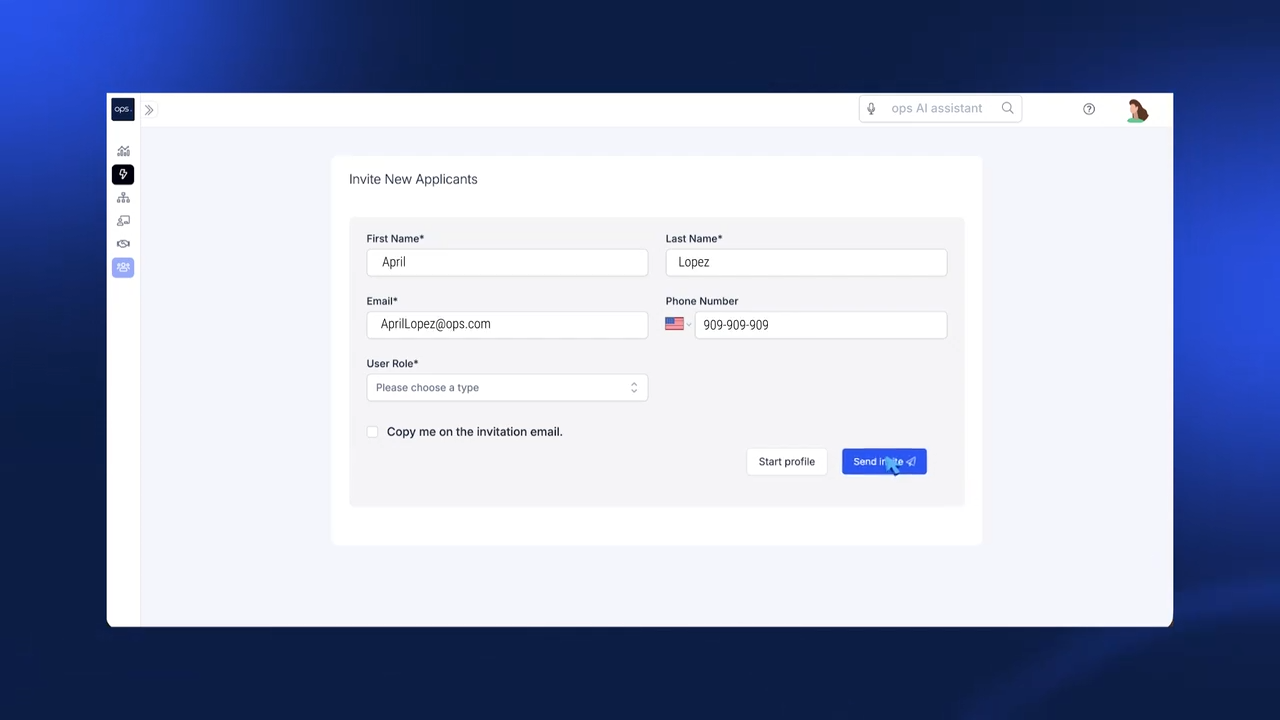
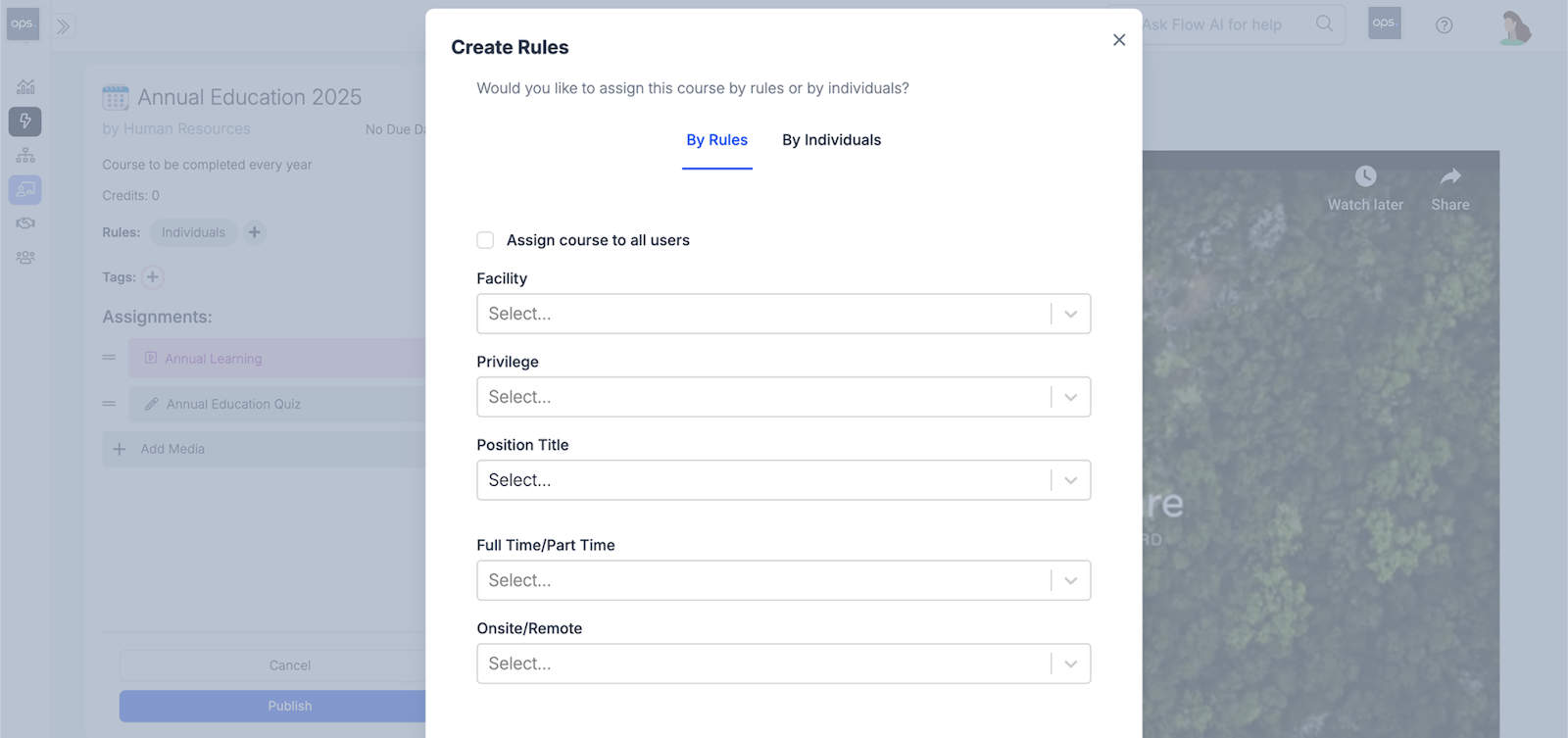
With these profiles, you can easily send tasks ranging from requesting credentialing documents to assigning role-based and compliance training courses.
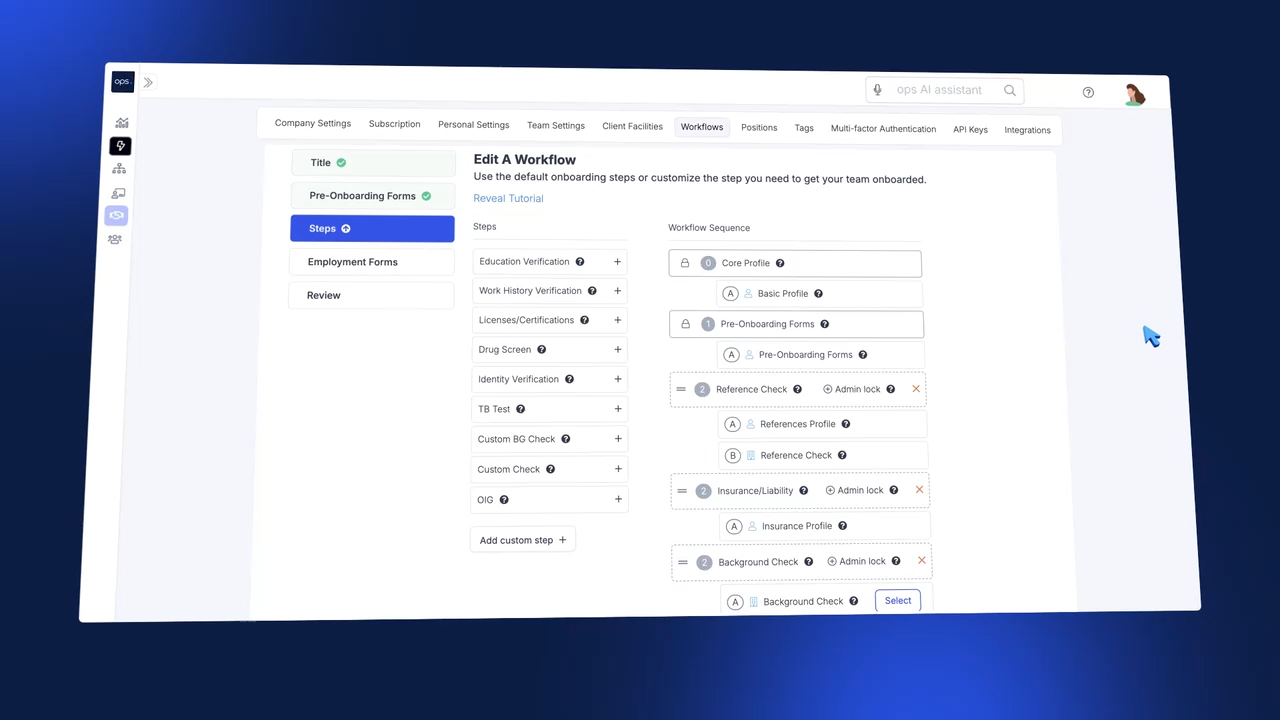
Ops.work also lets you create automated workflows to handle time-consuming administrative tasks, such as credentialing. These workflows can be shared across various departments to allow simultaneous task completion.
The software's data analytics and reporting features enable you to measure the impact of your efforts and draw useful insights to improve your employee integration process.
What are the Best Practices for Successful Onboarding?
You can improve how you integrate new employees in your organization in several ways:
- Start engaging with your employees before they report for the first day
- Create a structured program with clear tasks and responsibilities to ensure everyone is on the same page on what needs to be done
- Incorporate technology solutions to automate manual tasks and processes, which reduces errors, saves time, and creates better audit trails for regulatory compliance
- Clarify the new employee's roles and responsibilities within the first week, so they understand what they should be doing and their performance goals
- Invest in a cultural immersion program to familiarize your new employees with your organizational culture. You should also provide cultural training to help your physicians take better care of older patients from diverse backgrounds and cultures
- Pair new employees with mentors as soon as they report to ensure they have a go-to person who can guide them as they acclimate to the new work environment
Conclusion
Helping physicians acclimate to their new environment improves patient experiences and increases staff satisfaction. Tools like ops.work optimize how you integrate your physicians, allowing you to automate manual tasks, track progress, and generate reports to measure your efforts. Sign up for our free plan to get started.
References
Nicastri, Catherine, et al. “An Innovative Model for Geriatric Fellowship Training for Hospitalists.” Journal of Hospital Medicine, 13 Oct. 2025, https://doi.org/10.1002/jhm.70209.
“Physician Recruitment Process | AAPPR | Association for Advancing Physician and Provider Recruitment.” AAPPR - Association for Advancing Physician and Provider Recruitment, 2024, aappr.org/research/onboarding-report/.
Wang, Jingjing, et al. “A Global Prevalence of Turnover Intention among Doctors: A Systematic Review and Meta-Analysis.” Scientific Reports, vol. 15, no. 1, 2 July 2025, www.nature.com/articles/s41598-025-07019-0, https://doi.org/10.1038/s41598-025-07019-0.
Frequently Asked Questions
Mind, Mobility, Multicomplexity, what Matters most, and medications make up the 5M's of geriatric care.
A comprehensive onboarding process must include five components: compliance, culture, connections, confidence, and clarity.
The 30-60-90 template provides a roadmap for the activities a facility must complete to successfully integrate new staff. It guides teams and new staff on what to do within the first 90 days of employment.
Integrating new hires improves performance and care in geriatric facilities by boosting physician confidence and equipping them with the skills, knowledge, and support they need to deliver quality care.