
Corporate training programs improve employee skills, competence, and engagement. They include coaching, on-the-job training, instructor-led learning, and role-playing. Training platforms streamline corporate training with features such as course creation and management, role-specific customization, compliance tracking, analytics, and ease of use.
Key Takeaways
- Corporate training programs are structured systems that equip employees with the necessary skills
- Benefits of workplace training include improved employee outcomes, engagement, confidence, and enhanced patient care quality
- A skills gap assessment is essential for identifying current and desired employee capabilities, ensuring training aligns with organizational culture and values
Employees provide the most consistent source of value for healthcare facilities. Therefore, investing in their professional development positions your facility to deliver better services, ensure employee satisfaction, increase productivity, and reduce turnover.
What Are Corporate Training Programs?
Corporate training is a structured system meant to provide the skills and knowledge that employees need to perform their roles and grow their careers. Workplace learning programs include formal and informal efforts by an organization to impart skills to its workforce.
These programs include:
- Coaching and mentorship
- On-the-job training (learning by performing tasks or shadowing another employee)
- Instructor-led learning
- Role-playing
Benefits of Workplace Training Programs
Organizations that invest in workplace training programs have better employee outcomes. Their employees develop the right skills and have the capacity to apply them in their day-to-day jobs to achieve organizational goals.
These programs also keep employees engaged. When an employee is supported through skills training, they gain confidence in their ability to complete their tasks. This keeps them engaged and more likely to stay in your facility.
In addition to employee engagement, well-developed training initiatives reflect on the quality of patient care your facility provides.
What are the Types Of Corporate Training Courses?
There are four types of corporate learning programs provided during different stages of the employee lifecycle:
Onboarding training aims to provide skills and knowledge that help new hires integrate into the organization faster. Although it is short-term, it lays the foundation for ongoing employee development by introducing new hires to your internal processes and job-specific skills.
Compliance training aims to train your team on the external and internal regulations and policies your facility operates under. For healthcare companies, these include regulations such as HIPAA, HITECH, OSHA, and emergency preparedness, among others.
Compliance training is often mandatory for all employees and must be provided on an ongoing basis to prevent non-compliance.
Technical training provides employees with the hard skills needed to perform their jobs, operate software, or use medical equipment. It can be provided as part of upskilling employees after a promotion or new equipment purchase.
It is also important for early-career professionals as it helps them bridge the gap between their academic education and the real-world work environment.
Leadership development courses or executive education target employees seeking senior management and leadership roles. Leadership training covers a range of topics to help employees develop leadership skills, such as:
- Emotional intelligence
- Project management
- Strategic thinking
- Business planning
- Strategic planning
- Team leadership and management
Workplace learning programs may be grouped based on the facilitation method into traditional, blended, and online training approaches.
Traditional courses are offered in-person, either on-site or off-site, while online courses are offered through various digital platforms. Blended learning programs combine traditional and online learning features to deliver a varied learning experience.
You can create a range of professional development programs and courses using ops.work - an employee training management software that allows you to create, deliver, and manage your learning materials from one platform.
Get started with the free plan.
Choosing the Best Corporate Training Courses for Organizational Learning
Choosing the most popular corporate courses is not the best strategy when choosing organizational learning courses. The best course is tailored to your corporate setting and training needs.
The first step in choosing the best program is conducting a skills gap assessment to determine the current vs. desired skill levels. Once you've identified the gaps, your instructional design team develops course materials that meet these needs.
These courses must have measurable KPIs to help you measure the impact of your L&D efforts. These KPIs include skill proficiency, employee productivity, and employee progression.
The courses you choose must also align with your organizational culture. Such training promotes the core values, behaviors, and processes that the organization wants to nurture in its employees.
Alignment with company culture facilitates continuous learning, employee engagement, and productivity while supporting an employee's career and personal development needs.
What are the Key Features of an Employee Training Platform?
Online corporate training solutions automate various activities in the employee development process, allowing you to deliver customized training to meet different needs.
The platform should have features that allow all your employees to access training opportunities equally while allowing you to collect feedback and track key performance indicators such as course completion rates.
Ops.work learning management software provides a range of basic and advanced LMS features to support different L&D functions, from creating courses to generating reports. Here are the key functionalities of ops.work:
Course creation and management to allow corporate trainers to upload or create courses in various formats:
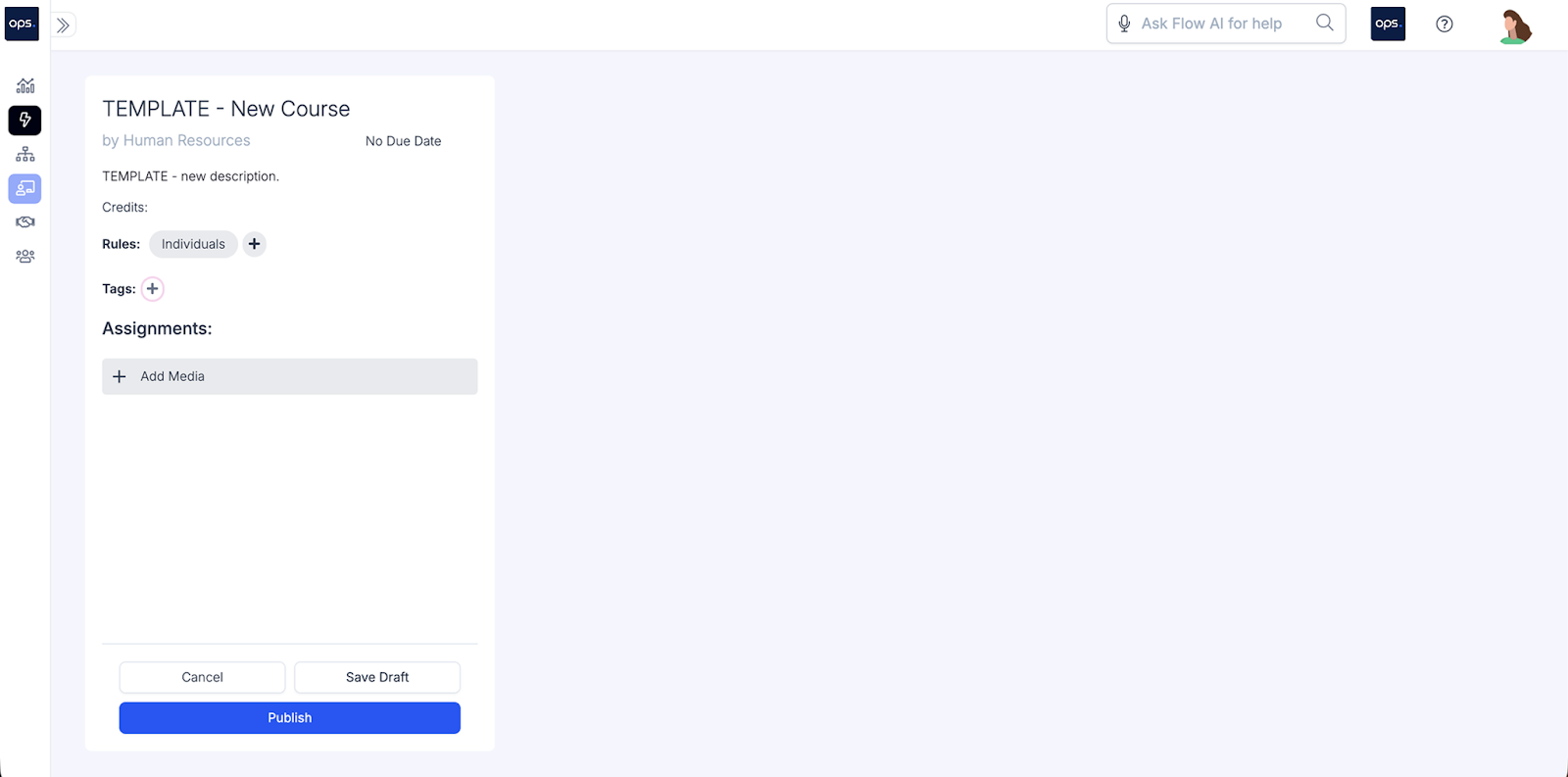
Customization is a key feature to look for when choosing an LMS platform for healthcare. Healthcare facilities have clinical and non-clinical roles with different skill requirements.
Therefore, employee development efforts must be customized to meet the needs of these roles. Ops.work allows this customization during the course design process by allowing you to assign courses based on a set of rules.
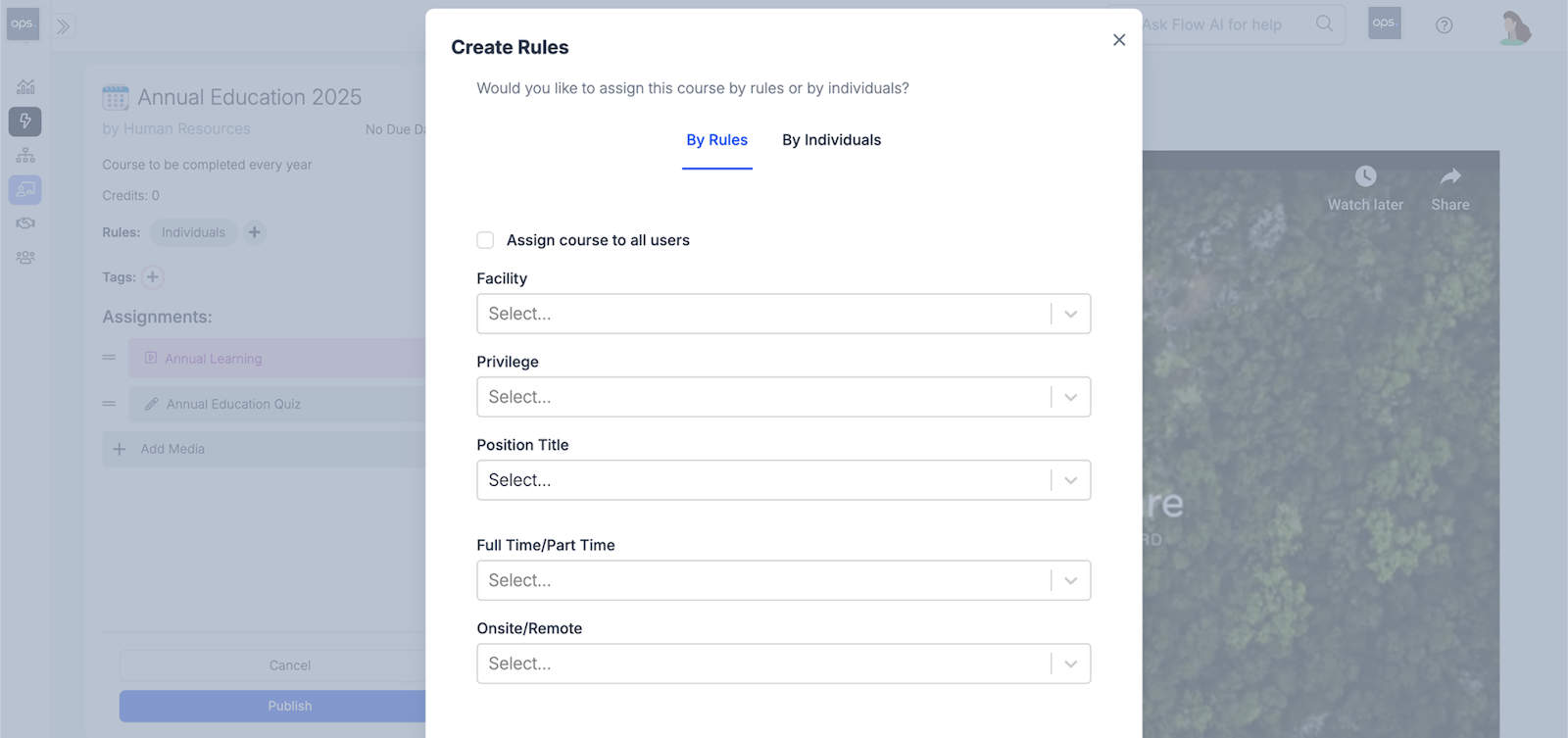
This way, you can coordinate training across the organization from the same platform without overwhelming your staff with unnecessary training materials.
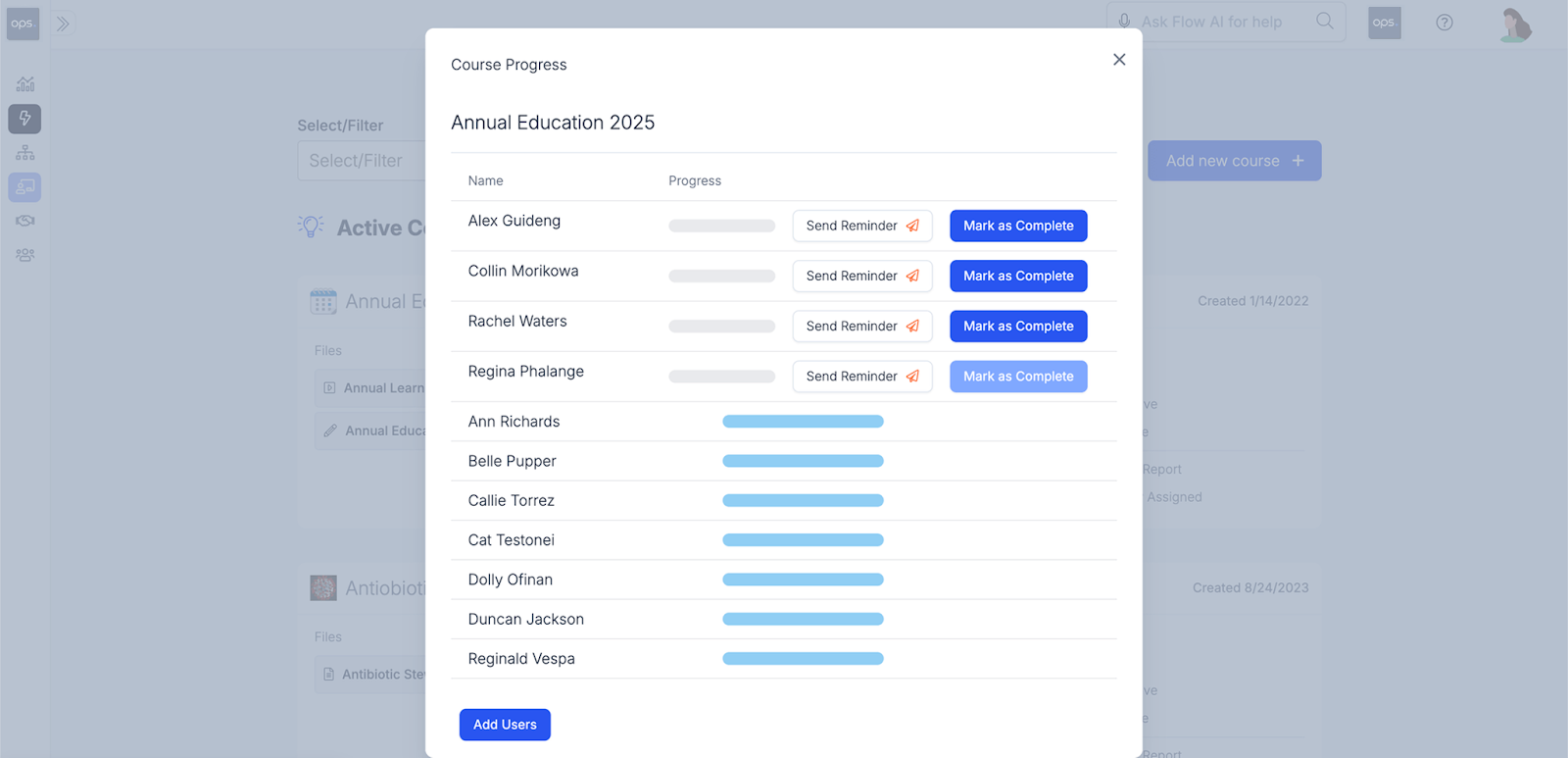
Compliance Tracking features allow you to monitor various metrics such as course enrollment, progress, and completion rate, which are important in ensuring your facility complies with internal and external standards.
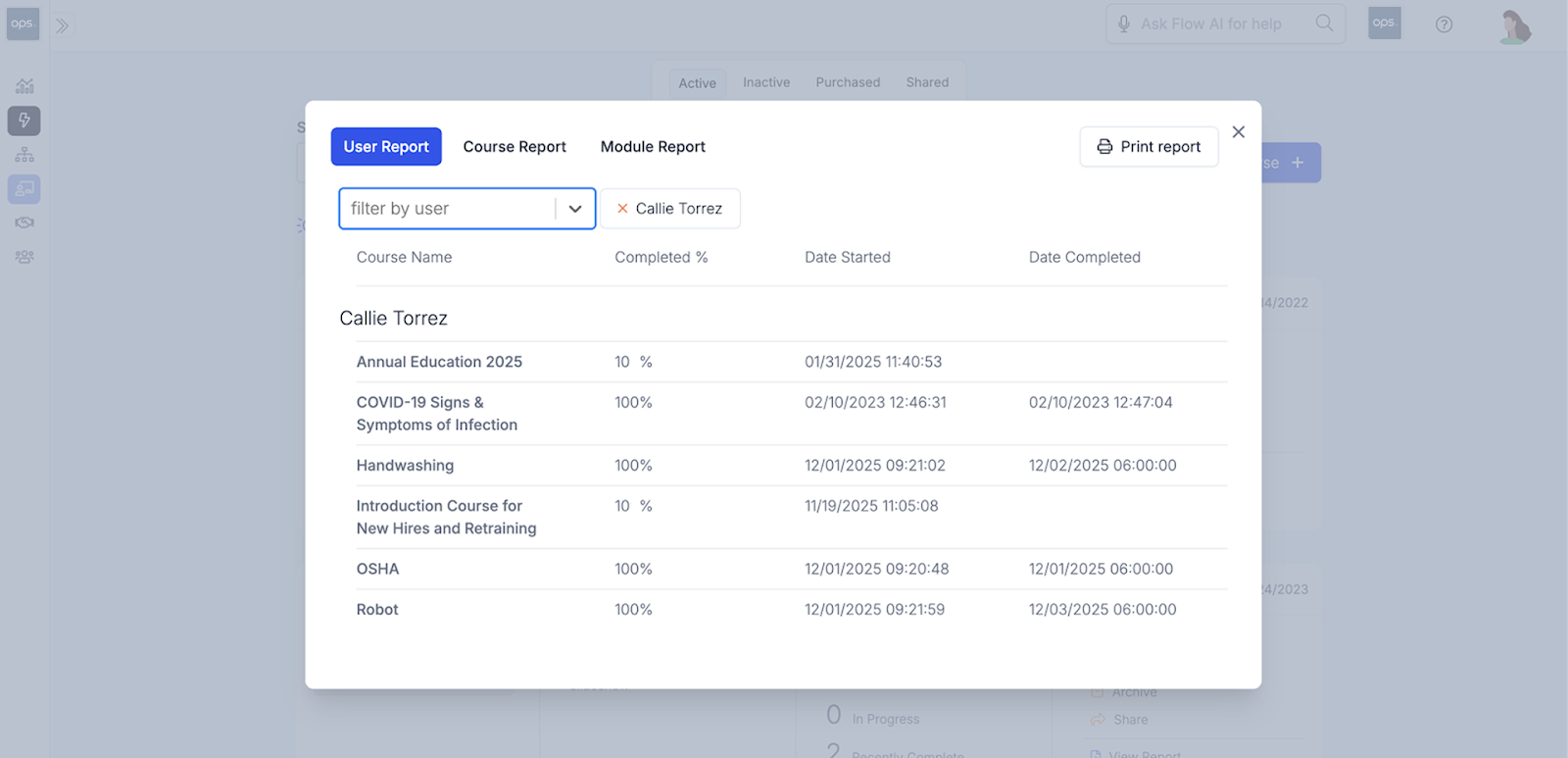
Analytics and Reporting features to help you generate reports to measure whether you're meeting your learning objectives
Ease of use: the platform should be easy to use by facilitators, learners, and administrators for a smooth learning experience. Ops.work integrates pop-up tutorials that guide users through the platform, making it easier to facilitate and access training. Explore these and more features with our free plan.
Conclusion
Professional development is an ongoing process that facilitates employee retention, fosters productivity and helps you support your team performance and shape the best talent to meet your organization's goals. Ops.work software provides LMS capabilities to help you develop, deliver, and measure the impact of your employee development efforts. Develop your first course with our free plan.
References
Shiri, Rahman, et al. “The Role of Continuing Professional Training or Development in Maintaining Current Employment: A Systematic Review.” Healthcare, vol. 11, no. 21, 3 Nov. 2023, pp. 1–17, pmc.ncbi.nlm.nih.gov/articles/PMC10647344/, https://doi.org/10.3390/healthcare11212900.
Lee, Zion. “Overcoming Challenges in Corporate Training: A Framework for Effective Training Initiatives.” Open Journal of Business and Management, vol. 11, no. 05, 1 Jan. 2023, pp. 2472–2487, www.scirp.org/journal/paperinformation?paperid=127999, https://doi.org/10.4236/ojbm.2023.115137.
Banerjee, Pratyush. “Corporate E-Learning Initiatives: A New Paradigm for Employee Development.” NHRD Network Journal, vol. 15, no. 3, 30 June 2022, pp. 345–352, https://doi.org/10.1177/26314541221088043.
Frequently Asked Questions
The best courses for talent development provide high-impact professional skills such as communicating effectively, problem-solving, innovation, and adaptability, which are essential for the modern workplace.
The 70-20-10 rule is a learning and development model that suggests employees learn:
- 70% from performing their jobs
- 20% from interactions with others, and
- 10% from formal programs
You can measure the effectiveness and ROI of a training program by:
- Tracking the reaction of your employees to the program through surveys
- Providing assessments to test for knowledge retention
- Observing the competency levels of employees after training
- Measuring performance improvement based on the outputs before and after the training