
Employee training management involves the planning, delivery, and optimization of training programs to improve employee engagement, satisfaction, and performance while ensuring compliance. It relies on training needs assessment to create tailored training programs for onboarding, compliance, technical skills, and leadership development. Training delivery can occur through synchronous, asynchronous, or blended methods, utilizing learning management systems (LMS) like Ops.work.
Key Takeaways
- Employee training management involves planning, delivering, and optimizing training programs within a company
- Training programs can be categorized into onboarding, compliance, technical skills, and leadership development training
- Training delivery methods include synchronous (real-time interaction), asynchronous (self-paced learning), and blended delivery (combination of both).
- Tools like Ops.work offer features for course management, including content creation, delivery, tracking, and reporting metrics.
- Assessments post-training measure knowledge retention and performance to evaluate training effectiveness and ensure compliance.
Organizational learning is important for medical facilities, whether it's to facilitate compliance or to improve the quality of patient care. Tracking employee training efforts is therefore important in identifying and addressing knowledge gaps within your workforce.
Related: A Complete Buyer's Guide to Employee Training Management Software
What is Employee Training Management?
Employee training management refers to all the activities related to planning, delivering, and optimizing your company's training programs. Companies that invest in training management know what their training needs are, the skills they need, and the impact of their efforts.
They also have higher rates of employee engagement, satisfaction, and performance. Another benefit companies get is mitigating risks and ensuring compliance.
How Does Employee Training Management Software Improve Training?
The training you provide at your company will determine whether employees stay or leave. More professionals are looking for workplaces that equip them with the skills and knowledge to fulfil their roles and responsibilities while growing professionally.
Therefore, paying attention to your training processes and making it convenient for staff to learn improves knowledge retention rates and business outcomes.
One way to improve your corporate training is by adopting a training management system. Here is how to streamline training.
Assessing Training Needs
A needs assessment is the first step in optimizing learning within your organization. The aim is to identify missing skills, abilities, and knowledge at the organization, role, team, and individual levels.
Conducting regular needs assessments allows you to identify performance requirements, reduce training redundancies, and provide missing courses.
When conducting a needs assessment, consult regulatory requirements, internal policies, managers, teams, and individual employees. This gives you diverse feedback on what each party expects from the training. It also helps you set training standards for your organization, in line with your goals, mission, and vision.
You can automate this process using tools such as ops.work. The software solution allows you to customize various feedback collection tools such as forms, surveys, and interviews.
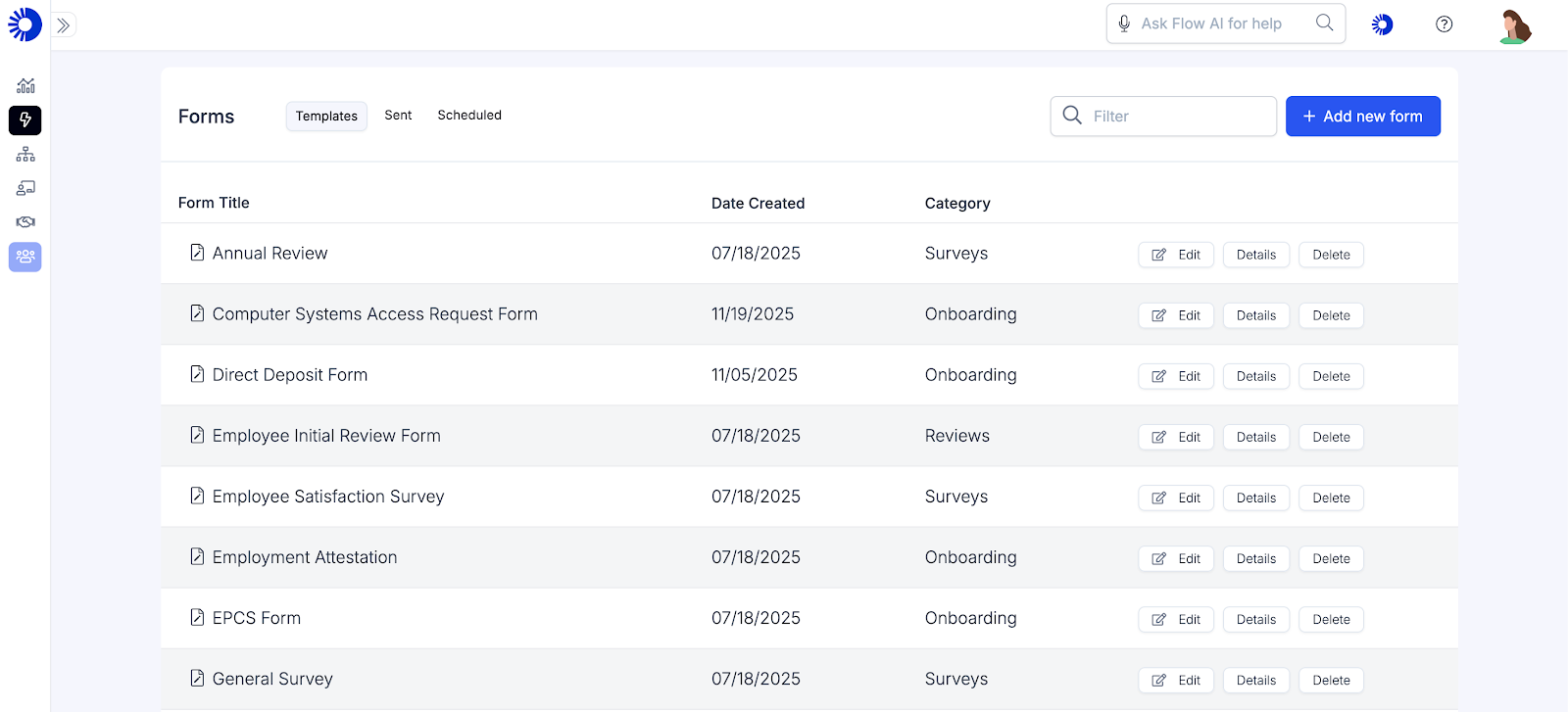
If you want to save time creating needs assessment tools, you can use ready-made templates from our free integration with Jotform. This integration allows you to access thousands of free templates for your business needs.
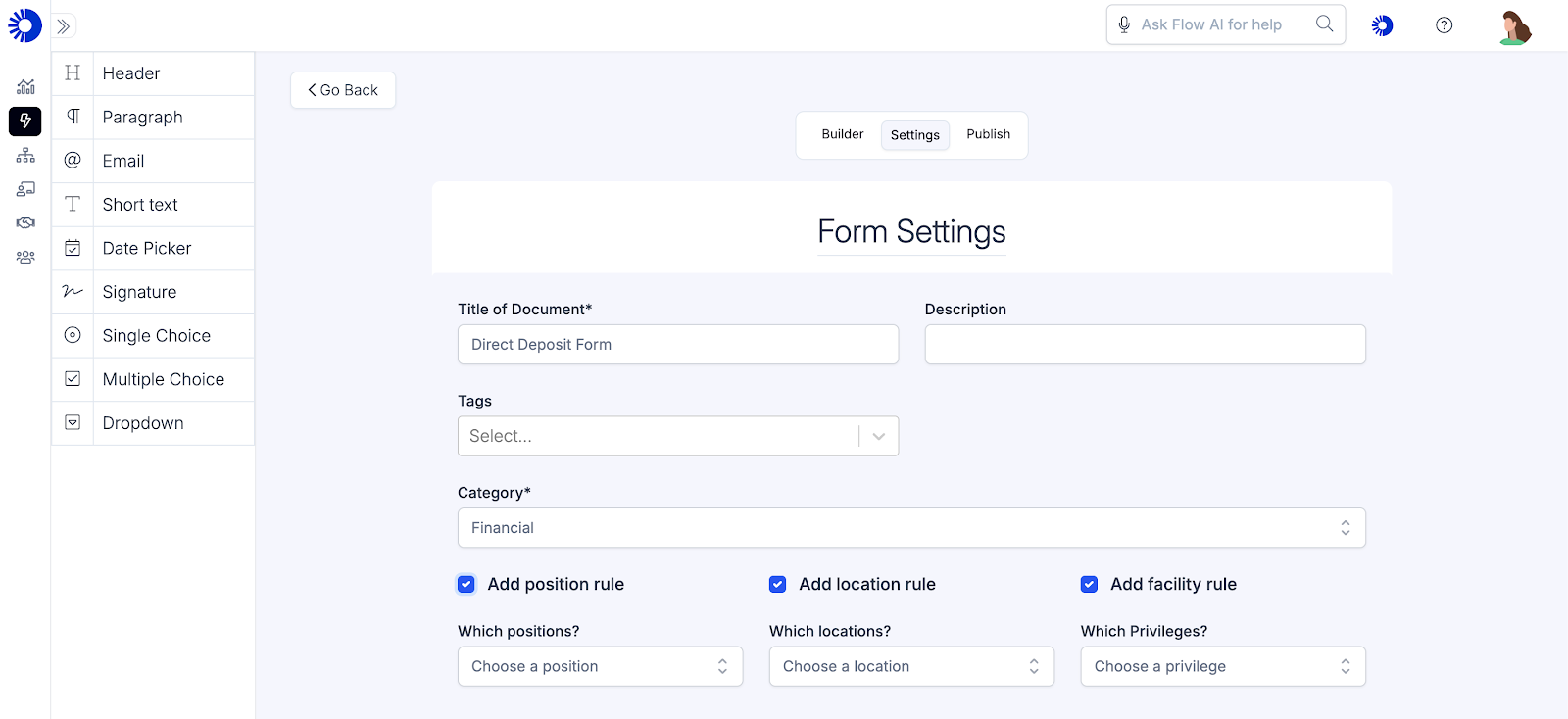
Once you've created the forms, you can assign them to different staff members based on the rules you set:
Creating Training Programs and Courses
The results you get from your needs assessment inform the next stage, which is developing training programs and courses. There are four major types of corporate training programs you can create:
- Onboarding training which is provided to new hires to integrate them into your organization. This training also prepares them to handle their responsibilities and lays the foundation for continuous development.
- Compliance training, which you offer to educate staff about federal, state, and internal regulations. This training ensures your workers understand their rights and legal responsibilities while keeping your organization compliant.
- Technical skills training introduces employees to the software, systems, and equipment used in the hospital, such as Electronic Health Records systems (EHRs).
- Leadership development training is an advanced program designed for current and aspiring leaders. It provides skills such as communication, team building, project management, and conflict resolution.
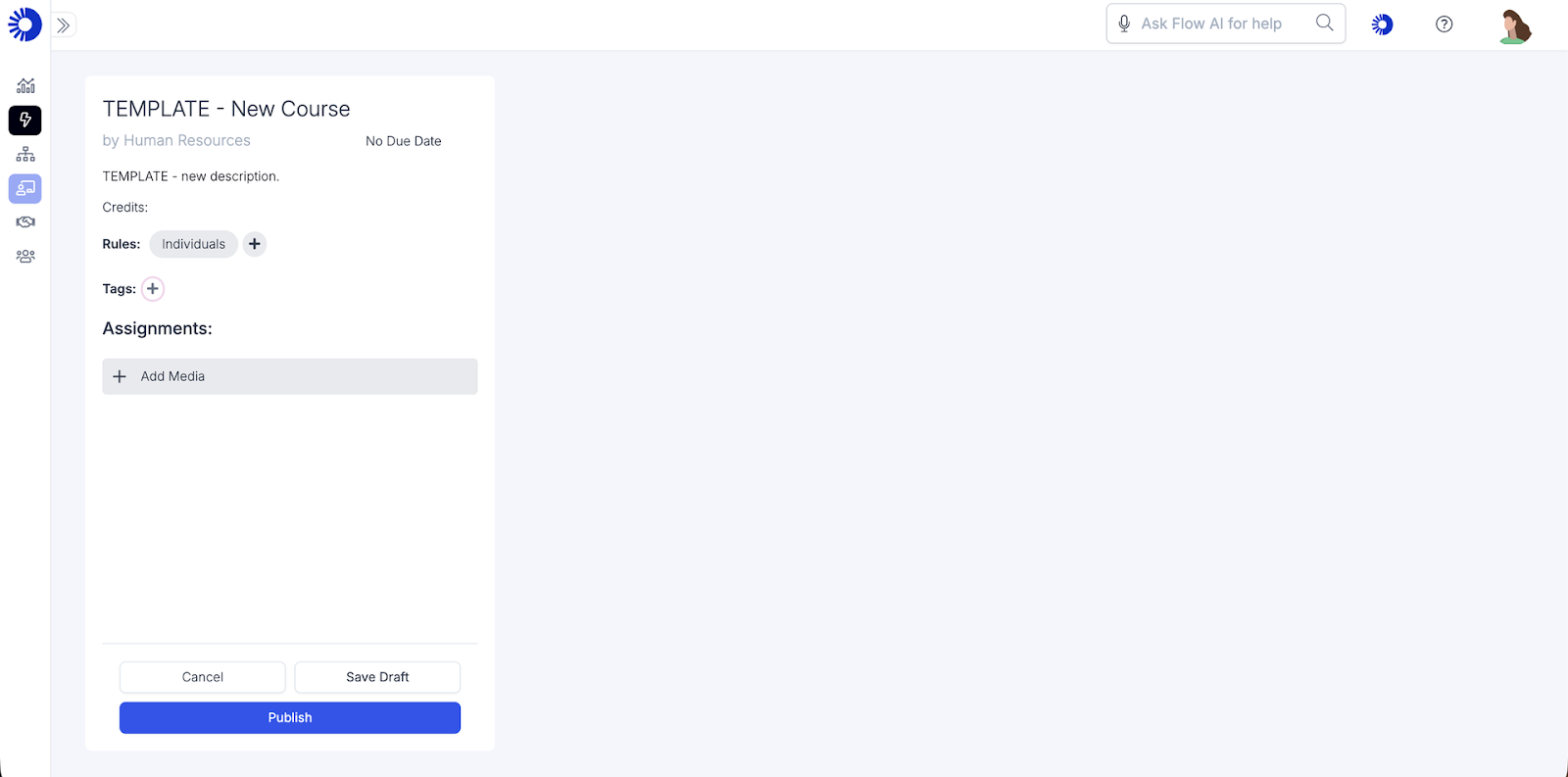
Once you've selected your programs, start designing courses for each. Ops.work has an intuitive course management interface that allows you to create training content in various formats.
You can either develop your material from scratch, upload existing courses, or purchase ready-made courses from credible institutions:
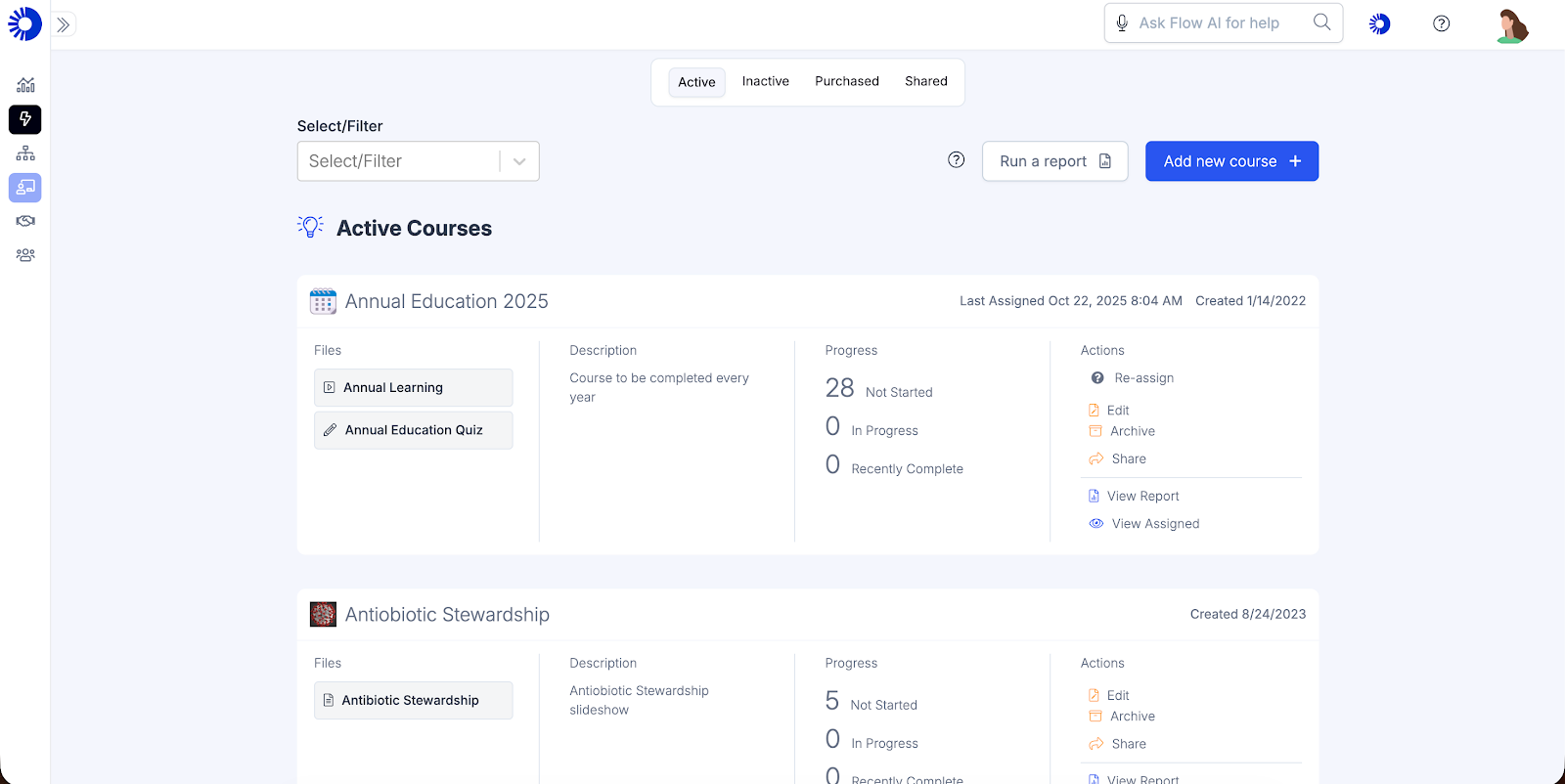
You can also track all your active courses and track learning metrics at a glance or generate detailed reports.
Whether you're designing a new course or updating an existing one, ops.work keeps track of all the changes to your courses. This way, you can maintain an audit trail, especially for courses on compliance regulations and company procedures.
Delivering Training Materials
Training delivery involves transferring learning content to employees. It can happen in one of three broad training delivery methods:
Synchronous delivery where learning happens in real-time. Instructor-led training is an example of synchronous delivery, as learners and trainers interact one-on-one. Synchronous delivery can be remote, using video conferencing tools, or in-person, such as coaching.
Synchronous delivery encourages social learning and collaboration between staff. They can ask questions as they learn while providing immediate insights about the training session.
Asynchronous delivery involves creating learning materials beforehand and making them available for employees to complete at their convenience. This type of delivery allows for personalized training as employees can dictate the pace at which they complete courses.
Some of the advantages of asynchronous learning delivery include:
- It saves the time and resources spent on training initiatives, as one course can be delivered to many learners at different times
- It promotes consistency in training, especially in diverse teams such as those in healthcare.
- Asynchronous delivery makes scalability easier; you can customize the same course to fit different training requirements across the organization without compromising quality or content.
Blended delivery combines synchronous and asynchronous training delivery systems. In this system, you provide online training modules and in-person training.
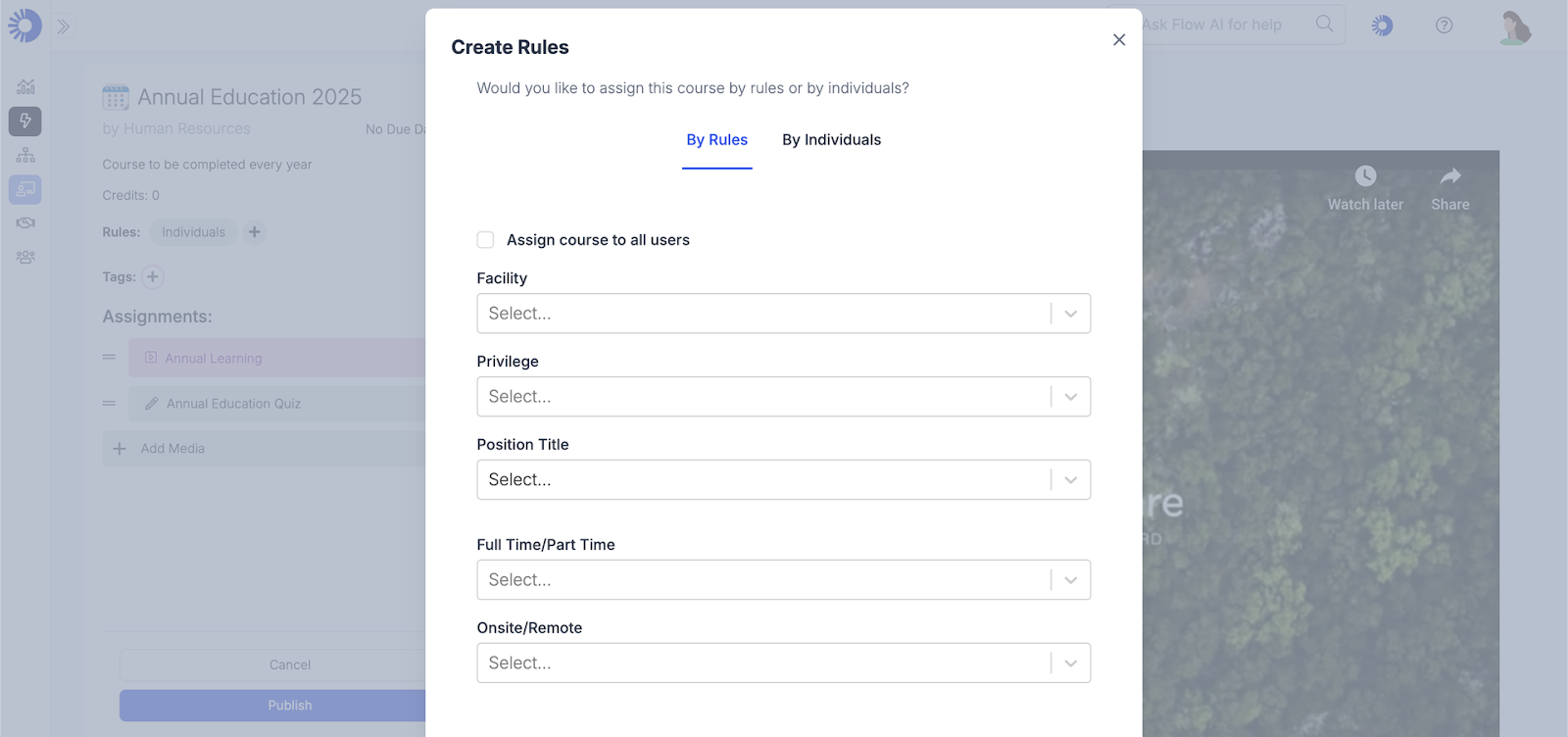
Ops.work is a learning management system (LMS) that allows you to host and deliver training courses. Our software allows you to assign training courses based on predesigned learning paths and rules:
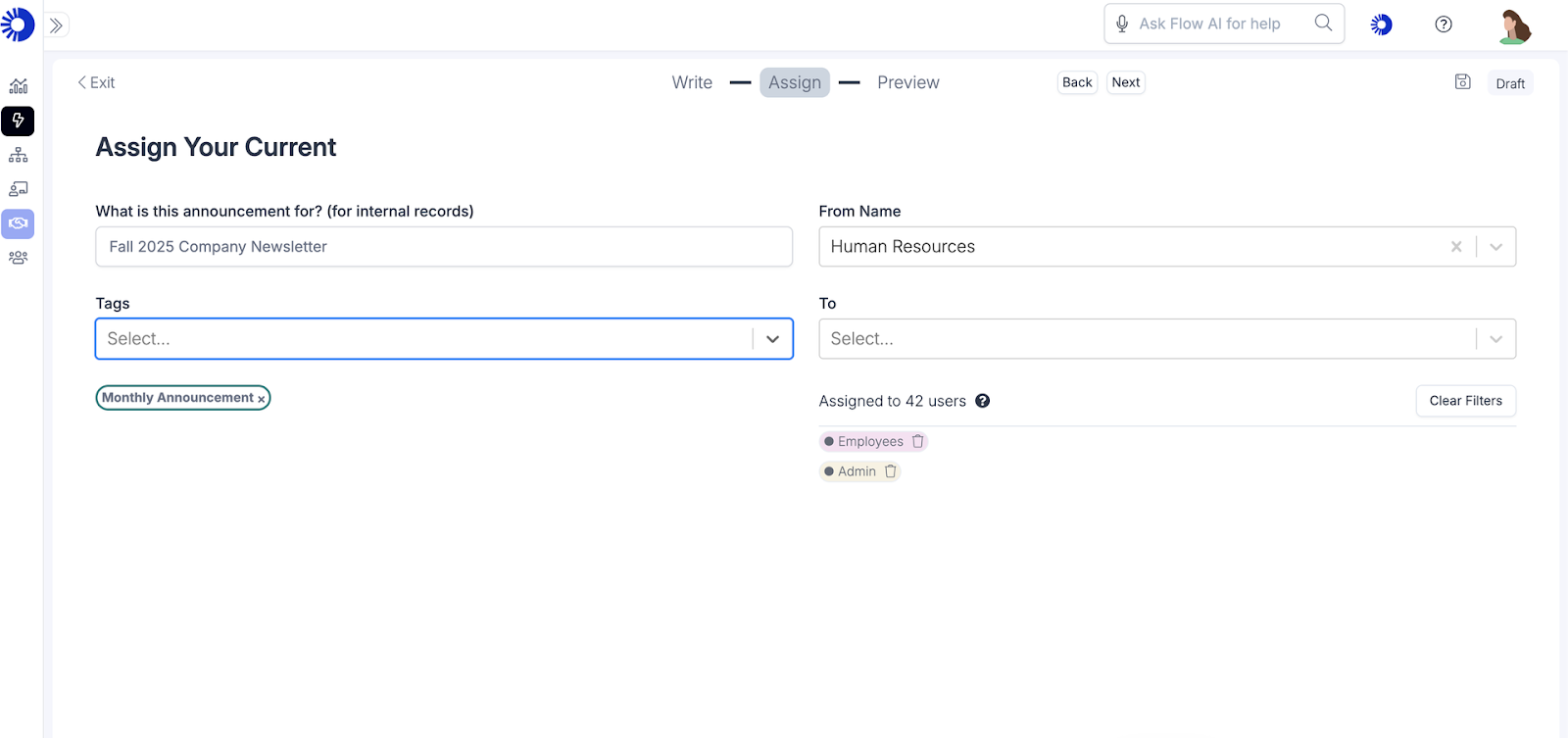
You can also notify employees about new courses through ops.work's currents.
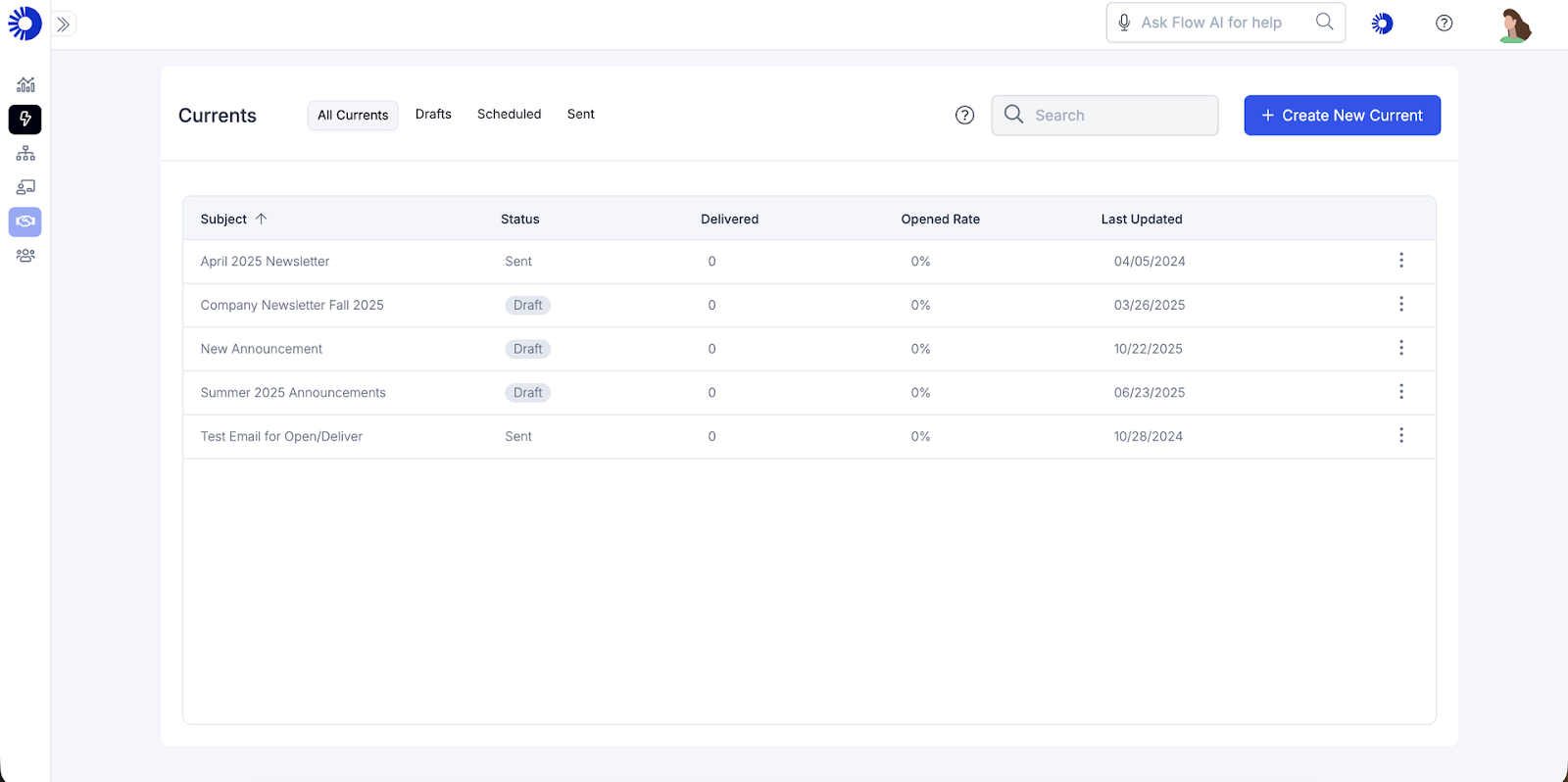
The software also tracks each message so you know which of your staff can access your training.
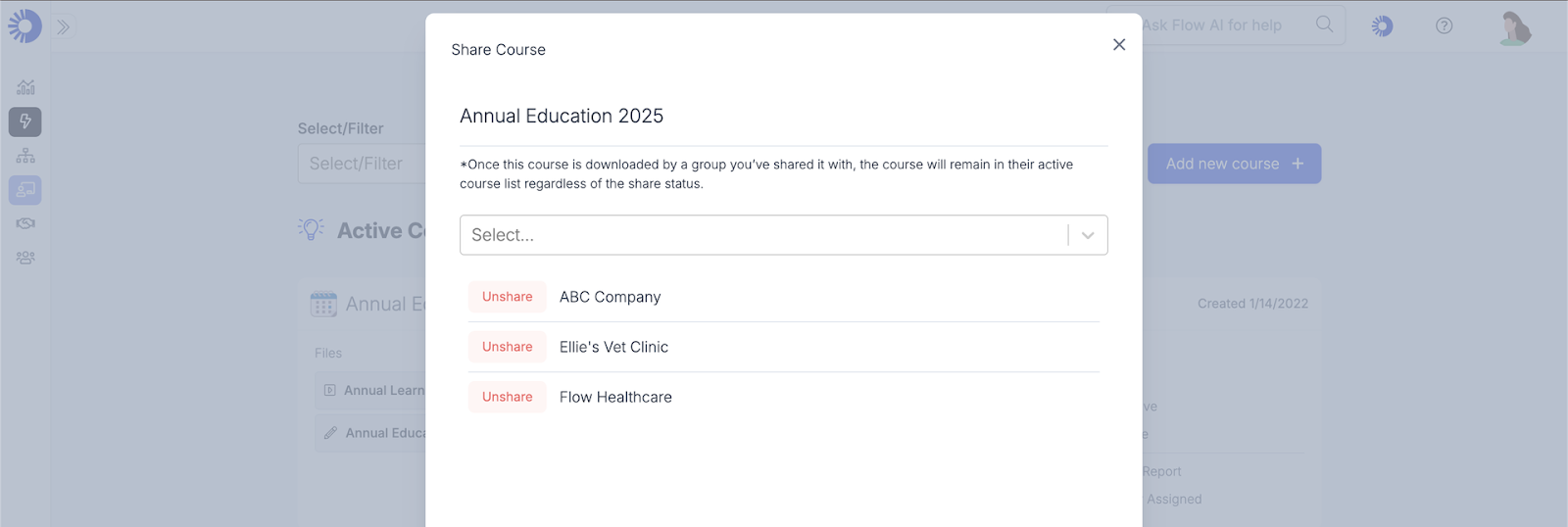
Our software also allows you to share courses, ensuring that your teams across different locations have access to training resources.
Ops.work learning management software comes with a link directory that allows you to create wikis and resource databases that your employees can access for online learning.
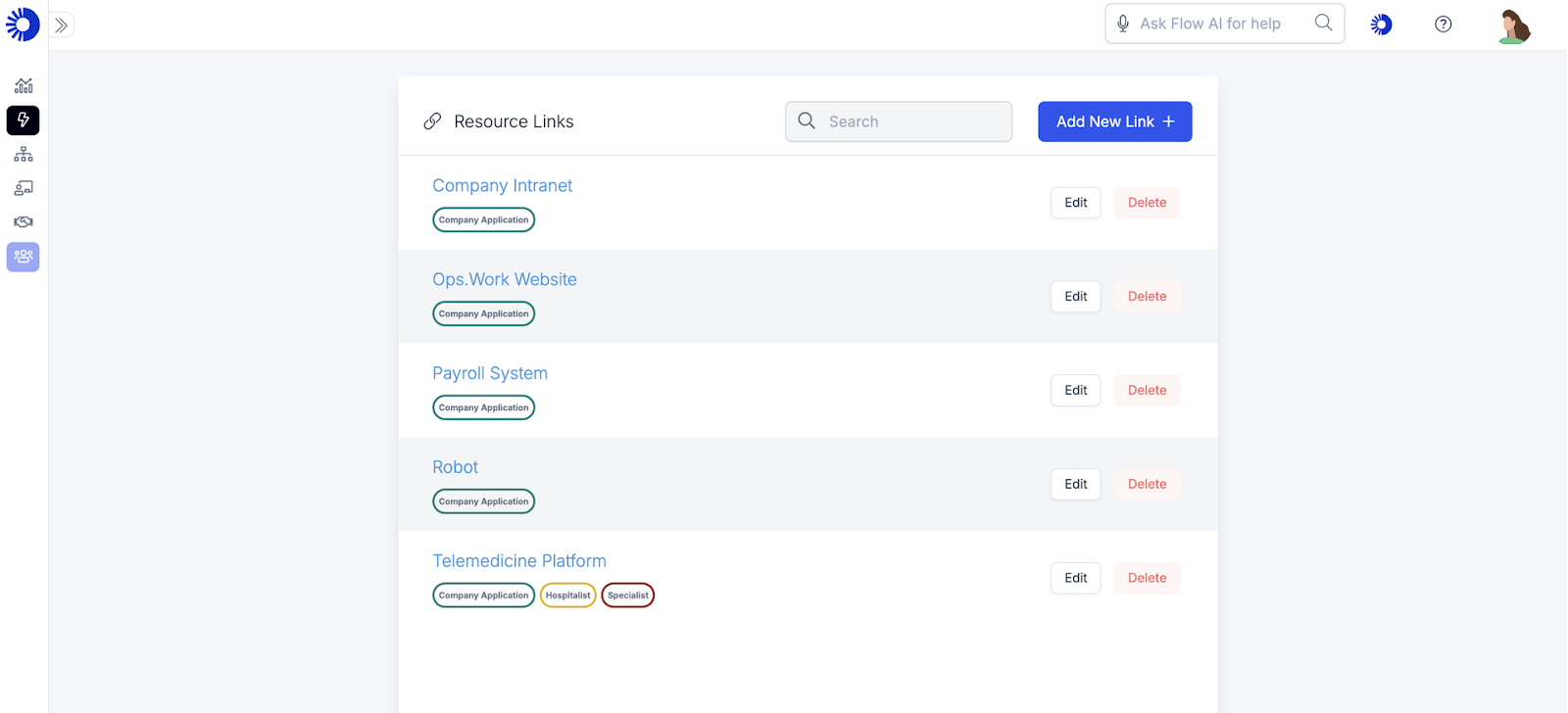
Try these features with our free plan.
Conducting Assessments
Conducting assessments at the end of each course allows you to measure the success of your learning and development efforts. Assessments can be knowledge or performance-based.
Knowledge tests measure the information an employee has retained after completing a course. This assessment is important when testing knowledge of compliance regulations.
For compliance courses, awarding a certification at the end helps you document that each team member completed the course and their performance. This makes it easier for your organization to pass compliance audit checks.
Employee performance assessment tests learning outcomes by observing how well they can complete an assigned task after training. The goal of performance-based assessments is to evaluate foundational skills and ensure that your staff is well-equipped to excel in their roles.
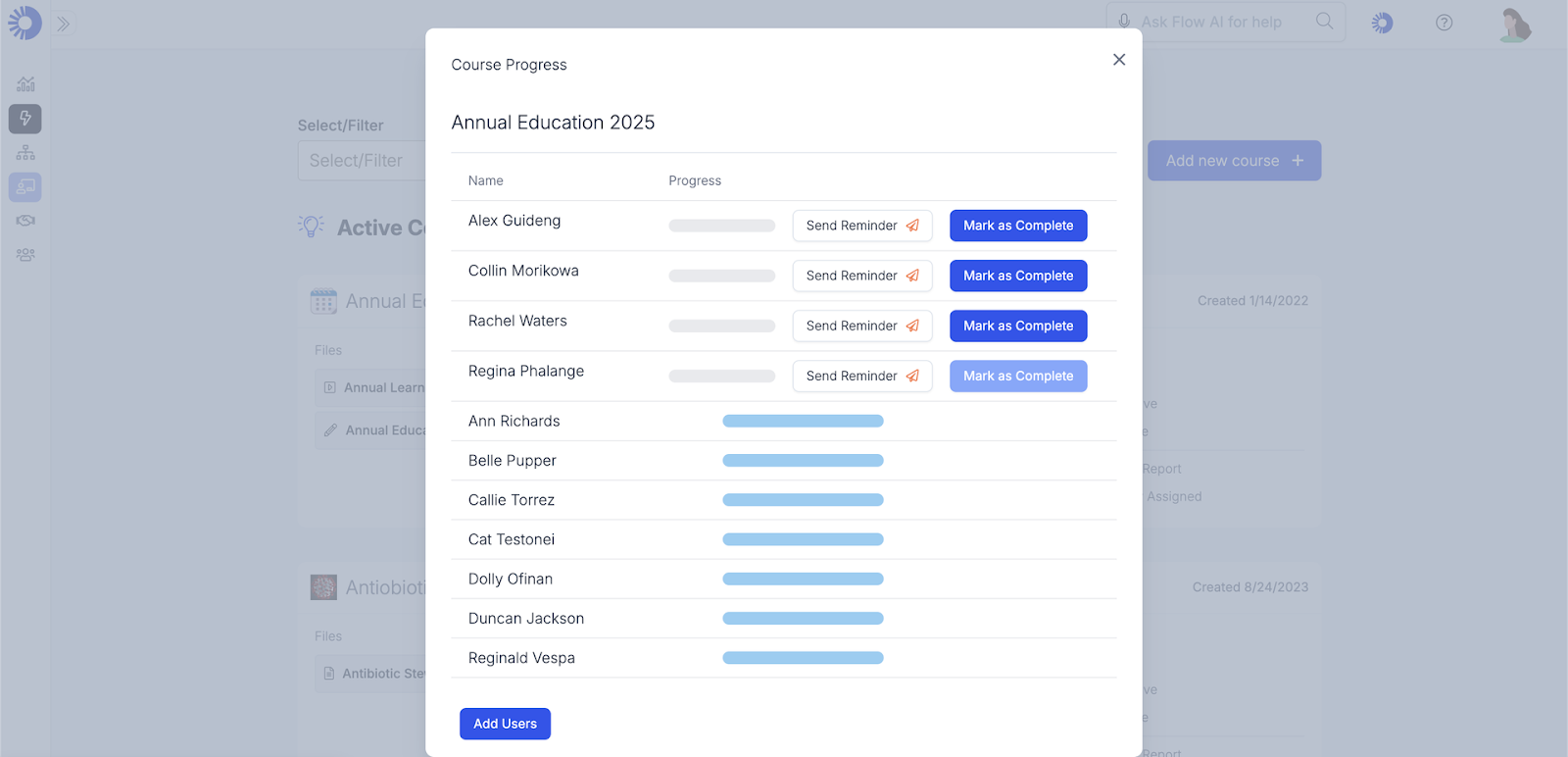
Ops.work training platform lets you manage staff profiles directly on the platform, making it easy to assign courses, track progress, manage training records, and send reminders. Start managing your employee training with our free plan.
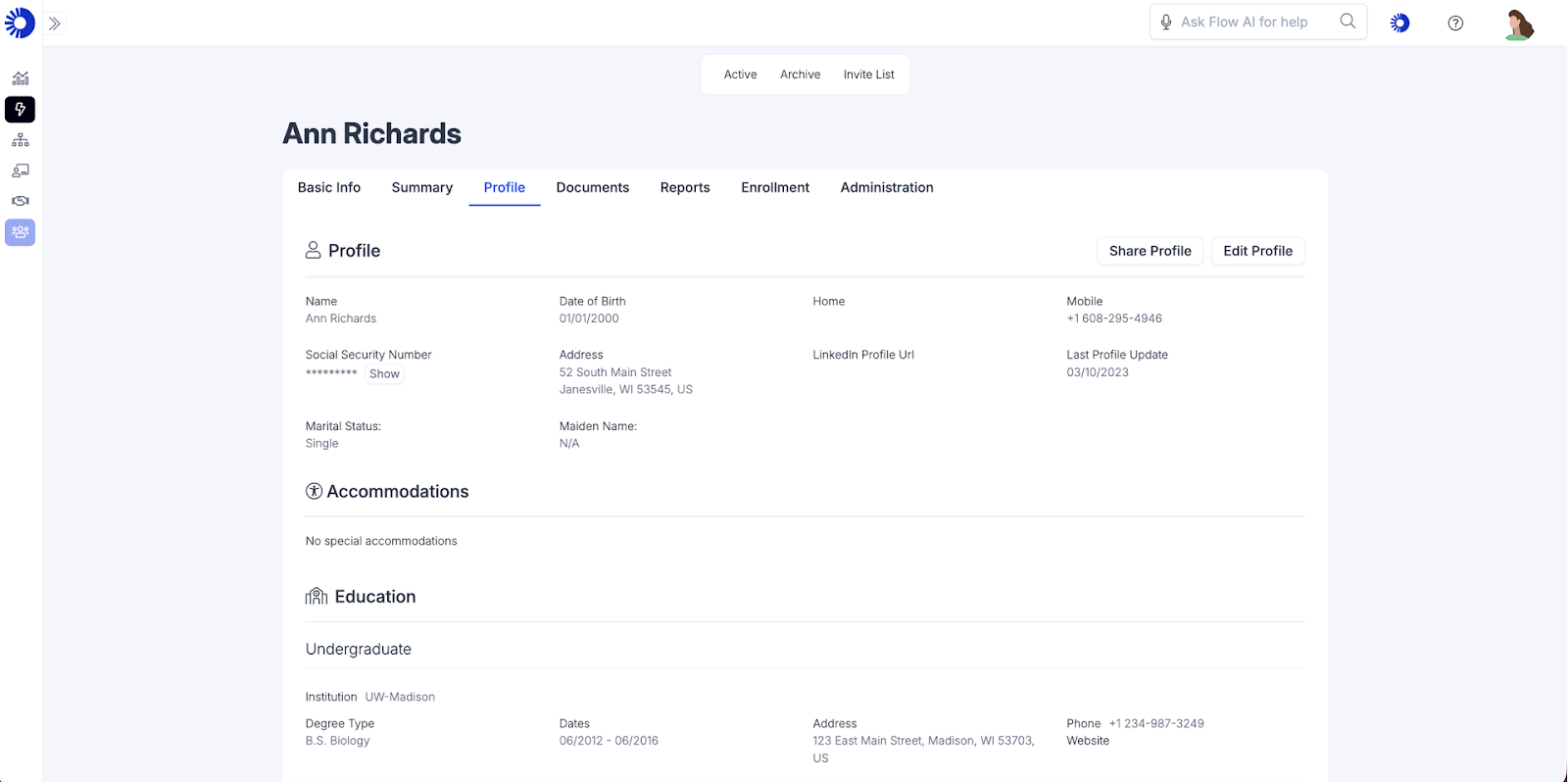
Send reminders to employees:
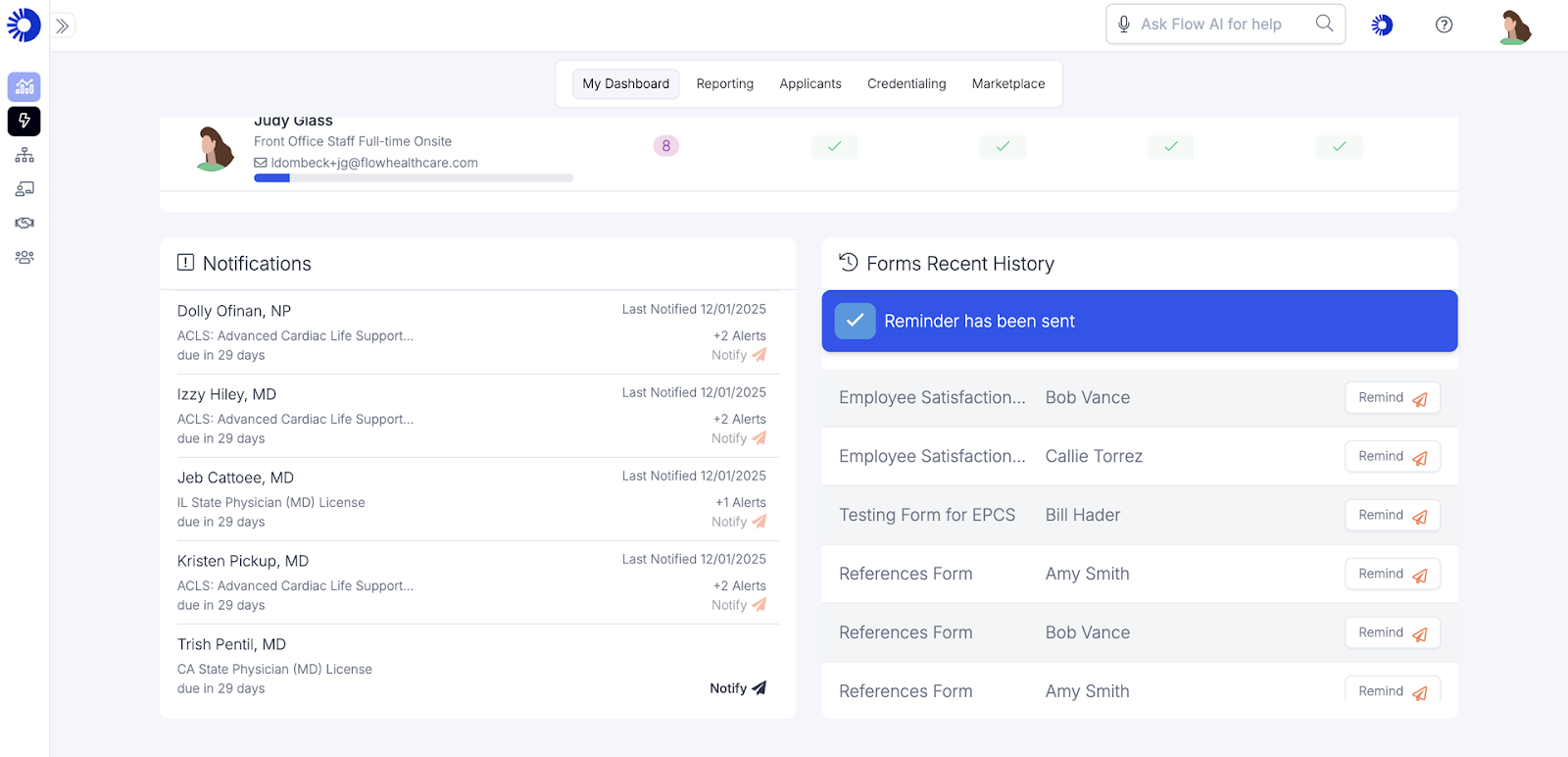
Evaluating and Optimizing Learning Programs
Measuring training effectiveness is crucial in understanding how your employee development and training efforts align with business goals. Some of the metrics to track include:
- Training completion rates
- Learner engagement rates
- Performance levels before and after training
- Net promoter scores
- Customer and employee satisfaction levels
Conducting an analysis of these metrics and what they mean for your business gives you insight into the impact of your training efforts. Adopting automation tools allows you to analyze training data and generate charts, reports, and dashboards.
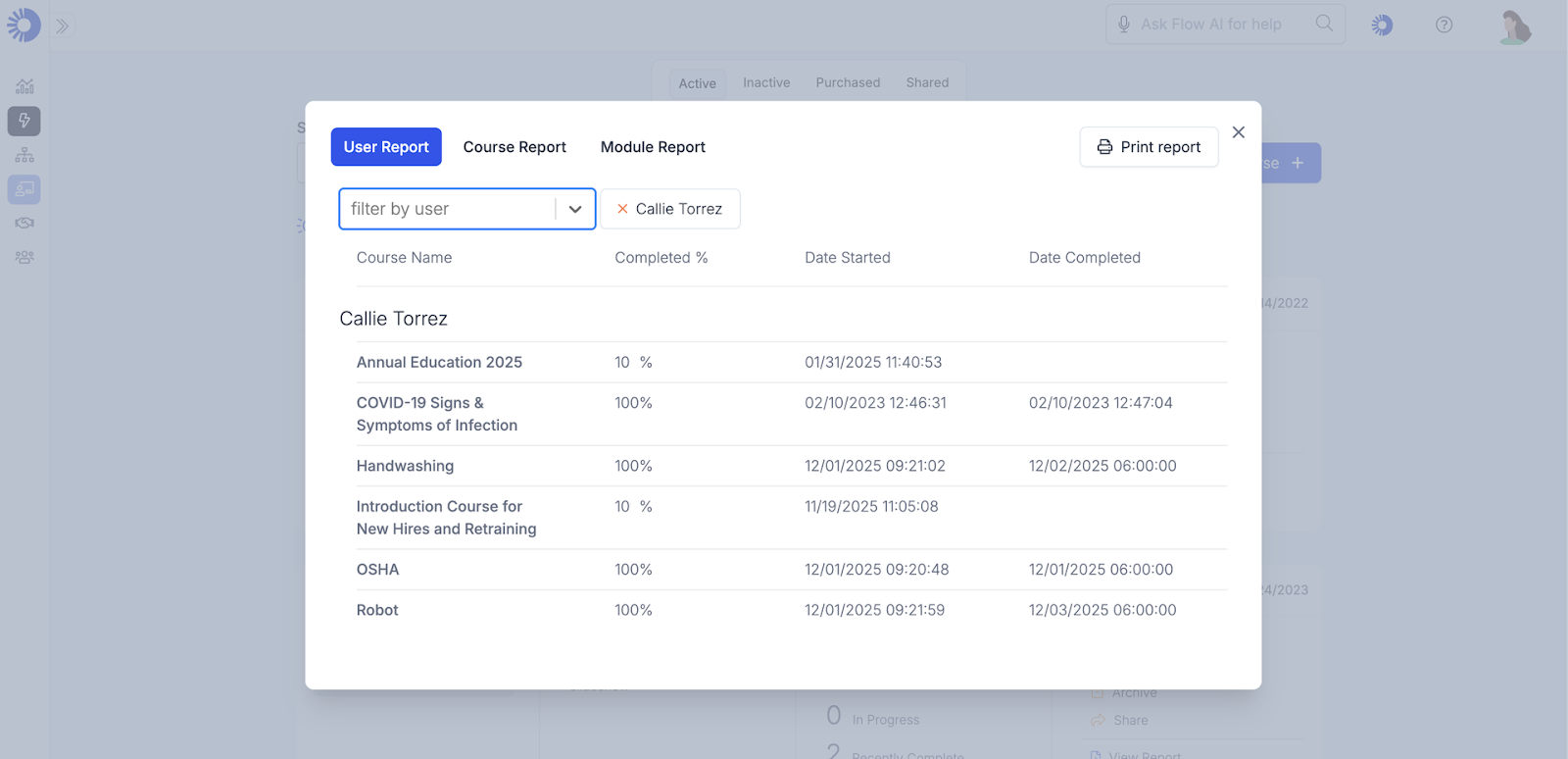
Ops.work is an LMS with training tracker capabilities that let you monitor various metrics and generate key reports. Here are some of the capabilities of our training tracking software:
Track the completion of foundational and mandatory courses
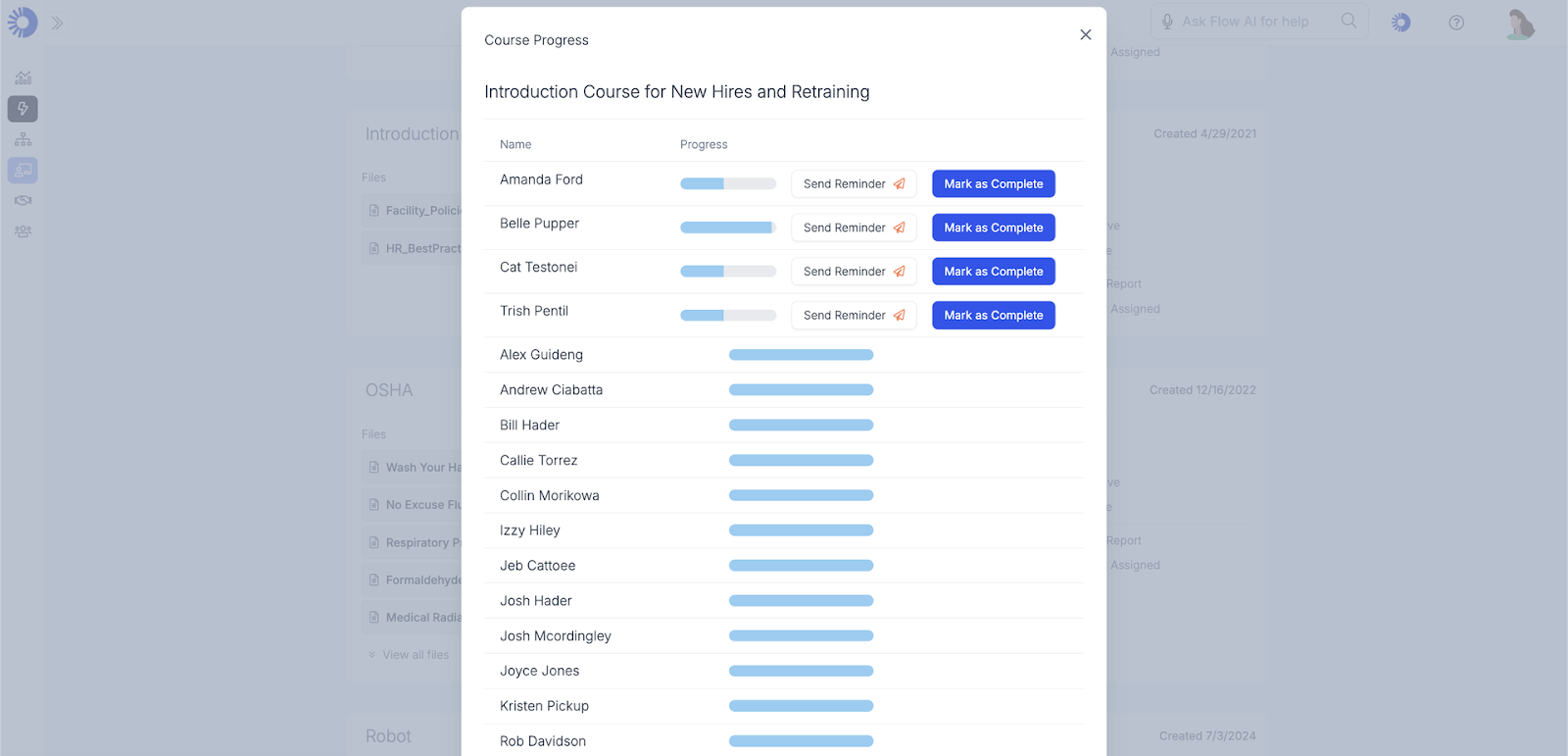
Track training progress for individual courses
Generate LMS reports for users, courses, and modules
Conclusion
Employee learning management solutions allow you to develop, deliver, and evaluate training efforts to ensure you're continuously meeting business goals. These learning management systems enable you to manage employee skill development by implementing L&D best practices, such as automation and consistent documentation. Ops.work helps you operate at your best by optimizing course delegation, allowing workflow customizations, and simplifying LMS reporting. Get started with our free plan to optimize your training frameworks.
References
Leuhery, Ferdy. “The Role of Technology in Employee Training and Development: A Systematic Review of Recent Advances and Future Directions.” Management Studies and Business Journal (PRODUCTIVITY), vol. 1, no. 3, 26 Mar. 2024, pp. 369–385, journal.ppipbr.com/index.php/productivity/article/view/132, https://doi.org/10.62207/jmnzaw55.
Noe, Raymond A. Employee Training and Development. 5th ed., New York, McGraw-Hill Irwin, 2010.
Frequently Asked Questions
The best employee training software should have the following capabilities:
- Integration with existing healthcare IT systems, including HRIS, EHR, and communication platforms
- Reporting and compliance tracking
- Employee management features
- User-friendly interface for administrators and learners
- Comprehensive LMS features for course development, access, and monitoring
Training platforms vary in terms of their features and capabilities. Some may have the capabilities of an LMS or a TMS. Checking for these differences before software implementation is important, especially for small enterprises.
Staff development platforms vary in cost depending on the features they provide. When choosing a software platform, consider your budget, the training cost per user, and the expected ROI of staff training.
Yes, ops.work integrates with your company systems, including EHR, payroll systems, HRIS, and collaboration tools. Check out our comprehensive features with our free plan.