
Corporate training software is essential for boosting employee productivity and ensuring high-quality care in the healthcare sector. Employee training management software like ops.work automates training processes and supports regulatory compliance. Key features to consider in training software include integration with existing HR systems, comprehensive LMS features, security measures, interactive training capabilities, and strong analytics.
Key Takeaways
- Investing in skills training programs equips employees with the necessary skills to meet business objectives
- Platforms like ops.work facilitate skill management by providing a centralized space for creating, delivering, tracking, and managing training courses
- Effective training solutions must integrate seamlessly with existing HR and business tools
- Interactive training features increase learner engagement and skill acquisition speed through activities like quizzes and simulations
Investing in a skills training program equips your workforce with the skills and knowledge necessary to achieve business goals. It helps improve employee retention and build a company culture of continuous learning and development.
How Does Corporate Training Software Work?
Training employees is crucial to enhancing productivity, improving retention, and delivering high-quality patient care. Workforce development tools allow you to provide training tailored to build skills in your new hires during employee onboarding.
This training continues beyond onboarding, ensuring your teams can tackle new challenges as the healthcare industry evolves.
Training solutions like ops.work help with workforce skill management by enabling you to create, deliver, track, and manage your training courses on a single platform. Get started with our free plan to deliver a consistent learning experience for your employees.
What are the Benefits of an Employee Training Platform?
An employee training management software helps companies fill existing skill gaps by facilitating the development and delivery of training content.
It streamlines your employee development efforts by automating the manual processes of traditional training.
For healthcare companies, it makes compliance with internal and external regulations easier. It does this by tracking the completion progress of your training courses for each course and employee.
Corporate training tools help you create customized training materials that cater to personalized learning paths based on an employee's role and experience.
Learning management systems (LMS) are also beneficial to employees. They allow employees to access online courses to develop in-demand skills that keep them productive.
What are the Features to Look for in a Skills Development Platform?
The best training software solution must have a set of key features that facilitate effective training, skills management, and create a positive learning experience for users. Here are the key features to consider when selecting the right employee training software.
Integration with Existing HR and Business Tools
Top employee training software facilitates integrations with your existing HR, EHR, and other business systems. Such integrations eliminate redundant manual processes such as entering employee data across multiple platforms.
Ops.work facilitates integrations with your internal business tools and other productivity and team management tools through Zapier, Webhook, and Make.
Comprehensive LMS Features
The best employee training platforms offer robust LMS features that facilitate every step of employee and customer training. Here are the features you can find in ops.work:
Templates for creating engaging learning courses that meet your organization's training needs. Before creating your courses, conduct a skills mapping analysis using tools such as employee self-assessments, manager feedback, or skills intelligence platforms.
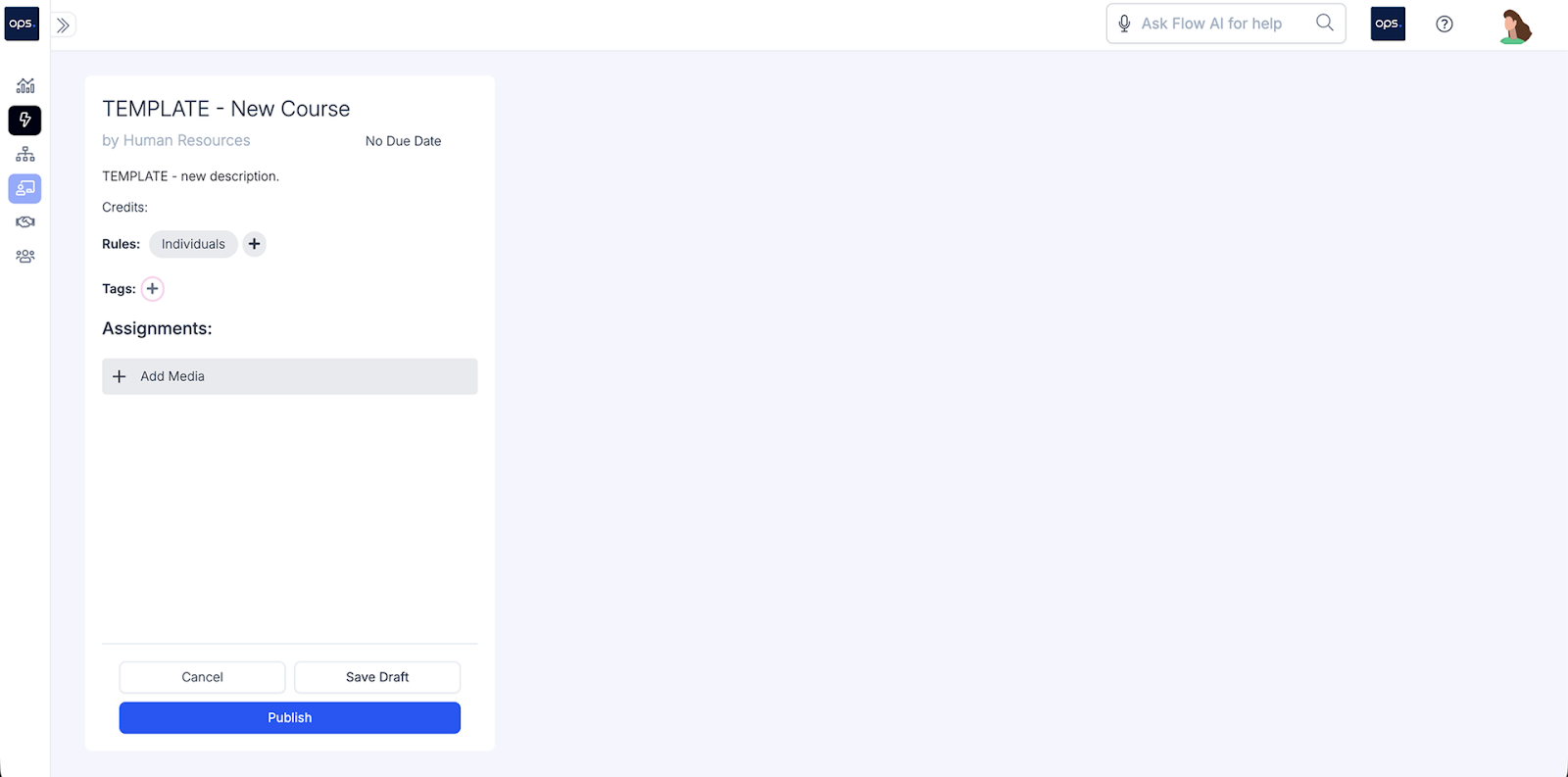
In addition to creating courses unique to your organization, you can purchase external training resources, especially for compliance training.
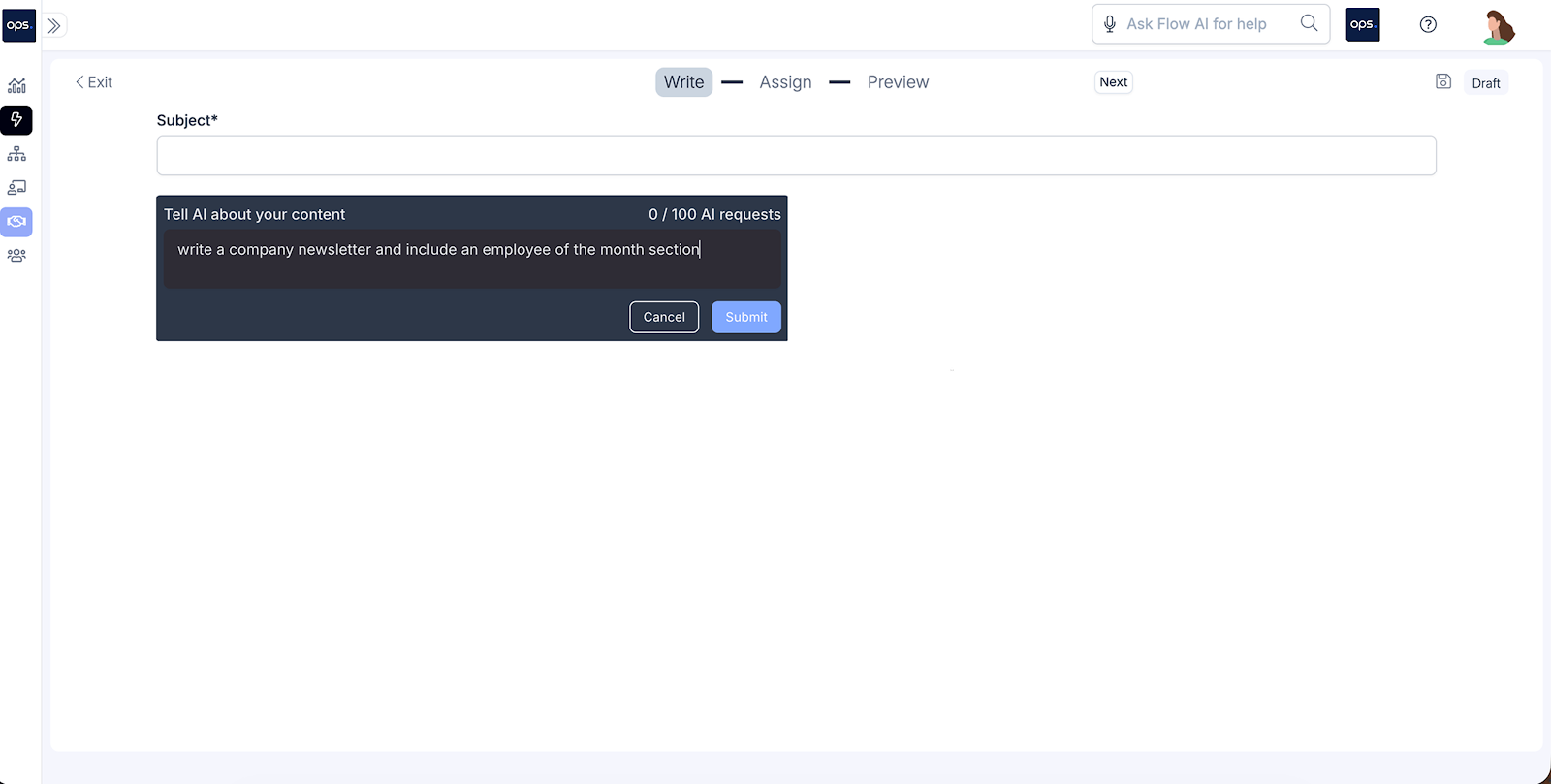
Ops.work also includes an AI-driven writing assistant to help you generate content.
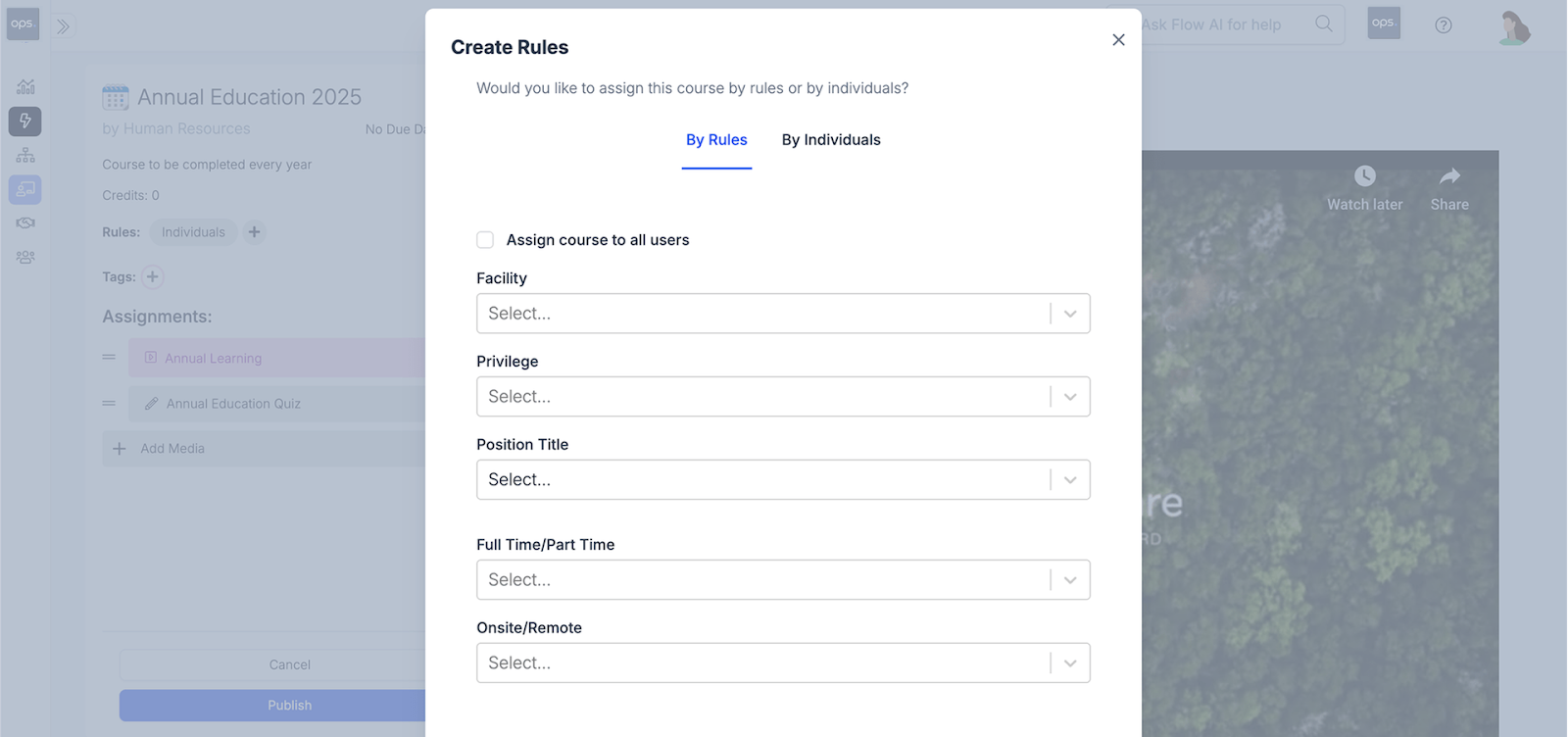
Ops.work learning platform allows you to manage your courses in a centralized platform and assign them to your employees based on their customized learning paths.
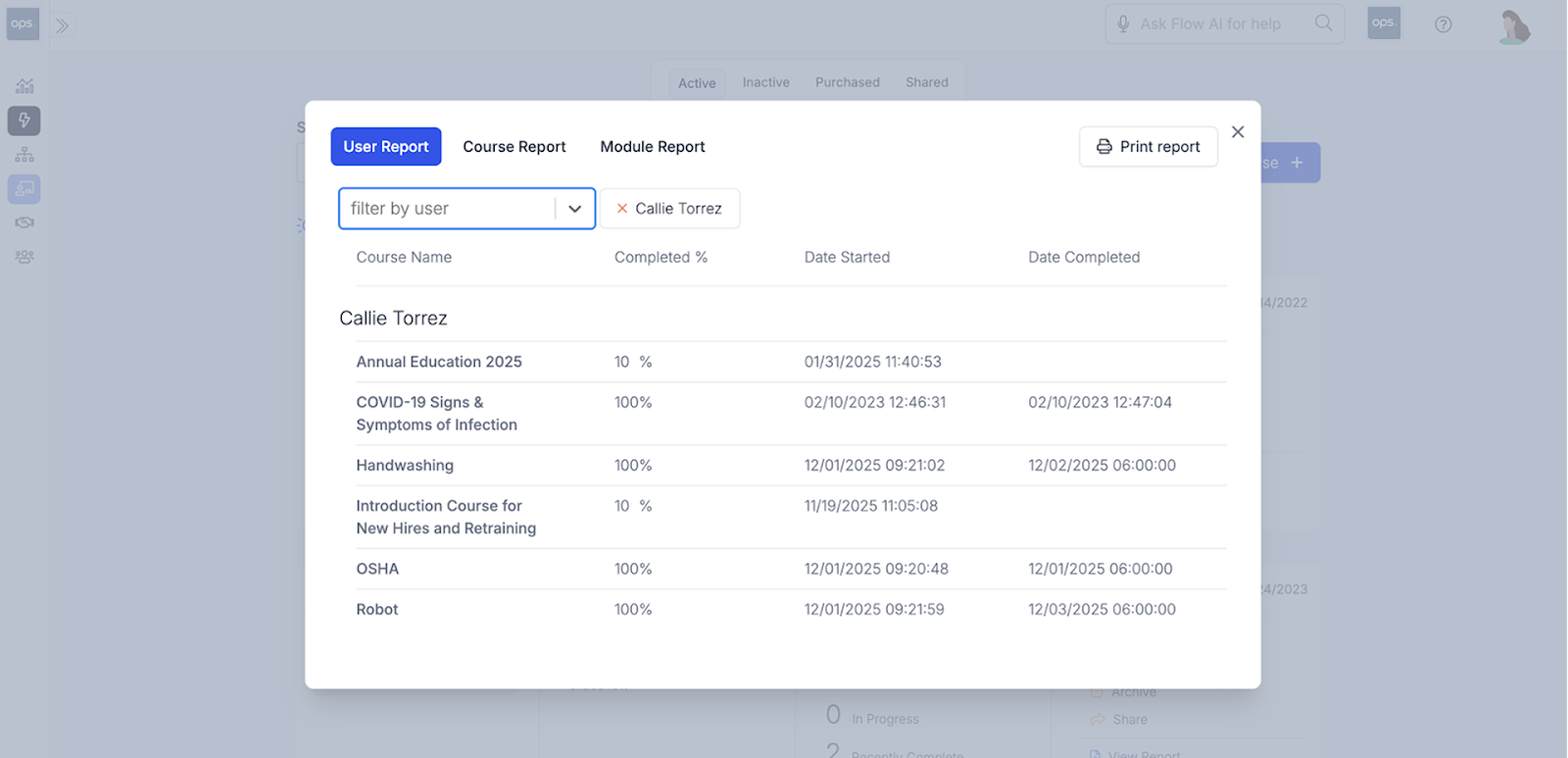
The online employee training management tool also enables you to track course progress and completion rates, as well as send automated reminders as needed. You can also generate reports to assess the impact of your training efforts and gather insights to improve the training process.
Security
The online training platforms you choose should adhere to cybersecurity best practices to ensure your systems and employee data are safe. For healthcare companies, these platforms should also be compliant with regulations such as HIPAA and the HITECH Act.
Some of the security features to look for in an LMS include:
- Access control, which prevents unauthorized staff from accessing information they shouldn't. For example, while LMS stores employee profiles, these profiles are only accessible to HR personnel, not to other users on the platform.
- Compliance with standards such as SOC 2, ISO 27001, and HIPAA
- Strong passwords and MFA policies
- Audit trails
Interactive Training Features
Engaged learners are able to develop skills faster. Interactive training helps employees develop technical skills more quickly by enabling them to engage directly with the learning material through activities such as quizzes, simulations, and live demonstrations.
These features are important, especially for product training, as they provide a hands-on experience and support better knowledge retention.
Interactive learning also incorporates social learning features that build soft skills such as collaboration and communication. These features can be incorporated into online and traditional training methods to facilitate employee skill development.
Some of the social features to look for include centralized knowledge bases and expert leaderboards.
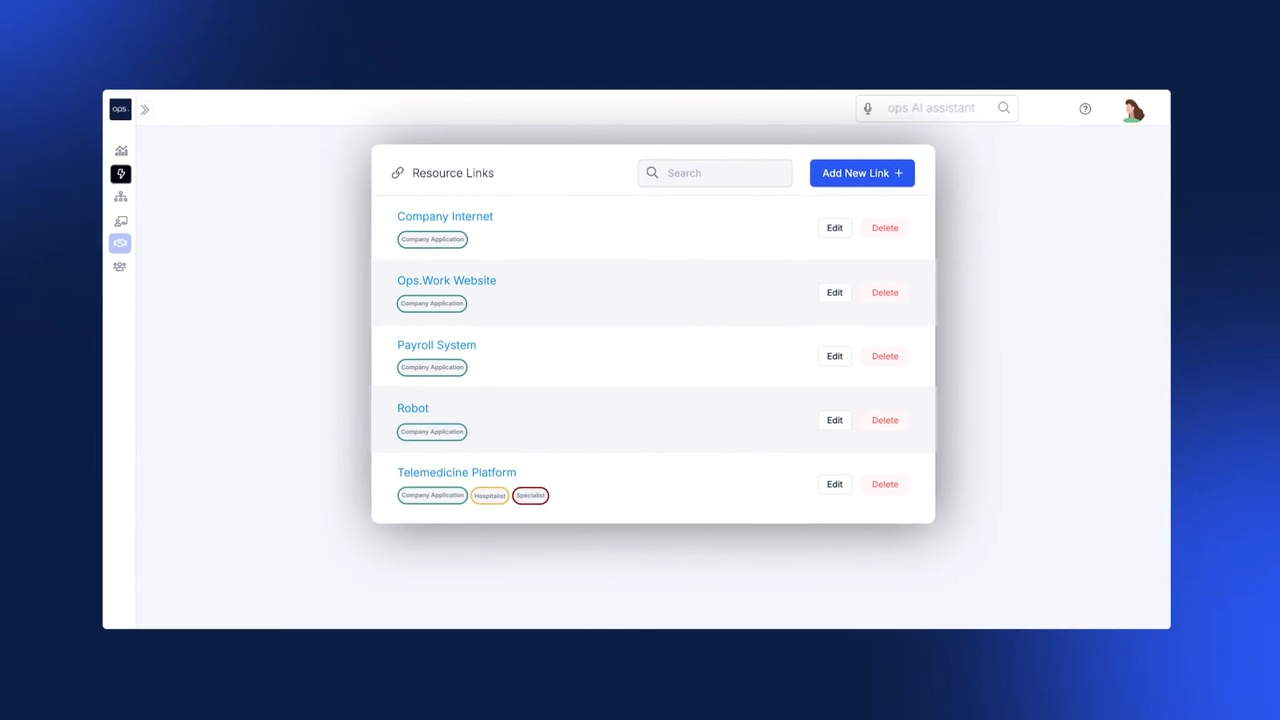
Analytics and Reporting
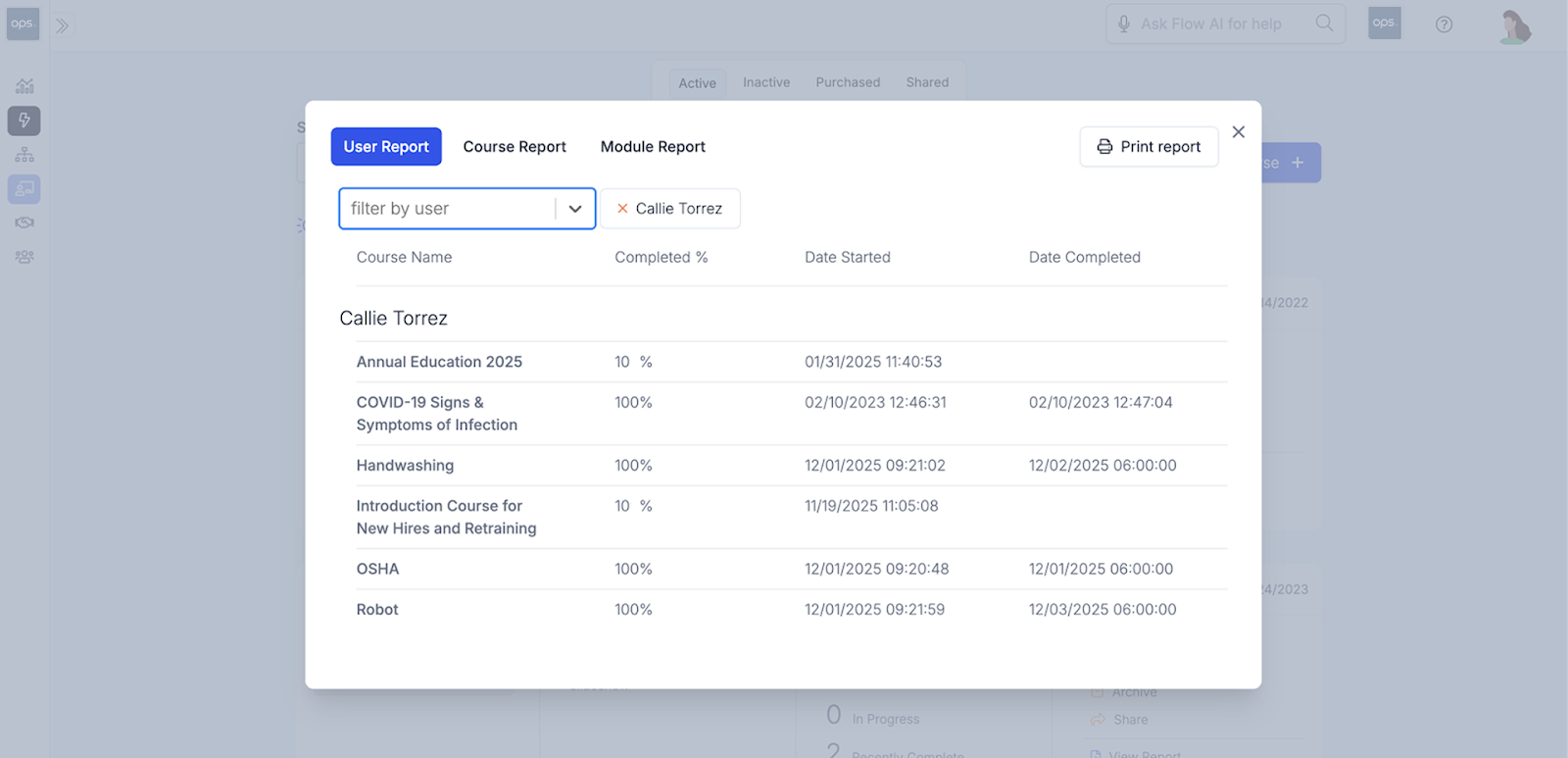
A good LMS must have strong analytics and reporting capabilities to help you collect skills data, course completion progress, and the contribution of your training efforts to business outcomes.
Tools like ops.work have inbuilt data analytics and reporting, allowing you to generate reports to measure training effectiveness, assess learning outcomes, and track training costs.
Conclusion
Adopting a learning management system automates key training activities, making it easier to create, deliver, and manage your training resources. It also facilitates adaptive learning, allowing employees to learn at their own pace. Ops.work provides the tools and resources for HR teams to develop the right knowledge and competencies to succeed in their jobs. Get started with our free plan to explore our training features.
References
Rokke, Nelson, "Examining the benefits of technology in training" (2013). Graduate Research Papers. 3212. https://scholarworks.uni.edu/grp/3212
Leuhery, Ferdy. “The Role of Technology in Employee Training and Development: A Systematic Review of Recent Advances and Future Directions.” Management Studies and Business Journal (PRODUCTIVITY), vol. 1, no. 3, 26 Mar. 2024, pp. 369–385, journal.ppipbr.com/index.php/productivity/article/view/132, https://doi.org/10.62207/jmnzaw55.