
Caregiving careers have the highest turnover rates in healthcare; therefore, a structured onboarding process is necessary to keep home attendants engaged and satisfied in their jobs. A structured program must have all five elements, including building confidence, facilitating compliance, encouraging connections betweennew hire and other staff, immersing the new home attendant into the organization’s culture, and providing clarity into what the new hire should be doing.
Key Takeaways
- An effective onboarding process reduces staff turnover and enhances engagement and productivity
- Early engagement through mentorship facilitates retention
- Using onboarding software streamlines your processes by automating repetitive tasks
The growing aging population in the US means an ongoing caregiver shortage. This, coupled with high caregiver turnover rates, places an additional burden on home care agencies to develop and implement efficient caregiver onboarding programs to support retention.
What Does a Home Attendant Do?
Home attendants work in home healthcare agencies to assist homebound patients. Home care attendants work with various facilities, including HHAs and long-term care facilities, to provide post-acute care.
Their duties include:
- Supporting patients with personal care tasks such as grooming, dressing, toileting, and bathing
- Light housekeeping tasks, such as meal preparation
- Helping with medication management
- Providing emotional and social support
- Transportation to medical centers and community events
Most home care businesses require home attendants to have at least a GED certificate or a high school diploma. Some facilities, however, may require caregiver training or certification based on state and internal regulations.
Home attendants must have the level of patience and sensitivity that allows them to maintain the dignity of their patients. This is important for dependent patients who need home care services, such as disability or dementia care.
What are the 5 Key Elements of Effective Onboarding?
Home health facilities must convince their new caregivers that they made the right choice in joining the facility. A quick and efficient caregiver onboarding experience is the best way to do this. Here are the must-have components for effective caregiver onboarding and retention:
It should give new employees confidence in their ability to deliver quality care. You can build their confidence by offering caregiving training that equips your home care attendants with the skills and knowledge they need to deliver high-quality care.
An efficient onboarding and training program should comply with federal, state, and internal regulations. Compliance protects homecare facilities from financial and legal risks while creating an environment conducive to better quality of care.
Clarity is another element of a comprehensive onboarding process that ensures your caregivers are set up for success from day one. Effective communication during the caregiver orientation and training process ensures your new attendants understand their roles, responsibilities, and performance expectations.
A good program cannot succeed unless it's set within a healthy work environment. Therefore, it should reflect your organization's culture to give new attendants and care aides a sense of belonging.
In addition, it should foster positive connections between new attendants and their team members
What are the Best Practices for Onboarding Home Care Attendants?
According to the Society for Human Resource Management (SHRM), employees who have a positive onboarding experience are likely to stay at your company for at least three years. This means your onboarding process can make or break a caregiver's experience.
You can apply a few strategies to improve how you onboard:
Use a digital tool to streamline your processes. Onboarding software, such as ops.work, provides automation capabilities that let you create workflows for each repetitive onboarding step. This saves you time, ensuring your attendants can start working as soon as possible.
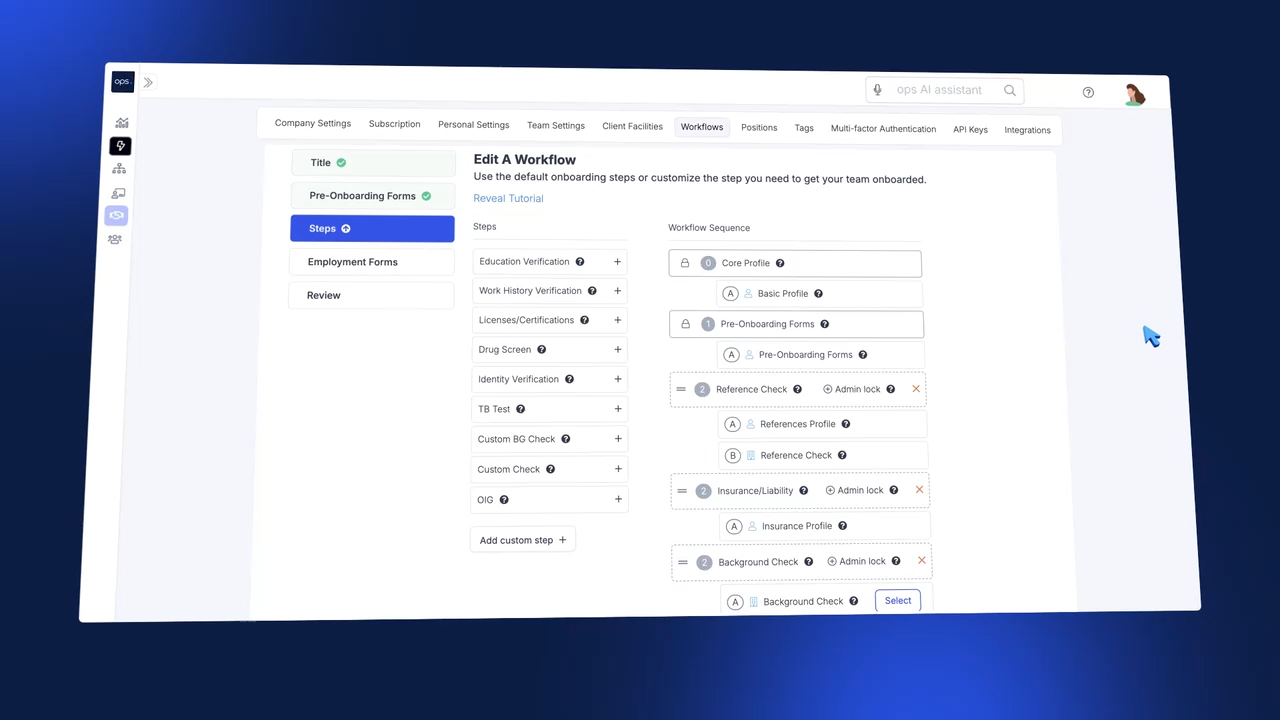
Create a detailed list of all tasks in the caregiver integration process. This ensures that you have a structured process that covers all the necessary activities. Such a list also helps create an integration timeline that prevents issues such as disorganized processes and information overload.
Give your new hires a warm welcome so they know their presence is valued
Assign a mentor as soon as possible to provide the new attendant with a go-to person for the questions they may have.
Invest in your recruitment program to ensure you hire the right people for your role. You should look for people with the soft skills necessary to provide dignified and quality home care services.
How Can You Use the 30-60-90-Day Checklist to Improve the Caregiver Onboarding Process?
The recruitment and hiring process shapes your home care attendants' first impression of your facility, while your onboarding strategy builds on this experience. You can leverage the 30-60-90-day template to onboard caregivers quickly.
The 30-60-90-day onboarding checklist provides a roadmap for the activities that teams and new staff must complete to be fully onboarded. Here's a breakdown of the timeline:
The First 30 Days
The first 30 days matter significantly in shaping caregiver experiences and influence their decision to stay or leave your facility.
A well-structured onboarding process dedicates the first 30 days to familiarizing the new attendant with the facility, their job, and their colleagues. Here's what to do in the first 30 days on the job:
- Complete all the HR paperwork
- Conduct an orientation program to give you new hires a warm welcome
- Immerse your attendants in your company culture
- Provide mandatory compliance training
- Provide the necessary IT systems training to ensure your attendants can
- Pairing the new hire with an experienced caregiver for them to learn how to provide home-based care
- Discuss their roles, responsibilities, and performance expectations
- Provide a comprehensive schedule of the expected activities and milestones for the next 90 days
- Hold a check-in meeting after 30 days to gather and offer feedback and set goals for the next 30 days.
Day 30-60
After the first 30 days, the new hire should be relatively settled into their job. They should be able to handle the basic tasks in their role independently. At the same time, they should progress through their mentorship program to improve their skills.
During this stage, you should continue training your caregivers to improve care quality. Such training improves their patience, adaptability, and sensitivity, especially when caring for patients who need long-term care.
At the end of 60 days, hold another check-in meeting to gather feedback and set goals.
Day 60-90
By the end of 90 days, your employees should be capable of performing their duties, understand how the organization works, and be ready to work without constant supervision when providing patient care.
It is also the perfect time to assess their engagement to collect data on their performance and the impact of your onboarding process.
Conduct another meeting with your caregiver at the end of the integration process to plan the next steps. This may include providing resources and support for continuous learning, including formal training to become an aide or transition to skilled nursing roles.
Showing your caregivers that you are invested in their professional growth makes them more willing to stay in your facility.
Conclusion
How you integrate caregivers into your facility influences their willingness to remain in the organization long-term. Ops.work streamlines home care employee onboarding processes, helping you improve your new-hire experience. Try our free plan to create an impactful program.
References
Shen, Karen, et al. “Health Care Staff Turnover and Quality of Care at Nursing Homes.” JAMA Internal Medicine, vol. 183, no. 11, 1 Nov. 2023, pp. 1247–1254, jamanetwork.com/journals/jamainternalmedicine/article-abstract/2810616, https://doi.org/10.1001/jamainternmed.2023.5225.
https://www.ahhcnc.org/images/Foundation/HHOnboardingModel_Oct2020.pdf
Activated Insights. “Activated Insights Suite.” Activated Insights, 5 Jan. 2026, activatedinsights.com/articles/caregiver-onboarding/.
Frequently Asked Questions
Onboarding is a comprehensive process that lasts through the first 90 days of employment, while orientation is a brief program within onboarding that lasts between one and seven days.
Home health aide integration covers skills such as communication, empathy, patient safety, and cultural sensitivity.
You can ensure your home care onboarding process complies with regulations by completing pre-employment screenings, providing compliance training, and keeping track of regulatory changes to keep your staff, training materials, and procedures up to date.
Common challenges when integrating new hires include information overload, bottlenecks caused by manual or poorly automated processes, and unclear role expectations. A structured program can solve these issues.