
Home care agencies can improve caregiver retention through effective onboarding. You can improve the onboarding process by adopting best practices such as creating a detailed onboarding checklist, automating workflows, providing comprehensive training, and conducting regular check-ins to collect and provide feedback. A strong onboarding program also fosters connection to culture, clarifies role expectations, and integrates tools like EVV and schedulers. Using automation tools like ops.work can streamline these processes and improve retention.
Key Takeaways
- Strong onboarding reduces caregiver turnover and helps integrate new hires into the HHA’s culture and expectations
- Use a comprehensive checklist and automated workflows to manage paperwork, background checks, credentialing, orientation, and training
- Track onboarding progress, analyze key metrics, and conduct regular caregiver check‑ins to refine processes and improve patient outcomes
- Integrate with scheduling and EVV tools to support reliability and compliance in caregivers’ day‑to‑day work
Home care agencies have high caregiver turnover rates, with 80% of caregivers leaving within the first 100 days of their jobs. While the high turnover rates are a multifaceted problem, efficient onboarding should be part of your retention strategy.
What are the Benefits of Onboarding Caregivers?
Employee retention is the greatest benefit of onboarding caregivers. Since many leave within the first 100 days, this is also the perfect time to highlight the benefits of working with your agency.
Creating a positive caregiver onboarding experience boosts employee morale while providing your workforce with a healthy environment for personal and professional growth.
A positive employee orientation experience also feeds into your recruitment efforts, helping you attract better candidates.
Onboarding provides caregiving training that equips new hires with the knowledge and skills needed to support patients. Well-trained staff deliver quality care, resulting in better outcomes.
Effective onboarding keeps your homecare facility compliant with regulations. These include HIPAA, EVV, and varying state certification and training requirements.
Best Practices for Streamlining the Onboarding Process
The efficiency of your onboarding process determines your ability to retain your new caregivers. Using technology is the fastest way to streamline your processes from the time you recruit staff to providing ongoing support throughout the employee lifecycle.
Onboarding software like ops.work helps you optimize your processes to deliver a positive onboarding experience. Here are the best practices to keep in mind when using automation to improve the onboarding experience:
Create an onboarding checklist outlining all tasks your teams and hires must complete. These include signing paperwork, uploading pre-employment documents such as I-9 forms, direct deposit authorization forms for payroll processing, and running background checks.
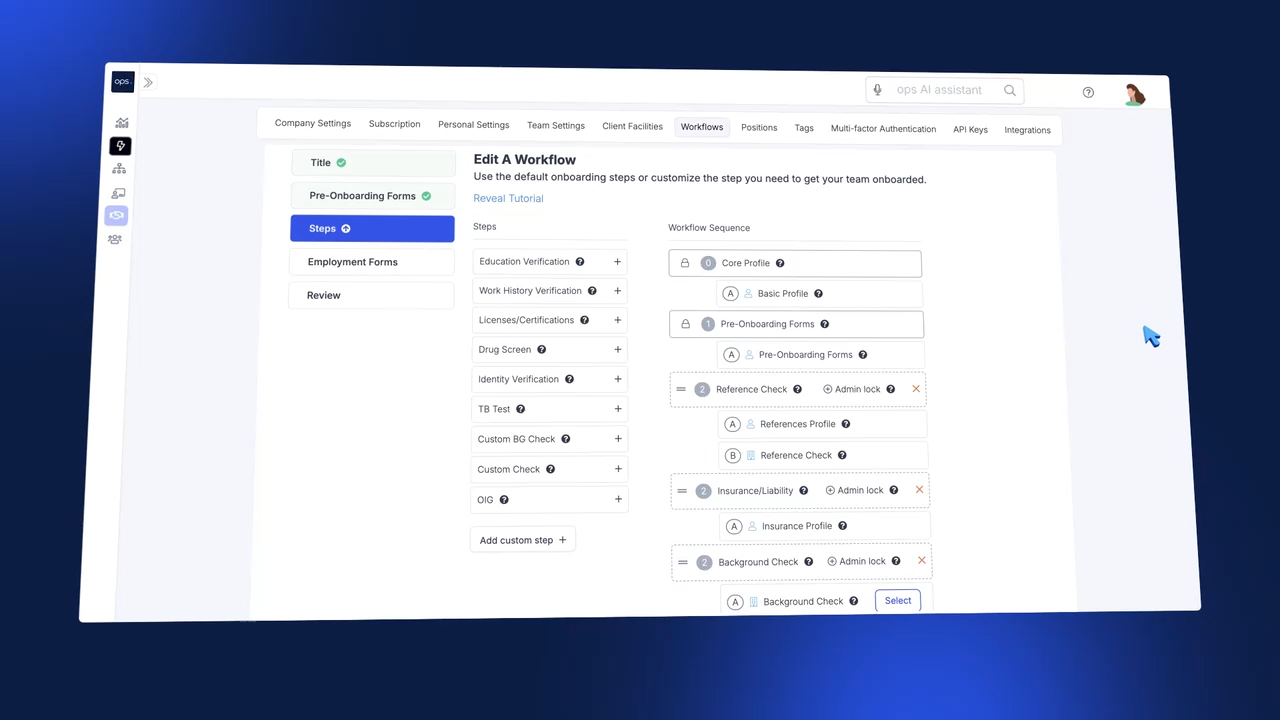
Create workflows for onboarding tasks, including credentialing, orientation, course assignment, document submission tracking, and task management.
By creating workflows, you ensure a consistent experience for all new team members and reduce errors caused by inefficient manual processes. Ops.work is a good place to start when automating your processes:
Prepare for new employees beforehand to ensure your staff has a positive experience from the first day. Some things to do before the first day include: filling out paperwork, sending a welcome packet, and providing an orientation schedule to make their first day easier.
Personalize your caregiver training to align with your new staff's experience and preferences. Caregivers should receive both classroom and supervised practical training.
Classroom training introduces caregiving knowledge, including communication skills, professionalism, care plan development, and patient rights.
Supervised practical training involves hands-on training where the caregiver interacts with a client or pseudopatient to support them with various activities of daily living, such as safe hygiene and grooming techniques.
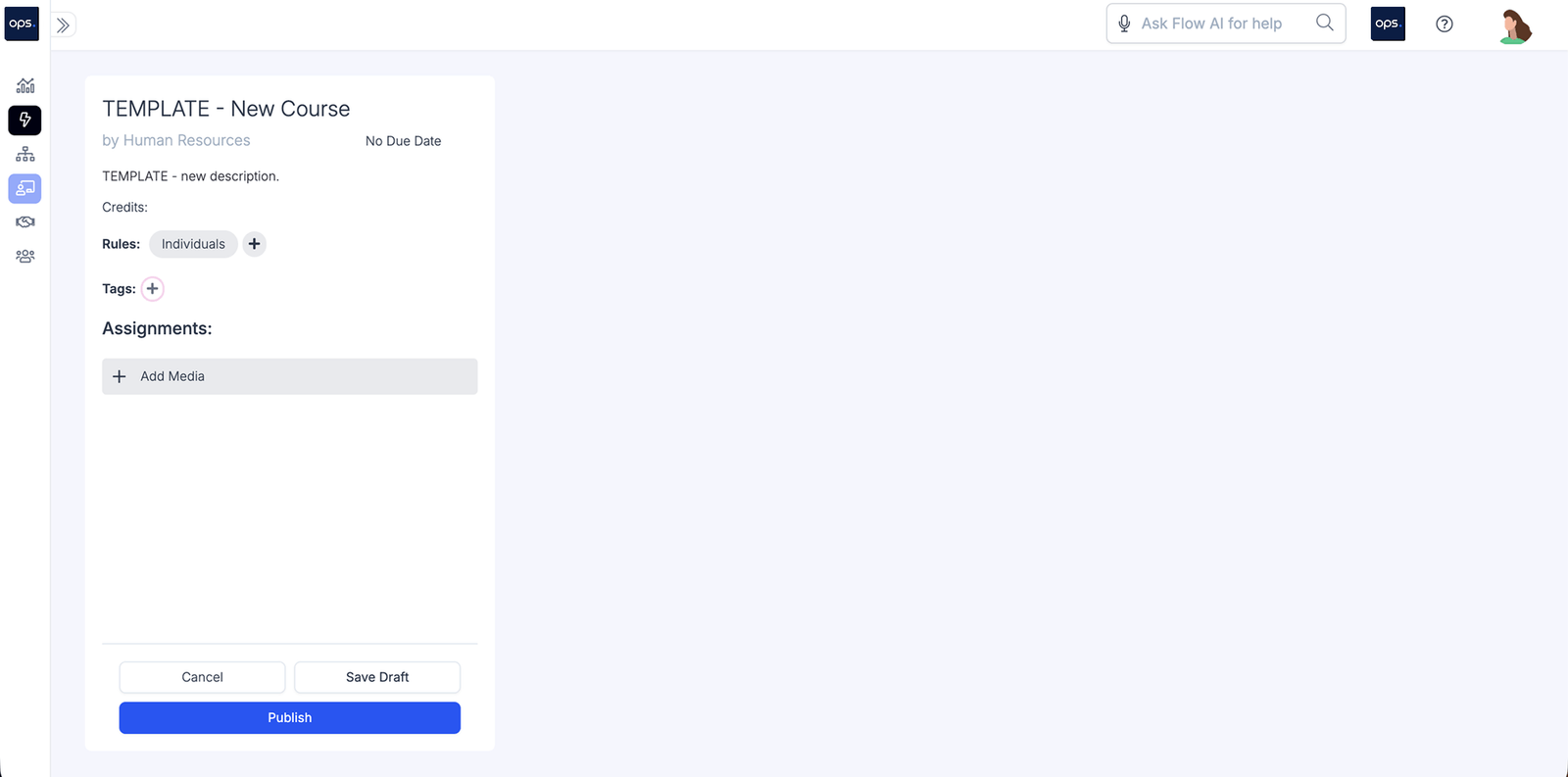
You can create various training programs with ops.work to instill the necessary skills:
Track key metrics to optimize how you onboard healthcare staff. Technology tools such as ops.work allow you to track various metrics such as onboarding time, onboarding and training completion status, and cost.
When analyzed, these metrics provide key insight to help you improve your processes to retain more staff.
Schedule regular check-ins to collect key feedback on your employee's experience. Schedule a check-in meeting within the first month to identify the progress your caregiver has made, including the areas in which they may need support.
Integrate your system with other tools, such as your EVV and scheduler, to make it easier for your staff to maintain their schedules and, therefore, their reliability.
What are the 5 Components of Caregiver Onboarding?
HHAs have a limited window to convince new caregivers to stay with their agencies. Therefore, building a strong onboarding program from the start is the best opportunity to make the most of the caregiver's first 90 days on the job.
A good program should give new hires confidence in their skills and ability to provide quality patient care. You can build their confidence through mentorship, on-the-job training, and in-service training after the onboarding process.
Your onboarding program should reflect your company culture to foster a sense of belonging in your staff. Even though your care aides often work in client homes, their work reflects your values as an agency.
Some of the ways to improve culture through onboarding include:
- Invest in their well-being by creating flexible and humane schedules
- Listen to and address employee concerns before they escalate into bigger problems
- Clarify what your company stands for and how employees can embody those values in their work
A good onboarding program provides clarity around the roles and expectations for each new hire. Let your new employees know from day one what they are responsible for, who they report to, and who they can go to when they face issues at work.
Providing clarity begins when recruiting new staff. It includes creating detailed and accurate job descriptions that cover the actual duties an employee will be responsible for.
HR must also hold a meeting during the orientation process to provide additional context on the role and expectations the new staff must meet.
Compliance with regulations is another component of onboarding. Your HHA onboarding program must adhere to workplace and data safety protocols (HIPAA and OSHA), employee background screening, training requirements (which vary by state), and internal procedures.
Your onboarding program should foster positive connections between your direct care and skilled nursing staff and patients. While caregivers work mostly in patient homes, they also interact with other professionals.
Connection also implies a sense of ownership of the work your employees do. You can foster a sense of connection by:
- Hold virtual and in-person interactive events
- Offer flexible schedules that encourage a healthy work-life balance to prevent burnout and fatigue
- Implement a rewards and recognition program
- Create an employee listening strategy to allow you to address employee concerns as they arise
Conclusion
HHAs are always struggling to overcome caregiver shortages and improve retention. Ops.work helps you improve your onboarding process from giving your caregivers a warm welcome to providing accessible training. Get started with our free plan to improve how you integrate new staff into your home care facility.
References
Gustavson, Allison M., et al. “Caregiver Recruitment Strategies for Interventions Designed to Optimize Transitions from Hospital to Home: Lessons from a Randomized Trial.” Trials, vol. 25, no. 1, 4 July 2024, https://doi.org/10.1186/s13063-024-08288-2.
Activated Insights. “Activated Insights Suite.” Activated Insights, 5 Jan. 2026, activatedinsights.com/articles/caregiver-onboarding/.
---. “Activated Insights Suite.” Activated Insights, 16 June 2022, activatedinsights.com/articles/how-to-use-your-caregiver-onboarding-process-as-your-agencys-best-recruitment-tool/.