
Credentialing is a necessary part of the physician associate onboarding process where healthcare facilities verify that new PAs have the education, licensing, and criminal clearance to provide patient care. After credentialing, PAs go through a structured 90-day onboarding process to help them gain relevant skills, build relationships with colleagues, and build their confidence to work independently.
Key Takeaways
- Onboarding and credentialing are critical processes in helping new physician associates adapt to their new jobs and provide quality patient care
- You should begin the credentialing process before physician associates report for their first day, as it is a time-intensive, yet mandatory process
- A 30-60-90-day onboarding plan is essential in providing a structured framework to facilitate a smooth transition to clinical practice for new physician associates
Credentialing new physician assistants or associates is a non-negotiable requirement for healthcare facilities. It ensures that the healthcare providers you hire are qualified to provide healthcare services. It also ensures your healthcare organization's compliance with federal, state, and company regulations and requirements.
The process can take anywhere from a few weeks to several months; however, you can streamline it using onboarding software to ensure a positive onboarding experience.
Understanding Onboarding and Credentialing Processes
Onboarding is the formal process of integrating new medical staff into healthcare organizations through structured onboarding programs. Onboarding is designed to support physicians starting in their new roles with the resources they need to improve satisfaction, prevent burnout, and achieve high job satisfaction.
Credentialing is a formal verification process that involves a detailed review of the physician assistant’s education, work experience, competence, licensing, and board certifications.
What are the Steps in the Medical Credentialing Process for Physician Associates?
Credentialing is a time-intensive process that can take several weeks to months. Understanding this process simplifies the physician associate onboarding process.
Here are the key steps in PA credentialing:
Step 1: Collecting Documents
Collecting documents is the first step in credentialing physician associates.
Here are the documents you must collect for this process:
- Personal information, including the practitioner’s name, contact information, and social security number
- Education qualifications
- Licensure and state board registration
- Professional experience documentation. This includes CV, references, proof of malpractice insurance, and work history.
- Specialty training
- Other supporting documents
Collect these documents as soon as a physician associate accepts a job offer to start the process sooner and manage potential delays.
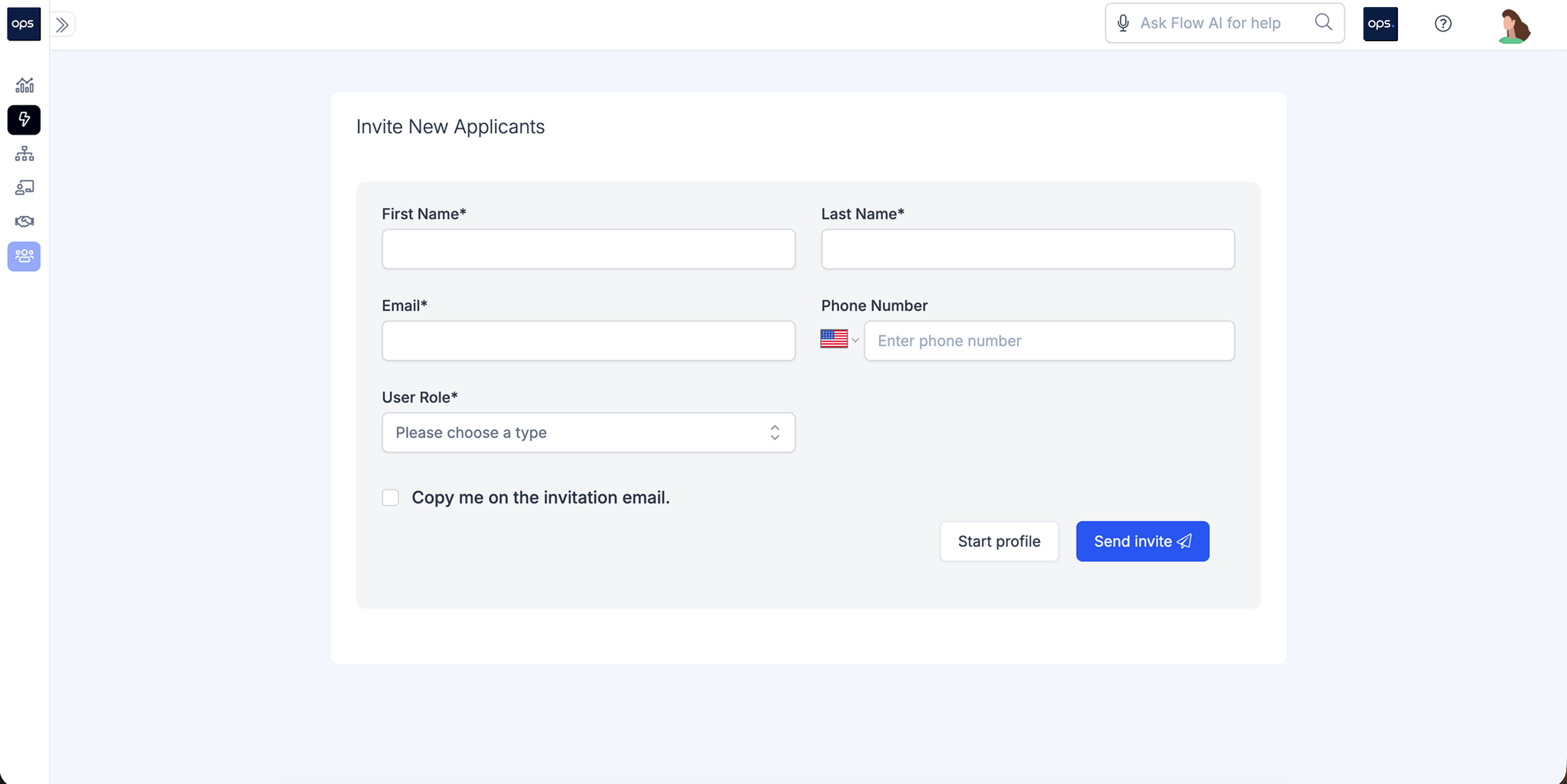
You can simplify this process by using automated credentialing services to create efficient credentialing workflows. Ops.work automates the process by allowing you to invite new hires:
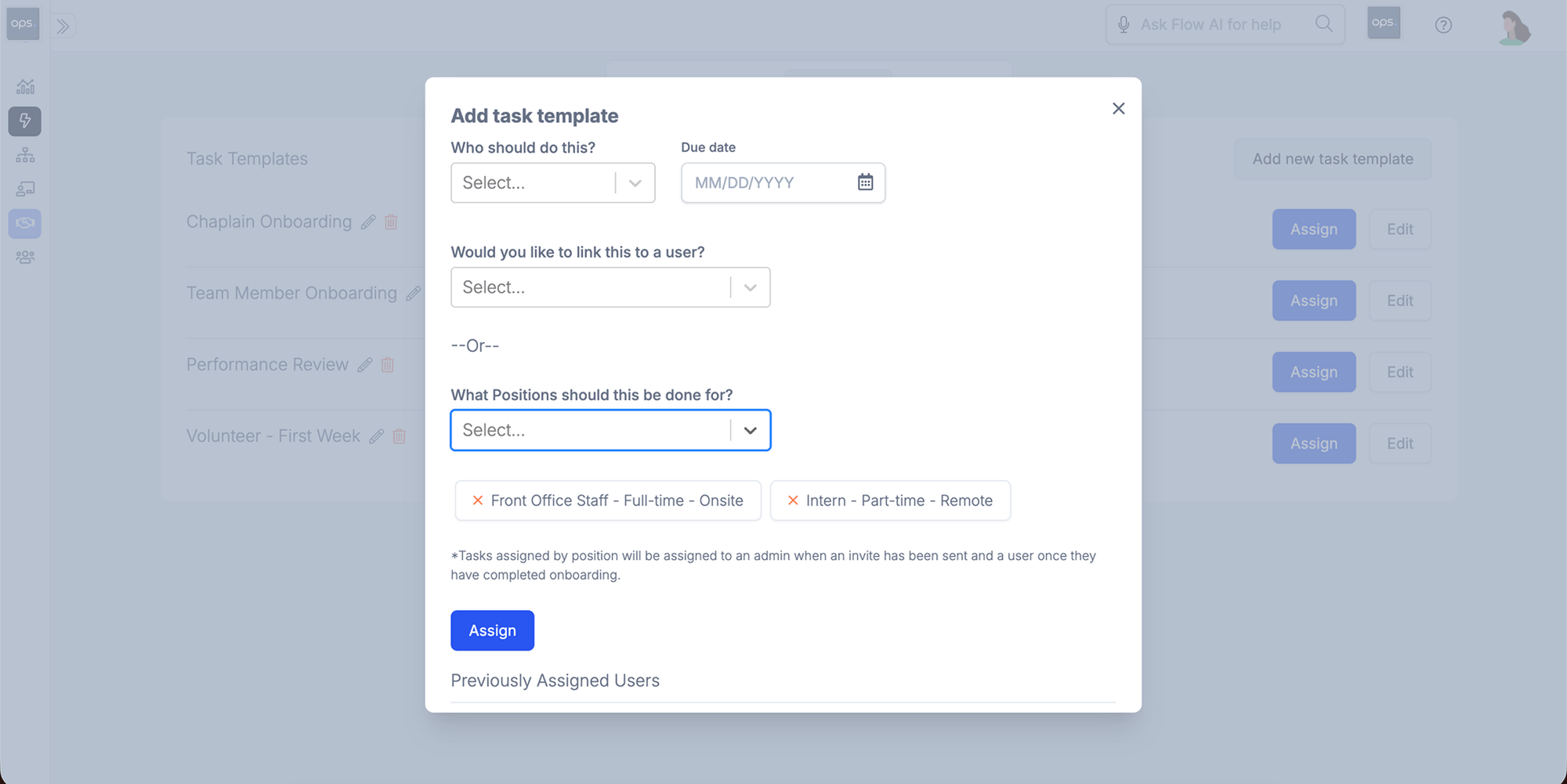
Once new hires are on the platform, you can assign onboarding tasks based on their roles:
Step 2: Primary Source Verification
You must verify the qualifications a PA reports to confirm that they are authorized to provide healthcare services. You do this through primary source verification (PSV).
PSV involves contacting issuing organizations to verify the legitimacy of:
- Academic certificates
- Work experience
- Licensing
- Registration with professional bodies
You can use a designated equivalent source in the absence of a primary source.
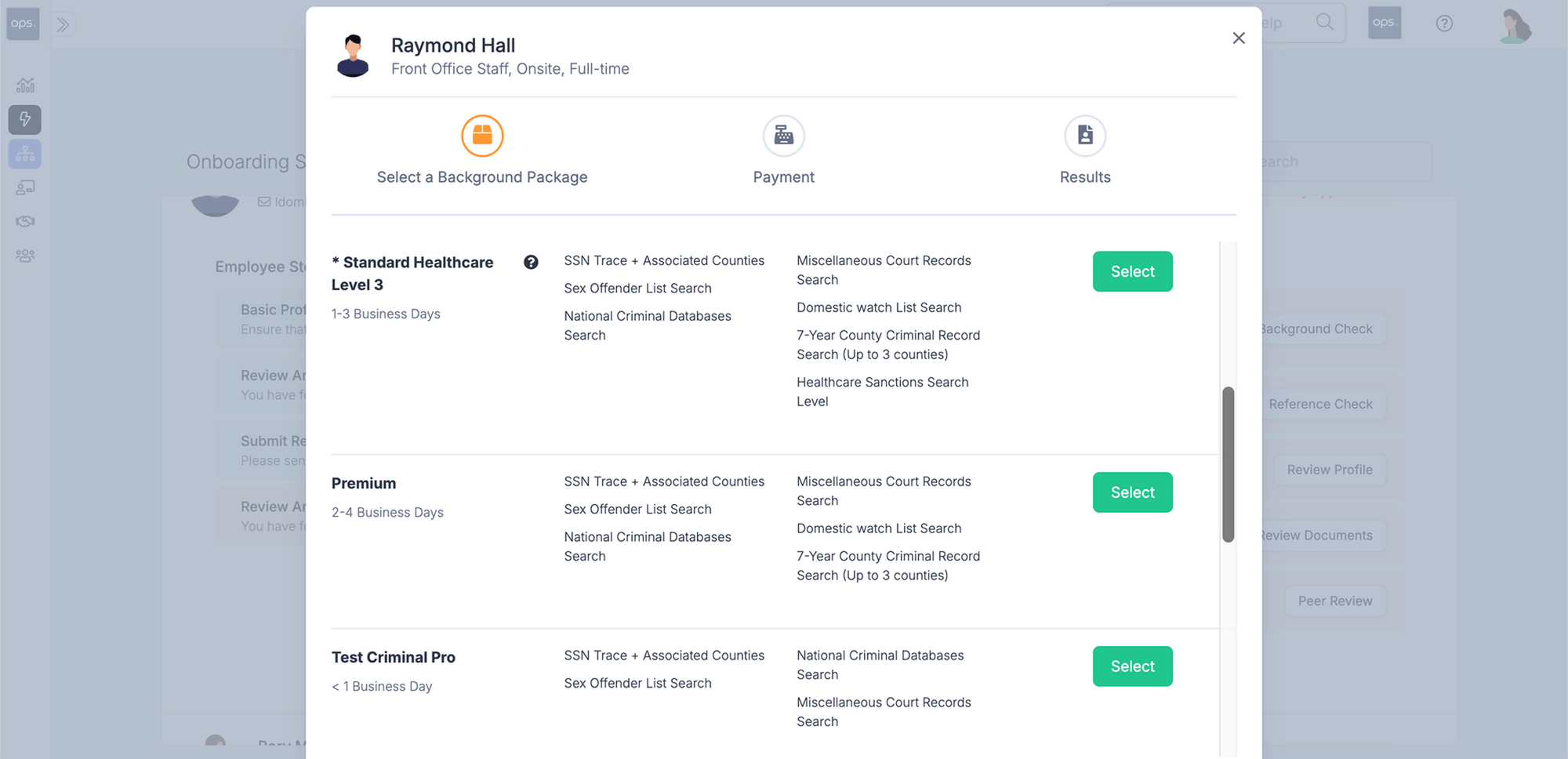
Step 3: Monitoring Exclusions
Hiring a physician assistant and nurse practitioner with federal or state exclusions can trigger a compliance audit. Monitoring for exclusions ensures you hire a practitioner who is in good standing.
PAs may have an exclusion for:
- Patient neglect or abuse
- Misdemeanor or felony convictions for healthcare-related offenses
- Submission of fraudulent claims
Monitor for exclusions often to ensure the nurses you hire remain in good standing.
Step 4: Payer Enrolment
Payer enrollment involves verifying a physician associate's eligibility to bill insurance companies. It is intensive as you must repeat it for all insurance companies you deal with.
Insurance providers carry out this process, meaning the timeline is out of your control. However, you can expedite the process by submitting all necessary documents and following up in case of any delays.
Step 5: Reappointment
Reappointment ensures that your workforce remains qualified to care for patients.
You must regularly monitor:
- Their licensure and board registration
- Sanctions or exclusions
- Adherence to continuing education requirements
- DEA certifications to determine their eligibility to prescribe medications
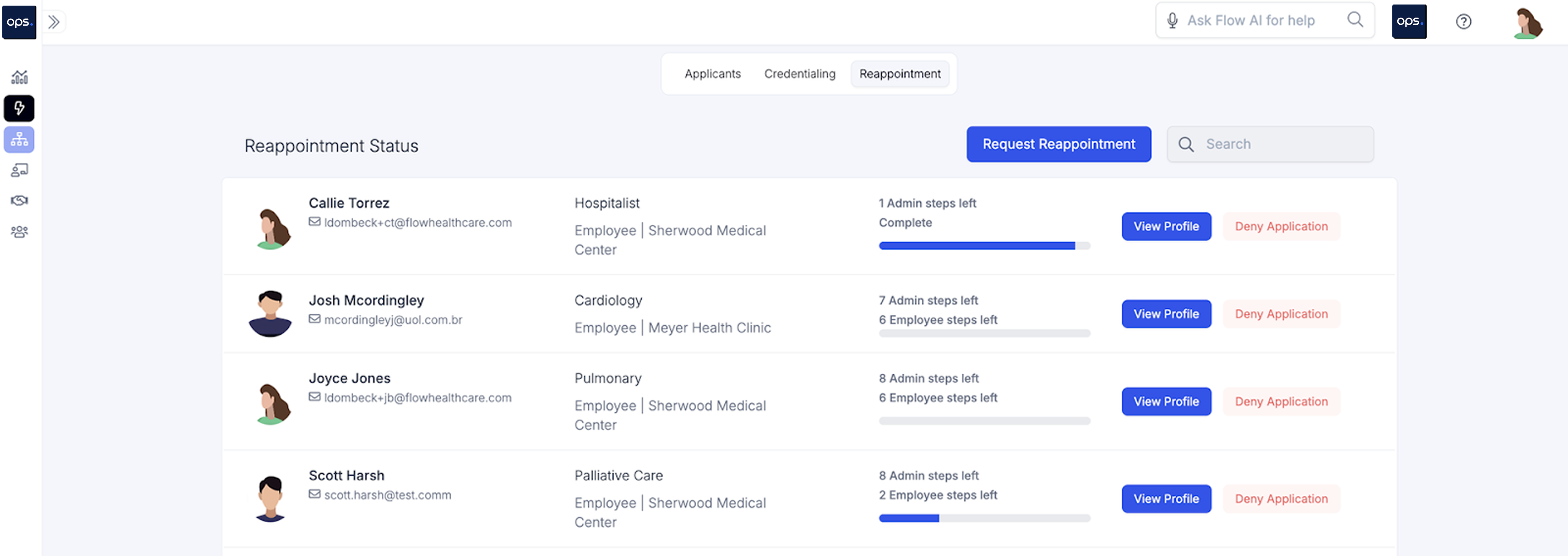
Ops.work is a credentialing software that screens credentials and sends automated reminders when credentials expire or require renewal. This way, you can effortlessly keep track of your reappointments in the ops.work onboarding dashboard.
What is the Best Way to Onboard Physician Associates in 90 Days?

Credentialing is the first step in the formal onboarding process. The next step is to enroll them in your physician assistant onboarding program to prepare them for success in their role and reduce turnover.
The 30-60-90 framework is the most popular onboarding framework for employers preparing new clinical staff to transition to practice smoothly. If you’re using ops.work to automate your onboarding efforts, you can enhance this framework with various onboarding checklists and templates from Jotform.
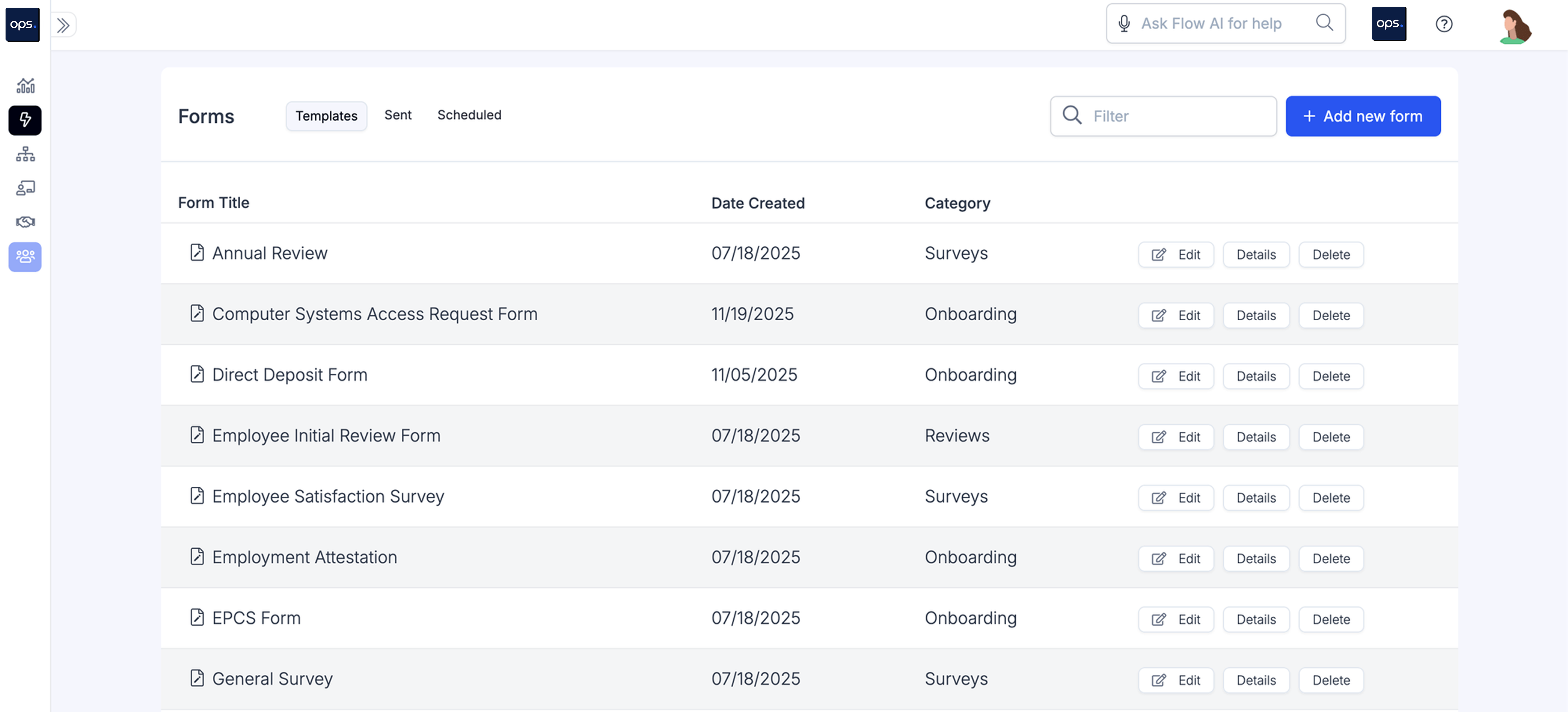
Here’s how you can implement the 30-60-90 physician associate onboarding plan:
Day 1-30
Familiarize your new physician associates with the organization in the first 30 days. Divide your 30-day onboarding checklist by weeks for easier implementation.
Here are some activities for the first week:
- Complete all necessary HR paperwork
- Provide an orientation of the company. Create an orientation checklist with all the activities that will familiarise the PA with your organizational culture and values
- Ensure they have access to the tools they will need to perform their duties
- Discuss their roles, responsibilities, and expectations for the next 90 days
After the first week, it’s time to immerse them in their role. You can do this by:
- Providing shadowing opportunities with more experienced staff members
- Familiarizing them with key performance metrics and expectations
- Providing detailed training on EHR systems and healthcare compliance
- Provide hands-on training for core skills that are necessary in your organization
Day 31 - 60
The second month allows your physician associates to practice what they’ve learned. You can support their efforts by:
- Conducting a review meeting. Check how they are handling their transition into the organization. End the meeting by setting goals for the next month
- Assigning a mentor whom the PA can go to for feedback and clarification
- Offer opportunities for continuing education and professional development
- Engage your new hire in team-building activities. This allows bonding with team members and immersion into the organizational culture.
Day 60 - 90
New physician associates should be fully integrated into your organization in 90 days. They should also be capable of demonstrating competence in their new role. Here are some onboarding activities for the third month:
- Set goals and clear expectations for the 90-day milestone
- Allow greater autonomy in their daily tasks
- Identify areas for additional training and development
After the third month, conduct a performance review for a clearer understanding of their competency.
Conclusion
Although physician onboarding is labor and time-intensive, it is key to improving patient satisfaction and engaging employees. Tools like onboarding software and provider onboarding checklists can simplify this process. A good example of an onboarding tool is ops.work, is designed to help you create an effective onboarding and credentialing process. Get started with our free plan to streamline your PA onboarding efforts.
References
Newton, Laurie, and Cecille Sulman. “Implementation of a Phased Onboarding Program for Novice Advanced Practice Providers.” International Journal of Pediatric Otorhinolaryngology, vol. 193, 22 Apr. 2025, p. 112363, www.sciencedirect.com/science/article/abs/pii/S0165587625001508, https://doi.org/10.1016/j.ijporl.2025.112363.
Ortiz Pate N, Barnes H, Batchelder H, Anglin L, Sanchez M, Everett C, Morgan P. Physician assistant and nurse practitioner onboarding in primary care: The participant perspective. J Am Assoc Nurse Pract. 2023 Feb 1;35(2):122-129. doi: 10.1097/JXX.0000000000000823. PMID: 36763465
Grek, Ami, et al. “Advanced Practice Nurse and Physician Assistant Orientation Program: A Critical Piece in the Onboarding Process.” The Journal for Nurse Practitioners, vol. 18, no. 6, Apr. 2022, https://doi.org/10.1016/j.nurpra.2022.02.028.
Frequently Asked Questions
The types of credentialing in healthcare are provider, insurance, and facility credentialing.
- Provider credentialing involves verifying a clinician’s qualifications and work experience.
- Insurance credentialing involves enrolling a provider with insurance companies to allow them to bill for services provided.
- Facility credentialing involves evaluating a healthcare facility’s qualification to provide services to patients
Physician credentialing is the verification of a physician’s professional standing. It involves checking their education, training, work experience, and any outstanding disciplinary actions to ensure they are qualified to care for patients.
The credentialing process for PAs can take anywhere from a few weeks to a few months, depending on the verification documents provided and delays from insurance companies. You can expedite this process through credentialing automation software, which cuts the timeline to as little as a few hours or days.
The common delays in PA credentialing include incomplete documents, outdated credentials, and missing files. These issues not only delay the credentialing process but can also lead to compliance issues and financial losses to your facility.
Automation is the best way to improve credentialing. It allows you to create checklists of all credentialing requirements and prompt new hires to submit the required documents before you begin credentialing. The software also automatically checks for errors, inconsistencies or missing information and alerts you, thus saving time and money.