
A structured pediatric onboarding program fosters role clarity, job satisfaction, and alignment with organizational goals. It includes four key stages: preboarding, orientation, training, and feedback collection.
Key Takeaways
- The 30-60-90-day onboarding plan outlines priorities for credentialing, organization introduction, training, and gradual uptake of responsibilities
- Common onboarding mistakes to avoid include providing unclear job descriptions and overwhelming new hires with information
- The onboarding process lasts 90 days but can extend up to a year for new or specialized pediatric physicians
Integrating new physicians into your practice requires planning and constant improvement. A good integration program facilitates engagement and productivity by providing the support and guidance new physicians need to succeed in their jobs.
What is the importance of Pediatric Onboarding for Healthcare Organizations?
Child healthcare roles experience high turnover and staff shortages, leaving facilities in a constant recruitment cycle. Therefore, a structured onboarding plan becomes one of the first steps for proactive healthcare practices to retain physicians.
Here are some of the benefits of creating a supportive environment for physicians starting a new job:
- It facilitates role clarity for young physicians, allowing them to understand the alignment between their role and organizational goals. Such clarity contributes to higher levels of job satisfaction and a stronger connection to their role. They can manage their workloads better and identify areas where they need support.
- Structured training during the integration process provides valuable resources to equip physicians with the skills and knowledge they need to succeed in their role. Since this training is often coupled with mentorship, your team can gain useful insights from colleagues, facilitating collaboration and better patient outcomes.
- It improves the workplace culture. When facilities adopt structured integration as a new practice, they gradually create a supportive work environment that tells physicians, nurses, and other staff that their well-being matters. This improves the overall communication and collaboration within your facility, resulting in better patient care.
Stages of the Onboarding Process and the 30-60-90-Day Onboarding Plan
A good onboarding program consists of four major stages that begin as soon as a new employee accepts a job offer and last through the first 90 days of employment.
Preboarding is the first stage that can take months to complete, especially physician credentialing. Credentialing involves verifying the new hire's qualifications and criminal clearances to ensure they are qualified to provide safe patient care.
The qualifications include completing the necessary education (including a residency program and a fellowship (for specialty physicians), a valid medical license, a National Provider Identifier, proof of malpractice insurance, and a DEA certificate.
In addition to these clearances, the preboarding phase is the perfect time to lay the foundation for orientation and onboarding. It allows you to create a positive first impression and prepare new hires for what to expect on day one and beyond.
During preboarding, send your new employees a welcome email introducing them to the company, requesting the necessary documentation, sending paperwork for signing, and sending a checklist of the onboarding activities the new physician should expect.
Preboarding tasks, such as credentialing, can be time- and resource-intensive. You can streamline them with onboarding software tools such as ops.work, which let you create workflows and track completion status for compliance.
The orientation program is the second step during onboarding. It begins on the first day of the job and can continue throughout the first week.
It involves providing an organizational tour to familiarize the new physician with the facility and introduce them to their team members. Other activities include:
- Introducing the new hire to the organization's policies and procedures
- Providing safety and compliance training
- Completing any pending administrative paperwork
- Providing access to the necessary IT tools and systems, including training on how to use the facility's electronic medical records (EMR)
After the first week, your new hires should feel comfortable navigating the workplace. They should also begin learning more about their role through a well-developed role-based training program.
Role-based training is tailored to the unique work requirements for pediatric staff. You can provide training in several ways:
- classroom-led instruction
- On-the-job learning through shadowing and mentorship
- Self-paced online learning
The final stage of your onboarding program involves collecting and providing feedback. Feedback collection is an ongoing activity during the integration of new team members. It involves scheduling one-on-one check-ins with new employees to help them feel supported and listened to.
These meetings also give employers the chance to personalize the onboarding experience by adjusting the pace and supporting each new employee's needs to meet expectations and succeed in their new role.
The 30-60-90 plan is the most popular framework for helping new hires adjust to new work settings while maintaining a healthy work-life balance. Here's a breakdown of the overall priority for each stage:
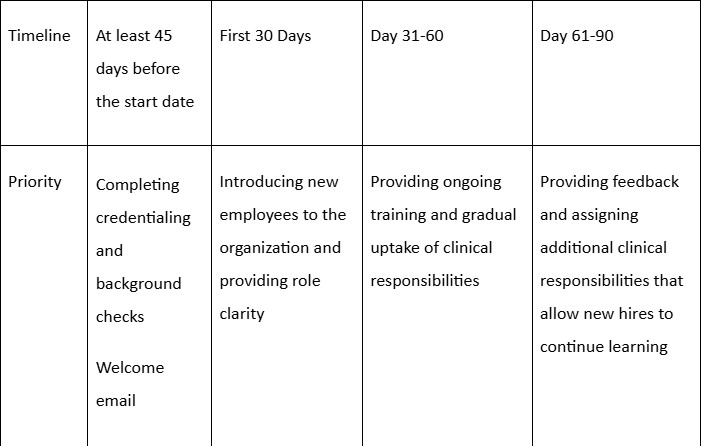
Tips to Avoid Common Mistakes When Onboarding Pediatric Staff in a New Hospital
Poor onboarding practices cost medical facilities significantly by creating a disengaged workforce. Some of the common mistakes to avoid include:
- Inaccurate or incomplete physician job descriptions
- Unclear expectations, resulting in a poor experience
- Leaving too much paperwork for the first day
- Overloading the employee with too much information on the first day, instead of spreading it out through the integration period
- Failing to account for the different learning curves among experienced and new physicians
You can avoid these mistakes, ensuring your new staff have a better experience and improve your retention rates:
- Use technology to streamline the process and reduce the manual paperwork your employees and administrative teams have to complete
- Start before the employee reports for the first day
- Engage with mentors who can provide guidance to physicians starting in a new position
- Evaluate your program constantly to identify and fix bottlenecks
Conclusion
An employer's work doesn't end when a candidate accepts a position in your practice. It continues throughout their time in your facility. Providing an exceptional experience during their early transition facilitates engagement, productivity, and retention. Incorporating tools such as ops.work improves how you onboard, train, and manage new staff. Get started with our free plan to build strong teams.
References
A Structured Onboarding and Training Platform for Child Care Personnel. 2025.
Dennee, Alexandra, et al. “The Impact of a Structured Onboarding and Education Program on the Professional Advancement of a Pediatric Sonographer.” Journal of Diagnostic Medical Sonography, 24 Dec. 2024, https://doi.org/10.1177/87564793241303936.
Silvestre, Jason, et al. “Workforce Projections on the Supply and Demand of General Pediatricians across the United States: Identifying Deficiencies to 2037.” Academic Pediatrics, vol. 26, no. 3, 8 Feb. 2026, p. 103237, www.sciencedirect.com/science/article/abs/pii/S1876285926000197, https://doi.org/10.1016/j.acap.2026.103237.
Frequently Asked Questions
Connection, compliance, confidence, clarity, and culture are the five components of onboarding.
Various staff are responsible for transitioning pediatrics staff into practice, including hiring managers, the HR team, L&D teams, and administrative staff. Clarifying their roles is part of a structured program that ensures everyone knows what they are responsible for throughout the process.
The process lasts the first 90 days of employment and can continue to the first year of the physician's job, especially for fresh graduates and specialized pediatric physicians.