
Nurse practitioner credentialing is a time-intensive yet necessary process in onboarding that ensures patient safety and regulatory compliance. It involves primary source verifications, OIG screening, payer enrolment, and ongoing reappointment screening.It is the first step in onboarding nurse practitioners, usually completed before the NP’s first day. Once they report for their first day, they begin a 90-day onboarding process to facilitate a smooth transition to clinical duties.
Key Takeways
- Nurse practitioner credentialing is a mandatory process that ensures patient safety and compliance by screening credentials and conducting thorough background checks
- Creating a structured 30-60-90-day onboarding program is essential for providing a roadmap for new hires to navigate and adjust to their new role faster
- Onboarding software simplifies both the credentialing and onboarding process through automation and progress tracking
Credentialing new nurse practitioners is a non-negotiable and necessary process. It ensures that your new hires can work with patients or provide healthcare services. It also keeps your healthcare organization compliant with federal and state regulations.
But the credentialing process can take anywhere from a few weeks to several months.
Fortunately, you can streamline your credentialing process with a dedicated healthcare onboarding software for a seamless onboarding experience.
What is Credentialing for Nurse Practitioners?
Credentialing is a formal process of verifying a nurse practitioner's qualifications and competence. It is a key part of the medical onboarding process that follows regulations from the National Committee for Quality Assurance (NCQA).
As a healthcare hiring manager, credentialing allows you to maintain your company’s compliance. It also enhances patient safety by ensuring competent clinicians care for them.
What are the Steps in the Credentialing Process for Nurse Practitioners?
Credentialing is a time-intensive process that can take several weeks to months. Understanding nurse credentialing makes it easier to streamline your nurse practitioner onboarding process.
Ops.work is an onboarding software that streamlines the credentialing process, reducing the timeline to hours.
You can view a dashboard that displays the credentialing status of all your applicants and the number of steps remaining in the process at a glance.
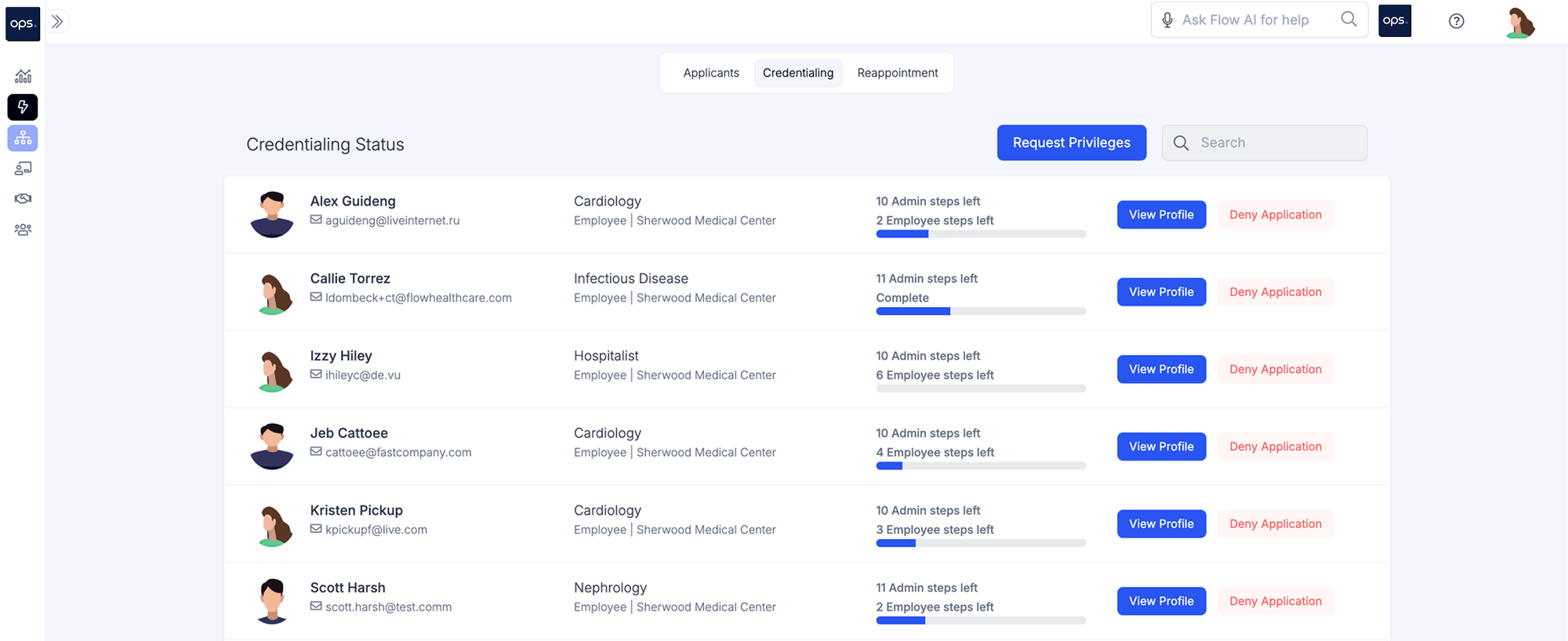
Here are the key steps of the credentialing process:
Step 1: Collecting Documents
Collecting documents is the first step in credentialing nurse practitioners. It allows you to verify whether they meet federal and state regulations.
Here are the documents you need to collect for this process:
- Personal information, including the practitioner’s name, contact information, and social security number
- Education qualifications, including copies of the nurse practitioner’s degrees
- Licensure and registration documents
- Professional experience documentation. This includes CV, references, proof of malpractice insurance, and work history.
- Other supporting documents
Collect these documents as soon as a nurse practitioner accepts a job offer. This way, you can start the credentialing process early. It also allows you to manage delays that may arise during the credentialing process.
Step 2: Primary Source Verification
You must verify the qualifications a nurse practitioner reports. This verification confirms that the nurse practitioner may provide healthcare services. You do this through primary source verification (PSV).
PSV involves contacting issuing organizations to verify the legitimacy of:
- Academic certificates
- Work experience
- Licensing
- Registration with professional bodies
- Specialty training and residency
You can use a designated equivalent source in the absence of a primary source.
Step 3: Monitoring Exclusions
Hiring practitioners with federal or state exclusions can trigger a compliance audit. Monitoring for exclusions ensures you hire a practitioner who is in good standing.
Nurse practitioners may have an exclusion for:
- Patient neglect or abuse
- Misdemeanor or felony convictions for healthcare-related offenses
- Submission of fraudulent claims
Monitor for exclusions often to ensure the nurses you hire remain in good standing.
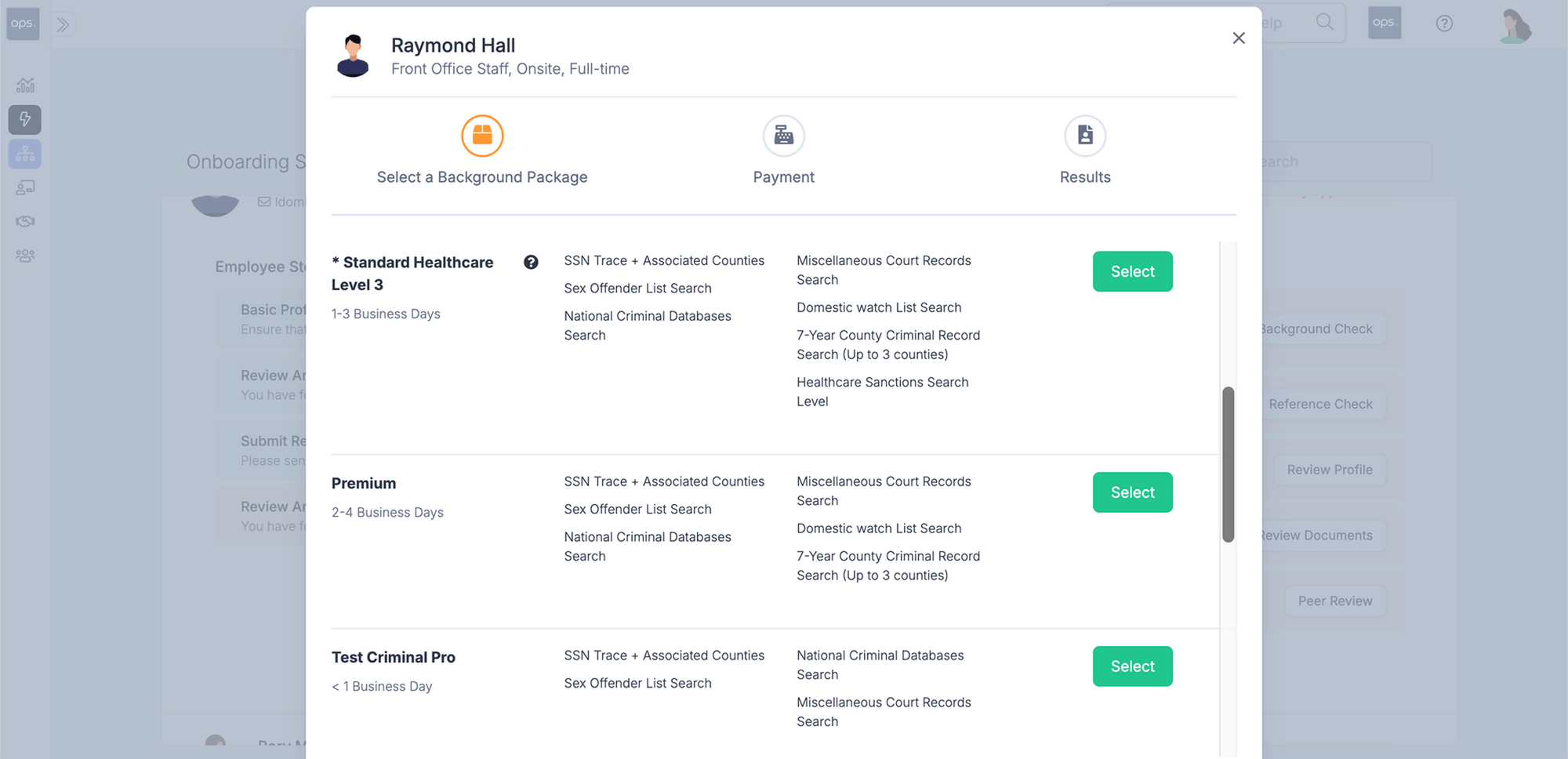
Step 4: Payer Enrollment
Payer enrollment is part of the credentialing process. It involves verifying a nurse practitioner's eligibility to bill insurance companies. Payer enrollment is intensive as you must repeat it for all payers you deal with.
Insurance payers carry out this process, meaning the timeline is out of your control. However, you can speed up the process by submitting all the necessary documents. If you notice delays in the verification process, contact the payer to follow up.
Step 5: Reappointment
Credentialing is an ongoing process. It continues after nurse practitioners and physician assistants begin working with your institution. Reappointment ensures that your workforce remains eligible to practice.
You must regularly monitor:
- Their licensure and board registration
- Sanctions or exclusions
- Adherence to continuing education requirements
- DEA certifications to determine their eligibility to prescribe medications
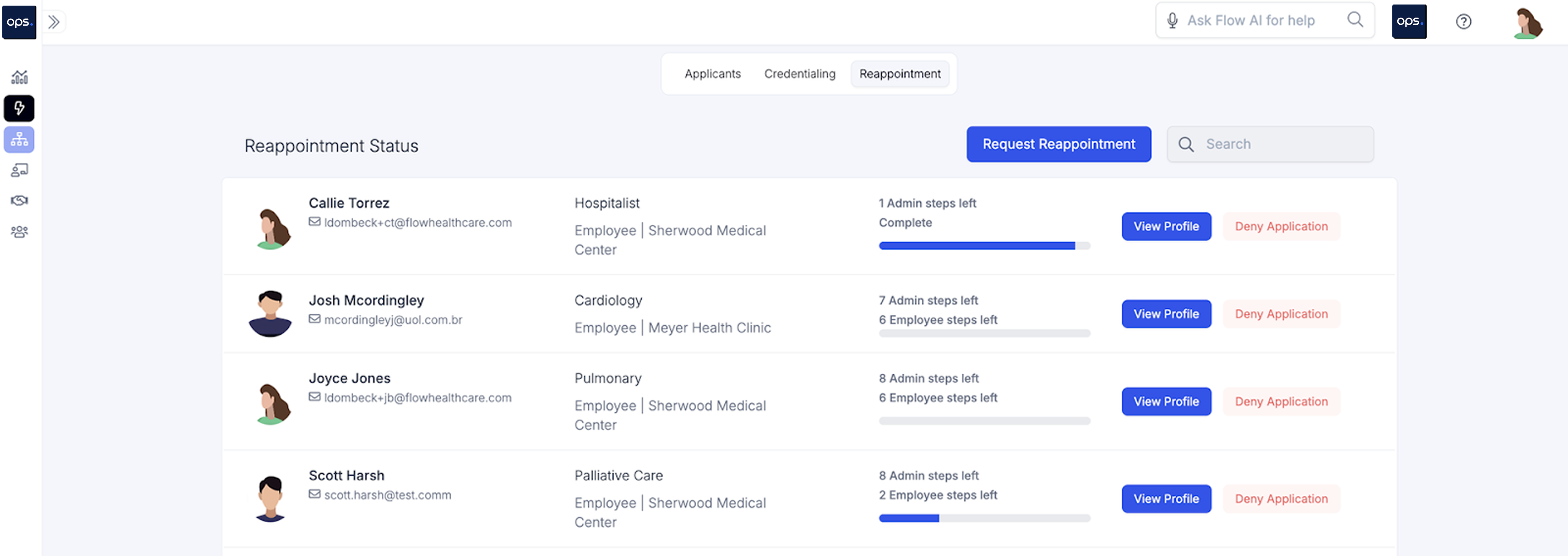
Ops.work simplifies and automates this process, enabling you and your employees to receive automated reminders when credentials expire or require renewal. This way, you can effortlessly keep track of your reappointments in the reappointment dashboard:
How Can Hiring Managers Streamline the Nurse Credentialing Process?
Nurse credentialing keeps your organization compliant and safe for patients. However, it is a time and labor-intensive process.
It is also ongoing. Therefore, you must credential a practitioner severally while they're in your organization.
Ops.work makes the credentialing process easy and fast. You can view a dashboard that displays the credentialing status of all your applicants and the number of steps remaining in the process at a glance.
You can streamline the process in several ways:
- Automate some credentialing tasks. These include licence verification, exclusions monitoring, and reminders for reappointment
- Create a standardized credentialing process for efficiency
- Follow up with payers to move the process along in case of unnecessary delays
- Outsource time- and labor-intensive credentialing tasks, such as primary verification and payer enrolment
Get started on ops.work with our free plan.
What is the 30-60-90 Onboarding Process for Nurse Practitioners after Credentialing?
Credentialing is the first part of the nurse practitioner onboarding process. It lets you know whether a nurse practitioner is qualified to care for patients.
After credentialing, the next step is to provide onboarding training for your new hires. This training prepares them for success in their role and reduces turnover.
The 30-60-90 framework is the most popular onboarding framework for employers preparing new clinical staff to transition to practice smoothly.
It also makes it easier to provide on-the-job training, collect feedback in real time, and improve productivity.
Here’s how you can implement the 30-60-90 nurse practitioner onboarding plan:
Day 1-30
Familiarize your new nurse practitioner with the organization in the first 30 days. Divide your 30-day nurse practitioner onboarding checklist by weeks for easier implementation.
A healthcare onboarding software like ops.work makes this easy for you, as you can keep track of each employee’s progress in the onboarding process according to your individual onboarding checklist:
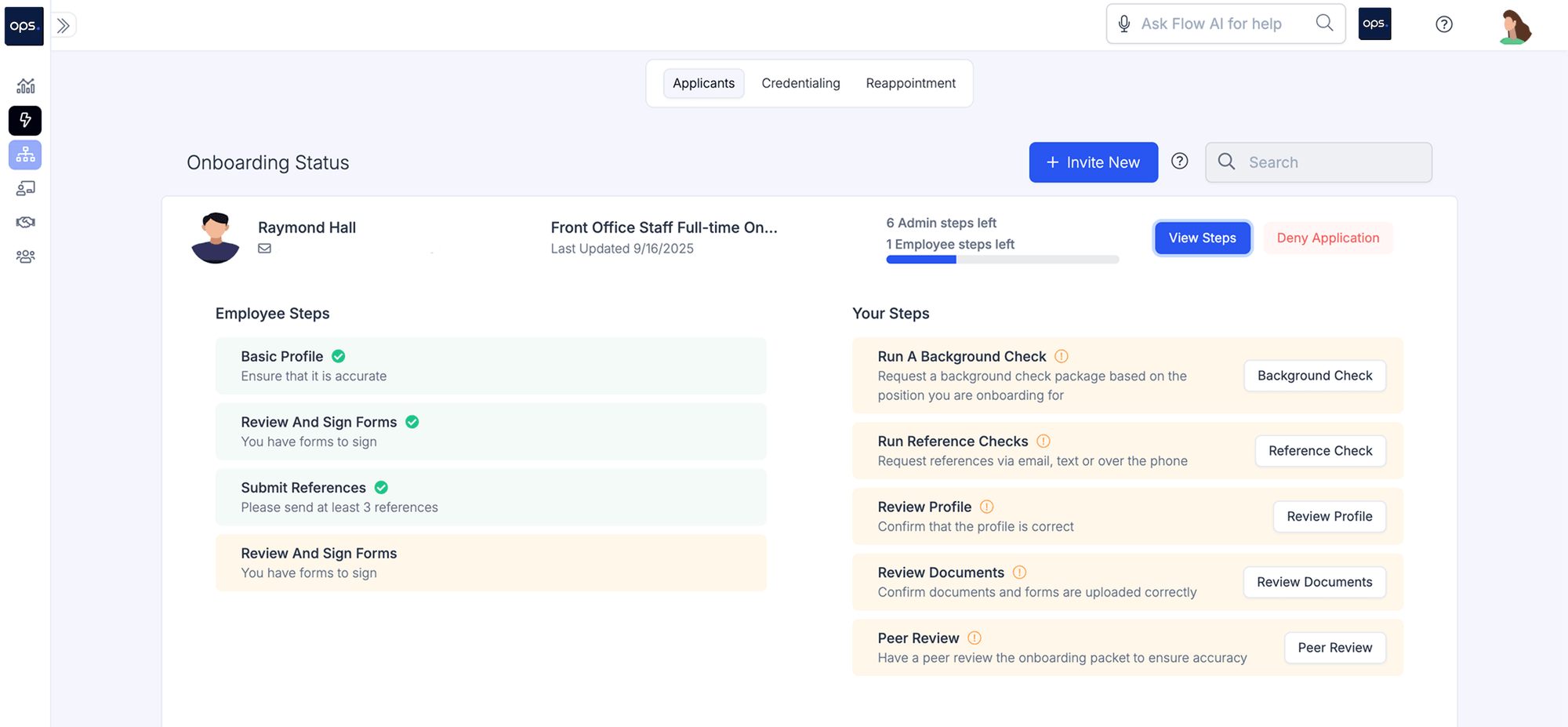
Here are some activities for the first week:
- Complete all necessary HR paperwork
- Provide the nurse practitioner with an orientation of the company. This includes a trip around the building and meeting new co-workers. Take them through all the key departments within the institution.
- Ensure they have access to the tools they will need to perform their duties
- Discuss their roles, responsibilities, and expectations for the next 90 days
After the first week, it’s time to immerse your nurse practitioners in their role. You can do this by:
- Providing shadowing opportunities with more experienced staff members
- Familiarizing them with key performance metrics and expectations
- Providing detailed training on EHR systems and healthcare compliance
- Provide hands-on training for core skills that are necessary in your organization
Day 31 - 60
The second month allows your nurse practitioner to practice what they’ve learned. You can support their efforts by:
- Conducting a review meeting. Check how they are handling their transition into the organization. End the meeting by setting goals for the next month
- Assigning a mentor whom the NP can go to for feedback and clarification
- Offer opportunities for continuing education and professional development
- Engage your new hire in team-building activities. This allows bonding with team members and immersion into the organization’s culture.
Day 60 - 90
New nurse practitioners should be fully integrated into your organization in 90 days. They should also be capable of demonstrating competence in their new role. Here are some onboarding activities for the third month:
- Set goals and clear expectations for the 90-day milestone
- Allow greater autonomy in their daily tasks
- Identify areas for additional training and development
After the third month, conduct a performance review. This provides a clearer understanding of your nurse practitioner's competency.
Besides the evaluation, map a career growth plan for them within the organization. This offers them a sense of direction and improves employee retention rates..
You can also increase retention rates by incorporating wellness programs into your onboarding processes. This allows your organization to balance employee well-being and productivity.