
Certified Nurse Onboarding bridges the gap between hiring and clinical practice by providing the necessary training and support CNAs need to thrive in their roles. It starts immediately after hire through the preboarding process and continues for at least 90 days after the first day. The orientation process familiarizes CNAs with the organization while training equips them with the necessary skills and competencies to succeed. Ongoing training is crucial for their professional development, engagement, and retention.
Key Takeaways
- CNA onboarding increases retention, engagement, well-being, and job satisfaction
- A good CNA onboarding process follows four key phases: preboarding, orientation, training, and ongoing support
- Onboarding software helps streamline the process while reducing the burden and errors of manual tasks
Certified nursing assistants and aides are key members of healthcare teams, especially in nursing homes and residential facilities. They are actively involved in caring for patients, from assisting with bathing to monitoring vital signs and communicating patient needs.
What are the Benefits of Certified Nurse Assistant Onboarding?
While CNAs play a crucial role in medical and nursing care, they have the highest turnover rates amongst healthcare professionals, according to the NSI.
This means that your facility must invest in a robust onboarding program to ensure that each new hire receives the necessary support to become a CNA. Such a program has the following benefits:
- Increased employee retention
- Better engagement with new staff
- Improved well-being and job satisfaction
What are the Key Steps in the Onboarding Process for Certified Nursing Assistants?
With so many healthcare professionals to onboard, it pays to automate the process with a dedicated onboarding software. Such software automates manual, time-consuming tasks, allowing you to focus on integrating new CNAs into your clinic.
Here are the steps in the onboarding process and how you can automate them:
Preboarding
Preboarding refers to all the activities that happen between when a CNA accepts a job offer and when they report for work. Activities that happen during the preboarding phase are meant to ease the transition into your practice.
They include:
- Sending a welcome packet
- Collecting the pre-employment paperwork, such as tax forms
- First week schedule
- Setting up employee profiles and accounts
- Collecting credentialing documents such as licensure, certifications, and clearances
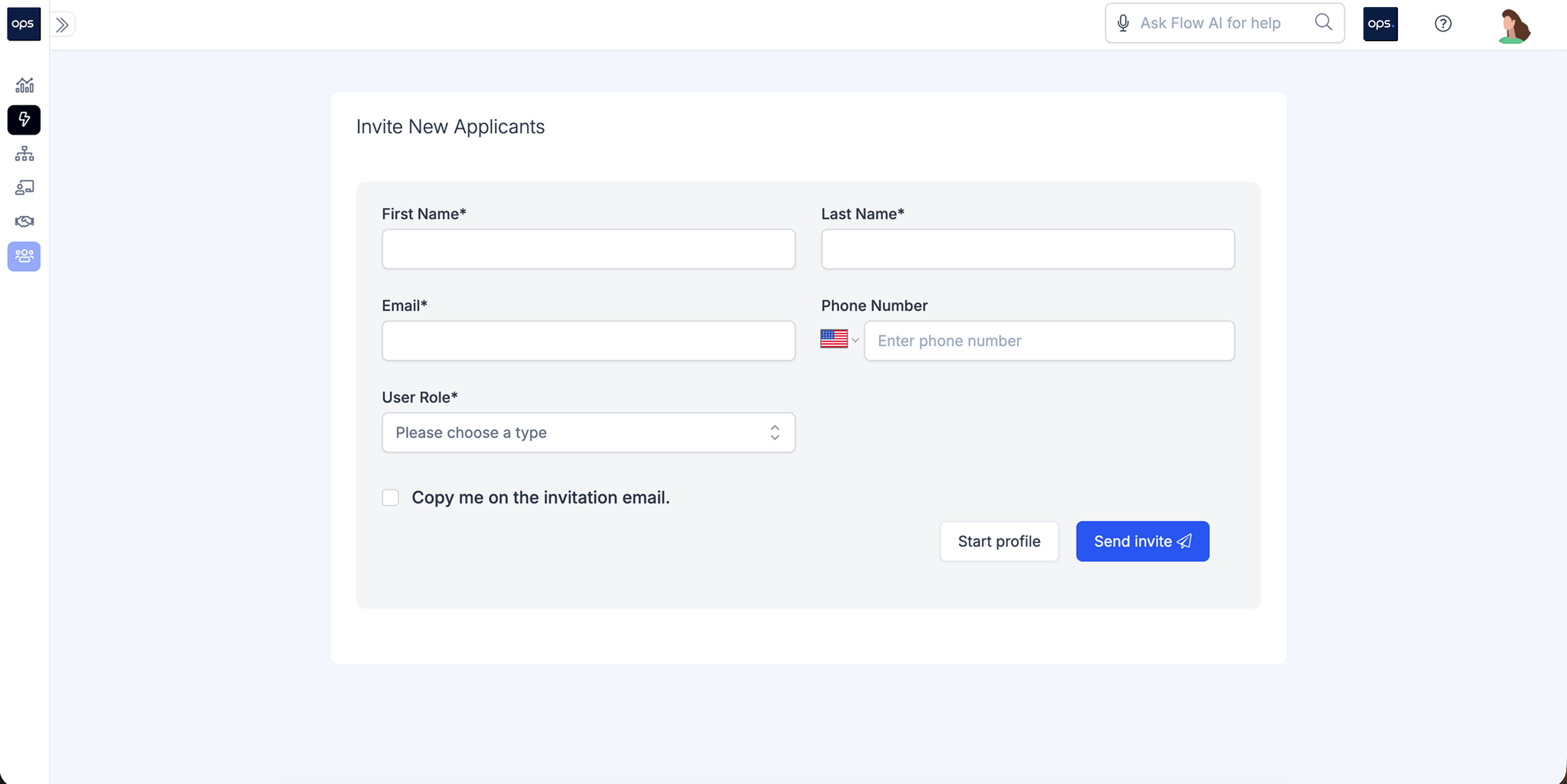
ops.work helps you onboard CNAs faster in several ways. First, you can easily invite new applicants to join your training platform.
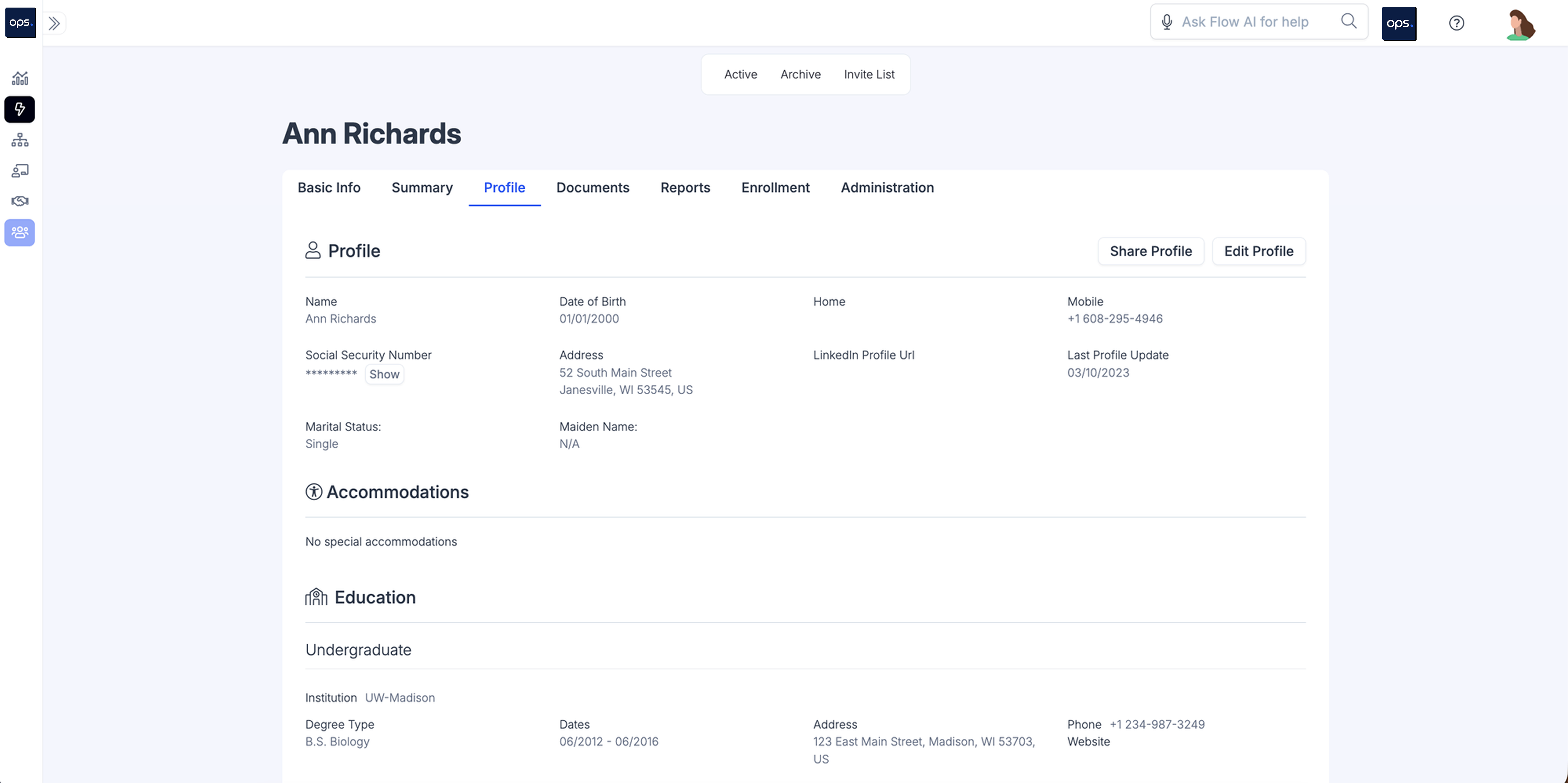
Once they've joined, you can create their profiles, making workforce management easier.
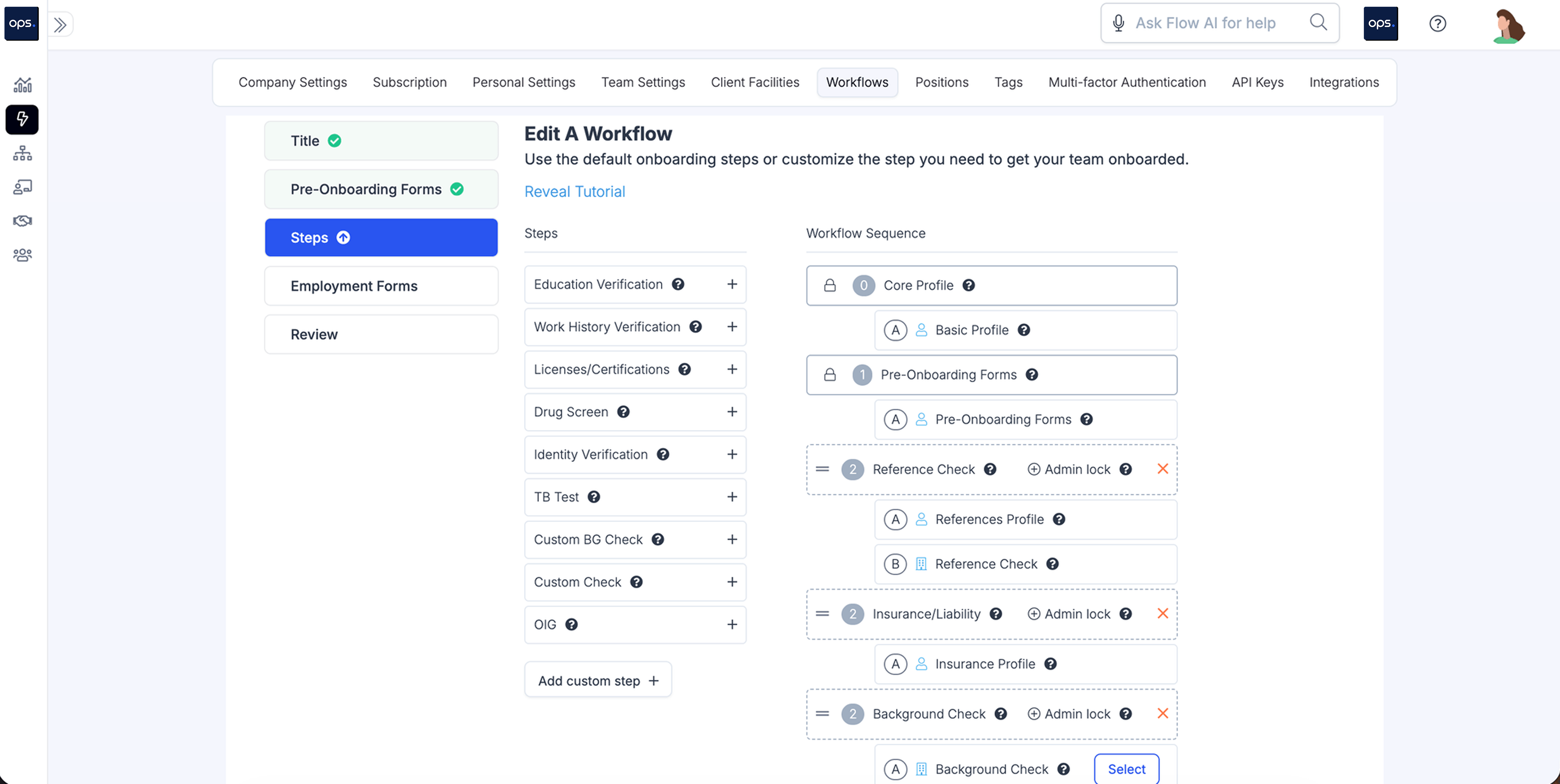
Ops.work also allows you to create checklists and workflows to onboard your staff faster. Sign up for our free plan to automate your workflows.
Orientation
The hiring process sets expectations with prospective hires about your organization, while the orientation process sets the stage for fulfilling these expectations.
Your program should:
- Offer a walking tour of your premises
- Introduce them to other team members
- Connect the CNA with a mentor
- Introduce them to their supervisors
- Provide induction training
- Sign the necessary administrative paperwork
- Review company policies, including patient intake procedures, documentation guidelines, and reporting standards
- Provide each CNA with the tools they need for the role, including a designated desk, access to communication tools such as a work email
Compliance and Role-Based Training
Compliance training is essential for CNAs. It provides them with a thorough understanding of the federal, state, and local regulations within which your clinic operates.
In addition to maintaining compliance, these training programs give your CNAs the confidence they need to navigate ethical challenges when delivering patient care.
Role-based training, on the other hand, equips CNAs with the essential skills they need to perform their duties. CNA training provides your new staff with practical skills in patient personal care.
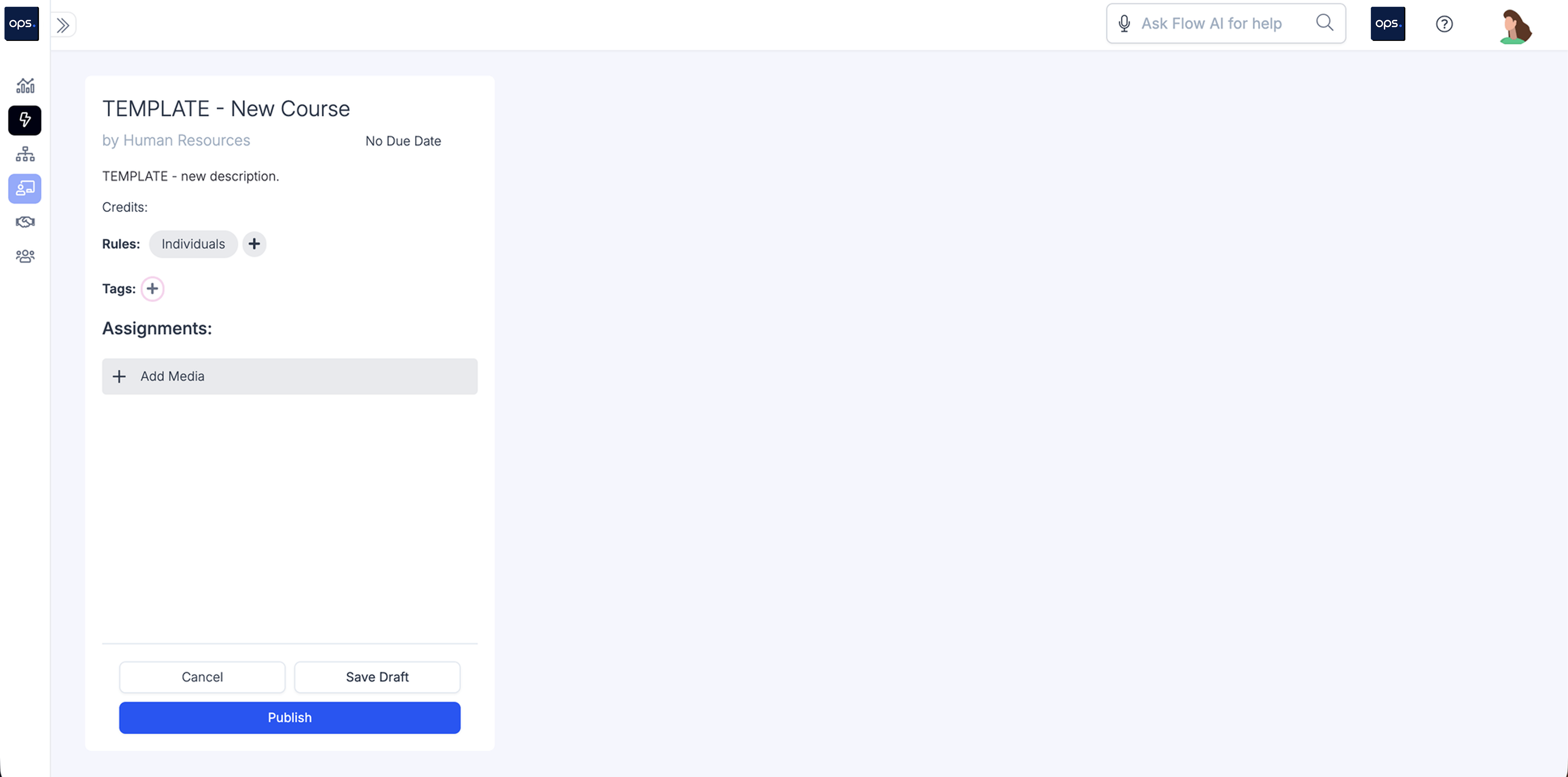
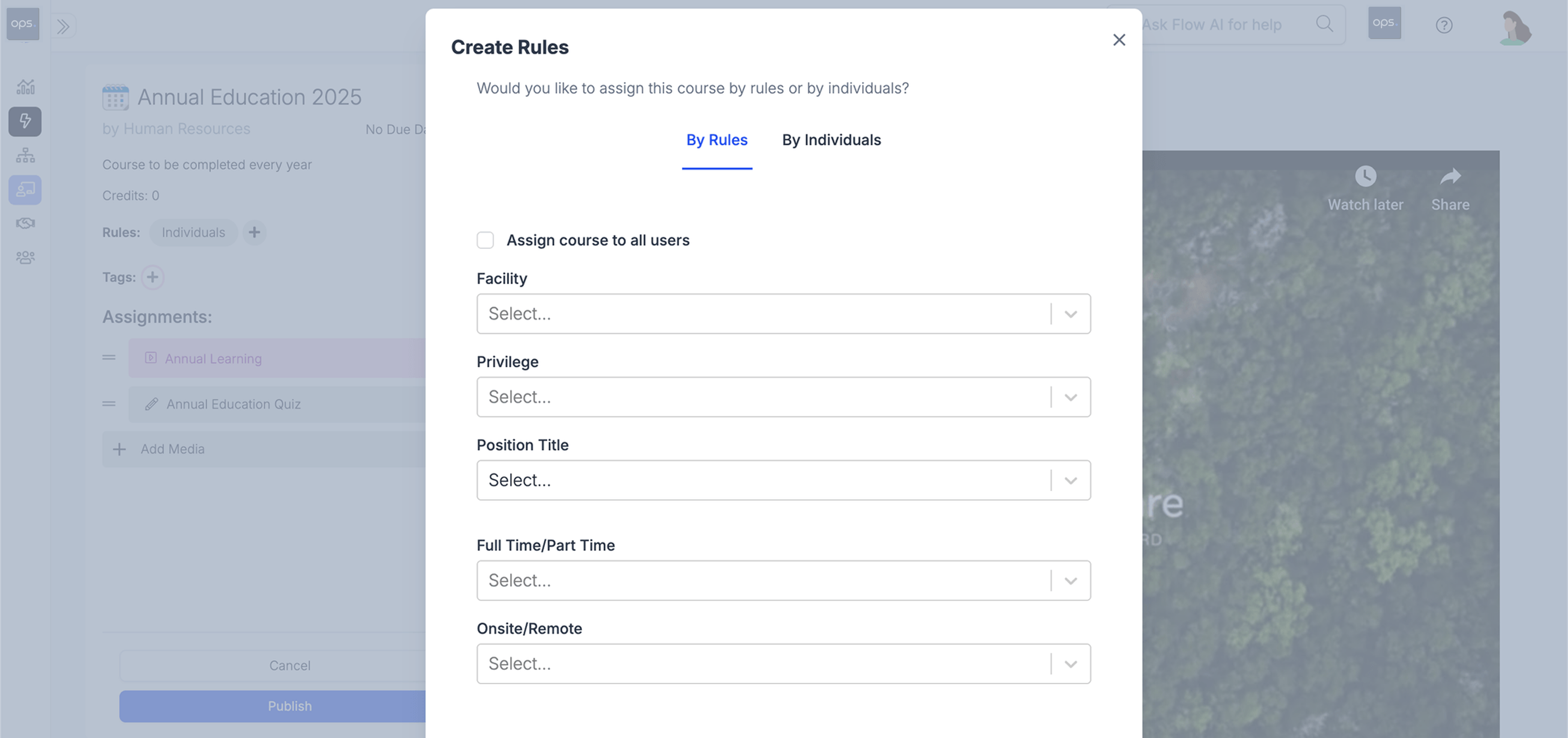
Ops.work course builder allows you to create educational resources. You can edit these courses so that your compliance training resources are up-to-date with the evolving regulatory requirements:
Once you have created these courses, you can share them with staff based on their roles:
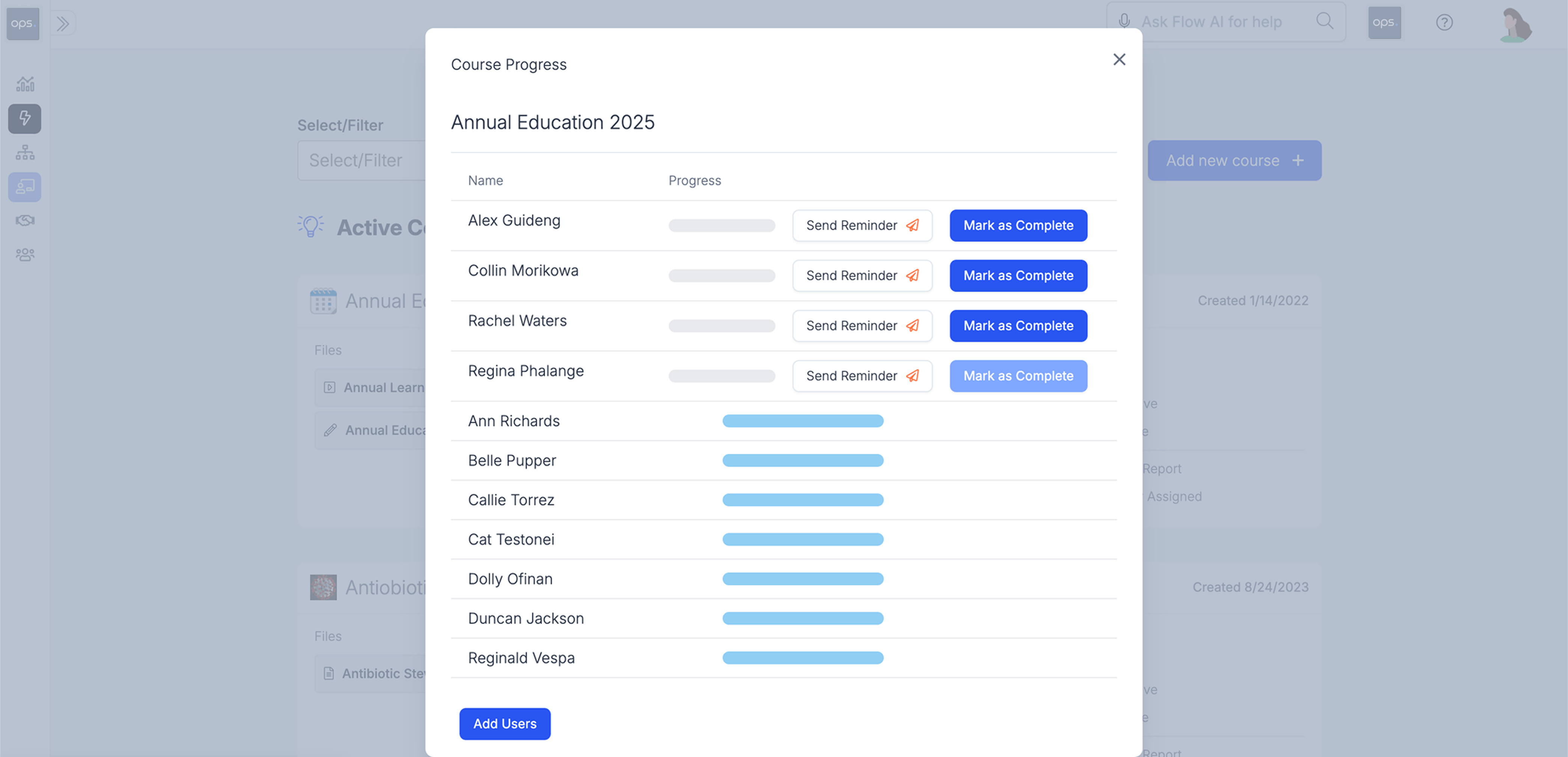
The ops.work LMS dashboard also allows you to track completion rates for various courses:
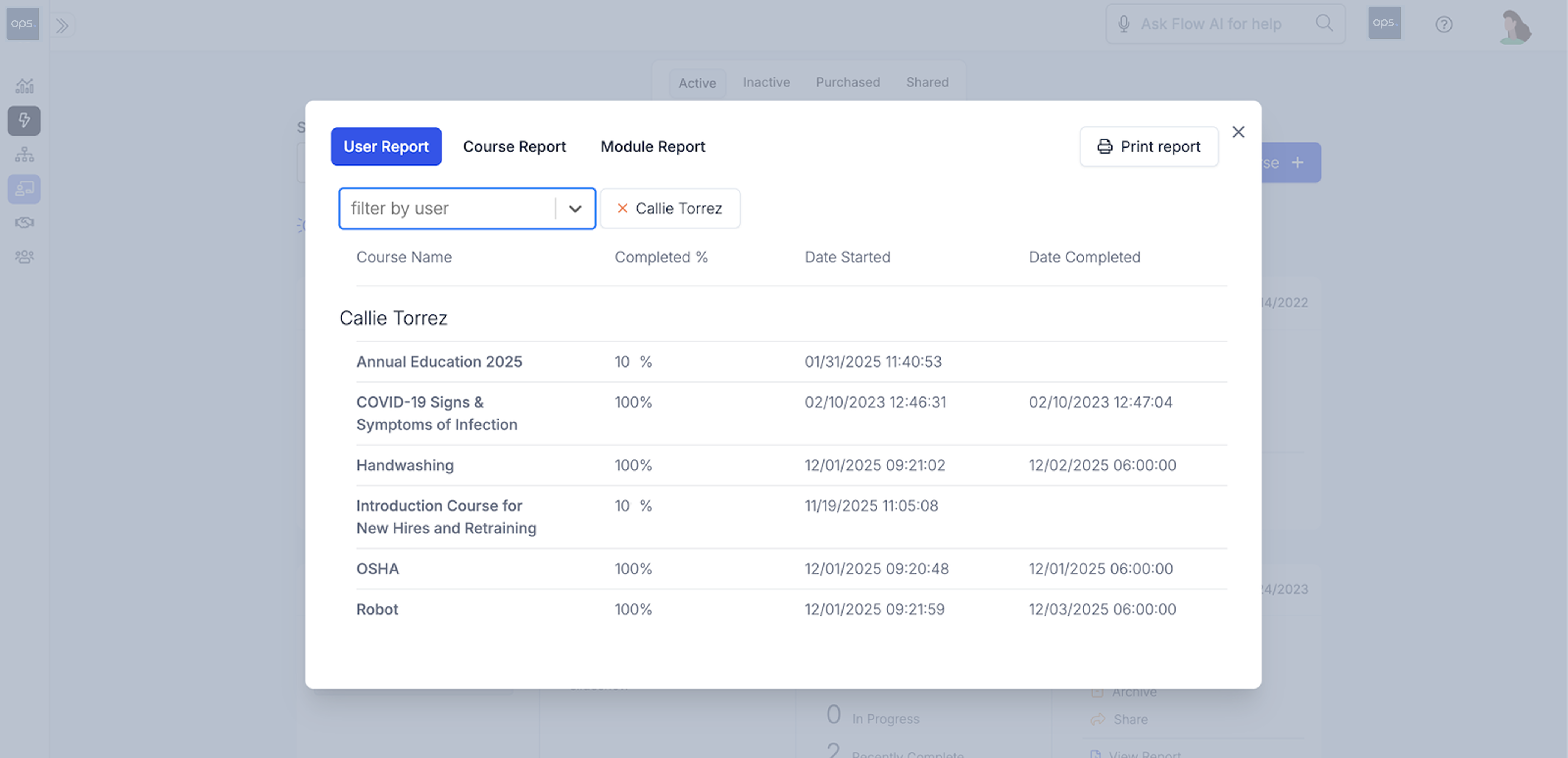
You can also generate comprehensive education reports to draw key insights on the impact of your staff education efforts:
Continuous Development
Continuous development is the last stage of the onboarding process. At this stage, your nursing assistants can demonstrate competency in their role. The next step is helping them develop a long-term career plan to ensure that new nurse aides understand what prospects they have.
At this stage, conduct performance assessments and hold in-person feedback sessions to understand the gaps in your program. The feedback you collect becomes key to onboarding quality improvement.
Conclusion
Your outreach efforts in finding nurse aides may fall flat if you don't onboard them properly. One way to ensure your efforts succeed is by automating your integration efforts to save time, prevent burnout, and provide a consistent experience for each CNA you onboard. Ops.work has a comprehensive set of features that help you verify, onboard, and create top-notch educational resources for your staff. Try our free plan today.
References
Bota Bexizdykova. “Mentorship and Onboarding of Nursing Assistants in Intensive Care: Models and Best Practices.” Universal Library of Medical and Health Sciences., vol. 03, no. 03, 6 Sept. 2025, pp. 70–75, https://doi.org/10.70315/uloap.ulmhs.2025.0303009.
Jones, Cheryl B., et al. “The Transition, Onboarding, and Integration of Newly Hired Faculty into Nursing Academia: A Scoping Review.” Journal of Professional Nursing, vol. 62, Jan. 2026, pp. 66–82, https://doi.org/10.1016/j.profnurs.2025.10.010.
Berggren, Amy, et al. “Standardized Onboarding Increases Intention to Stay with the Organization.” the Journal of Nurse Practitioners/the Journal for Nurse Practitioners, vol. 20, no. 6, 1 June 2024, pp. 105011–105011, https://doi.org/10.1016/j.nurpra.2024.105011.
Frequently Asked Questions
CNA tasks include assisting clients with basic daily activities, such as bathing and feeding. Certified medical assistants (CMAs) assist with clinical duties, including administering medications, scheduling appointments, and billing.
Some medical centers offer paid training programs. In such training, you complete a state-approved CNA program and pass a certification exam, but work for the clinic for a defined period, typically one year.
Most CNAs wear scrubs. You can also wear a business casual outfit that does not restrict your mobility, especially if you will be demonstrating clinical skills.
You can help CNAs grow their careers by providing mentorship and training opportunities. Clearly define potential career pathways they can explore, including advanced certifications to become registered nurses or LPNs and leadership roles.