
A structured onboarding process for phlebotomists prepares them for long-term success. Using the 30-60-90 onboarding plan makes it easy to gradually transition new hires into their role from supervised practice to independent clinical work.
Key Takeaways
- A good healthcare onboarding program ensures employee satisfaction, retention, and productivity
- Phlebotomist onboarding should start before the first day and continue to a minimum of the first 90 days on the job
- After onboarding, provide your phlebotomists with ongoing support to help them plan for their longterm career goals
Phlebotomists are healthcare professionals who collect blood samples and prepare them for laboratory testing. They work in various medical settings, including blood banks, diagnostic centers, hospitals, long-term care facilities, and physician offices. Proper onboarding is the first step in setting your new staff up for success, engagement, and job satisfaction.
Adopting onboarding software as part of your process makes it easy to implement the 30-60-90-day plan, saving your time and money.
How do you use the 30-60-90-Day Phlebotomist Onboarding Checklist?
The 30-60-90-day onboarding plan provides a roadmap for new employees and HR teams on what to expect when integrating new team members.
It provides a structure that streamlines your operations and clarifies each stakeholder's responsibilities, creating a positive onboarding experience.
Here's a breakdown of the key activities to include in your care provider onboarding template:
Before the first day
Healthcare onboarding begins well before the new phlebotomist reports for their first day. You can start the process at least 30 days before the official start date to ensure you have enough time to complete credentialing, background checks, and referral verification.
Here's a list of tasks to complete before the new hire reports for work:
- Credentialing to verify that your technician meets the education, certification, and licensing requirements to work in the lab
- Sending welcome packets to introduce your employee to your company
- Sending an orientation schedule so they know what to expect on the first day
- Filling and signing pre-employment documents
The first 30 days
The first 30 days lay the foundation for your new employees' onboarding experience. For efficient onboarding, create a checklist outlining the activities for the first week of orientation. These include:
- Introducing new staff to their colleagues and supervisors
- Setting clear expectations and goals so that new staff know what they should be doing. Some of their responsibilities include drawing blood samples and maintaining records.
- Providing a schedule for the next 90 days of onboarding
- Introducing the employee to the organizational mission, vision, core values, and culture
After the one-week orientation process, the next three weeks should include training to help new employees feel confident in performing their duties. Here's how to ensure your staff receive the necessary training
- Start by pairing them with a mentor to provide guidance on navigating the work environment and preparing for long-term success.
- Adopt shadowing as part of your training program to allow your staff to gain hands-on experience in accurate blood draws, patient communication,
- Train your new staff on how to use your EHR system to document the lab procedures provided
- Provide training on laboratory safety protocols, including biohazard waste disposal and infection control.
- Train on equipment and procedures, including blood collection techniques, documentation procedures, ethical and professional standards, emergency response protocols, and quality assurance and control.
Day 31-60
By the second month, the employee should be familiar with their job responsibilities and capable of handling basic tasks. However, they still need comprehensive training to ensure they have the knowledge and skills required to care for patients safely and efficiently.
For the next 30 days, continue providing role-based training and provide constructive feedback on their performance.
Day 61-90
By the end of the onboarding period, your employee should be able to work independently. They should have mastered the basic skills and be able to provide quality patient care. At this stage, hold regular check-ins to address any questions or concerns they may have.
What Skill Training is Needed When Onboarding Healthcare Professionals in the Lab?
Employee training makes a significant difference in the healthcare industry. It allows your facility to provide high-quality patient care while improving employee retention. Organizations that provide professional development opportunities to staff have a 14% increase in productivity, according to Gallup.
You can create opportunities for continuing education by creating personalized training programs to address the skills gap in your laboratory workforce. Some of the training areas to focus on for your new phlebotomy staff include:
- Clinical skills training for needle techniques and blood collection methods (including techniques for different patient populations such as pediatric and geriatric patients)
- Problem-solving, attention to detail, and communication skills.
- Safety and compliance training covering infection control, regulatory requirements, PPE use, and proper biohazard waste disposal.
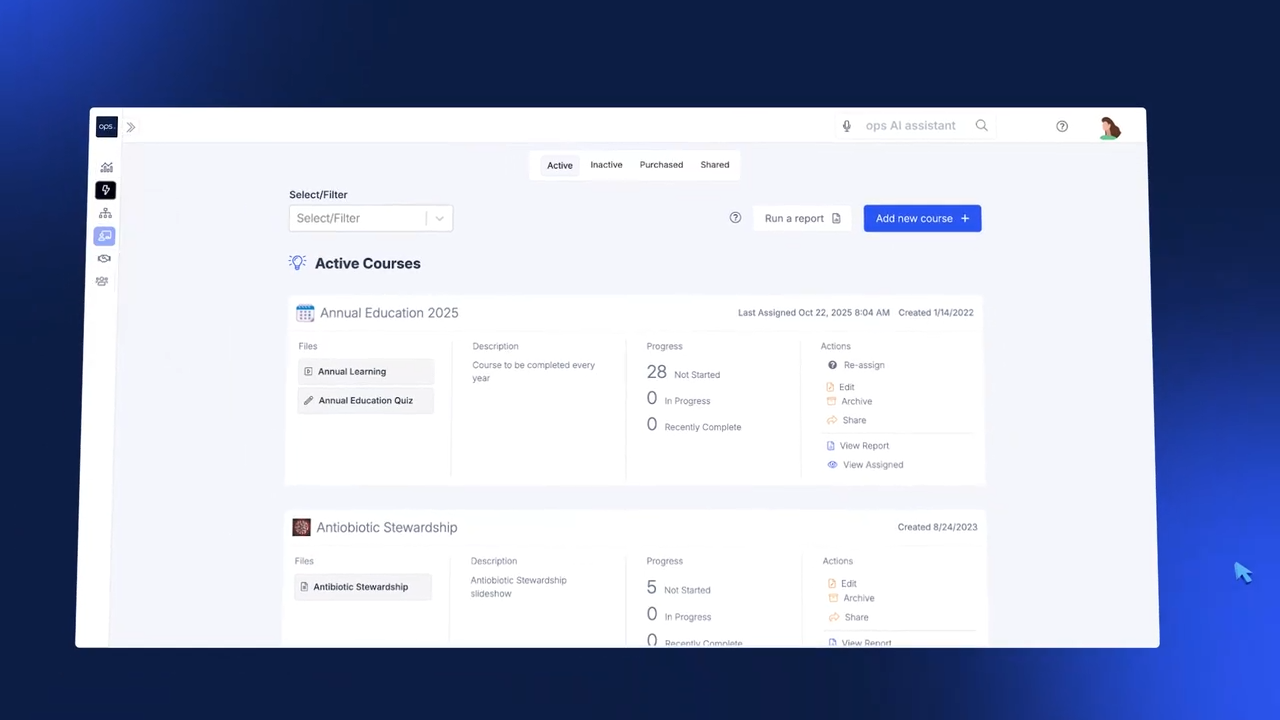
You can use an LMS tool like ops.work to create, assign, and manage courses around these training areas. In addition, ops.work lets you create assessments to measure knowledge retention rates and generate reports to help you identify areas for improvement. Try our free plan to streamline your employee training efforts.
How do You Provide Ongoing Support and Feedback for New Phlebotomy Technicians?
Your employee engagement efforts should continue beyond the onboarding period. This is a crucial time to help your technicians view your organization as a place where they can advance their careers in healthcare.
You can continue engaging your employees by:
- Conducting ongoing competency assessments to ensure you laboratory staff continue to meet the competency standards
- Providing reinforcement training in areas such as HIPAA and OSHA regulations and your internal SOPs
- Providing opportunities for continuing education (CE) and leadership development
- Collect feedback on engagement through employee pulse surveys to identify warning signs of disengagement
- Meet with each new hire to create a personal development plan. This lets your employees know that you are invested in their growth
Conclusion
The experience your employees have during onboarding influences their willingness to stay with your company. Using the 30-60-90-day onboarding template gives structure to your onboarding process, allowing you to provide a consistent experience. You can further optimize the process with ops.work to create automated workflows, track onboarding status, and gather actionable insights to improve future onboarding efforts. Sign up for our free plan to get started.
References
King, Sandy, "Analysis of Phlebotomy Training Implementation to Reduce Lab Errors in the Clinical Setting" (2023). Doctor of Nursing Practice Projects. 44. https://arch.astate.edu/dnp-projects/44
Frögéli, Elin, et al. “Effectiveness of Formal Onboarding for Facilitating Organizational
Socialization: A Systematic Review.” PLOS ONE, vol. 18, no. 2, 16 Feb. 2023,
pmc.ncbi.nlm.nih.gov/articles/PMC9934447/, https://doi.org/10.1371/journal.pone.0281823.
“30-60-90 Day Plan: What It Is and How to Create and Use One (Example Included).” Indeed Career Guide, www.indeed.com/career-advice/starting-new-job/30-60-90-day-plan.