
Physical therapist onboarding requires a structured program that begins before they report for the first day and continues for the first 90 days of employment. The process includes preboarding, orientation, training, and continuous support and feedback collection. Such a program helps physical therapists understand the workplace environment and how they fit in. Done well, it improves job satisfaction and retention.
Key Takeaways
- A strong PT onboarding program makes new hires feel welcome and supported throughout their journey, resulting in higher retention rates
- PT onboarding should begin with a comprehensive preboarding process, an orientation program, and comprehensive training.
- You should provide ongoing support to physical therapists after the onboarding period to help them plan their career progression plan and reduce turnover rates
How you integrate hires into your practice matters. It shapes the perception they have of you as an employer and their willingness to stay in the facility. Engaging onboarding efforts provide them with a predictable structure that helps them navigate the first few months of their employment.
What is PT Onboarding?
Physical therapist onboarding is the process of integrating your new hires into your facility. This process goes beyond the basic welcome tour or signing of paperwork.
It familiarizes your new physical therapists with your organizational mission, values, and culture. Done well, it allows you to fulfil the promises and expectations set during the hiring process.
A well-structured program anticipates the questions and challenges that new hires may experience as they settle into their role and addresses them.
What are the Key Steps in Onboarding Physical Therapists?
The onboarding process for physical therapists should ideally begin before they arrive for their first day and continue for at least the first three months of employment.
For more advanced specialities, extend this program to run through the first year to improve employee engagement and improve patient outcomes. Here are the key steps to include:
Preboarding
Preboarding refers to the set of activities that occur before the new employee's first day at work. They include credentialing and preparing the new hire for their first day at work. Some of the activities you can engage in during the preboarding phase include:
- Sending a welcome packet
- Providing clear logistical information, including the location of your facility, where to park, and what to wear on the first day
- Requesting the submission of credentialing documents, such as licensing, education, proof of work, and personal information
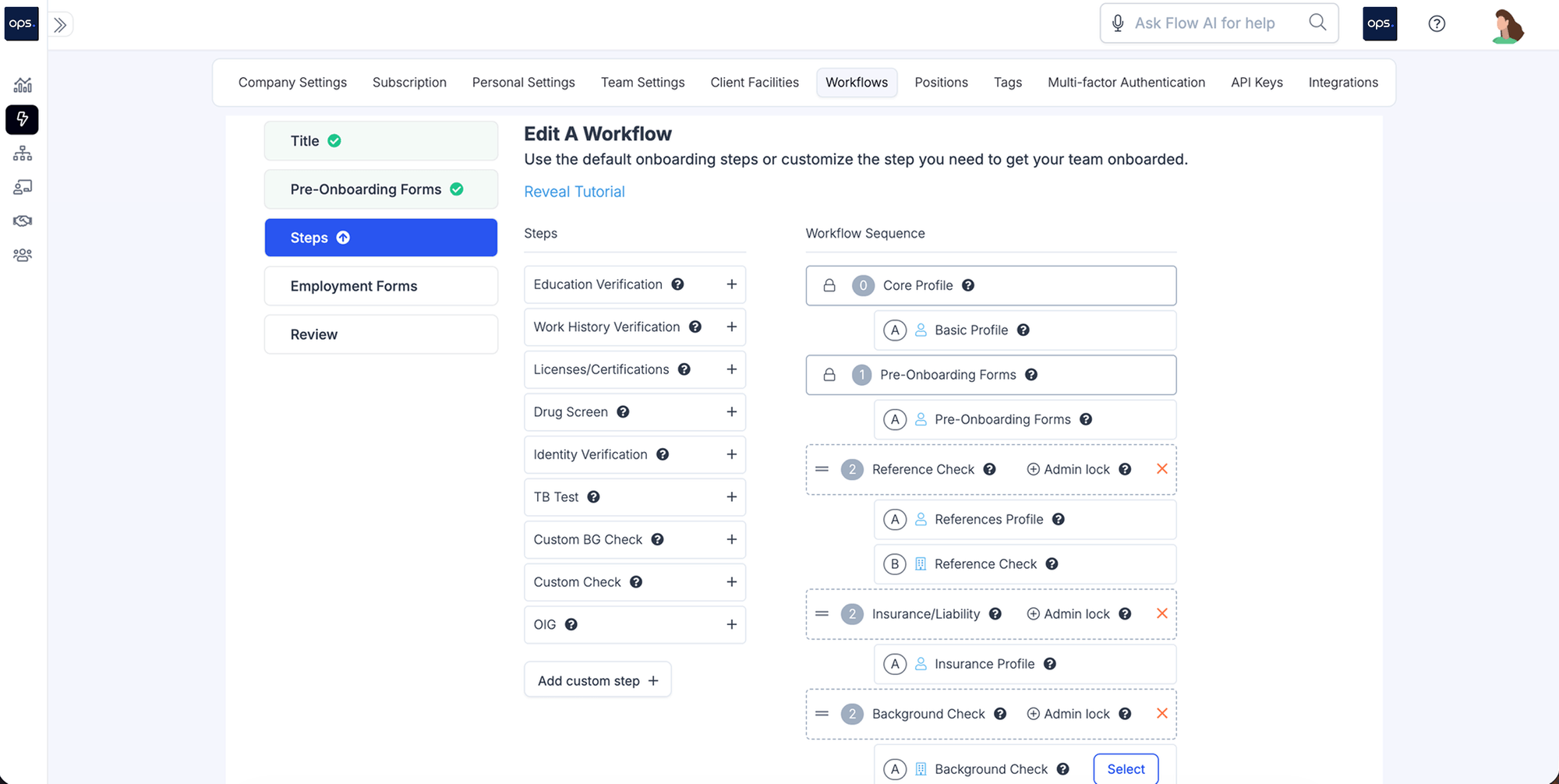
You can standardize the preboarding process by creating a comprehensive preboarding checklist with ops.work onboarding software. With the tool, you can automate your workflows to ensure all your new hires receive a consistent experience.
Orientation
Orientation, also known as induction, is a brief introductory process meant to quickly familiarize new team members with your facility. It also helps them build confidence as they start working in your facility.
Orientation includes:
- A walking tour of the facilities
- Introducing the employee to your other team members
- Connecting the new employee with a mentor
- Providing orientation training
- Completing administrative paperwork for HR
- Reviewing company policies
- Assigning and directing them to their workstation
Role-Based and Compliance Training
Proper onboarding includes role-based and compliance training. Compliance training prepares your physical therapists to handle patient information, understand OSHA safety regulations, insurance billing requirements, and internal policies.
Role-based education equips them with the clinical skills necessary to deliver physical therapy to patients. It includes familiarizing them with the equipment used at your clinic, as well as patient handling procedures, from intake to rehabilitation.
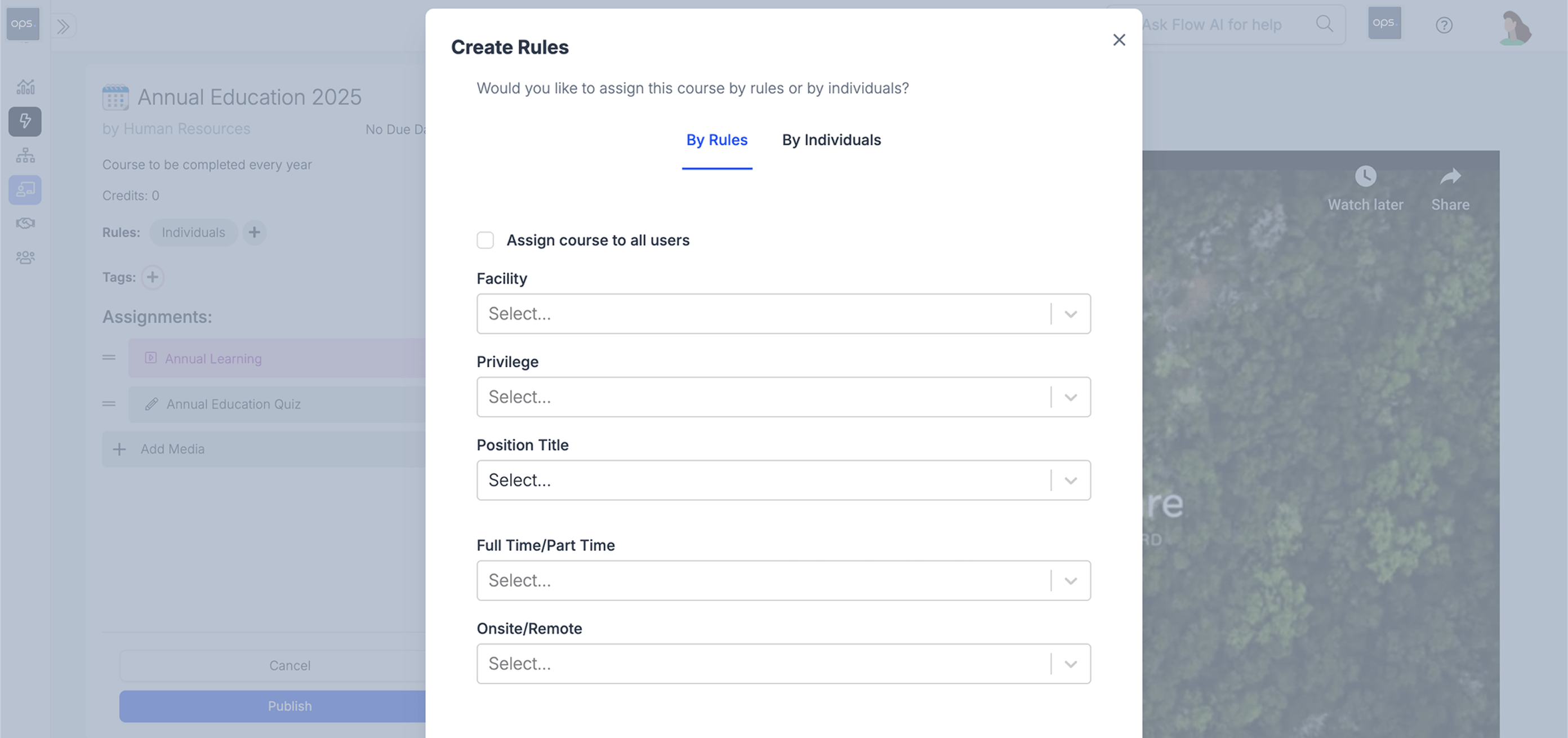
You can create mandatory and role-based courses with ops.work's customizable templates:
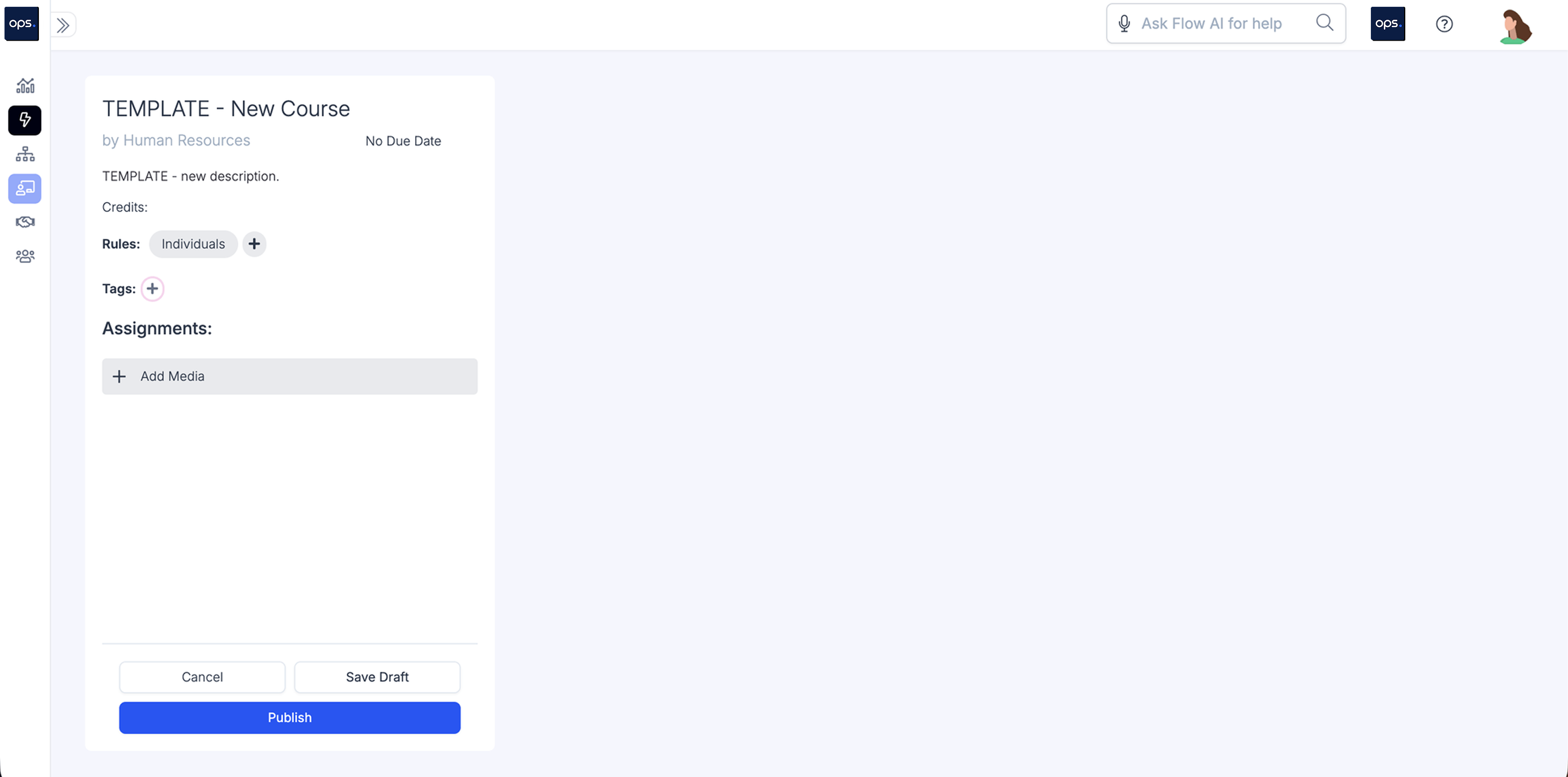
Once you create the courses, you can assign them to new employees and track completion progress. Try our free plan to create your courses.
Integration and Continuous Learning
The final phase of the onboarding process involves integration and continuous learning. Integration means that new therapists are familiar with the company culture and have developed a sense of belonging to your organization.
At this stage of the onboarding journey, they can perform the assigned tasks with confidence. Some of the activities to include in this phase include:
- In-person feedback sessions
- Performance reviews
- Competence assessments
This phase also lays the groundwork for the continuous development of your physical therapists. Schedule a check-in meeting with them to explore potential career paths within your facility, including clinical and leadership pathways.
Having clarity on the way forward allows your employees to set goals, thus contributing to their productivity. It also allows you to proactively provide opportunities for continuous learning.
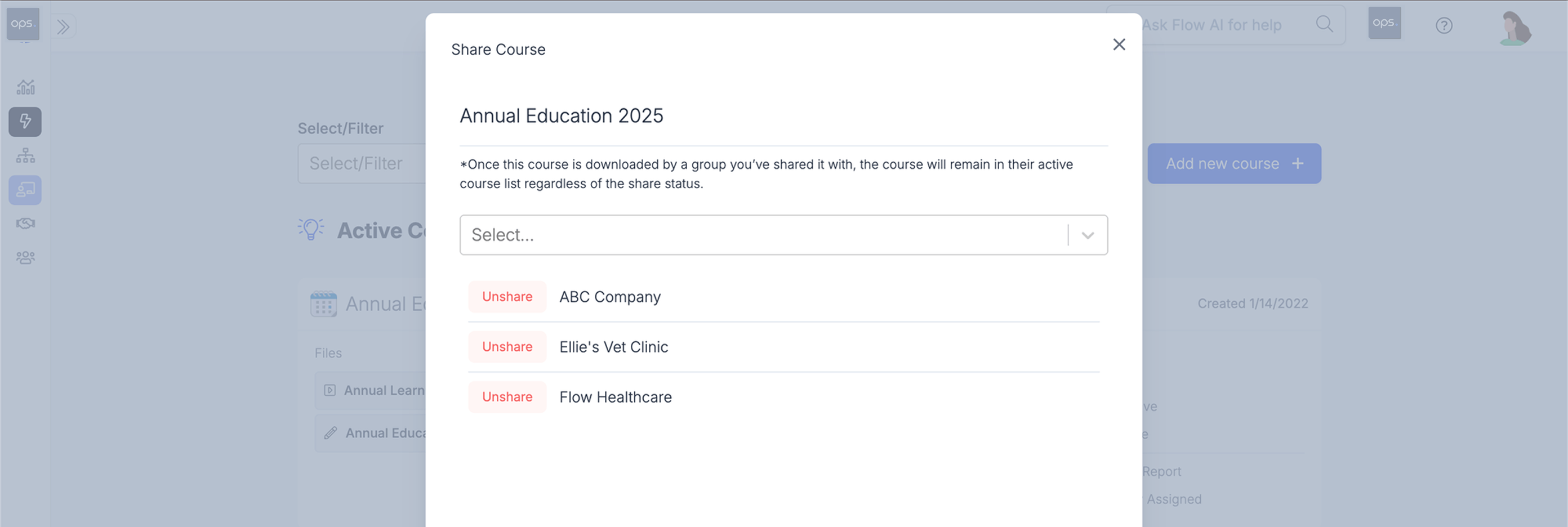
Once you've mapped potential career paths, you can use ops.work to create and share role-based courses:
How can Onboarding Help Retention at a Physical Therapy Practice
According to the NSI National Health Care Retention Report, healthcare facilities experienced a turnover rate of 11.4% for physical therapy staff. While this is below the overall turnover rate for hospitals, it still translates to high costs for replacing existing employees.
How you onboard your hires can influence their decision to stay in your facility for years to come. You can achieve this by creating an environment that promotes career growth and wellness. Here's how you can use your onboarding process to drive high retention rates:
- Create an environment that supports the development of interpersonal relationships and teamwork
- Let new staff immediately know how they fit into their departments and the organization. Employees who feel valued from the start are more likely to stay.
- Clearly communicate duties, responsibilities, and performance metrics from the start
- Offer valuable learning experiences when onboarding them
Conclusion
The investment you make in your onboarding process influences your ability to transform new hires into productive and engaged staff members. It also allows you to manage turnover at your facility, therefore retaining talented staff for longer.
Automating key tasks in the onboarding process using tools such as ops.work can transform how you educate, onboard, and manage skilled providers. Try our free plan to get started.
References
Black, Lisa L., et al. “The First Year of Practice: An Investigation of the Professional Learning and Development of Promising Novice Physical Therapists.” Physical Therapy, vol. 90, no. 12, 1 Dec. 2010, pp. 1758–1773, https://doi.org/10.2522/ptj.20100078.
Summit. “Why Onboarding Matters: Shaping PTs as First-Line Providers - Summit Professional Education.” Summit Professional Education - Sharing Knowledge, 3 Oct. 2025, summit-education.com/blog/general/why-onboarding-matters-shaping-pts-as-first-line-providers/?srsltid=AfmBOoodeS4xR4t3A8U2Suv6jjanuw9oTwTh1W44B1l91KL0rlOhvXFY
Walzack, Nicole. “Physical Therapy Onboarding: How to Steer Staff to Success - MEG Business Management.” MEG Business Management, 3 May 2022, www.megbusiness.com/physical-therapy-onboarding-how-to-steer-staff-to-success/.
Frequently Asked Questions
Onboarding physical therapists increases employee retention rates and job satisfaction. It lets employees know they are valuable members of your facility from day one.
The 30-60-90-day onboarding plan should provide a checklist of the activities and milestones your employee should meet within the first 90 days. You can implement this framework as follows:
- The first 30 days are dedicated to orienting new staff to your facility and team members
- In the next 30 days, you guide them through their duties and responsibilities. This could also include instruction from mentors or shadowing experienced therapists.
- In the final 30 days, you evaluate their performance and set long-term goals.
These technology tools streamline employee education and compliance by standardizing your onboarding and learning efforts. They also make it easier to track various compliance metrics, keeping you practice audit-ready.